
Category: Newsletter
-
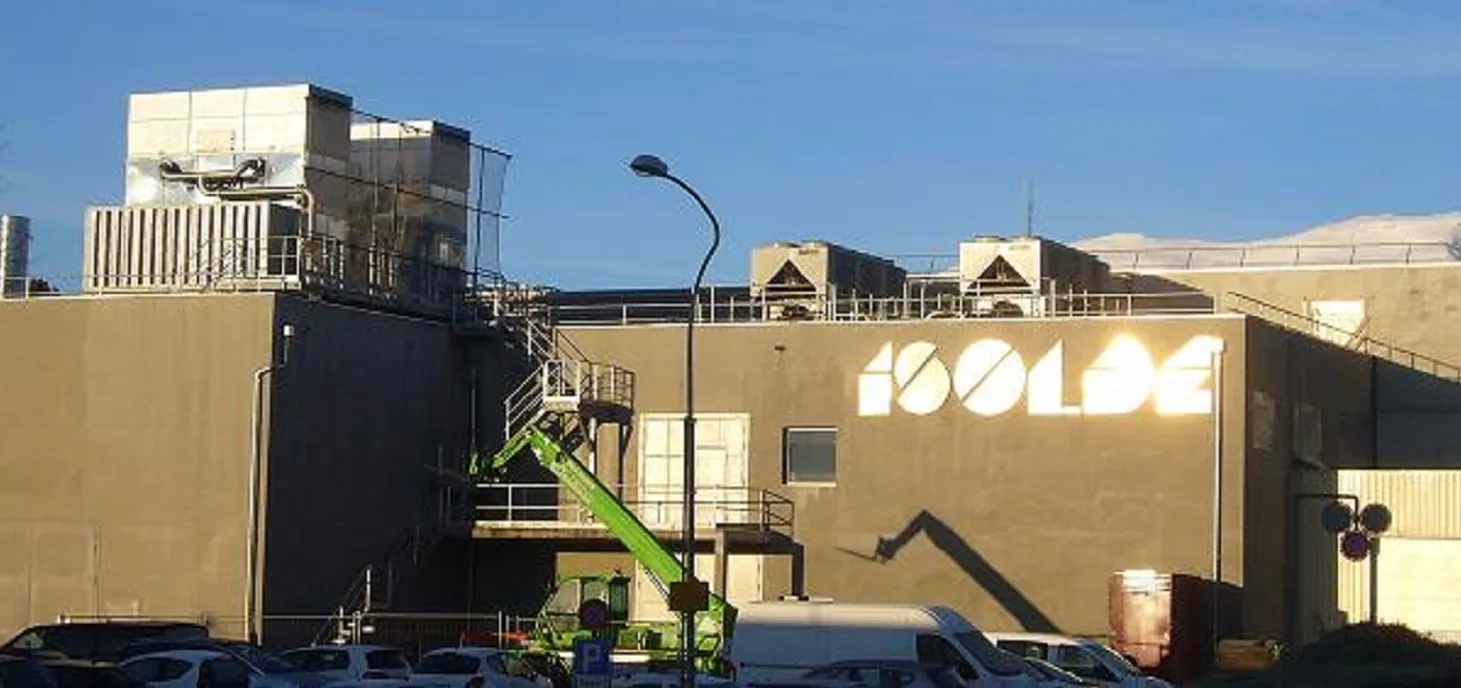
The many faces of ISOLDE
The many faces of ISOLDE You will stand across the street from the ISOLDE facility, when visiting CERN’s medical center, fire fighters, raw materials store, transport teams, or goods reception service. Located centrally at the Meyrin site (https://videos.cern.ch/record/2243399), ISOLDE has been the longest running CERN research facility, approved in 1964, connected to the synchrocyclotron (SC)
-
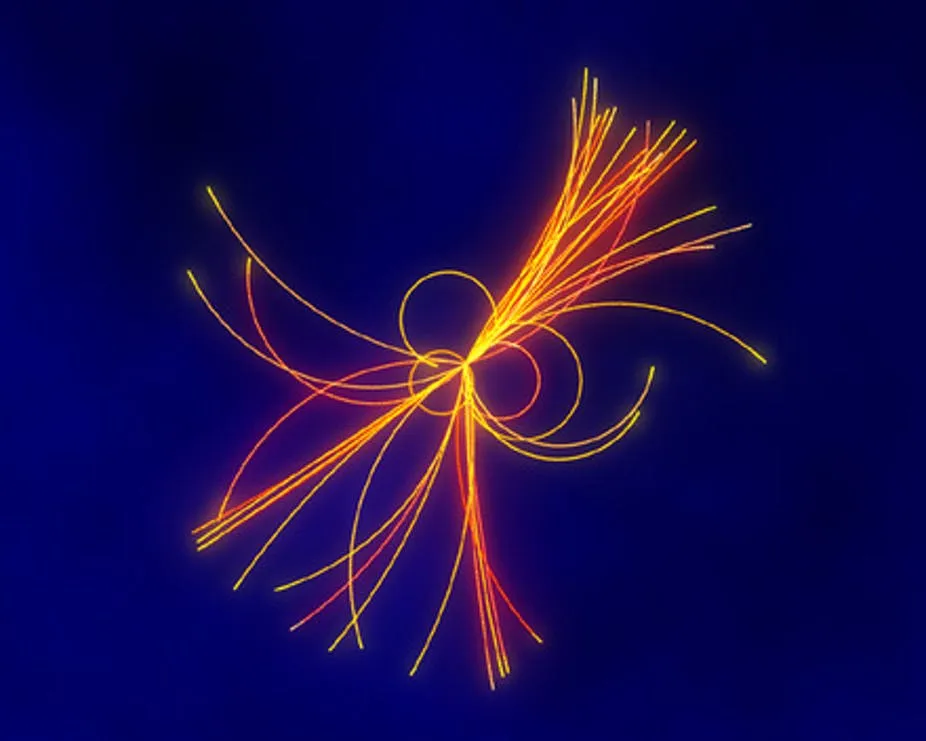
Higgs boson and the quest for new physics
Higgs boson and the quest for new physics The discovery of a new particle in 2012 by the ATLAS and CMS experiments at CERN was just the beginning in understanding the properties of this particle and its potential link to some of the most pressing fundamental questions in modern physics. Following its discovery, the LHC
-
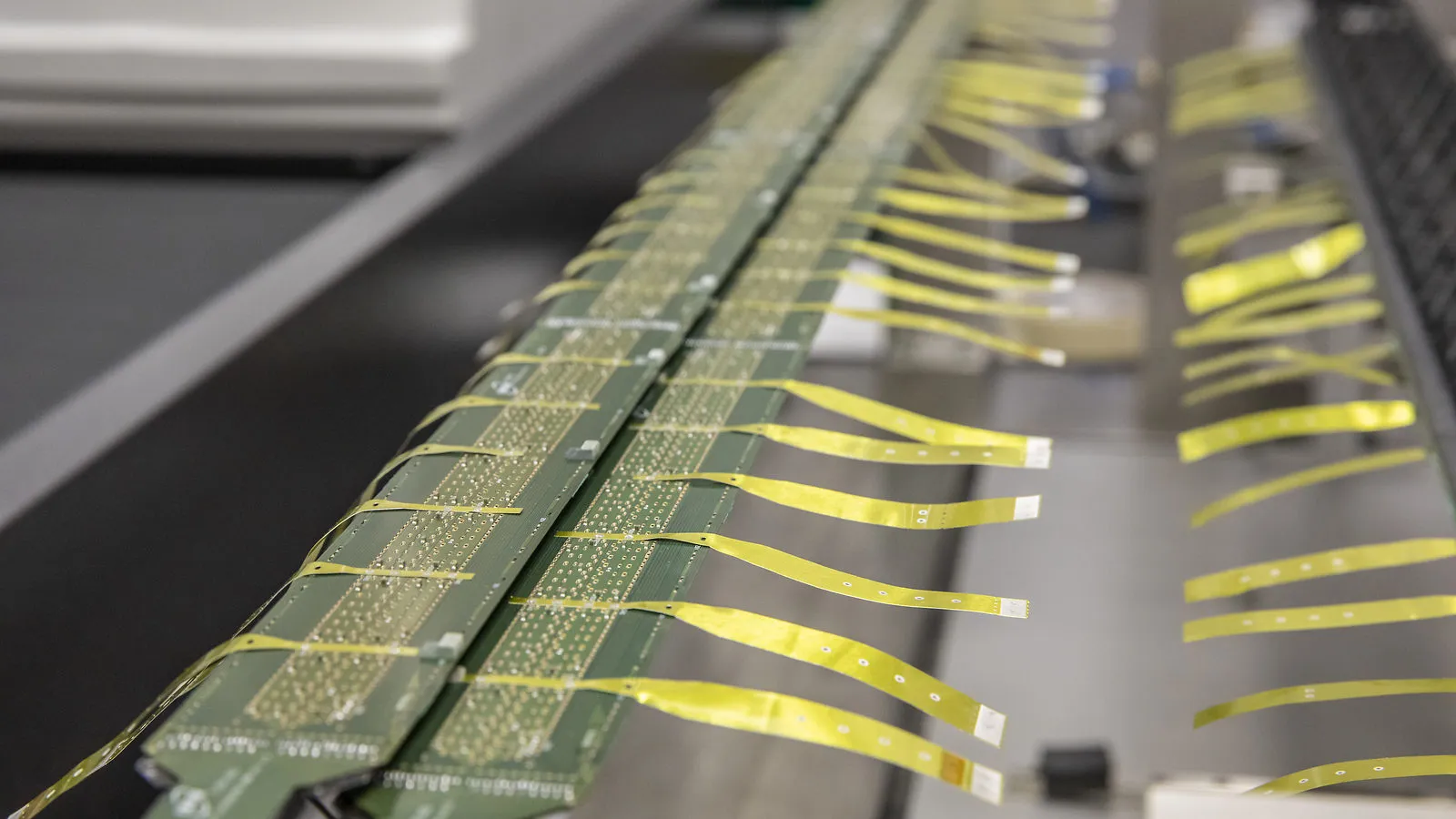
Update on the ECFA Roadmap for R&D on Detector Technologies
Update on the ECFA Roadmap for R&D on Detector Technologies It was reported in the previous edition of the EP Newsletter (1) that the European Strategy for Particle Physics Update (EPPSU (2) recommended that “Organised by ECFA, a roadmap should be developed by the community to balance the detector R&D efforts in Europe, taking into
-

Google Summer of Code brings Students to HEP Software Projects
Google Summer of Code brings Students to HEP Software Projects Google Summer of Code is a programme that brings together students wanting to code for Open Source software projects and mentors who can introduce them to exciting projects and the full software development cycle. As a major supporter of Open Source software the EP-SFT group
-

System-on-Chip in Particle Physics Experiments
System-on-Chip in Particle Physics Experiments Many experiments in particle physics use custom-built electronics boards in order to perform event triggering and data readout. For many years now, those electronics boards have been using Field-Programmable Gate Arrays (FPGAs) for processing data. An FPGA is a type of integrated circuit that is reconfigurable and that provides fast
-
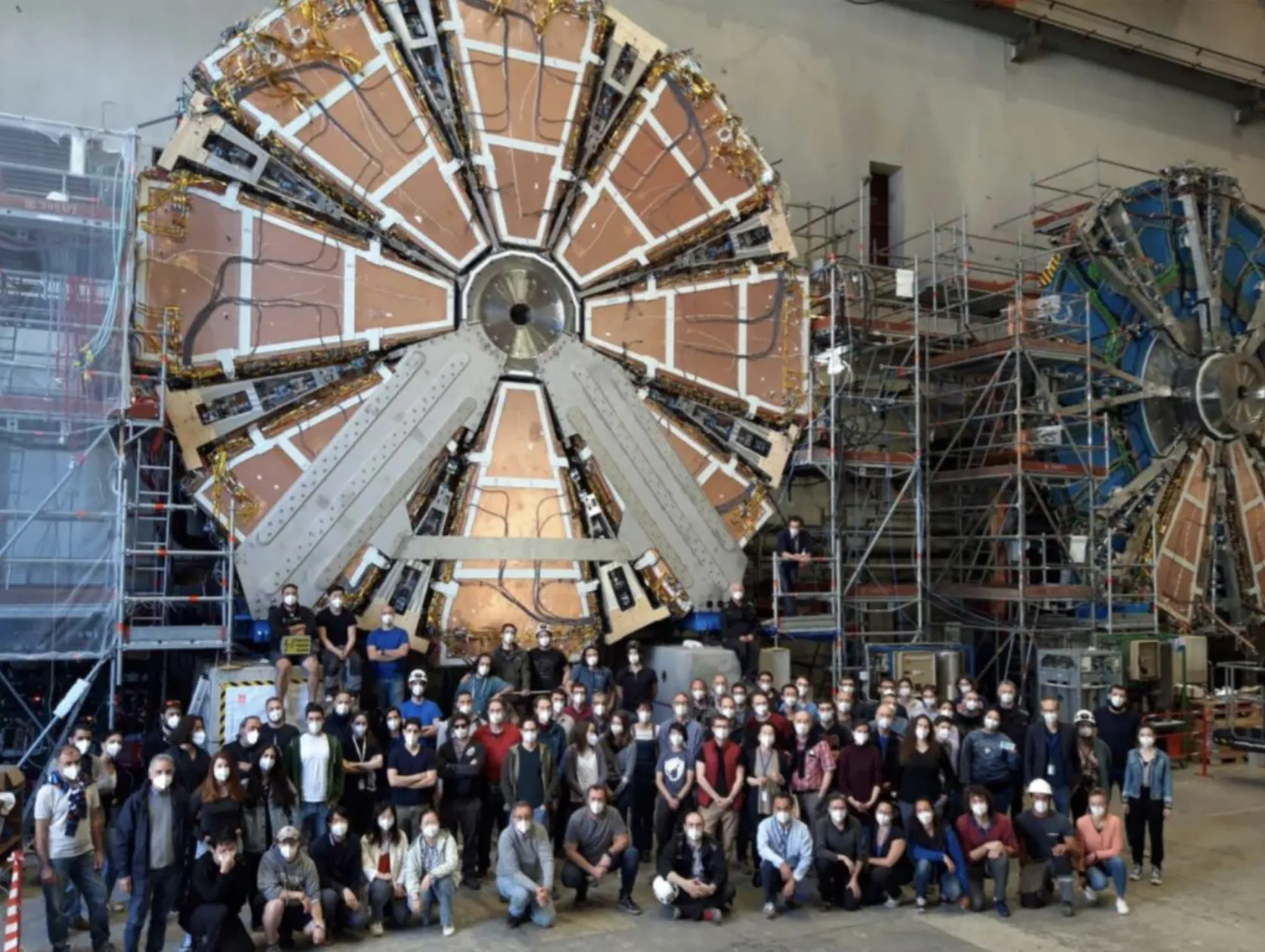
ATLAS New Small Wheel upgrade advances
ATLAS New Small Wheel upgrade advances Group photo after the installation of the last sector of NSW-A. On the right is NSW-C with the first three sectors installed at the time. The New Small Wheel (NSW) upgrade is an ambitious project that aims to allow, along with other upgrade projects, to track and record data
-
Successful installation of the CMS Pixel Tracker
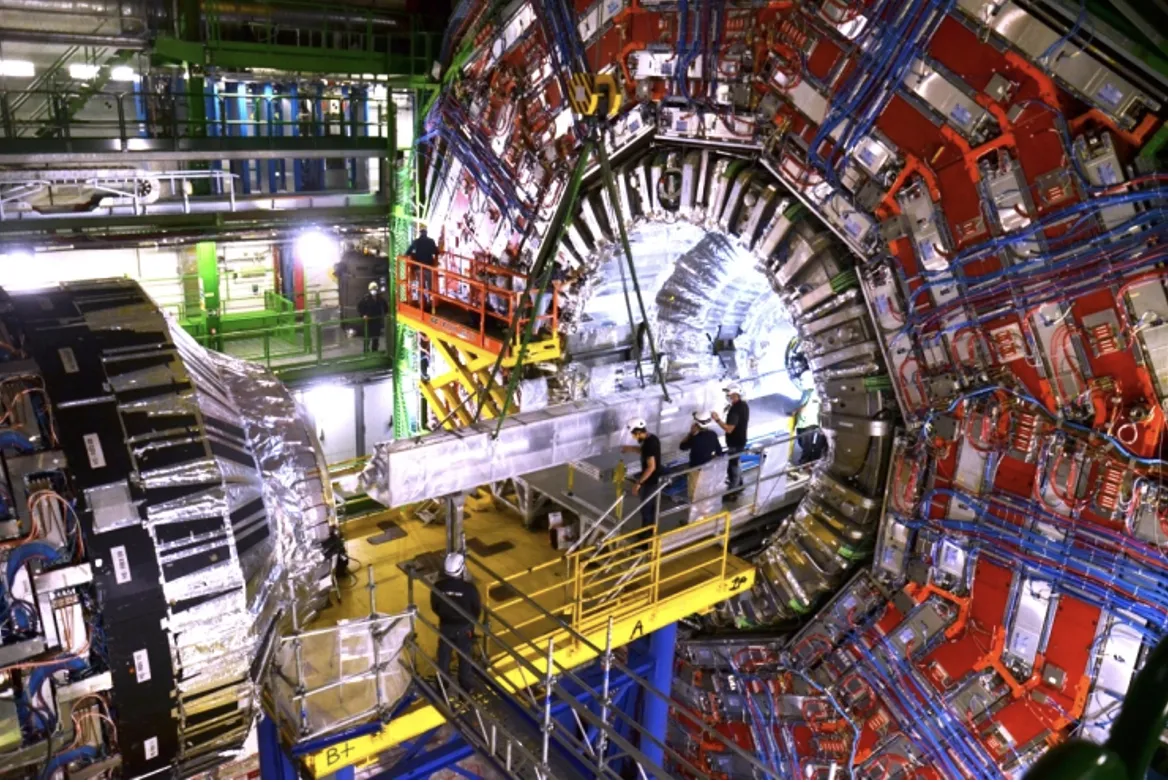
Successful installation of the CMS Pixel Tracker In early 2019 the CMS Phase-1 Pixel detector was extracted from the underground cavern after successful completion of the LHC Run 2 data taking campaign. Its sub-detectors, the Barrel Pixel (BPIX) and Forward Pixel (FPIX) detectors, were stored cool and dry in a clean room facility on the
-
Cooling a particle from a trap away
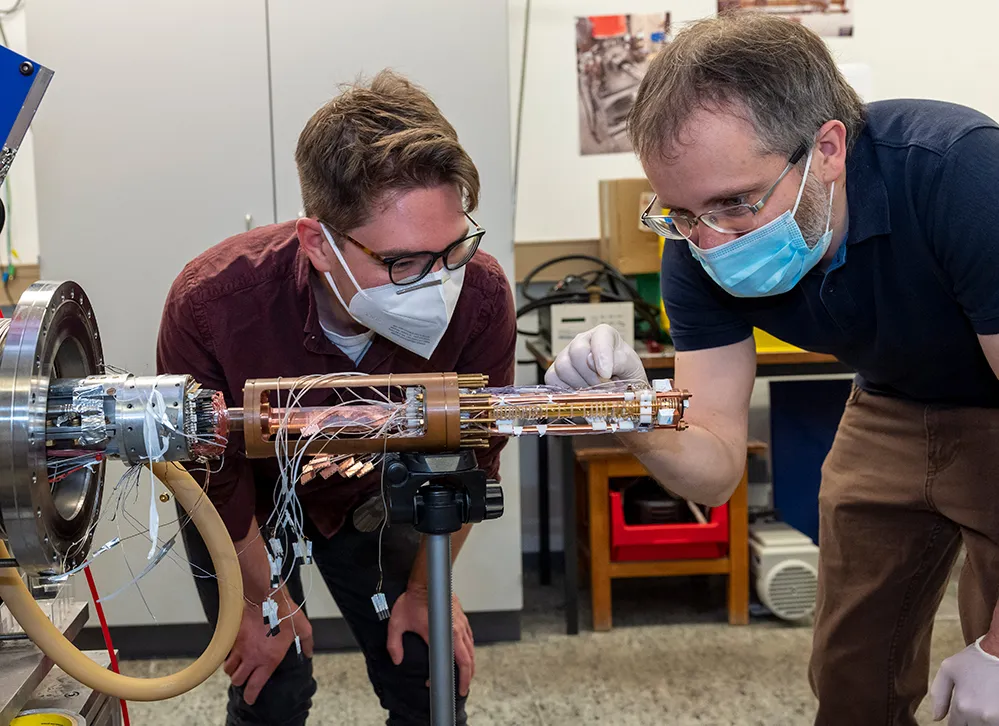
Cooling a particle from a trap away The BASE experiment, located at CERN’s Antiproton Deccelerator (AD) performs some of the most precise measurements with antimatter in the world – namely measuring the magnetic moment and charge-to-mass ratio of a single trapped antiproton. With these measurements, BASE, along with other experiments at the AD, is attempting
-
Installation of the critical first half of the LHCb SciFi detector progresses
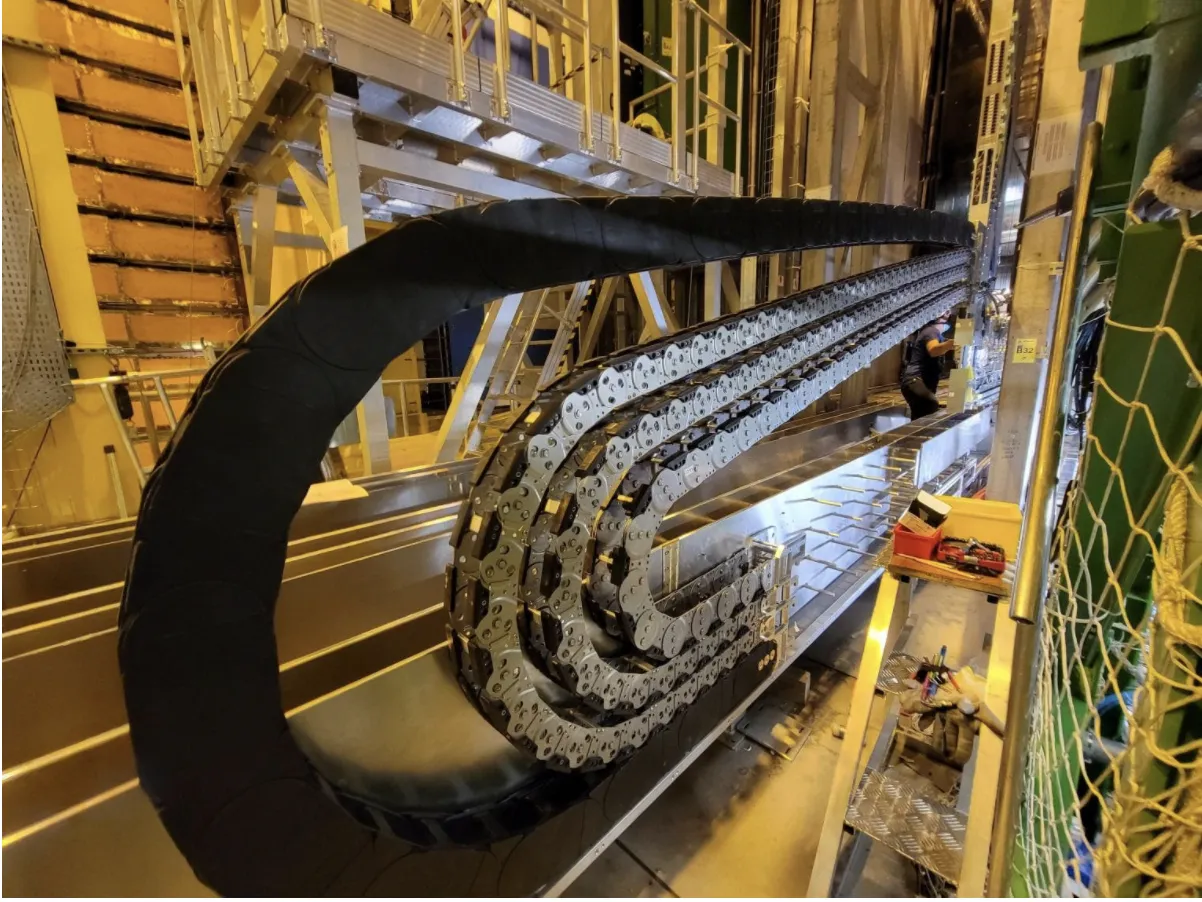
Installation of the critical first half of the LHCb SciFi detector progresses The LHCb SciFi tracker is the replacement of the Outer Tracker (based on gas straw tubes) and the Inner Tracker (Silicon microstrips) by a single detector technology (see also a previous EP newsletter article and a CERN Courier article). The detector consists of
-
The new ALICE Fast Interaction Trigger
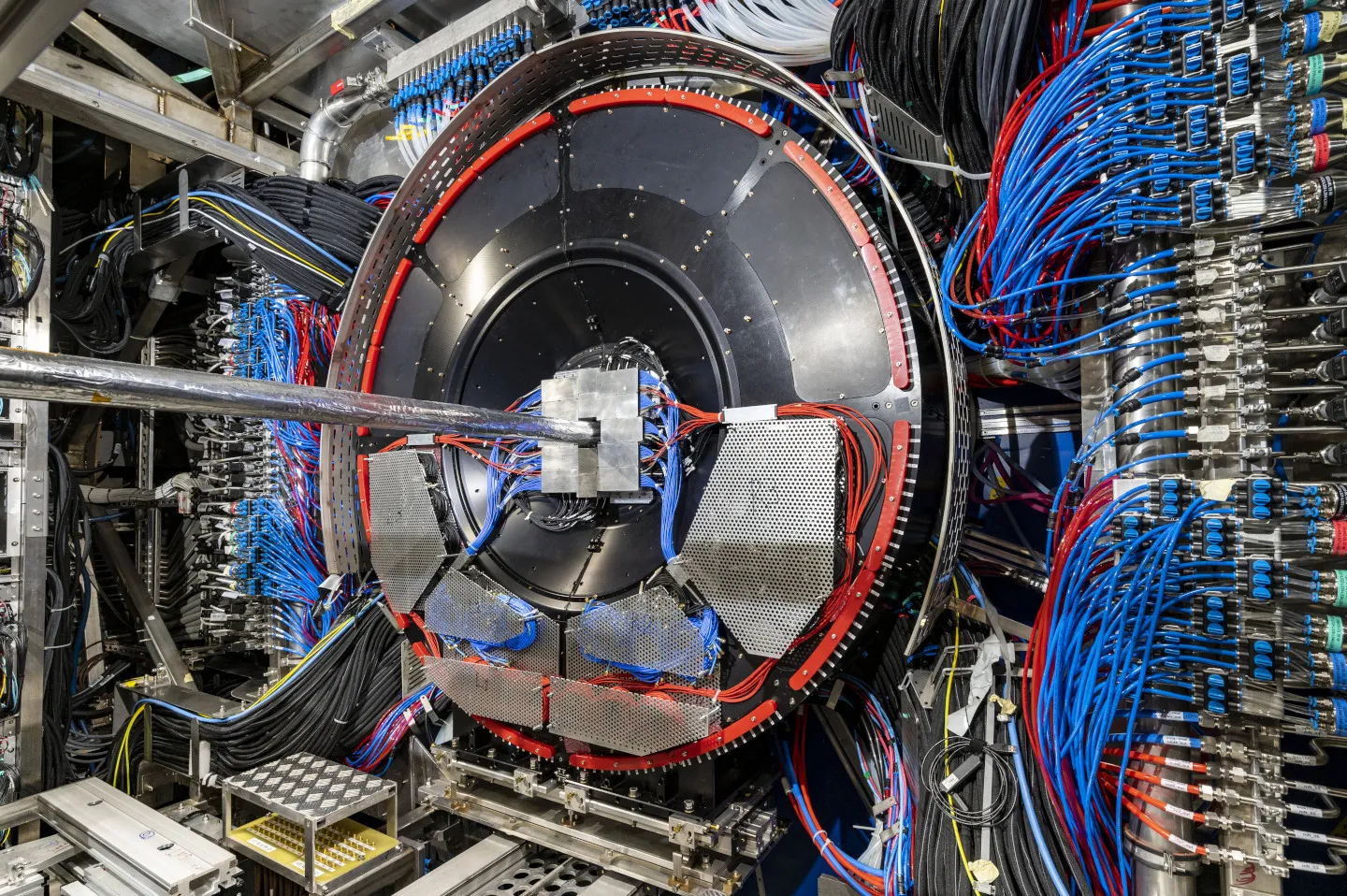
The new ALICE Fast Interaction Trigger To reach Run 3 physics goals, ALICE (A Large Ion Collider Experiment) [1] must collect all minimum-bias data for an interaction rate (i.e., number of collisions each second) of 50 kHz for Pb–Pb and up to 1 MHz for pp collisions. This is two orders of magnitude greater than