
Tag: DT
-
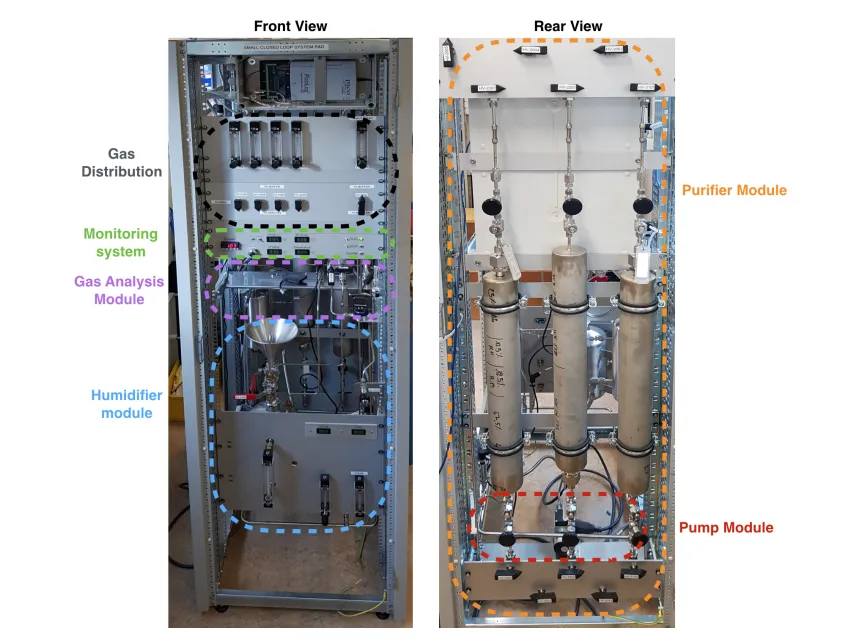
A portable gas system for particle detectors.
A portable gas system for particle detectors. Today, about 30 gas systems are used to deliver the right gas mixture to the corresponding gaseous detectors at the LHC experiments. The detector gas mixture is the sensitive medium where the charge multiplication produces the signal that is then recorded and analysed. The correct and stable gas
-
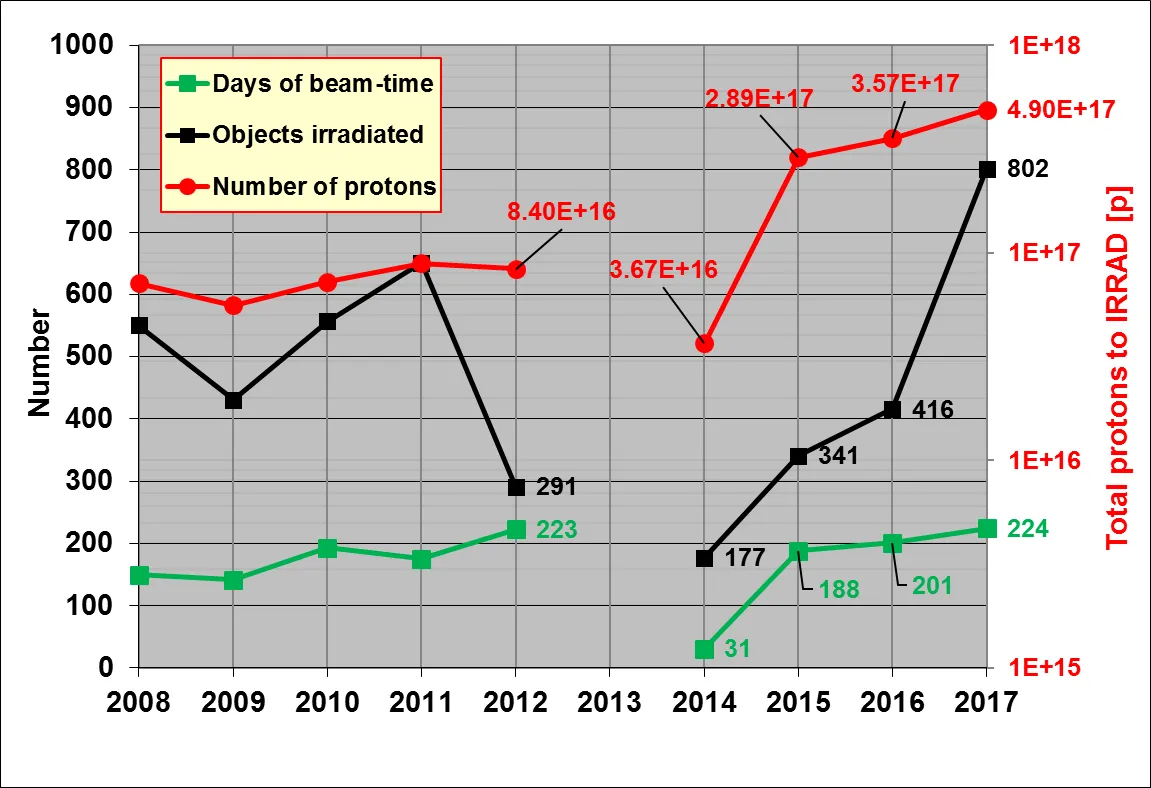
An exceptional year for the EP-DT proton irradiation facility IRRAD
An exceptional year for the EP-DT proton irradiation facility IRRAD The CERN proton irradiation facility (IRRAD) at the PS East Area has been designed and built during LS1 to cope with the increasing need for irradiation experiments of the EP experimental community, working for the High-Luminosity upgrade of the LHC and beyond. This new facility
-
RADECS 2017 meeting in Geneva
RADECS 2017 meeting in Geneva RADECS (RADiation Effects on Components and Systems) is the yearly European conference gathering world-class scientists in the field of radiation effects in electronics devices and systems. This year the conference has been organised by the partnership between CERN and CNES, the French Space Agency, and has taken place on October
-
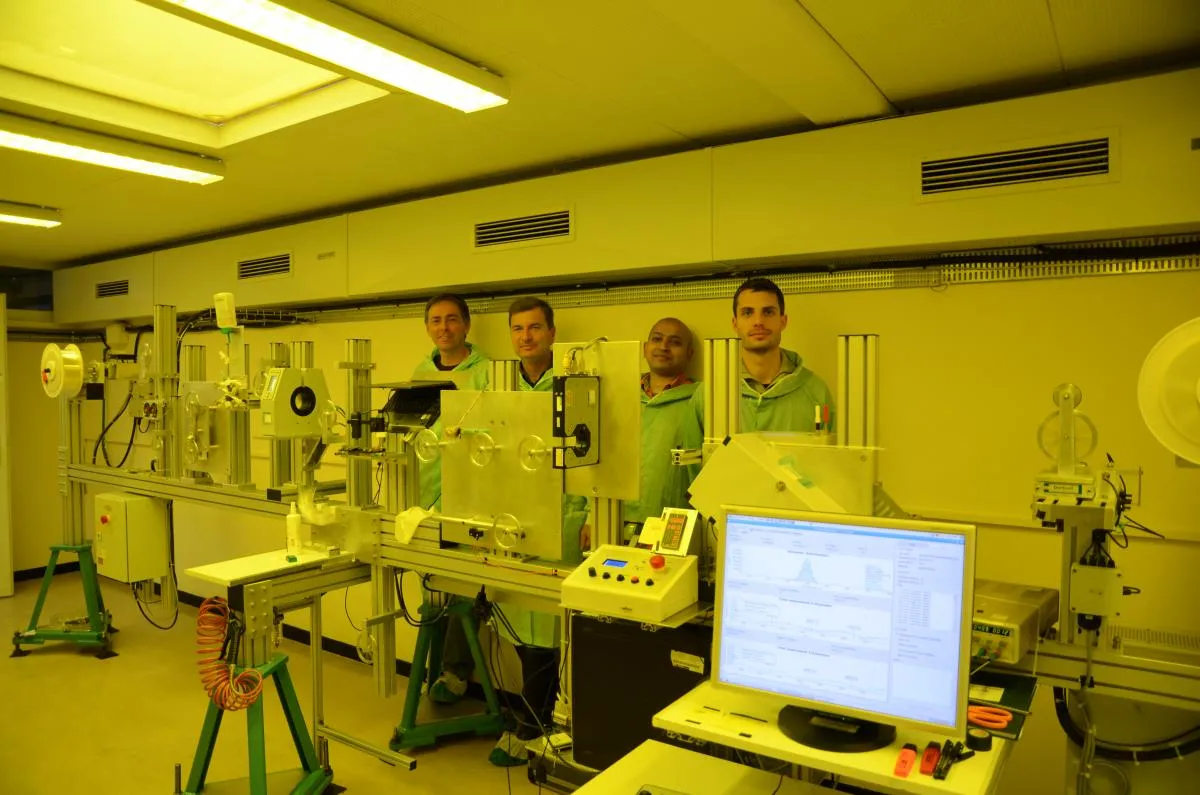
Scintillation light at the end of the tunnel
Scintillation light at the end of the tunnel The LHC Long Shutdown 2 (LS2) is approaching in giant steps and with it the date for the installation of the LHCb upgrade detectors. A large SciFi tracker will replace the current downstream trackers SciFi stands for scintillating fibre and means that the fibres will produce tiny
-
Upgrade of the Magnet Safety System for Experimental Magnets
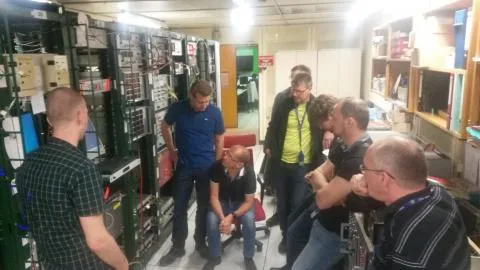
Upgrade of the Magnet Safety System for Experimental Magnets The Magnet Safety System (MSS) is a critical system that ensures the safety of experimental magnets, both warm and superconducting. It was developed within EP-DT for the LHC experiments, starting at the end of the 90’s, in the framework of the overall Magnets Control Project (MCP).
-
Superconducting Magnets for Particle Detectors
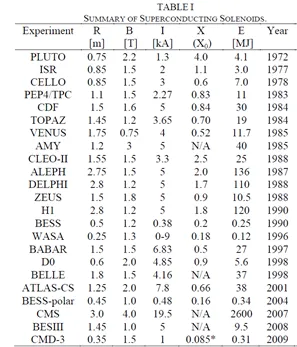
Superconducting Magnets for Particle Detectors BROKEN IMAGE NOT MOVED (drupal url : https://ep-news.web.cern.ch//content/superconducting-magnets-particle-detectors) Experimental particle physics at the energy frontier has been performed with colliding beam accelerators and particle detectors. Superconducting magnets for these detectors and for physics experiments including astroparticle physics have much advanced in the past years based on advancements in superconductivity. In
-
RD50: 30th Workshop on radiation hard semiconductor devices for high luminosity colliders
RD50: 30th Workshop on radiation hard semiconductor devices for high luminosity colliders The RD50 collaboration “Radiation hard semiconductor devices for high luminosity colliders” is working on the development of radiation-tolerant silicon sensors for the detectors of the HL-LHC (High Luminosity-LHC) experiments and started to evaluate challenges arising from radiation levels and technology demands anticipated for
-
RD53: a large scale demonstrator pixel chip for the phase 2 upgrades of ATLAS and CMS
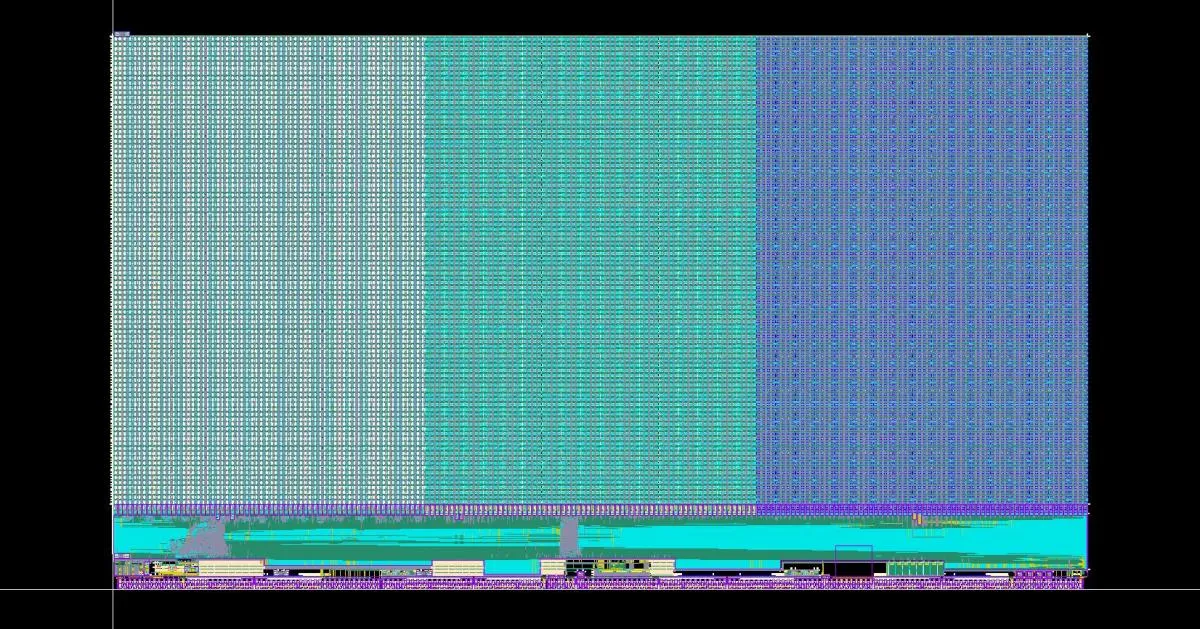
RD53: a large scale demonstrator pixel chip for the phase 2 upgrades of ATLAS and CMS The RD53 collaboration presented the RD53A large scale pixel chip demonstrator in 65nm CMOS technology as a vital milestone to make viable pixel detectors for the ATLAS and CMS phase 2 upgrades. The RD53 collaboration has during the last
-
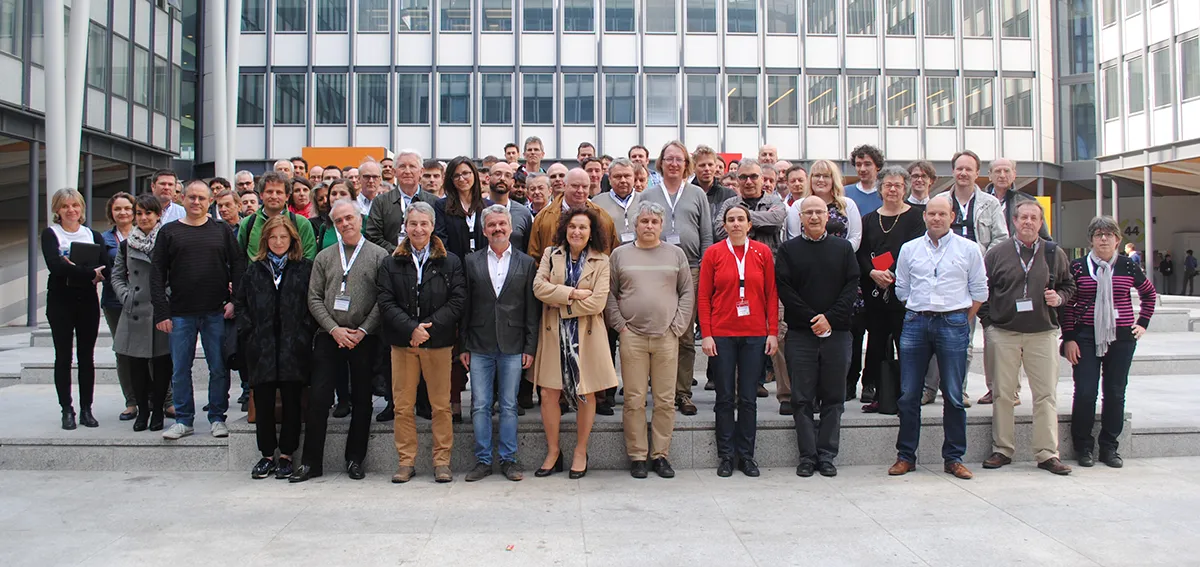
AIDA-2020 spearheads European detector R&D
AIDA-2020 spearheads European detector R&D Detectors are what makes particle physics an experimental science. Pushing detector technologies and facilities beyond the frontiers of scientific innovation is critical in advancing high-energy physics. As such, current detectors must be improved and upgraded, whilst new technology, concepts and applications for future detectors need to be developed. The AIDA-2020
-
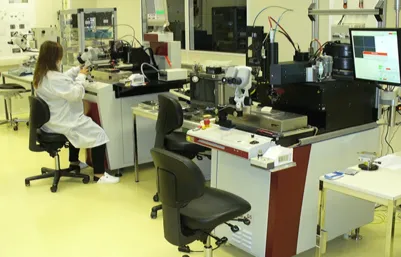
An amazing year for the DT group
An amazing year for the DT group The DT group, provides centralized resources and expertise in terms of personnel and facilities, for the development of future detector technologies, R&D and contributes to detector construction projects. Thank to the vast range of activities, infrastructure, expertise, and long-standing collaborations with CERN experiments 2016 has been an amazing