
Tag: LHCb
-
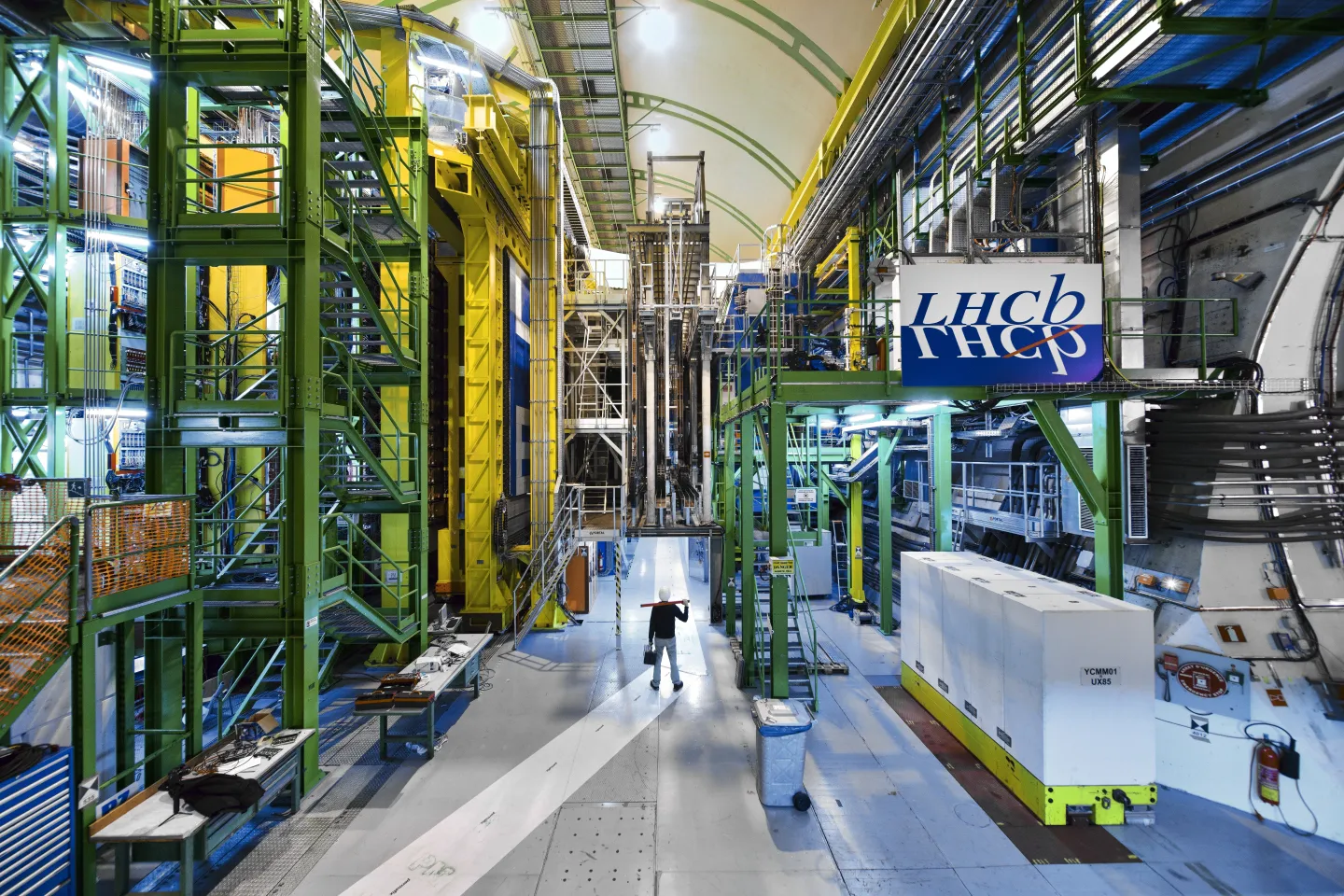
Scientists Observe a New Way for Heavy Mesons to Decay
Scientists Observe a New Way for Heavy Mesons to Decay Researchers working on the LHCb experiment at CERN have achieved a breakthrough in understanding a subatomic particle called the Bc+ meson. They have observed, for the first time, a specific way this meson decays, providing valuable insights into the fundamental forces that govern our universe.
-
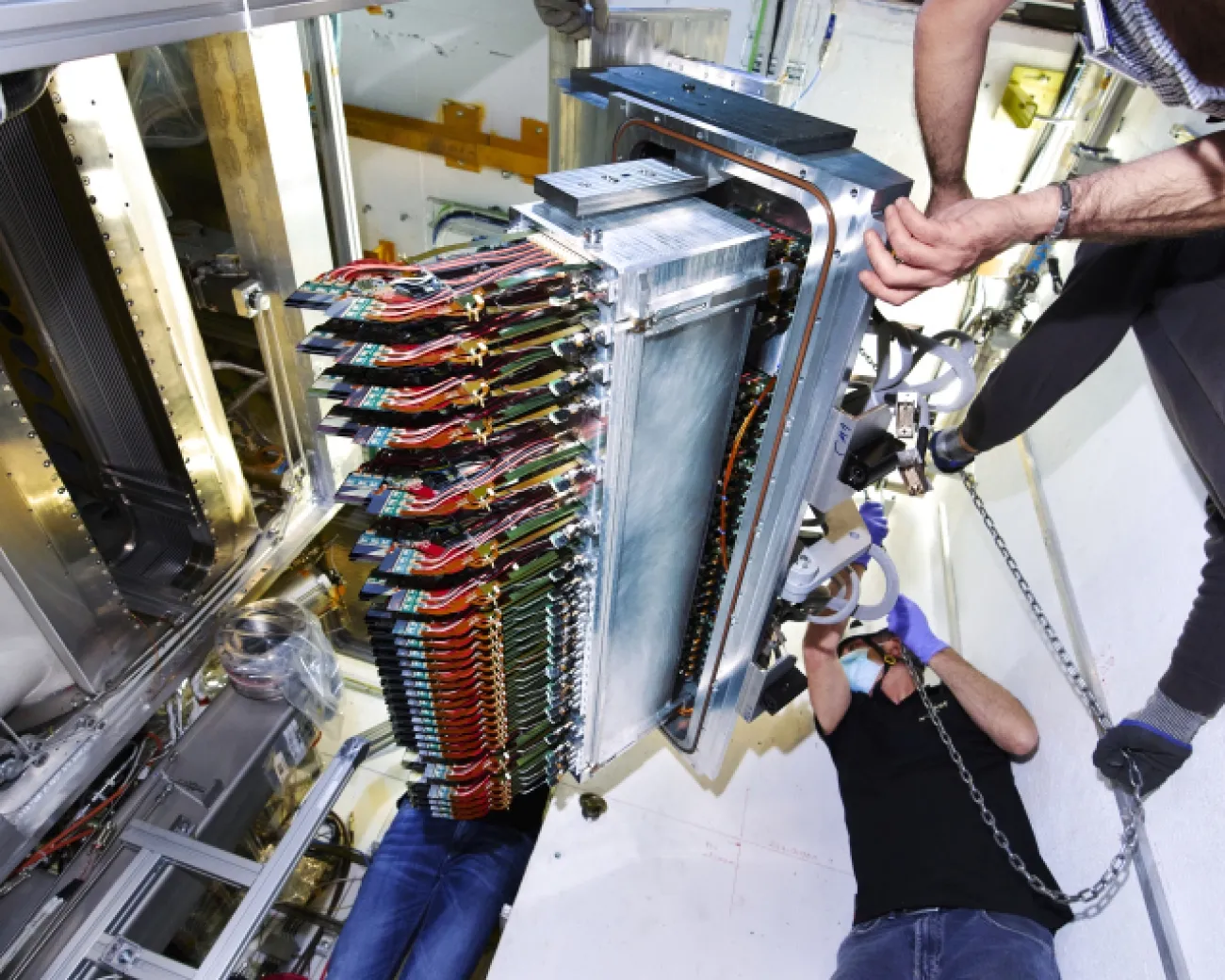
LHCb’s new VELO preparing to spring into action
LHCb's new VELO preparing to spring into action The replacement of the previous VErtex LOcator (VELO) detector with a new high-speed hybrid pixel detector was one of the key milestones for the LHCb collaboration in 2022 (see also previous EP newsletter article). The upgrade was part of an R&D programme that allows the LHCb detector
-
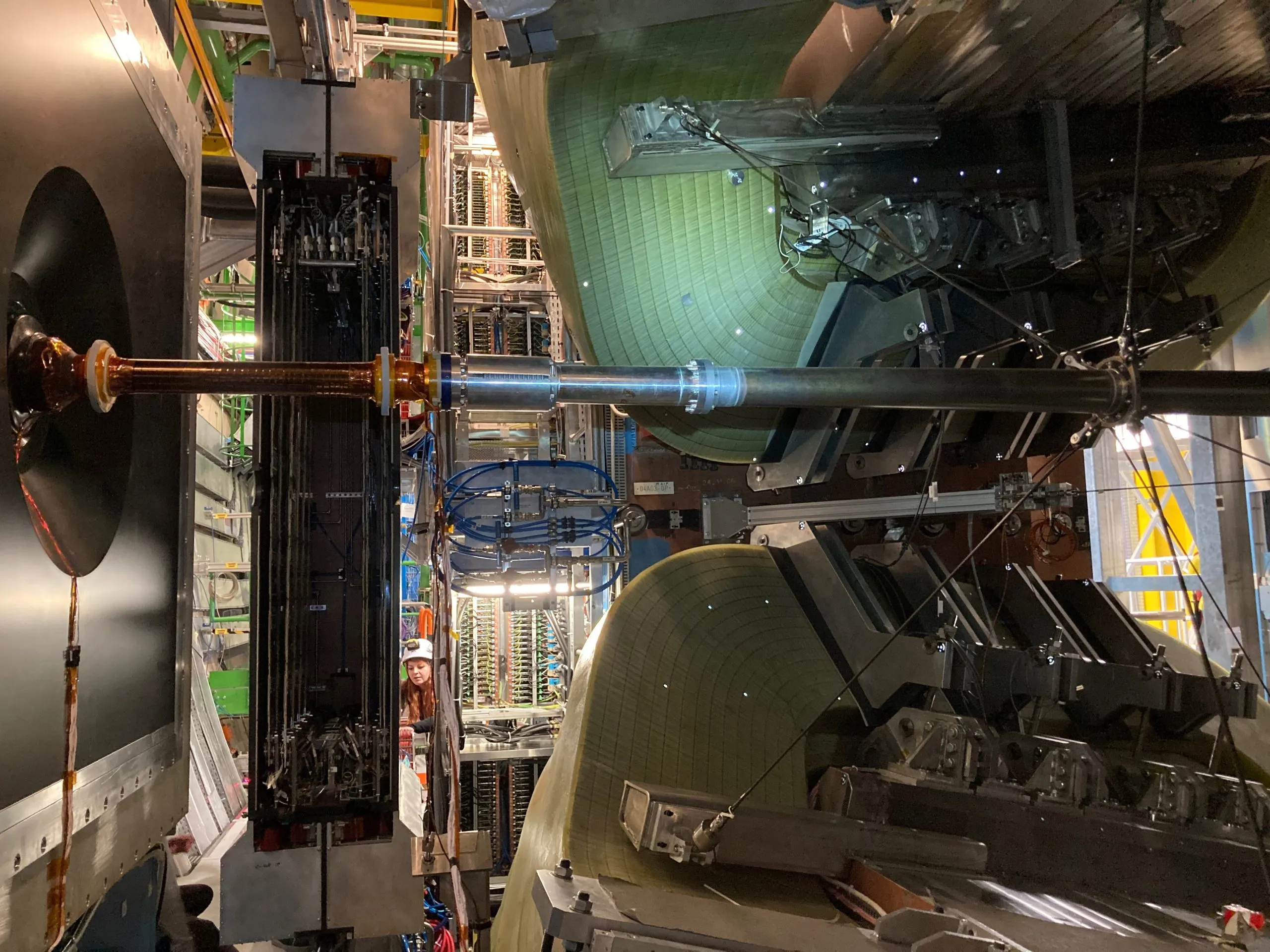
Upstream Tracker closing completes installation of the LHCb Upgrade detector
Upstream Tracker closing completes installation of the LHCb Upgrade detector The UT sub-detector is located in front of the LHCb dipole magnet. The images included in this news were taken during the UT closing process around the LHC beam pipe. The UT plays an essential role in achieving the desired processing speed in the innovative
-
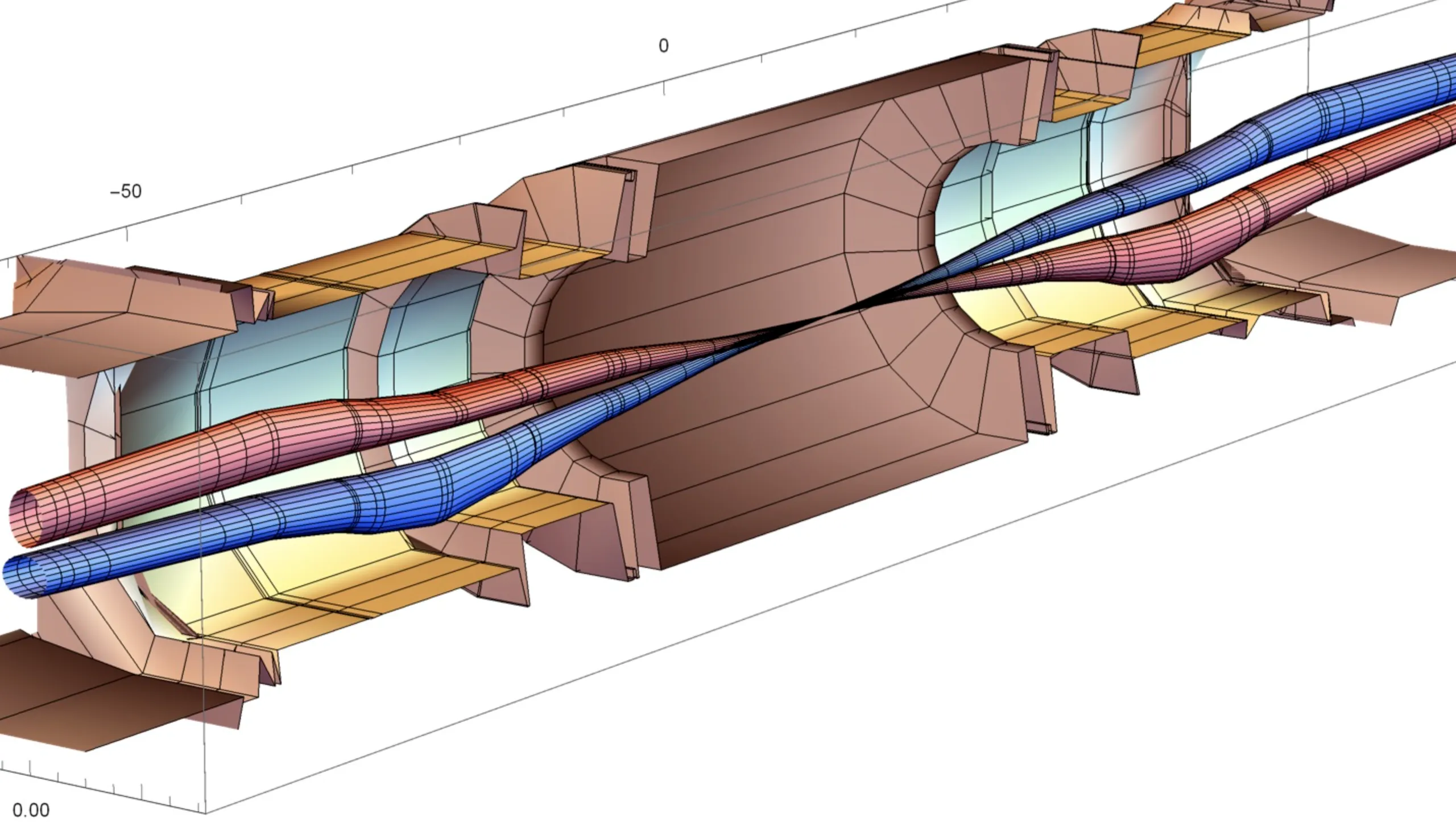
Ending the 2023 LHC run with heavy-ion collisions
Ending the 2023 LHC run with heavy-ion collisions The LHC schedule for 2023 has been revised following the emergence of a leak in mid-July. The decision was to stop the regular proton running this year and focus on the heavy ion physics that was already scheduled for the year-end. This was complemented by relatively brief
-
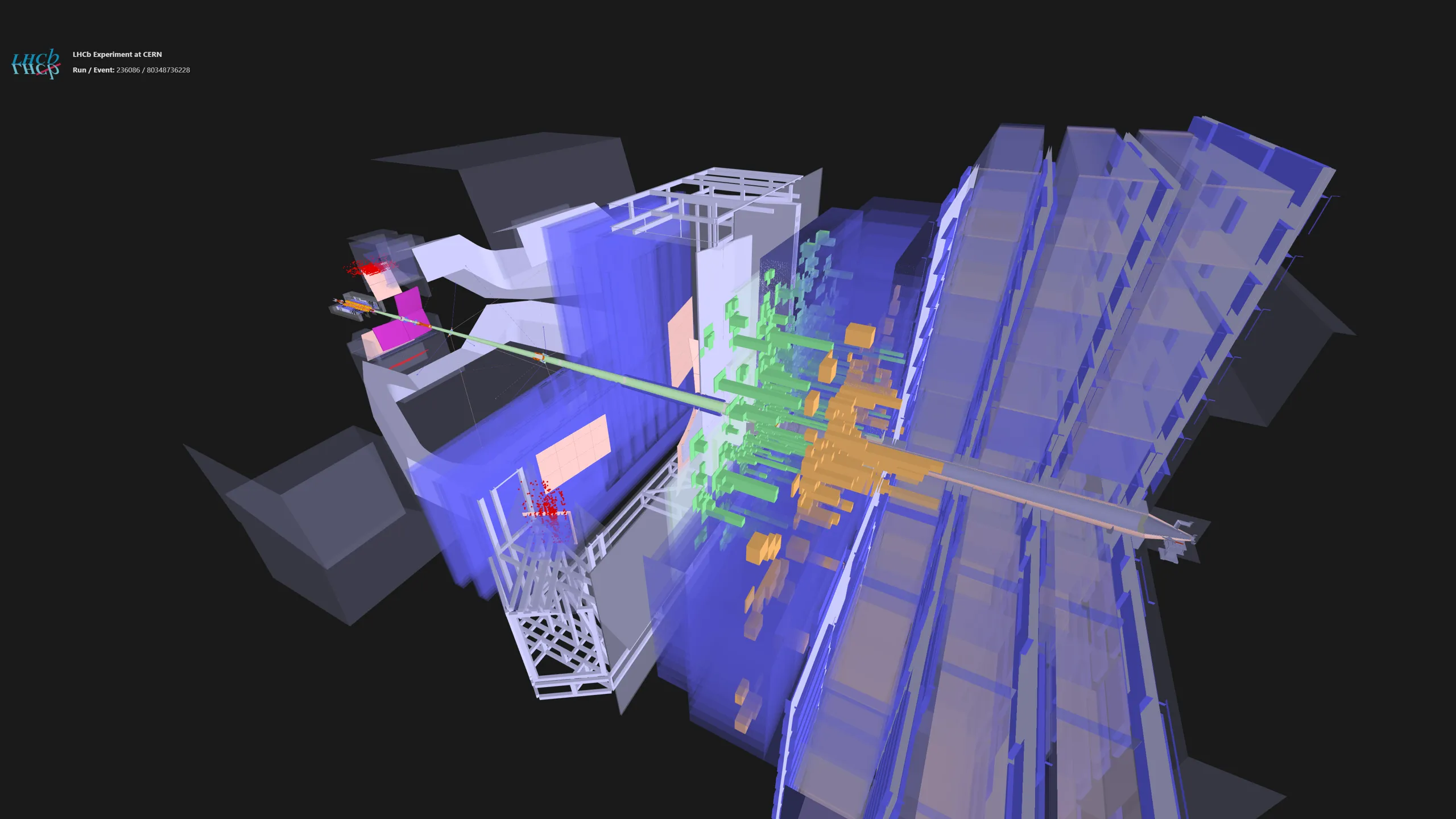
LHCb physics looks forward to Run 3
LHCb physics looks forward to Run 3 The first high energy beams of the LHC on July 5th 2022 marked the start of the third Run of the LHC. While still harvesting and exploring in depth the physics of the first two runs, the LHCb experiment has undergone a major upgrade [1]. Ninety percent of
-
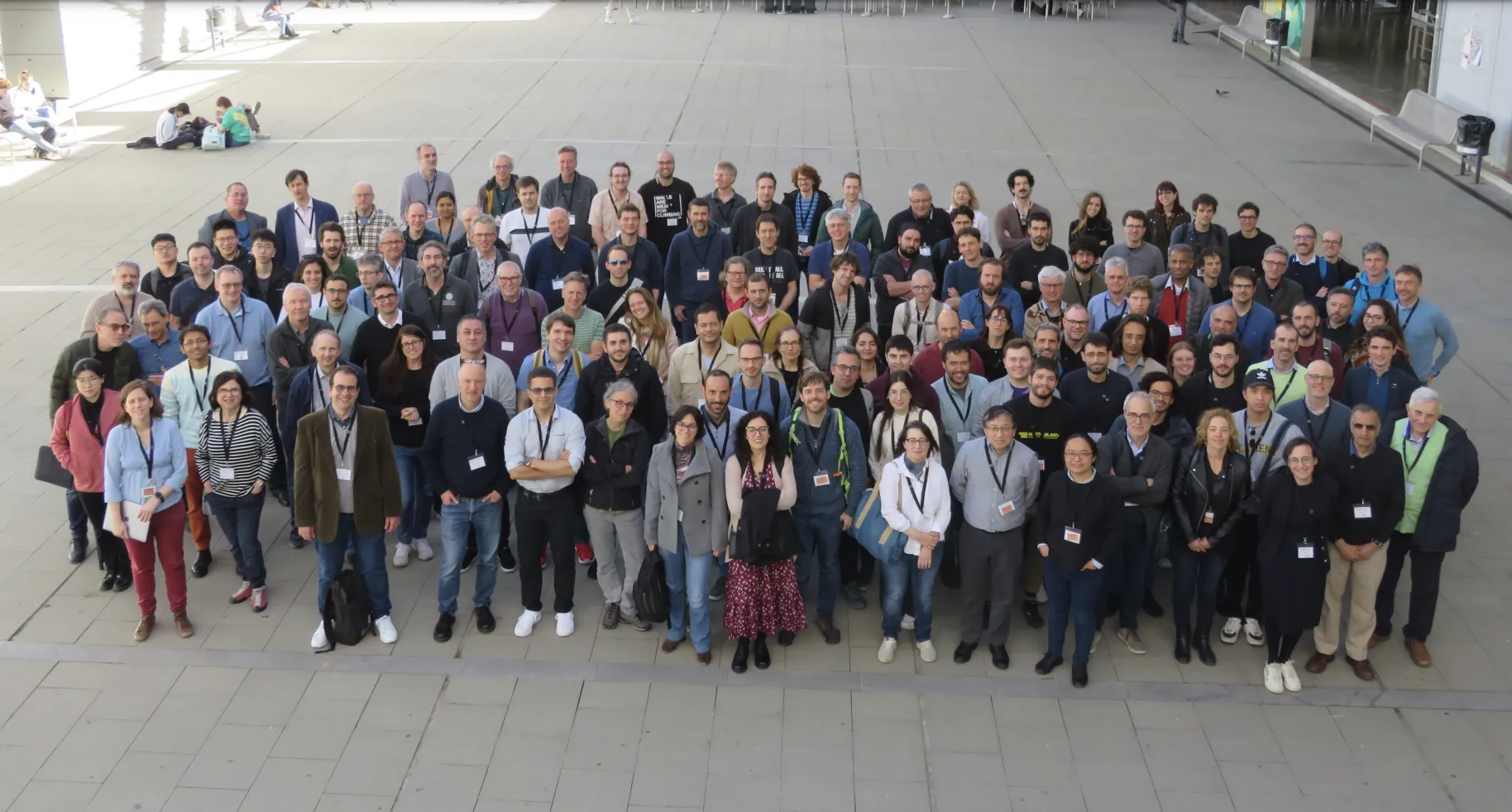
Report from the 6th Workshop on the LHCb Upgrade II
Report from the 6th Workshop on the LHCb Upgrade II From March 29 until 31, the LHCb collaboration held its 6th Upgrade II workshop in the Faculty of Physics in Barcelona with 147 participants. It was the first time the collaboration gathered in-person after the pandemic to discuss plans for the Upgrade II of the
-
LHCb’s unique approach to real-time data processing
LHCb’s unique approach to real-time data processing The LHCb collaboration is currently enhancing its unique system of data filtering, Real Time Analysis, by installing a 2nd set of Graphics Processing Units (GPUs) in the trigger system. Current technology does not allow all LHC proton-proton collision data to be stored and analyzed. A fast event selection
-
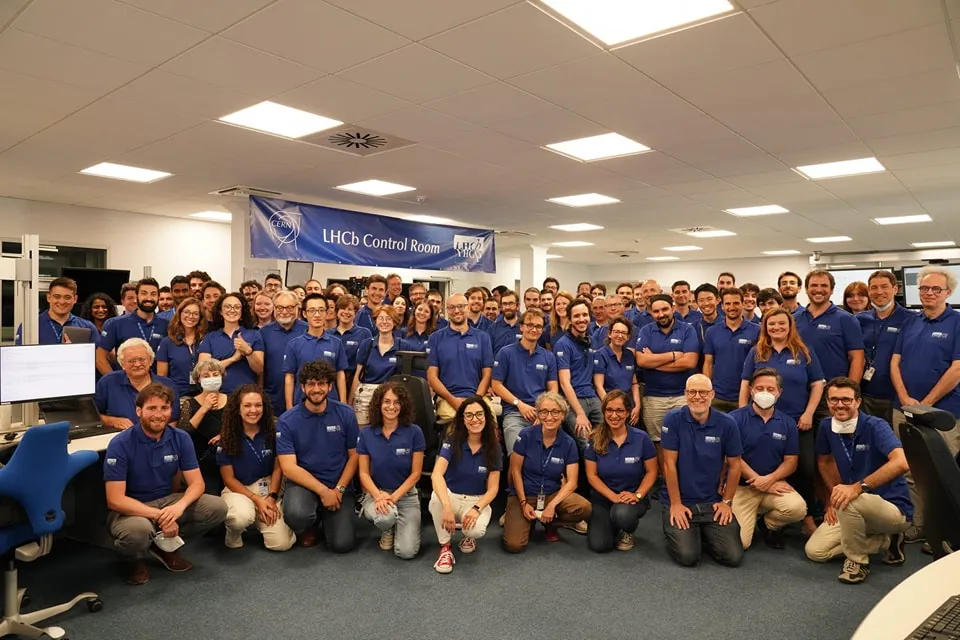
An intense commissioning year at LHCb
An intense commissioning year at LHCb The restart of data taking in 2022 after the completion of the installation during the Long Shutdown 2 at LHCb marked the first commissioning phase of its new upgraded detector. An impressive amount of work has been achieved throughout the year in the commissioning of the detector, the readout
-
LHCb VELO closes fully for the first time
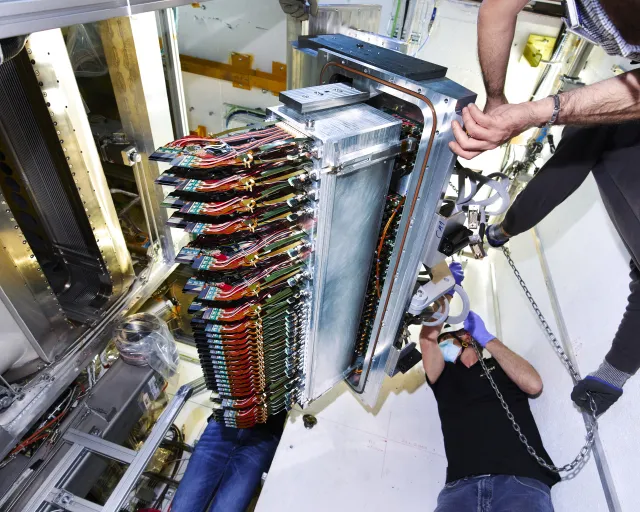
LHCb VELO closes fully for the first time At the end of October, the two halves of the new Vertex Locator (VELO) approached the LHC proton-proton collision point in a process referred to as VELO closing – following the installation of the upgraded detector. Replacing the previous VErtex LOcator (VELO) detector has been one of
-
Scrutinising cosmic antimatter production with an innovative use of LHCb
Scrutinising cosmic antimatter production with an innovative use of LHCb “The real prize is finding something new out there” is one of the most famous citations by Vera Rubin, the scientist who around 1975 firstly observed the anomalous rotation curves of spiral galaxies, providing evidence for the possible existence of dark matter (DM). Since then,