
Tag: NU
-
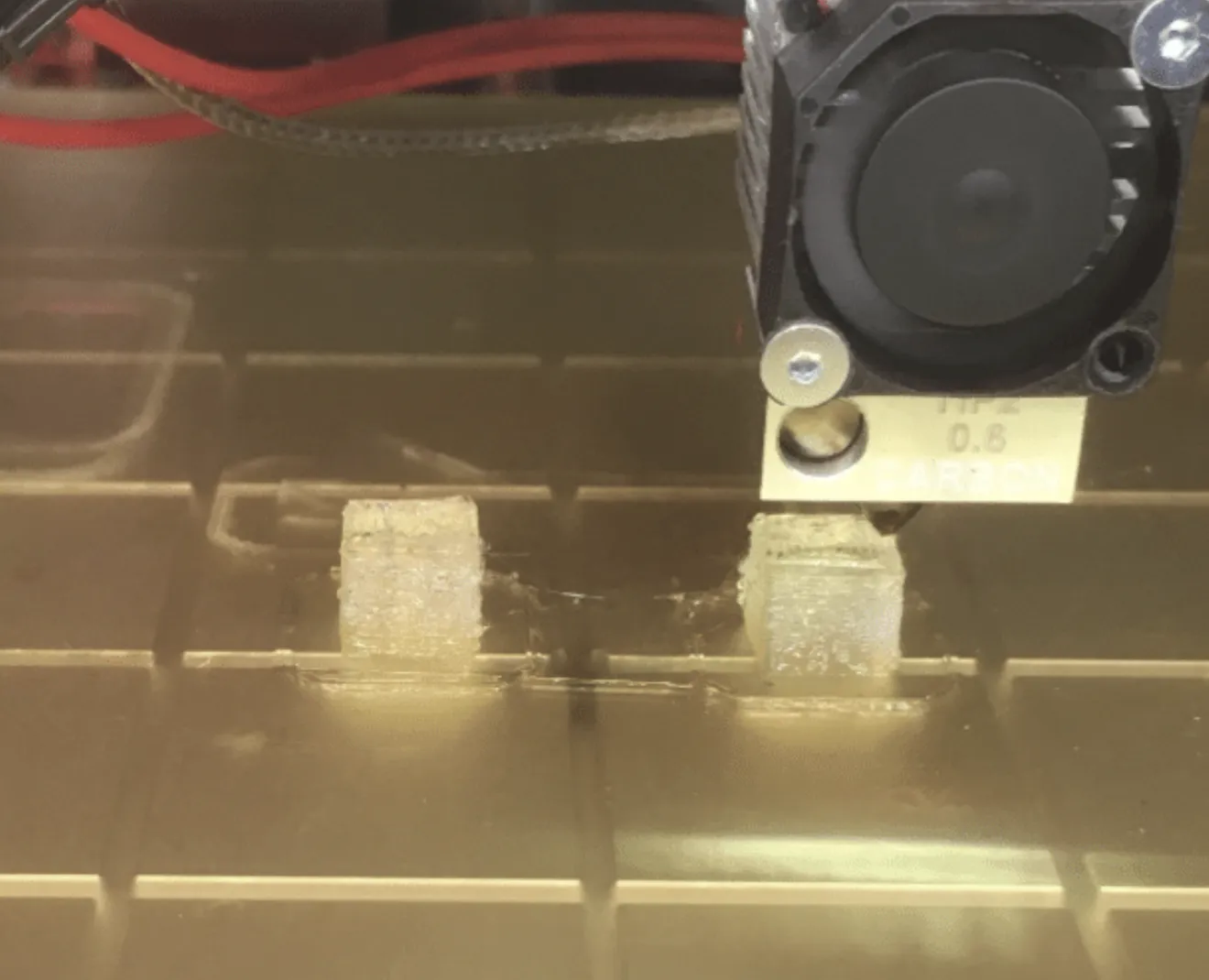
The 3D printed Detector (3DET) Project
The 3D printed Detector (3DET) Project Plastic scintillator is one of the most used active materials in high-energy physics. The “3D printed Detectors” (3DET) collaboration was formed in 2019 with the goal of investigating and developing additive manufacturing as a new production technique for future scintillator-based particle detectors. The 3DET collaboration includes research institutes and
-

Hunting for axion-like particles at neutrino detectors
Hunting for axion-like particles at neutrino detectors Although neutrinos were discovered more than 60 years ago, they are the most mysterious particles in the Standard Model (SM). While the present data collected at the neutrino experiments can explain several neutrino properties, there are still at least several unanswered fundamental questions in the neutrino sector that
-
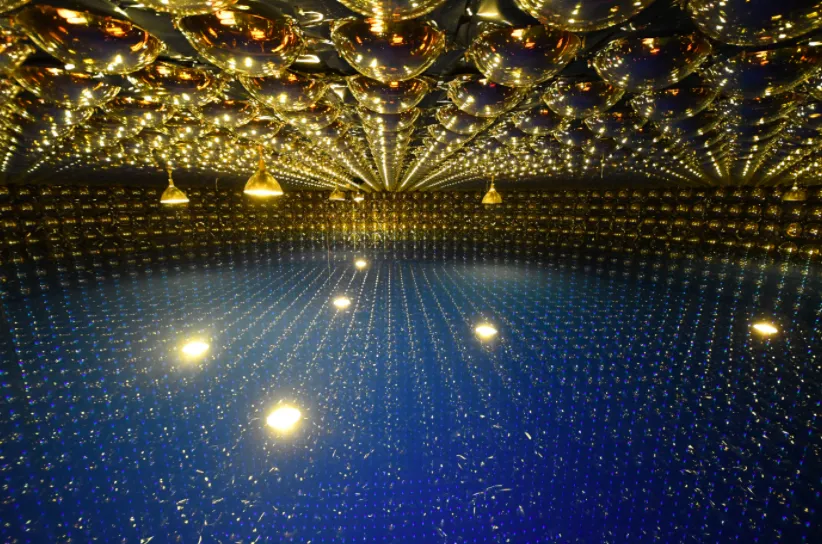
T2K Neutrino Oscillation Results
T2K Neutrino Oscillation Results The T2K collaboration studies neutrino oscillations. These oscillations arise from quantum mechanical interference caused by the fact that every neutrino of the type electron, muon, or tau is a combination of three neutrino mass states. The neutrino type is determined by the associated heavy lepton (electron, muon, or tau) in the
-
Proto-DUNE at CERN: New technologies for new discoveries
Proto-DUNE at CERN: New technologies for new discoveries Following many years of R&D work, recent results from ProtoDUNE-SP, the single-phase DUNE Far Detector prototype at the CERN Neutrino Platform, now validate the Liquid Argon Time Projection Chamber (LArTPC) technology choice for DUNE providing the necessary information for the DUNE Technical Design Report (TDR) [https://arxiv.org/abs/2002.03010] recently
-

Using 3D printing techniques for future neutrino detectors
Using 3D printing techniques for future neutrino detectors Plastic scintillator is one of the most used active materials in high-energy physics. A charged particle crossing a plastic scintillator loses part of its initial energy and produces a quantity of scintillation light that depends on its energy and type. This property allows using this technology for
-
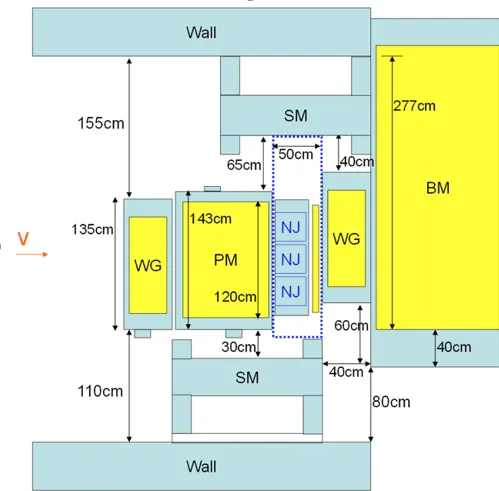
Baby MIND prepares for first physics run with WAGASCI at T2K
Baby MIND prepares for first physics run with WAGASCI at T2K Extracting ever more precise information from long-baseline neutrino oscillation experiments calls for a better understanding of neutrino production and neutrino interactions with their target detectors, through experimental programmes dedicated to neutrino cross-section measurements and validation of neutrino interaction models. The challenge is in the
-

ENUBET: a beam for the precision era of neutrino physics
ENUBET: a beam for the precision era of neutrino physics Even if neutrino oscillations were discovered more than 20 years ago, our knowledge of mixing, flavor oscillation and CP violation in the neutrino sector is still far from the precision achieved for quarks. CP violation in the quark sector was established in 1964 and the
-
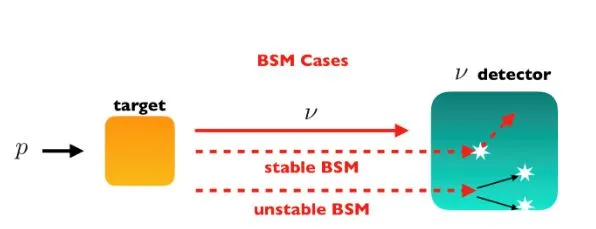
Physics from neutrino near detectors: opening a new window for BSM searches
Physics from neutrino near detectors: opening a new window for BSM searches With the advent of a new generation of neutrino experiments which leverage high-intensity neutrino beams for precision measurements, it is timely to explore the opportunity that these experiments offer for searches of beyond the standard model (BSM) physics. The realm of BSM physics
-
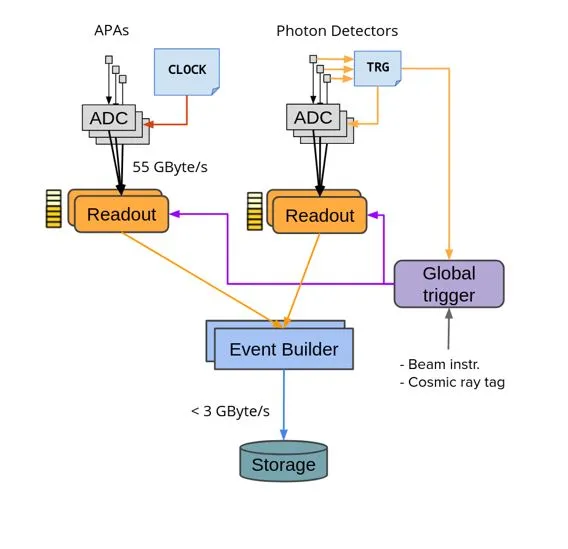
Data acquisition challenges for the ProtoDUNE-SP experiment at CERN
Data acquisition challenges for the ProtoDUNE-SP experiment at CERN The ProtoDUNE Single-Phase (SP) experiment at the Neutrino Platform at CERN (read more) is taking data after about two years of construction and commissioning. Its primary goal is to validate the design principles, construction procedures, detector technologies, and long term stability in view of DUNE (Deep
-
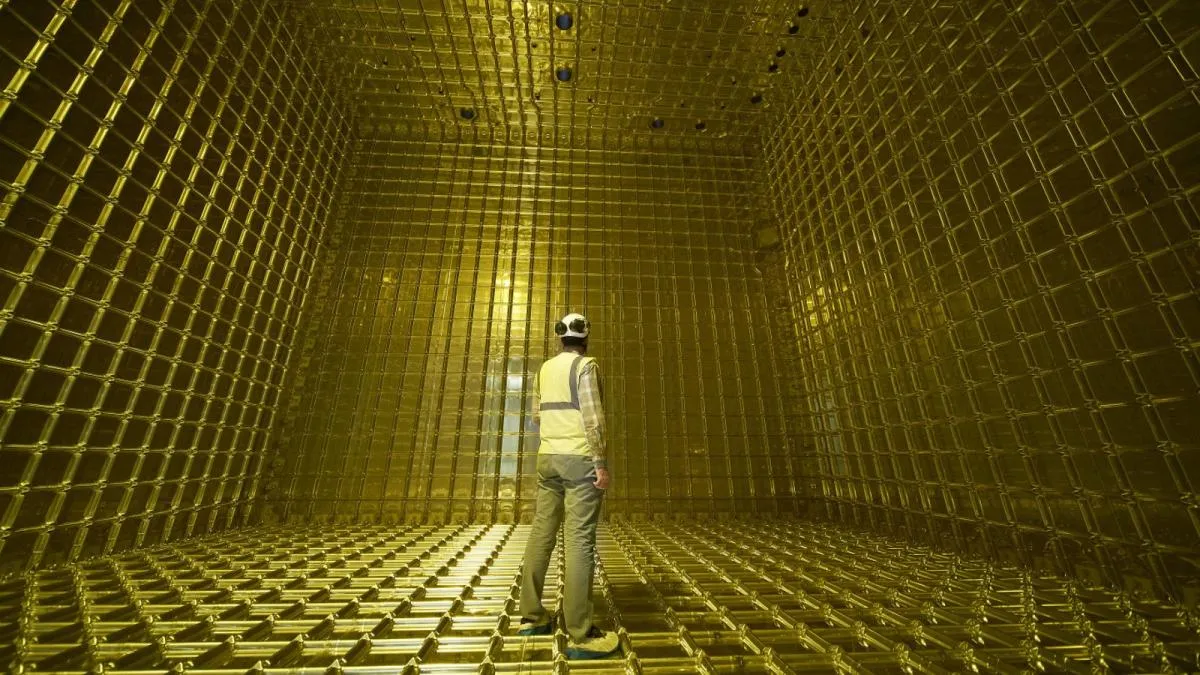
ProtoDUNE sees first particle tracks
ProtoDUNE sees first particle tracks Introduction The CERN Neutrino Platform was installed in 2014 following the recommendation of the European Strategy Group for CERN to engage in the worldwide experimental neutrino program. The platform engaged from the start in the future Deep Underground Neutrino Experiment (DUNE) in the US, which plans for its far detector
