
Tag: SFT
-
Rucio crosses the exabyte horizon
Rucio crosses the exabyte horizon When we last wrote in these pages about Rucio, ATLAS had just passed the half-exabyte mark and the community counted around thirty organisations. Six years on, a threshold that was then a distant projection has been crossed: both ATLAS and CMS, the two largest LHC experiments, now each manage more
-

New Staff Members and Fellows
New Staff Members and Fellows Maximilian Babeluk Hi, I’m Max. I recently joined the ALICE ITS3 team, where I work on sensor testing, functional verification, and in the future also chip design – particularly on MOSAIX. My main activities include testing and yield assessment across multiple integration levels (wafer probing to system tests), including data
-

ROOT Users Workshop 2025
ROOT Users Workshop 2025 ROOT is a software framework at the heart of HEP’s Software Ecosystem. It is an open source project, hosted on GitHub. Laboratories such as GSI, FNAL, CERN, as well as several universities contribute to it. Moreover, many talented and motivated individuals develop ROOT: during 2025, more than 90 distinct contributors made
-
G4HepEm: accelerated electromagnetic shower simulation for the HL–LHC
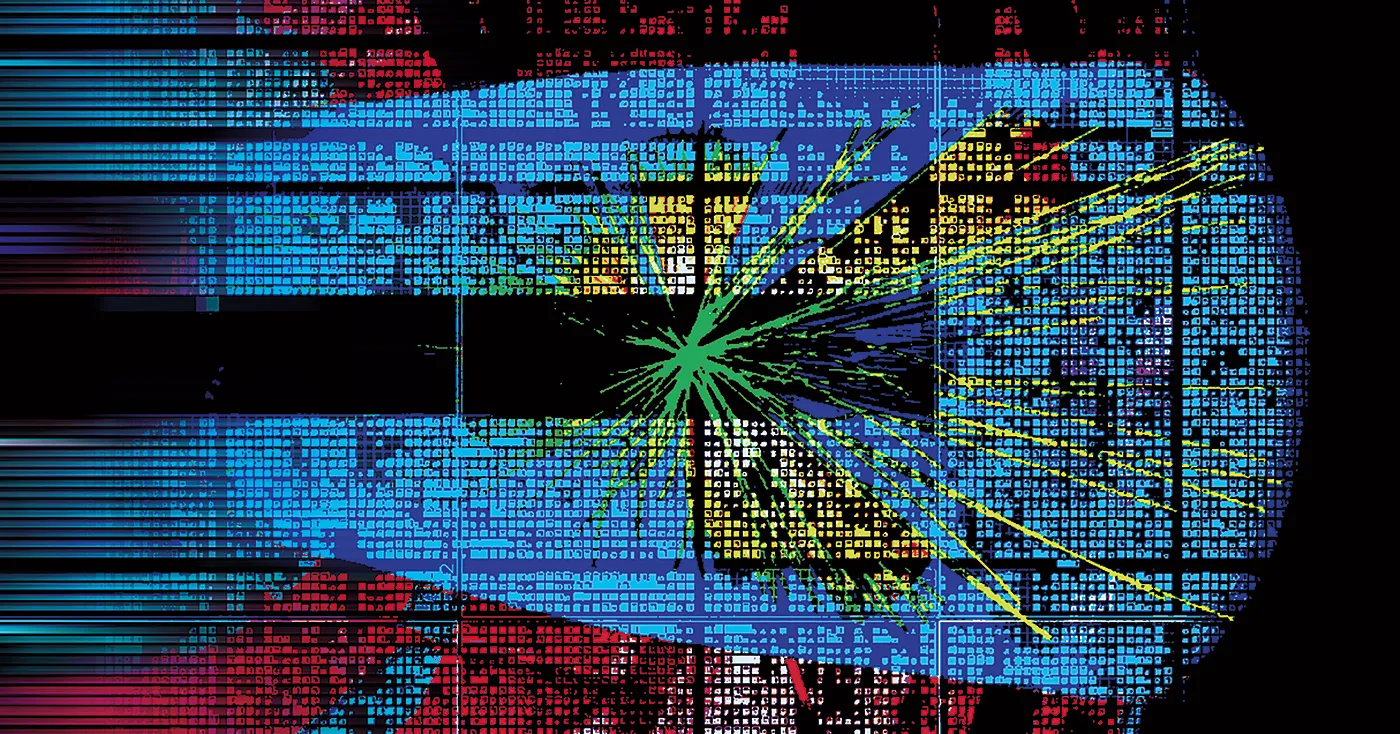
G4HepEm: accelerated electromagnetic shower simulation for the HL–LHC When the High–Luminosity LHC (HL–LHC) starts delivering data, the volume of simulated events required to control systematic uncertainties will rise sharply. In ATLAS, detailed detector simulation already consumes a large fraction of the computing budget; in CMS, it is expected to grow substantially with the Phase-2 upgrade,
-
CLUE: A Scalable Clustering Algorithm for the Data Challenges of Tomorrow
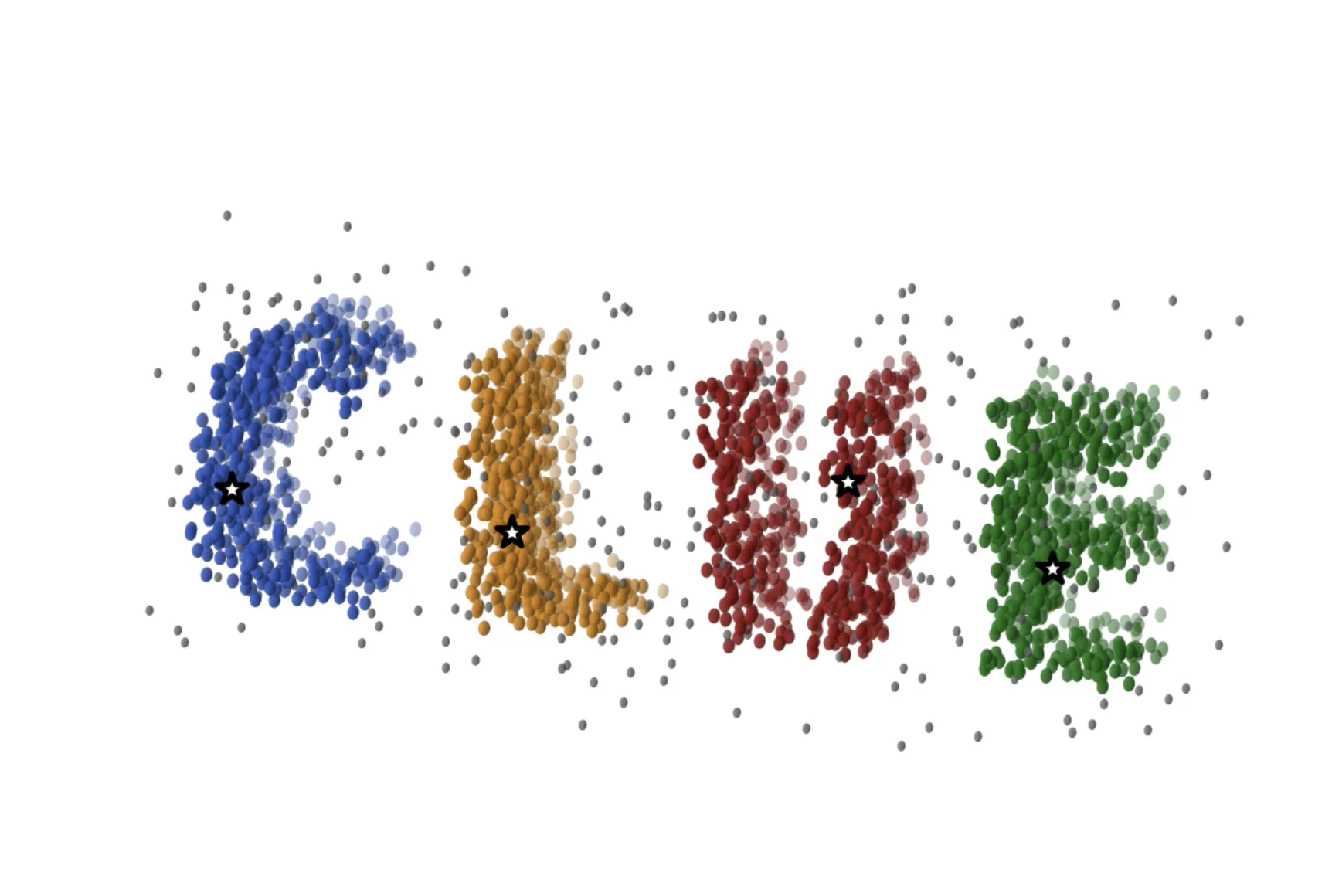
CLUE: A Scalable Clustering Algorithm for the Data Challenges of Tomorrow The foreseen increase in luminosity and pileup at the High-Luminosity Large Hadron Collider (HL-LHC) [1] will challenge both the detector hardware and the reconstruction software. With higher pile-up, calorimeter energy reconstruction depends even more on pattern-recognition algorithms. These algorithms have to cluster together deposits
-
RNTuple: The New Columnar Storage for HEP Data
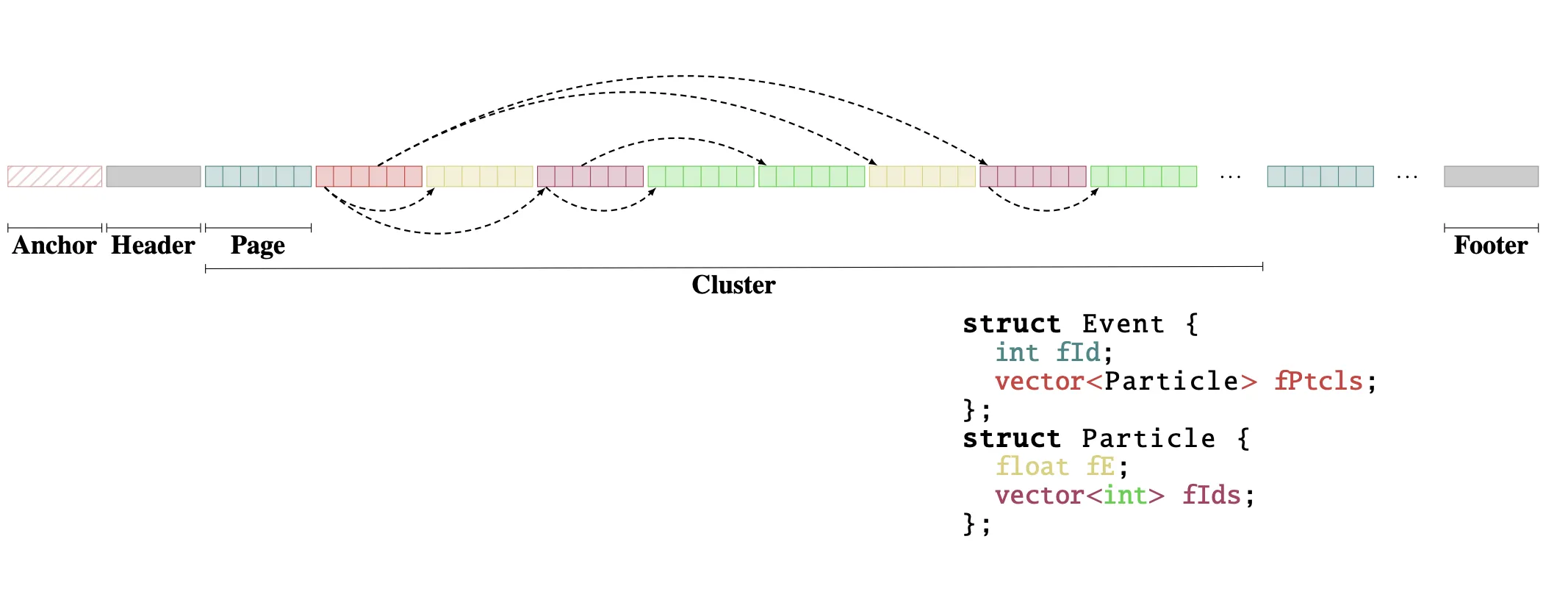
RNTuple: The New Columnar Storage for HEP Data R&D activities are vital for the ROOT project. A few years ago, we started investigating the evolution of TTree, ROOT’s columnar format with which more than two exabytes of data were written at the LHC: experiments write data, lots of it, to then store them on media
-
Unveiling the Power of Software in Science: Inside the EVERSE Network
Unveiling the Power of Software in Science: Inside the EVERSE Network Researchers across all sciences use different types of tools: benches, centrifuges, lasers, weather balloons, seismographs, telescopes… you name it. At CERN, such a “hardware tool” is the LHC, together with all our other accelerator facilities, which are invaluable for exploring the world of particles.
-
The Future of HEP Computing Considered
The Future of HEP Computing Considered We are well-used to long lead times in particle physics. Detectors that are commissioned often rely on technology that was in an R&D phase decades before and now, as the CERN community, we now plan for new accelerators that will still be operational at the end of this century.
-
Update on CernVM-FS
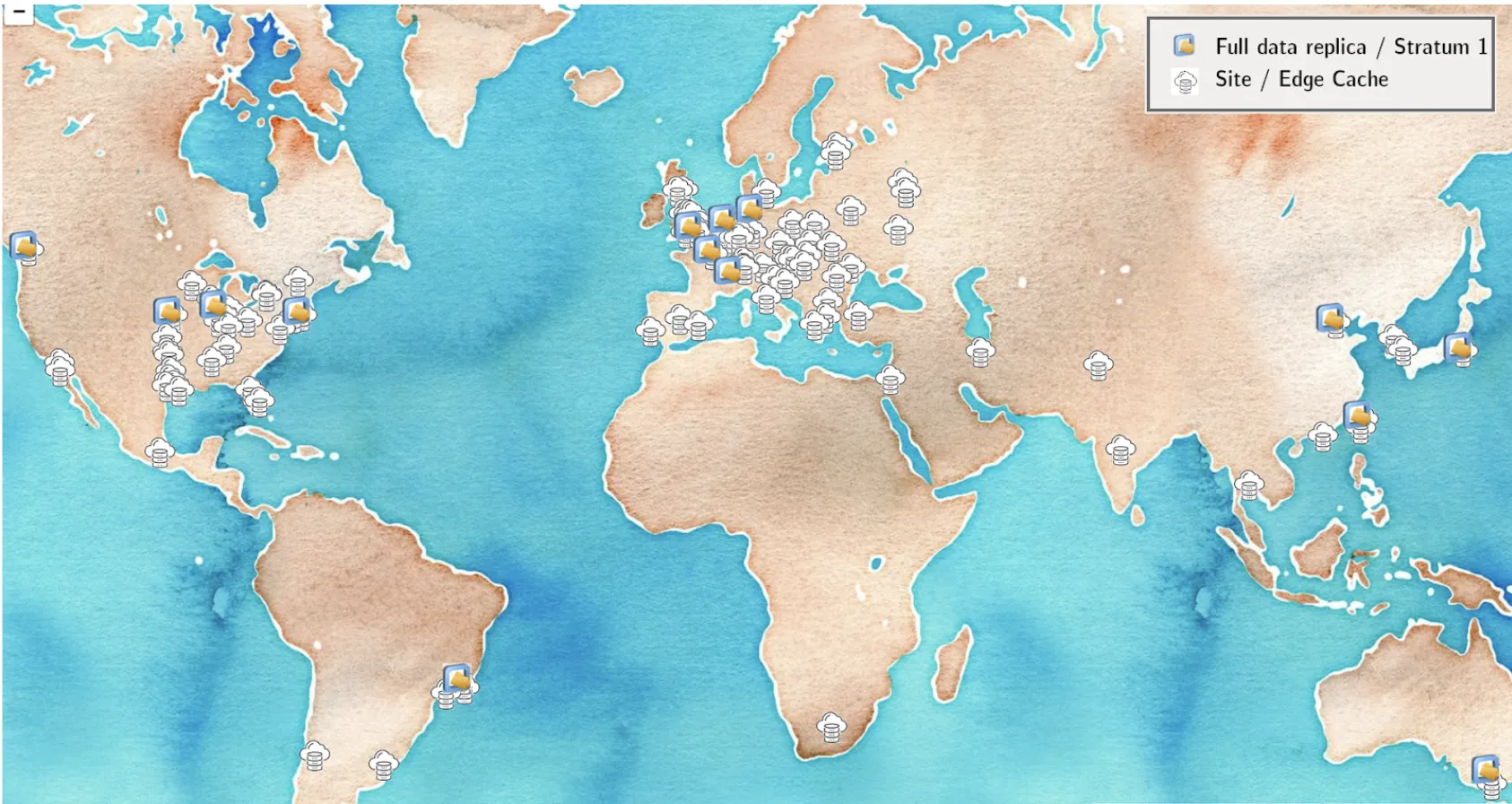
Update on CernVM-FS Fig. 1: Map of CVMFS cache instances. The tiered cache model is one of the techniques that helps to efficiently deploy software on /cvmfs to computing sites all over the world. Anyone who has ever used experimental software on CERN's computing infrastructure is likely to be familiar with CernVM-FileSystem (CVMFS) – even
-
Distributed Analysis with ROOT RDataFrame
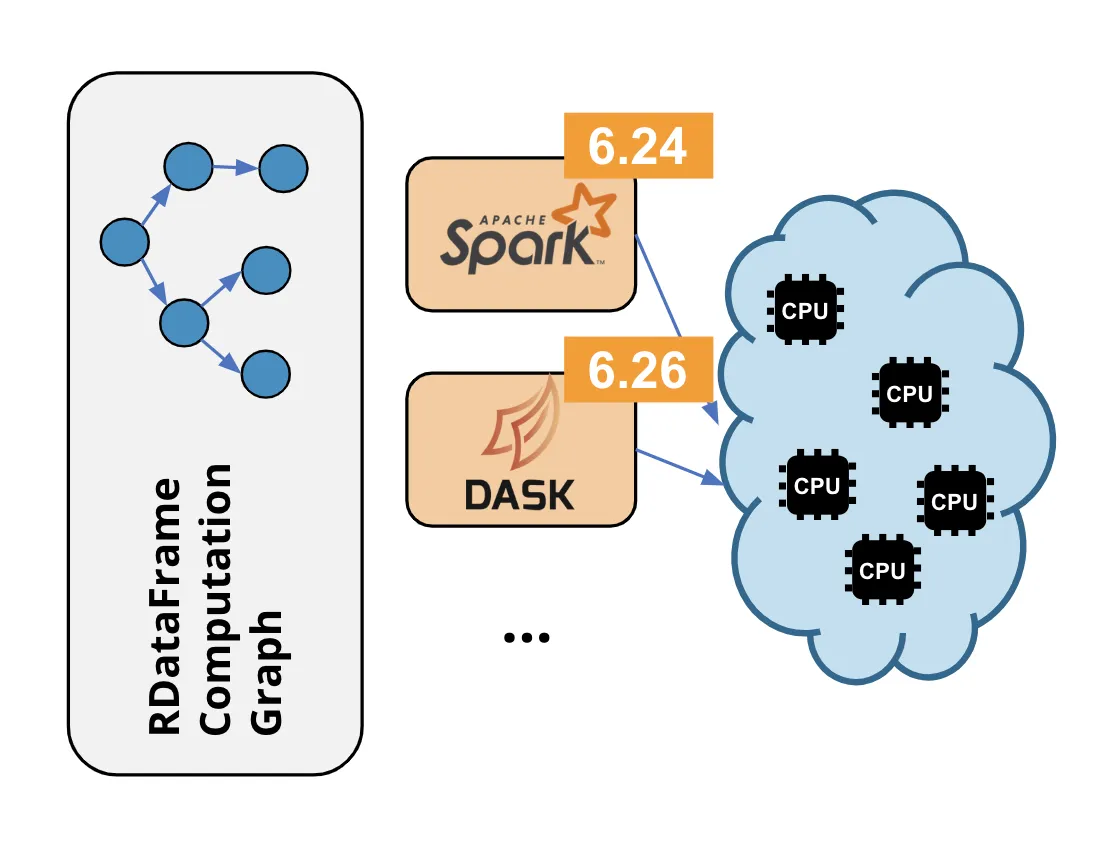
Distributed Analysis with ROOT RDataFrame The HL-LHC is foreseen to generate roughly thirty times more data than the LHC has produced so far. Given the available future budget estimations and expected technological evolution [1], software will play a crucial role to cover the performance gap and be able to process the foreseen data volumes. In