
Tag: SME
-
The CERN-MEDICIS project
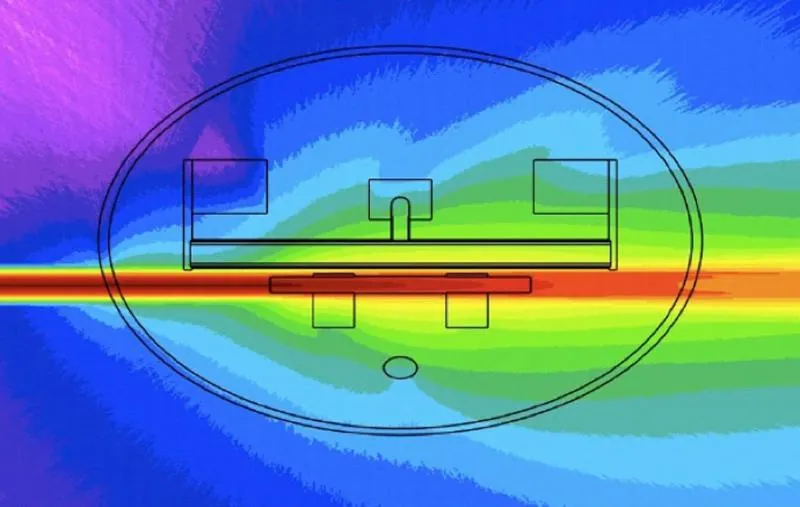
The CERN-MEDICIS project Secondary radioactive ion beams have been delivered to ISOLDE at CERN for over 40 years, for fundamental studies in nuclear structure and for applications, for instance in semi-conductors. The idea of using these beams as sources for innovative medical isotopes was put forward fifteen years ago by G. Beyer and collaborators. However
-
New light from CLOUD on climate change
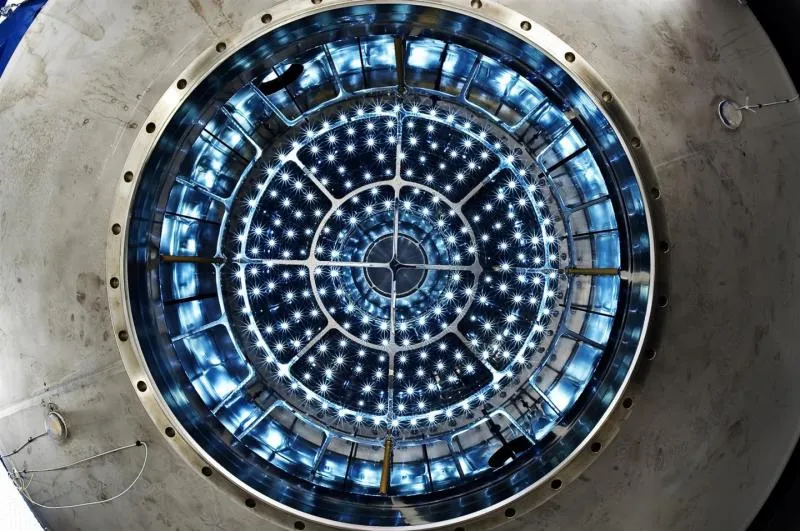
New light from CLOUD on climate change In a paper published in the journal Nature, the CLOUD experiment at CERN reports on a major advance towards solving a long-standing enigma in climate science: how do aerosol particles form in the atmosphere? It is known that all cloud droplets form on aerosols: tiny solid or liquid
-
Three Natures in the ISOLDE hand
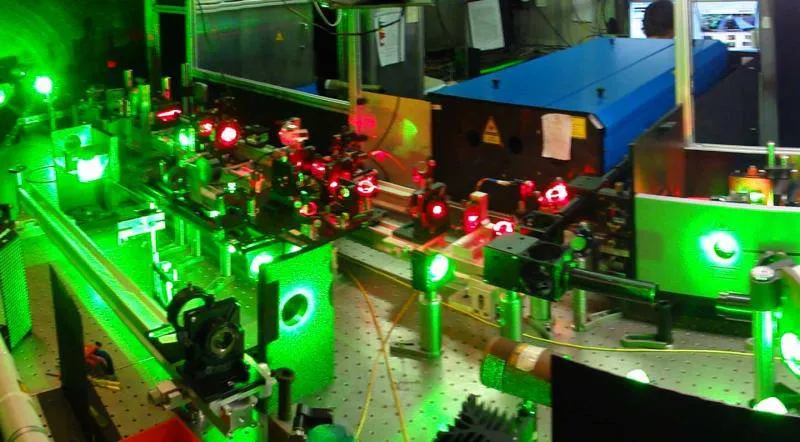
Three Natures in the ISOLDE hand The radioactive beam facility at CERN, ISOLDE(1) has pioneered many achievements both at the level of designing new devices and of producing frontier Physics. These demarches have been crowned by a series of papers in Nature and Nature communication published within a month. BROKEN IMAGE NOT MOVED (drupal url
-

The CLOUD Experiment
The CLOUD Experiment CLOUD Collaboration: Aerodyne Research Inc., Billerica, Massachusetts 01821, USA California Institute of Technology, Div. of Chemistry & Chemical Engineering, Pasadena, California 91125, USA Carnegie Mellon University, Center for Atmospheric Particle Studies, Pittsburgh PA 15213-3890, USA CERN, CH-1211 Geneva, Switzerland Finnish Meteorological Institute, FI-00101 Helsinki, Finland Goethe-University of Frankfurt, Institute for Atmospheric and
-
Meeting the challenges of the High-Energy ISOLDE!
Meeting the challenges of the High-Energy ISOLDE! The On-Line Isotope Mass Separator ISOLDE is a facility dedicated to the production, study and use of exotic nuclei located far from the valley of stability i.e. far from the species found naturally on Earth. These exotic nuclei are being studied in many different experiments in the fields
-
The RICH detector of the NA62 experiment
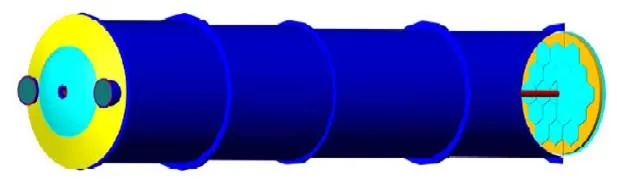
The RICH detector of the NA62 experiment The NA62 experiment is focused on precision tests of the Standard Model by studies of rare decays of charged kaons since only for few kaon decays there is a precise theoretical prediction. One of these exceptions is the very rare decay K+→π+ν ν, which has a branching ratio
-
ISOLTRAP’s MR-ToF mass separator to plumb a neutron star
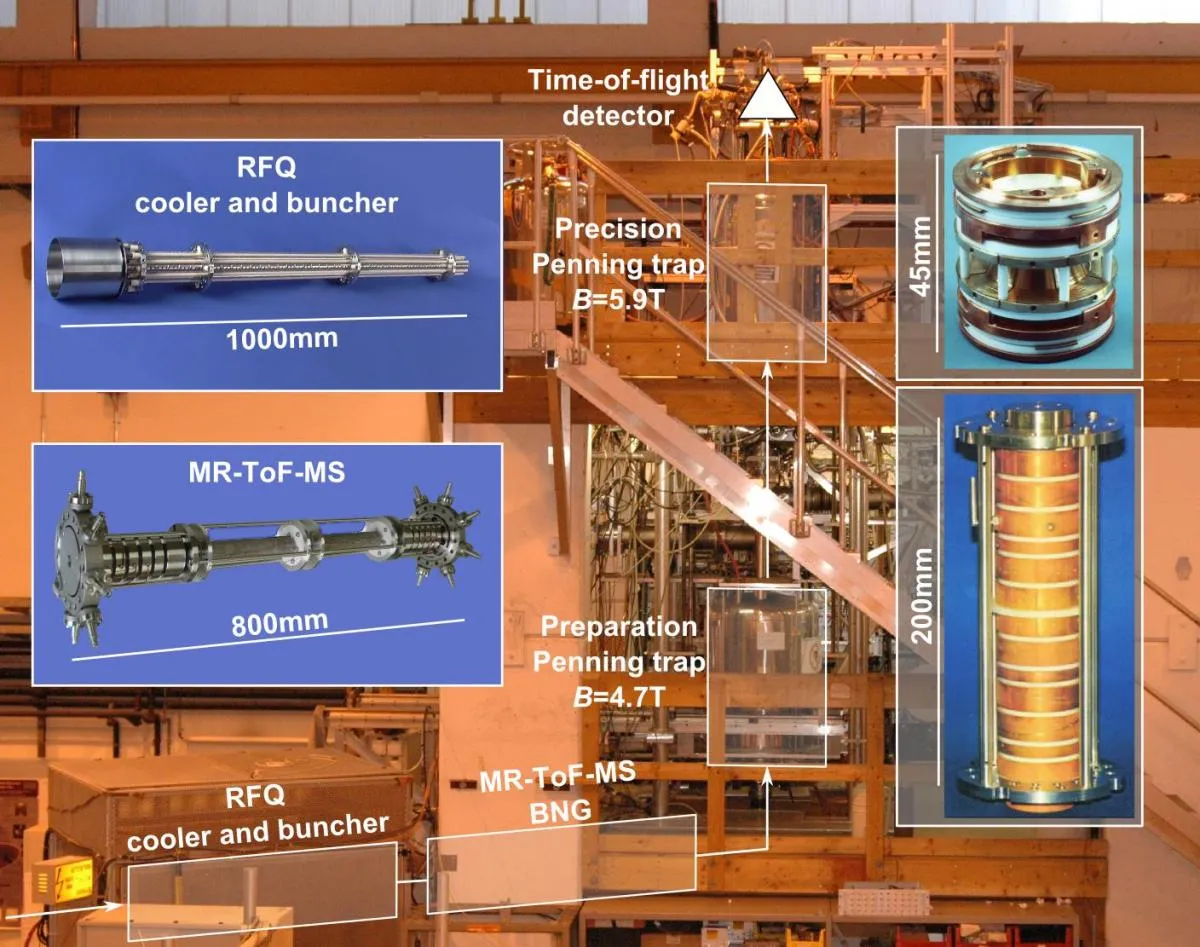
ISOLTRAP’s MR-ToF mass separator to plumb a neutron star The mass of an atomic nucleus is one of its most fundamental properties.Via the binding energy, i.e., the difference in mass between its constituents (protons and neutrons) and the entire nucleus, it reflects the sum of all interactions present. Precision mass measurements of short-lived isotopes provide
-
GBAR – Gravitational Behavior of Antimatter at Rest
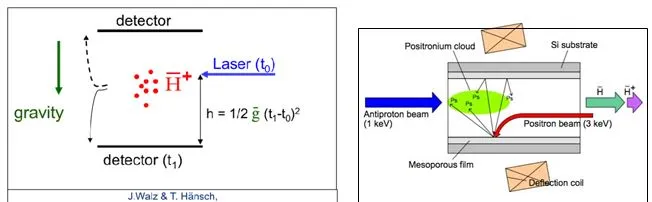
GBAR – Gravitational Behavior of Antimatter at Rest The GBAR experiment, proposing a gravity measurement of antihydrogen at the planned ELENA facility, was approved by the Research Board in May 2012. The collaboration is formed of 14 laboratories and about 40 researchers at present1. The goal of GBAR is to test the Einstein Weak Equivalence
-
PRESENT STATUS AND FUTURE PROGRAMS OF THE n_TOF EXPERIMENT
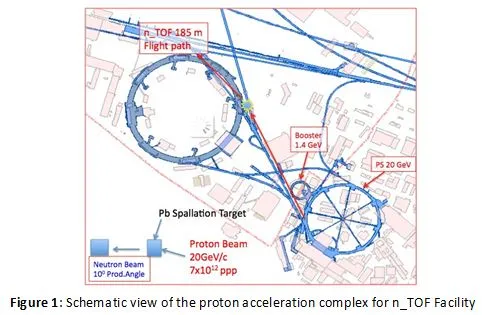
PRESENT STATUS AND FUTURE PROGRAMS OF THE n_TOF EXPERIMENT High precision neutron cross-‐section data are of major importance for a wide variety of research fields in basic and applied nuclear physics [1]. In particular, neutron data on neutron-‐nucleus reactions are essential in Nuclear Astrophysics for understanding the production rate of heavy elements in the Universe,
-
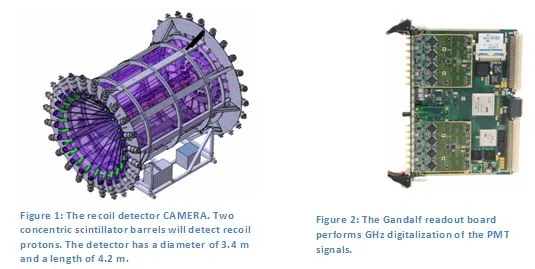
COMPASS-‐II: Preparing for the next step
COMPASS-‐II: Preparing for the next step COMPASS (NA58) is preparing for the next step in its programme studying nucleon structure and hadron spectroscopy. From 2014 onward the focus will be on transverse momentum dependent (TMD) parton distribution functions (PDF) and on generalised parton distributions (GPD). Both are related to the intrinsic transverse structure of the