
Tag: Axions
-
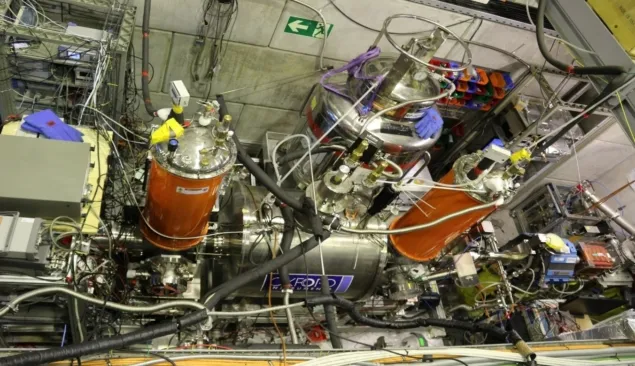
BASE develops a new technique to detect ultralight dark matter.
BASE develops a new technique to detect ultralight dark matter. In a recent work published in Physical Review Letters [1], the Baryon Antibaryon Symmetry Experiment (BASE) at CERN has placed new limits on a possible coupling between photons and hypothetical axionlike dark matter particles with masses between 2.7906-2.7914 neV. We evaluated the signals from our
-

BabyIAXO submits for publication its Conceptual Design Report
BabyIAXO submits for publication its Conceptual Design Report The International Axion Observatory (IAXO) will search for axions or axion-like particles emitted by the Sun with unprecedented sensitivity. Axions are hypothetical particles that appear in extensions of the Standard Model that include the Peccei-Quinn mechanism [1–4], proposed to solve the “strong-CP problem”, or why the strong
-
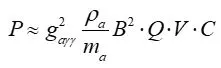
CAST: from Solar to Dark Matter Axions searches
CAST: from Solar to Dark Matter Axions searches CERN’s Axion Solar telescope (CAST) has been running since 2003 searching for the axion: a hypothetical particle introduced in 1978 as a consequence of the Peccei-Quinn mechanism aiming to solve the strong CP problem, i.e why is the neutron electric dipole moment limit some ten orders of
-
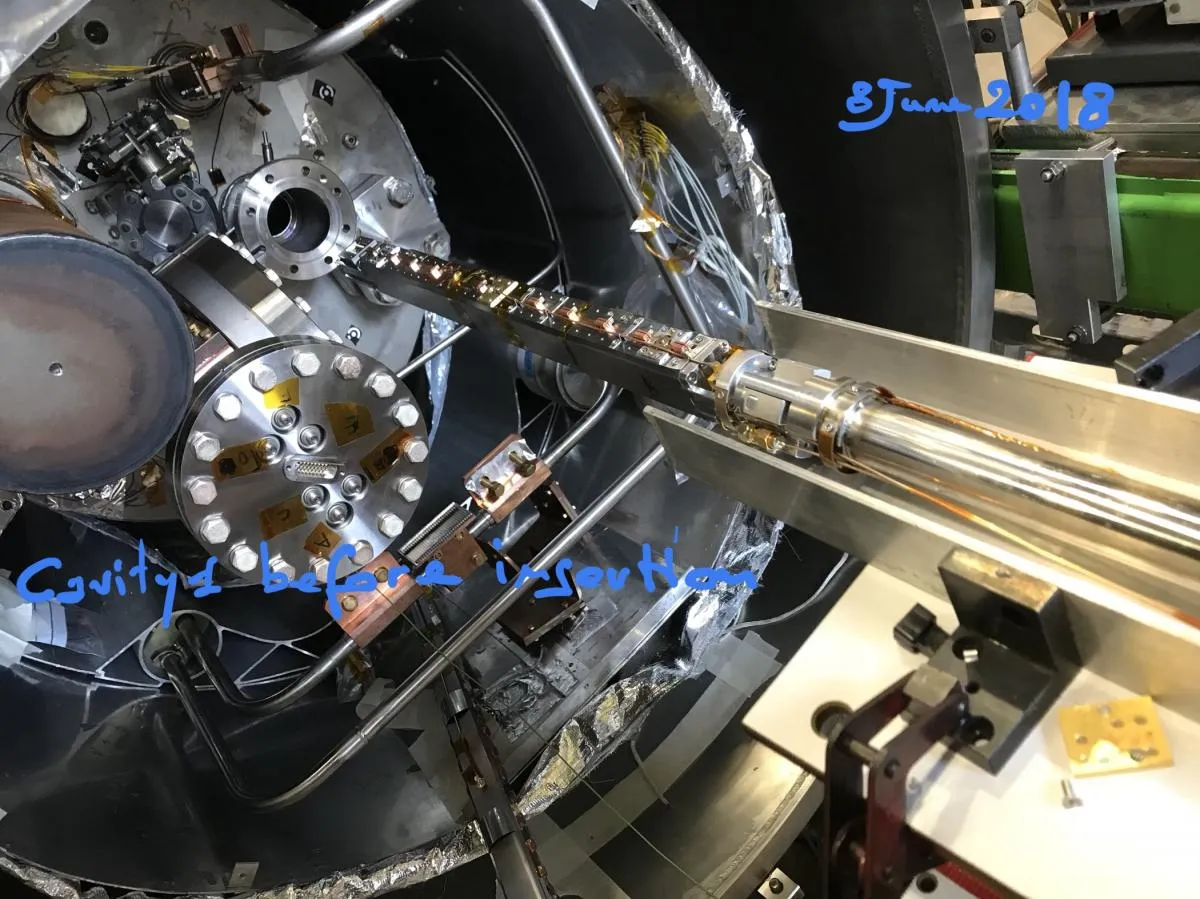
Experimental searches for solar and dark matter axions
Experimental searches for solar and dark matter axions Detection of solar axions If axions exist, they would be produced in large quantities in the solar interior. Photons from the solar plasma would convert into axions in the Coulomb fields of charged particles via the Primakoff axion-photon conversion. Once produced, axions get out of the star
-

Interview with Helen Quinn
Interview with Helen Quinn Helen Quinn, a professor emerita at the Department of Energy’s SLAC National Accelerator Laboratory and Stanford University, received the 2018 Benjamin Franklin Medal in Physics last April for her accomplishments in the field of particle physics. As a student, Quinn says, she grew up in an environment that encouraged curiosity about