
Tag: BSM physics
-
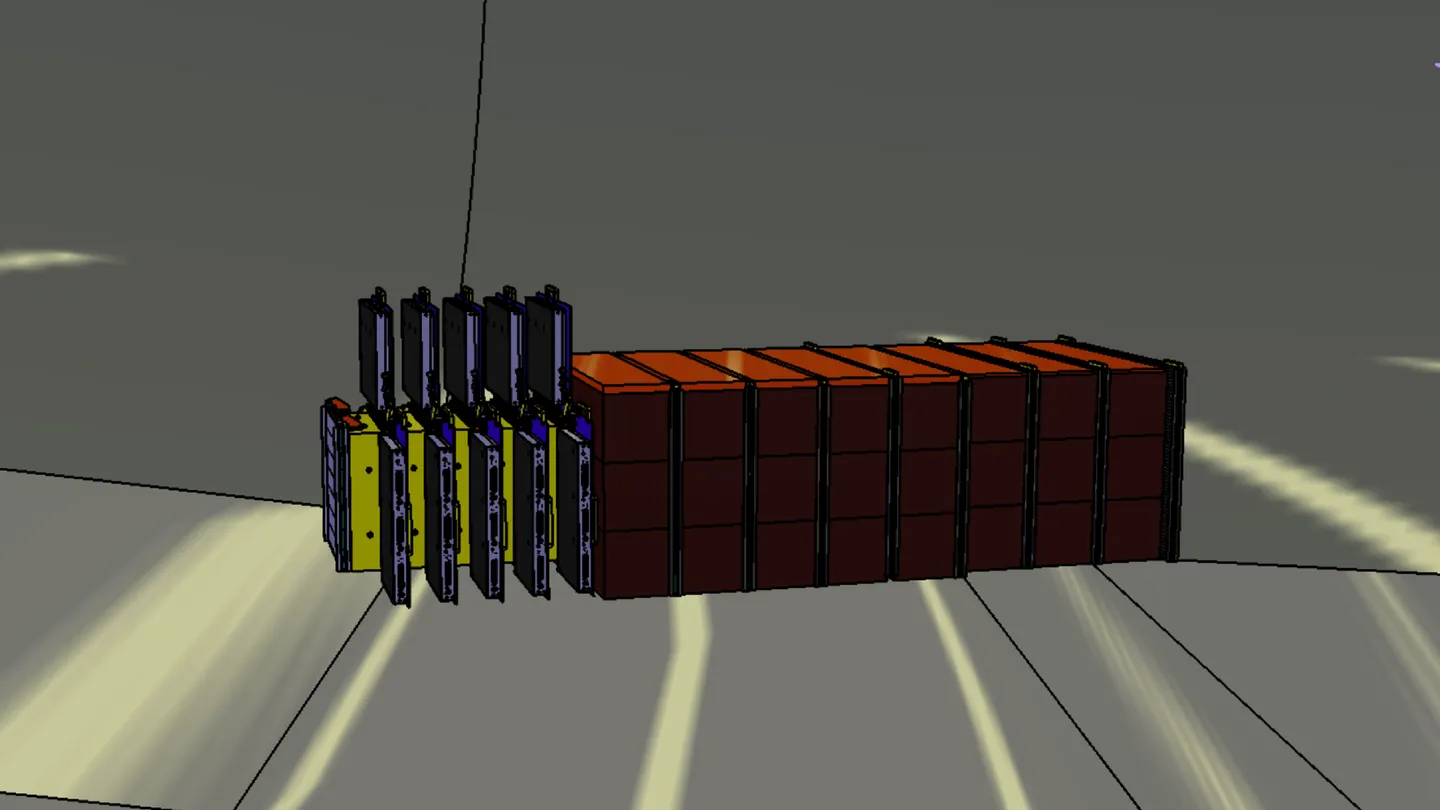
Designing the SND@LHC experiment
Designing the SND@LHC experiment SND@LHC is a newly proposed, compact and stand-alone experiment to perform measurements with neutrinos produced at the LHC in a hitherto unexplored pseudo-rapidity range of 7.2 < 𝜂 < 8.6, complementary to all the other experiments at the LHC, including FASER. Today, two effects make it possible and particularly interesting to
-

Hunting for axion-like particles at neutrino detectors
Hunting for axion-like particles at neutrino detectors Although neutrinos were discovered more than 60 years ago, they are the most mysterious particles in the Standard Model (SM). While the present data collected at the neutrino experiments can explain several neutrino properties, there are still at least several unanswered fundamental questions in the neutrino sector that
-
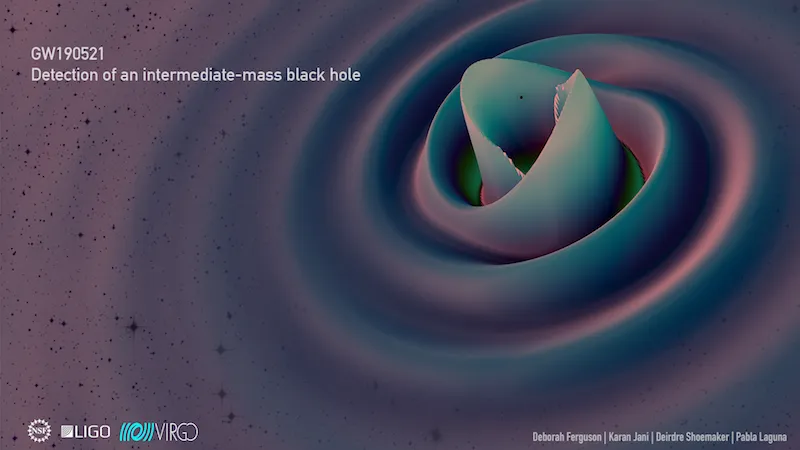
Beyond the Standard Model Explanations of GW190521
Beyond the Standard Model Explanations of GW190521 Earlier this month the LIGO and Virgo gravitational wave observatories announced the discovery of GW190521, an exceptional and extraordinary signal. Seven billion years ago — a little over half the age of the universe — at the other end of the universe, two black holes spiraled into each
-
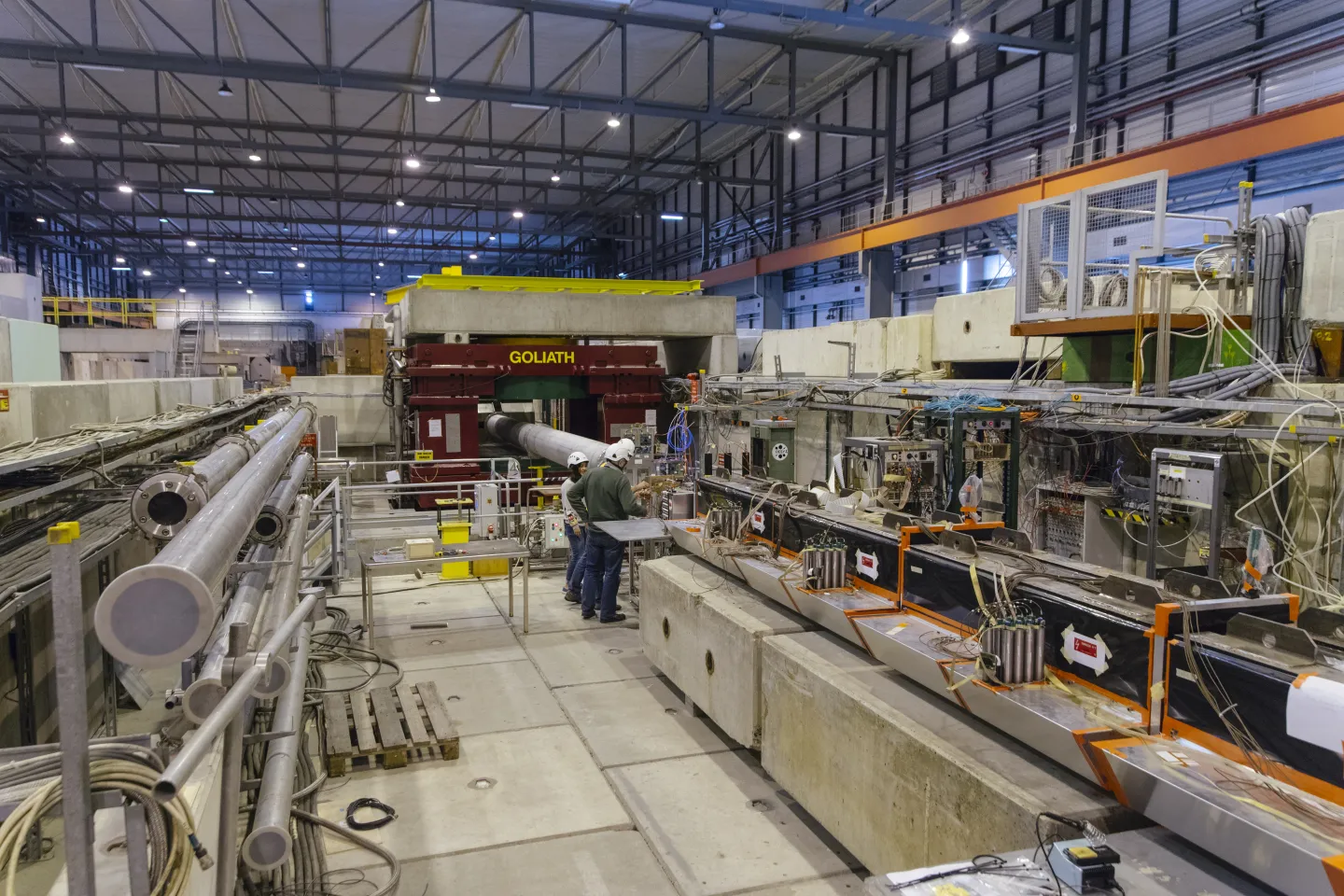
Closing the gap between beam dump and colliders ALPs searches with NA64
Closing the gap between beam dump and colliders ALPs searches with NA64 The axion was postulated to provide a solution to the “strong CP” problem. This pseudo-scalar particle emerges as a consequence of the breaking of the Peccei-Quinn (PQ) symmetry [1,2,3] (link to EP article on Axions). Typically, models of QCD axions predict a specific
-
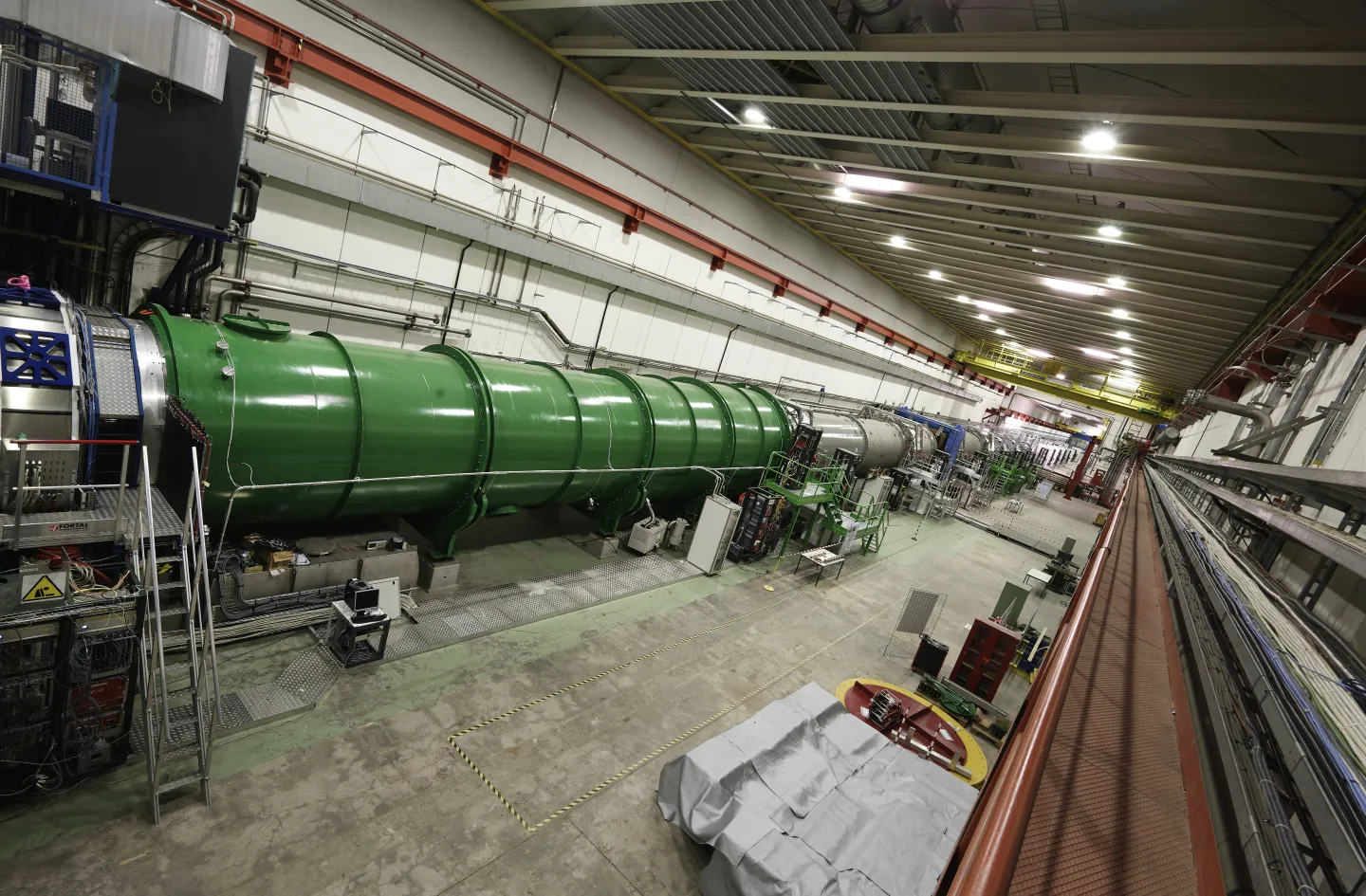
NA62 experiment at CERN reports first evidence for ultra-rare process sensitive to new physics
NA62 experiment at CERN reports first evidence for ultra-rare process sensitive to new physics The CERN NA62 collaboration presented at the ICHEP 2020 conference the first significant experimental evidence for the ultra-rare decay of the charged kaon into a charged pion and two neutrinos (K+ -> π+νν). The decay process is very sensitive to deviations
-

How to search for new physics without knowing about it?
How to search for new physics without knowing about it? BSM searches at the LHC increasingly profit from ML techniques since this approach allows more general searches that minimise the probability of missing evidence of new physics. Very recently, the ATLAS collaboration has published a novel approach [1], based on weakly unsupervised ML techniques, to
-
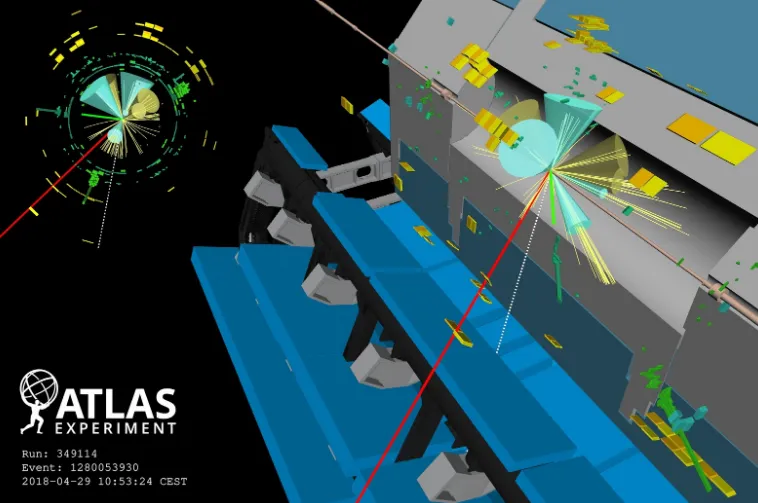
ATLAS results: from precision to rarity
ATLAS results: from precision to rarity Two recent ATLAS results that showcase the full range of the ATLAS physics potential, from precision to rarity, were shown at LHCP and presented at a recent CERN LHC seminar. A test of the universality of τ and μ lepton couplings in W boson decays from tt̅ events [1]
-

ATLAS results: from precision to rarity
ATLAS results: from precision to rarity Two recent ATLAS results that showcase the full range of the ATLAS physics potential, from precision to rarity, were shown at LHCP and presented at a recent CERN LHC seminar. A test of the universality of τ and μ lepton couplings in W boson decays from tt̅ events [1]
-
How to search for new physics without knowing about it?
How to search for new physics without knowing about it? BSM searches at the LHC increasingly profit from ML techniques since this approach allows more general searches that minimise the probability of missing evidence of new physics. Very recently, the ATLAS collaboration has published a novel approach [1], based on weakly unsupervised ML techniques, to
-
CMS tunes in searches for new physics
CMS tunes in searches for new physics The CERN LHC has produced proton-proton collisions at an unprecedented center of mass energy of 13 TeV since 2015, providing an excellent opportunity to search for new phenomena in regions that were previously inaccessible to collider experiments. While the standard model (SM) of particle physics is well established