
Tag: Dark Matter
-
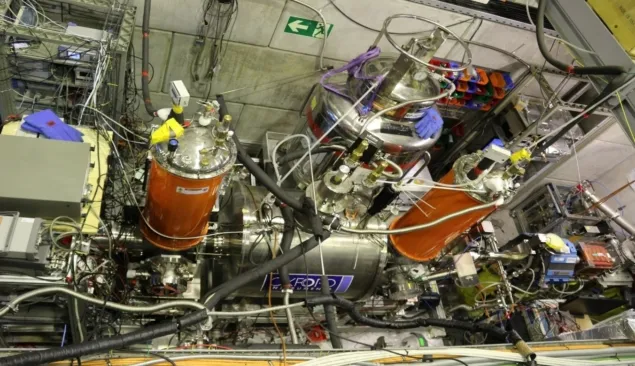
BASE develops a new technique to detect ultralight dark matter.
BASE develops a new technique to detect ultralight dark matter. In a recent work published in Physical Review Letters [1], the Baryon Antibaryon Symmetry Experiment (BASE) at CERN has placed new limits on a possible coupling between photons and hypothetical axionlike dark matter particles with masses between 2.7906-2.7914 neV. We evaluated the signals from our
-
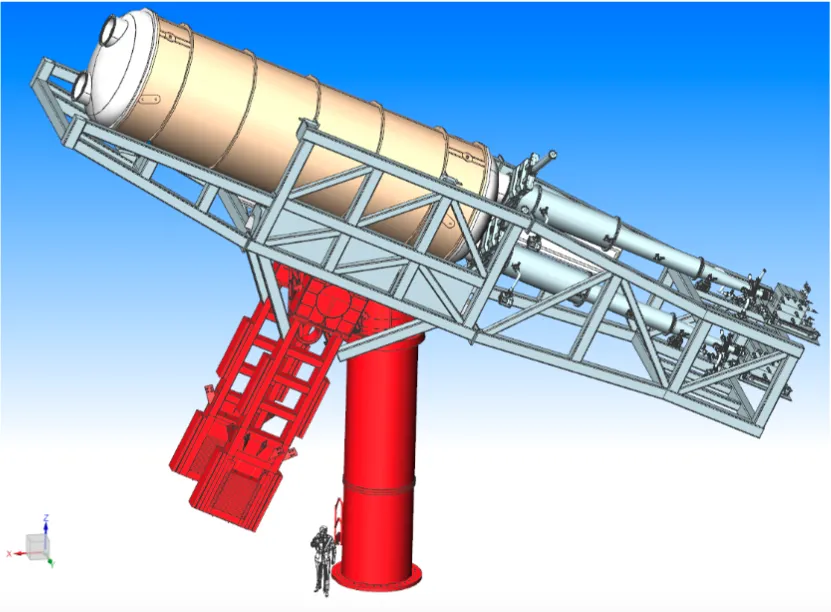
BabyIAXO submits for publication its Conceptual Design Report
BabyIAXO submits for publication its Conceptual Design Report The International Axion Observatory (IAXO) will search for axions or axion-like particles emitted by the Sun with unprecedented sensitivity. Axions are hypothetical particles that appear in extensions of the Standard Model that include the Peccei-Quinn mechanism [1–4], proposed to solve the “strong-CP problem”, or why the strong
-
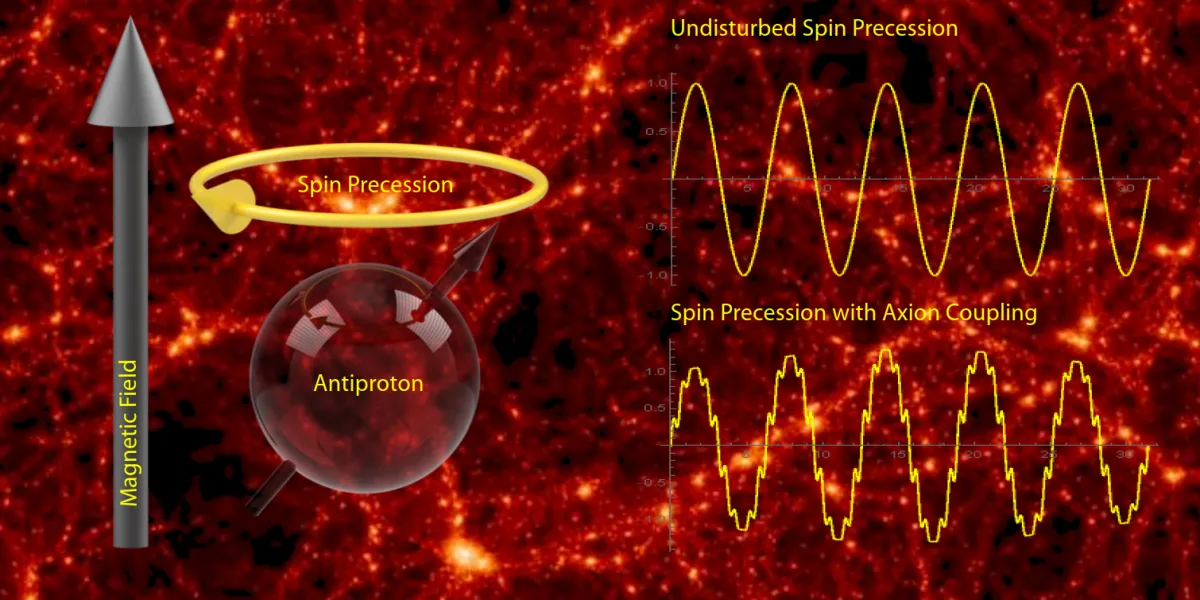
BASE probes antimatter – dark matter interaction
BASE probes antimatter – dark matter interaction In a recent paper, the BASE collaboration presented results from a direct search for interactions of antimatter with dark matter and placed direct constraints on the interaction of ultralight axion-like particles (dark-matter candidates) with antiprotons. Their analysis constrained the value of the axion–antiproton interaction parameter in the range
-
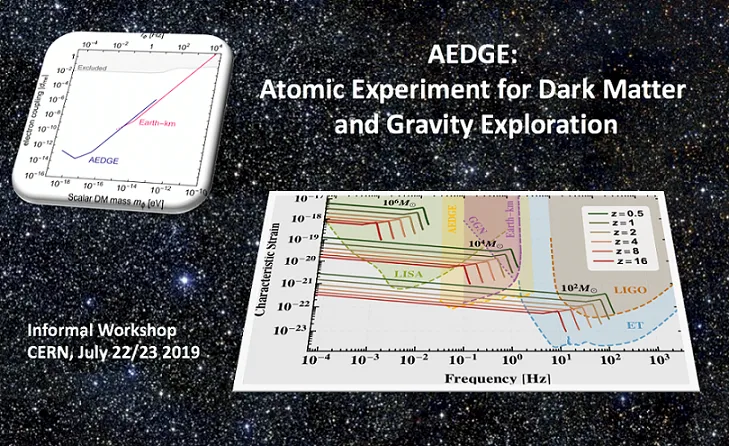
Atomic Experiments for Dark Matter and Gravity Exploration
Atomic Experiments for Dark Matter and Gravity Exploration A workshop on “Atomic Experiments for Dark Matter and Gravity Exploration” was held at CERN on 22nd and 23rd of July, More than 130 participants met at CERN to review the landscape of cold atom experiments for exploring dark sector physics, gravitational effects and new fundamental interactions.
-
Experimental searches for solar and dark matter axions
Experimental searches for solar and dark matter axions Detection of solar axions If axions exist, they would be produced in large quantities in the solar interior. Photons from the solar plasma would convert into axions in the Coulomb fields of charged particles via the Primakoff axion-photon conversion. Once produced, axions get out of the star
-

Interview with Helen Quinn
Interview with Helen Quinn Helen Quinn, a professor emerita at the Department of Energy’s SLAC National Accelerator Laboratory and Stanford University, received the 2018 Benjamin Franklin Medal in Physics last April for her accomplishments in the field of particle physics. As a student, Quinn says, she grew up in an environment that encouraged curiosity about
-

XENON1T probes deeper into Dark Matter WIMPs
XENON1T probes deeper into Dark Matter WIMPs Results from XENON1T, the world’s largest and most sensitive detector dedicated to a direct search for Dark Matter in the form of Weakly Interacting Massive Particles (WIMPs), were reported on the 28th May, by the spokesperson, Prof. Elena Aprile of Columbia University, in a seminar at the hosting
-

Search for axions in streaming dark matter
Search for axions in streaming dark matter Streaming dark matter (DM) axions may be the better source for their discovery than the widely assumed isotropic DM. Because, a large axion flux enhancement can take place, temporally, due to gravitational lensing when the Sun and/or a planet are aligned with the stream or an axion caustic
-

Interview with James Peebles
Interview with James Peebles An interview with Jim Peebles, one of the world’s foremost cosmologists and an emeritus professor at Princeton University, where since 1984 he was the Albert Einstein Professor of Science. Together with Robert Dicke (who was originally his supervisor) and others they predicted the existence of the cosmic background radiation while his