
Tag: DT
-
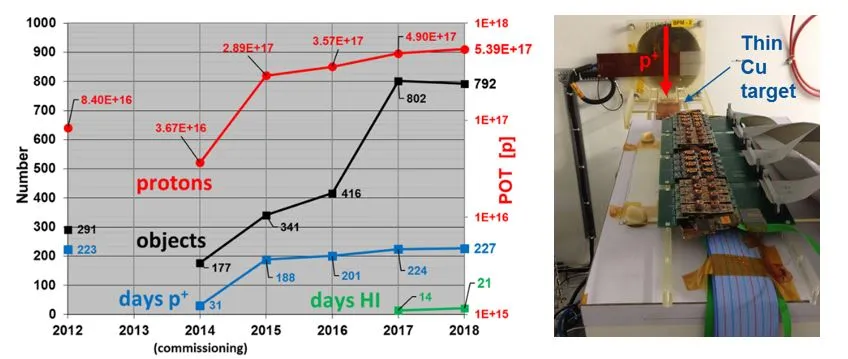
A bright year for the EP-DT irradiation facilities
A bright year for the EP-DT irradiation facilities The CERN proton irradiation facility (IRRAD – www.cern.ch/ps-irrad) at the PS East Area and the new gamma irradiation facility (GIF++ – www.cern.ch/gif-irrad) at the SPS North Area have been designed and built during LS1 to cope with the increasing need for irradiation experiments of the EP experimental
-
Setting a roadmap for future detector technologies
Setting a roadmap for future detector technologies The effort to address the remaining open questions of the Standard Model lies at the core of the HL-LHC physics programme and informs current design studies for post-LHC colliders (CLIC, FCC-ee, FCC-hh) as well as new fixed target experiments explored under the Physics Beyond Collider initiative. To meet
-
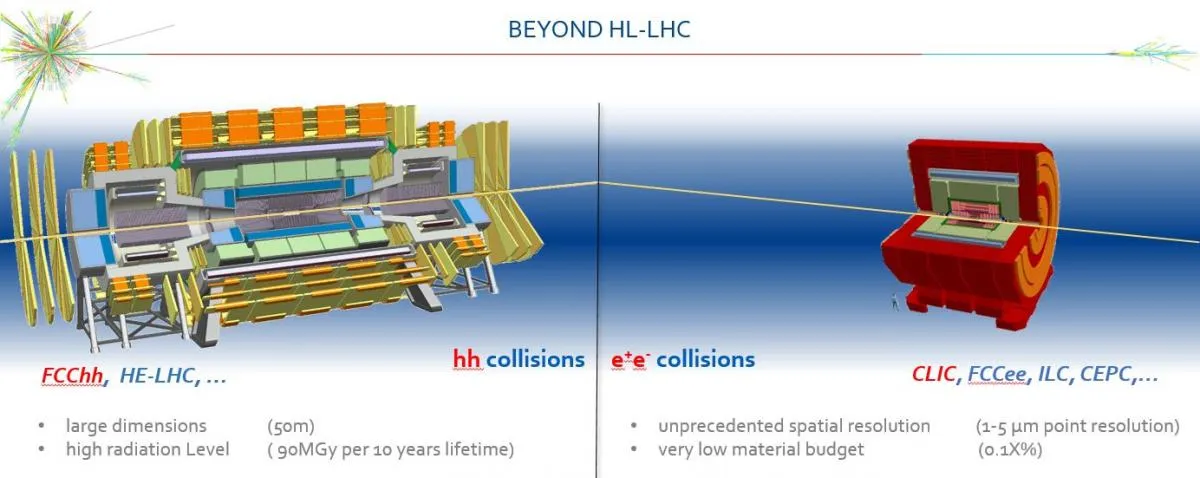
Meeting the challenges of tracking detector mechanics
Meeting the challenges of tracking detector mechanics Designing detectors to meet the physics requirements of future high-energy experiments calls for a strong R&D program on new detector-systems. This includes sensors technologies, fast and efficient electronics, mechanics and cooling techniques that could cope with the environment offered in high-energy and high-intensity colliders planned for the post-LHC
-
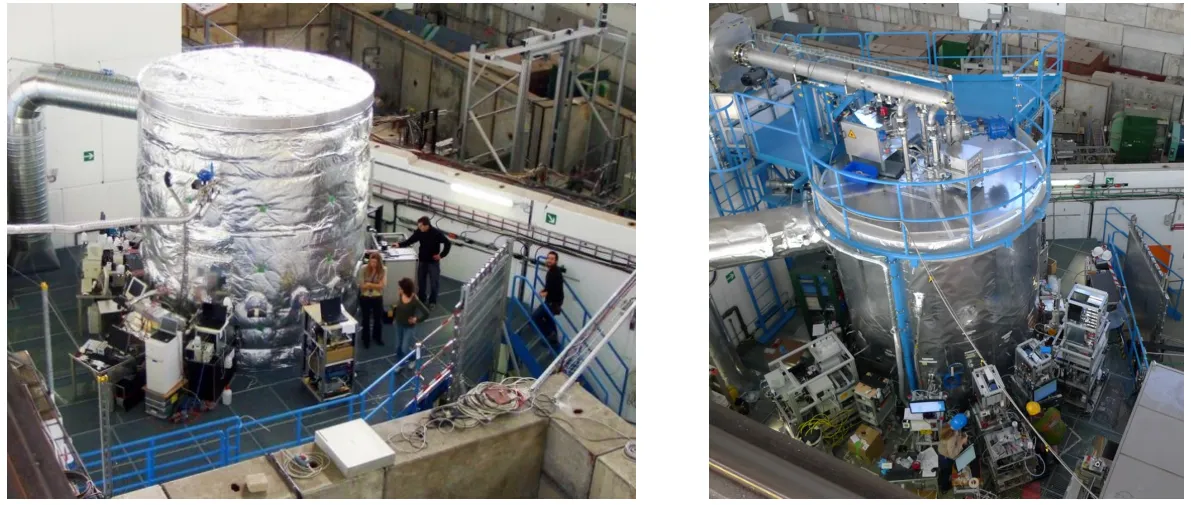
Cloud(y) climate studies at CERN
Cloud(y) climate studies at CERN Continuous improvements to the CLOUD facility as well as to the instruments combined with the state of the art know-how available at CERN have enabled a steady increase in the measurement capabilities and resulted in numerous high impact publications. This combination reflects CLOUD's world leading role in experimental laboratory studies
-
Precise timing detectors for the LHC experiments
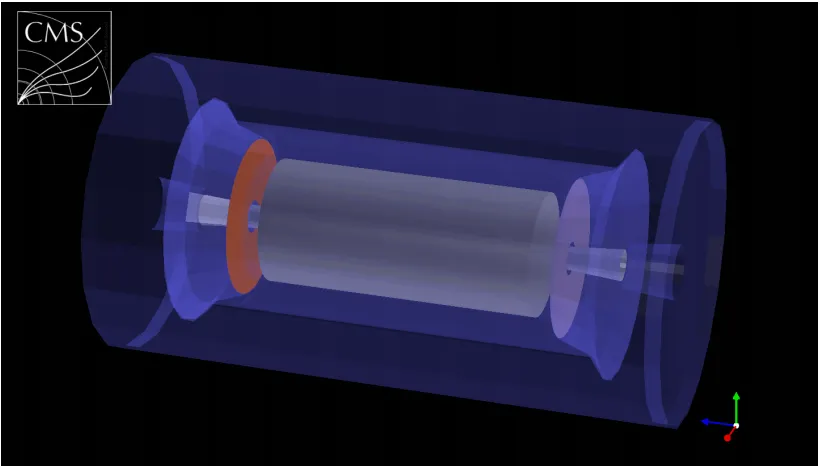
Precise timing detectors for the LHC experiments The ATLAS and CMS experiments physics programme at the HL-LHC will target a very wide range of measurements, including in-depth studies of the Higgs boson properties and direct searches for physics beyond the standard model (BSM). Timing detectors will help improve vertex identification, acceptance extension for isolated objects,
-
RD53: Making the challenging pixel detector chips for the Phase-II upgrades of ATLAS and CMS
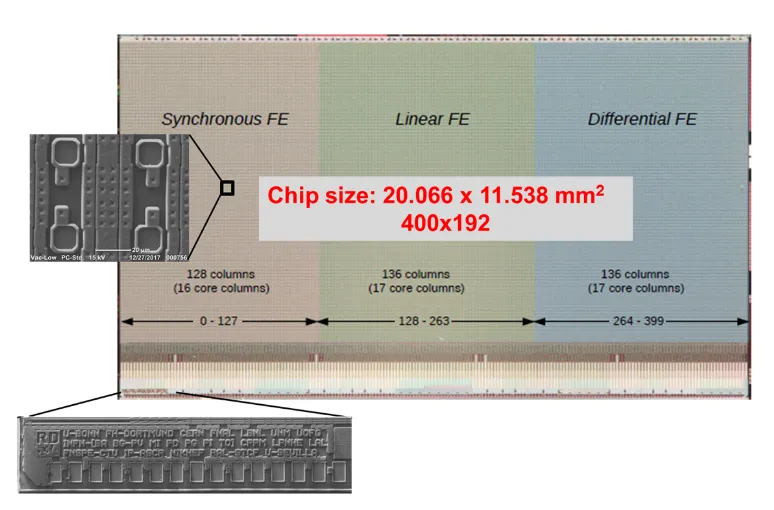
RD53: Making the challenging pixel detector chips for the Phase-II upgrades of ATLAS and CMS The RD53 collaboration has developed over the last five years the foundations to make the extremely challenging pixel detector chips for the Phase-II pixel upgrades of ATLAS and CMS. A large-scale demonstrator chip, called RD53A, was produced last year and
-
VeloPix, a new hybrid pixel readout ASIC for the upgrade of the VELO detector of LHCb.
VeloPix, a new hybrid pixel readout ASIC for the upgrade of the VELO detector of LHCb. The LHCb-VELO group, which is composed of several institutes from the UK, Spain, Netherlands, Russia, Brazil and CERN are constructing an upgraded version of the VErtex LOcator (VELO) to be installed and commissioned during the long shutdown LS2 in
-

DT’s 2018 annual report
DT's 2018 annual report The EP-DT group has published its Annual Report where key activities throughout 2017 are summarized and a description is given of how the group is organized and interacts with the detector physics community. The Detector Technologies group participates in the development, construction, operation and maintenance of particle detectors for experiments at
-
Setting a roadmap for future experimental technologies
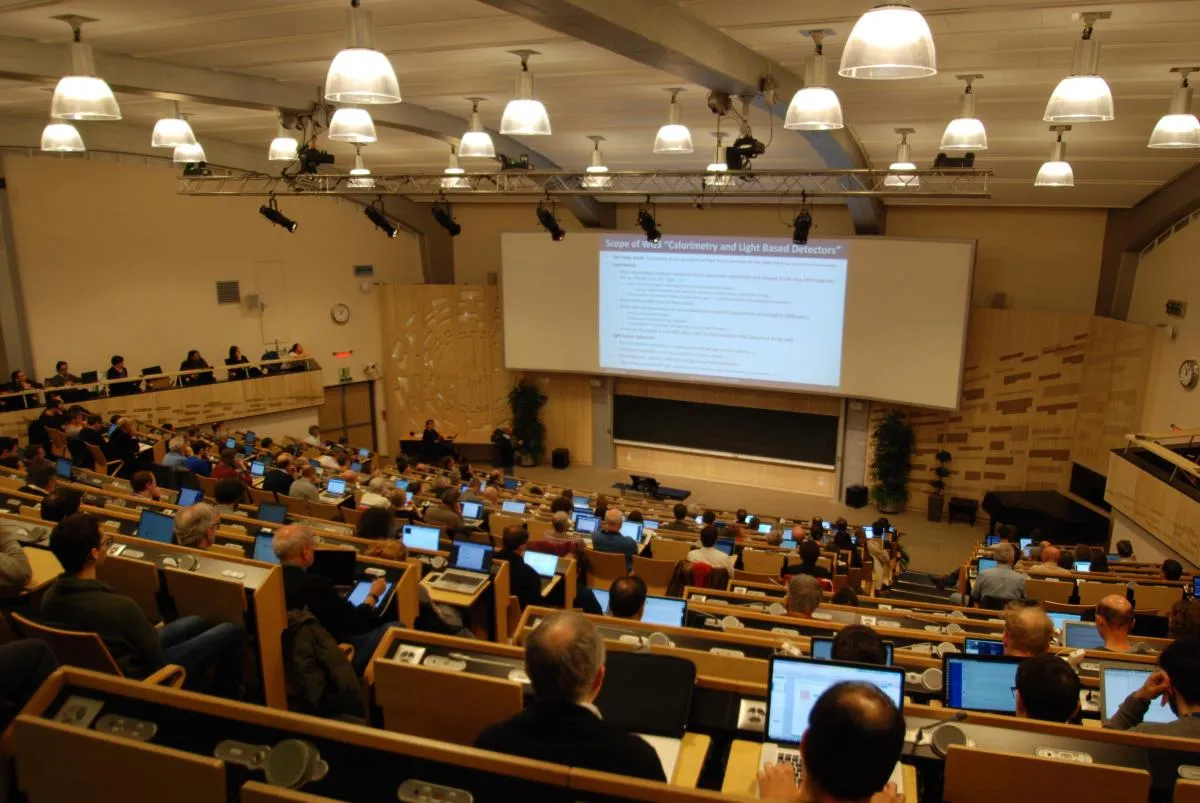
Setting a roadmap for future experimental technologies In elementary-particle physics as in most fields of science, advances in understanding are closely coupled to advances in technology. Machines of higher luminosity open opportunities for the observation of rare and unexpected processes while higher-energy accelerators are needed to cross thresholds for suspected new phenomena. Advances in accelerator
-
A new database of irradiation facilities
A new database of irradiation facilities Detector and accelerator developers need irradiation facilities to test their components under conditions that are as close as possible to real applications, as well as to predict and prevent failures in materials. The foreseen high-luminosity upgrade of the LHC (HL-LHC) and future accelerator projects like the Future Circular Collider