
Tag: June 2021 – August 2021
-
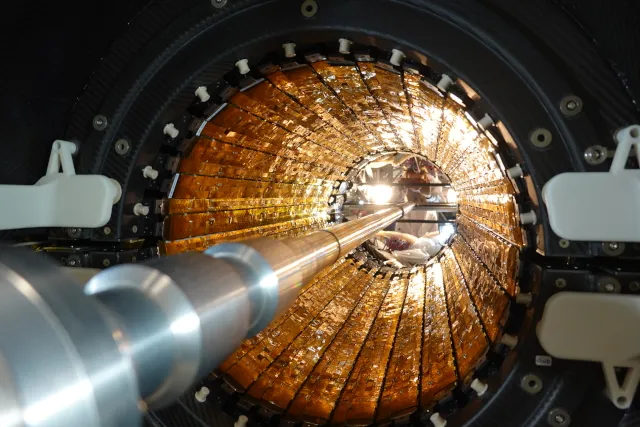
The commissioning and installation of the new ALICE ITS
The commissioning and installation of the new ALICE ITS The Inner Tracking System (ITS) is the innermost detector of the ALICE central barrel. It consists of seven cylindrical layers all equipped with Monolithic Active Pixel Sensors (MAPS) named ALPIDE (ALice PIxel DEtector). The ITS allows track ing charged particles of very low transverse momentum at
-
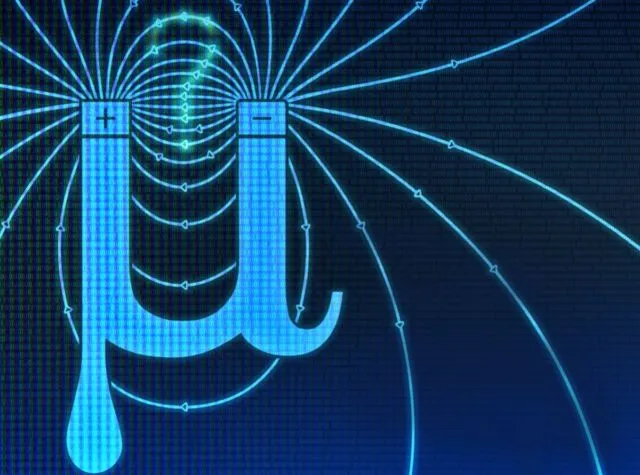
Pinning down the muon (g-2) anomaly at the CERN SPS
Pinning down the muon (g-2) anomaly at the CERN SPS The Dirac equation predicts the muon gyromagnetic ratio g=2. Loop effects from quantum field theory lead to a small deviation from this value, parameterized by the so called anomalous magnetic moment which is defined as aμ=(g-2)/2. The difference between the theoretical prediction and the experimental
-
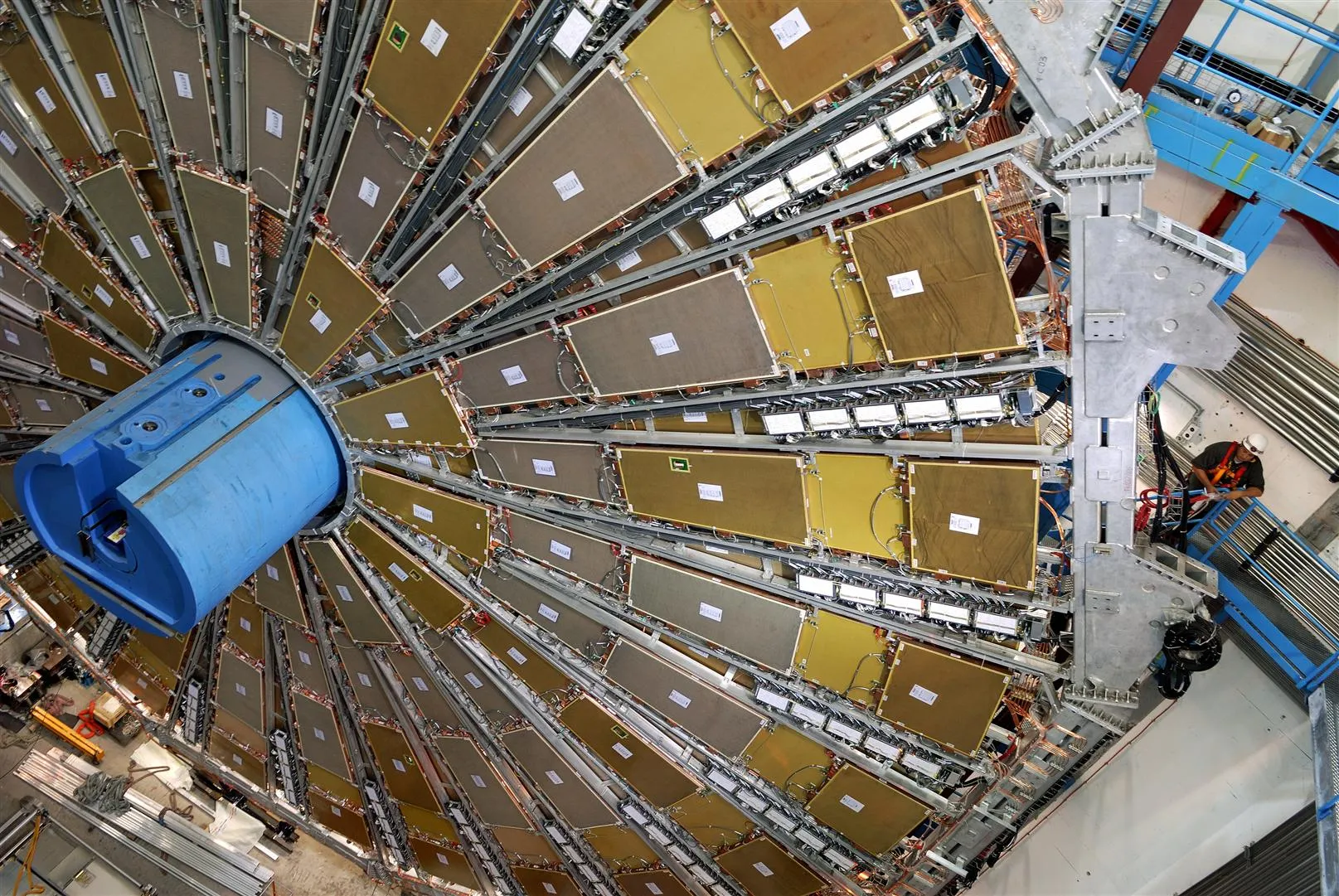
Aligning the ATLAS muon spectrometer
Aligning the ATLAS muon spectrometer If you visit the ATLAS experimental cavern, the first thing you’ll see is the muon spectrometer: several thousand chambers that make up the outermost layer of the experiment (see image above). As muons fly out of the collision point, their tracks curve due to a surrounding toroidal magnetic field. By
-
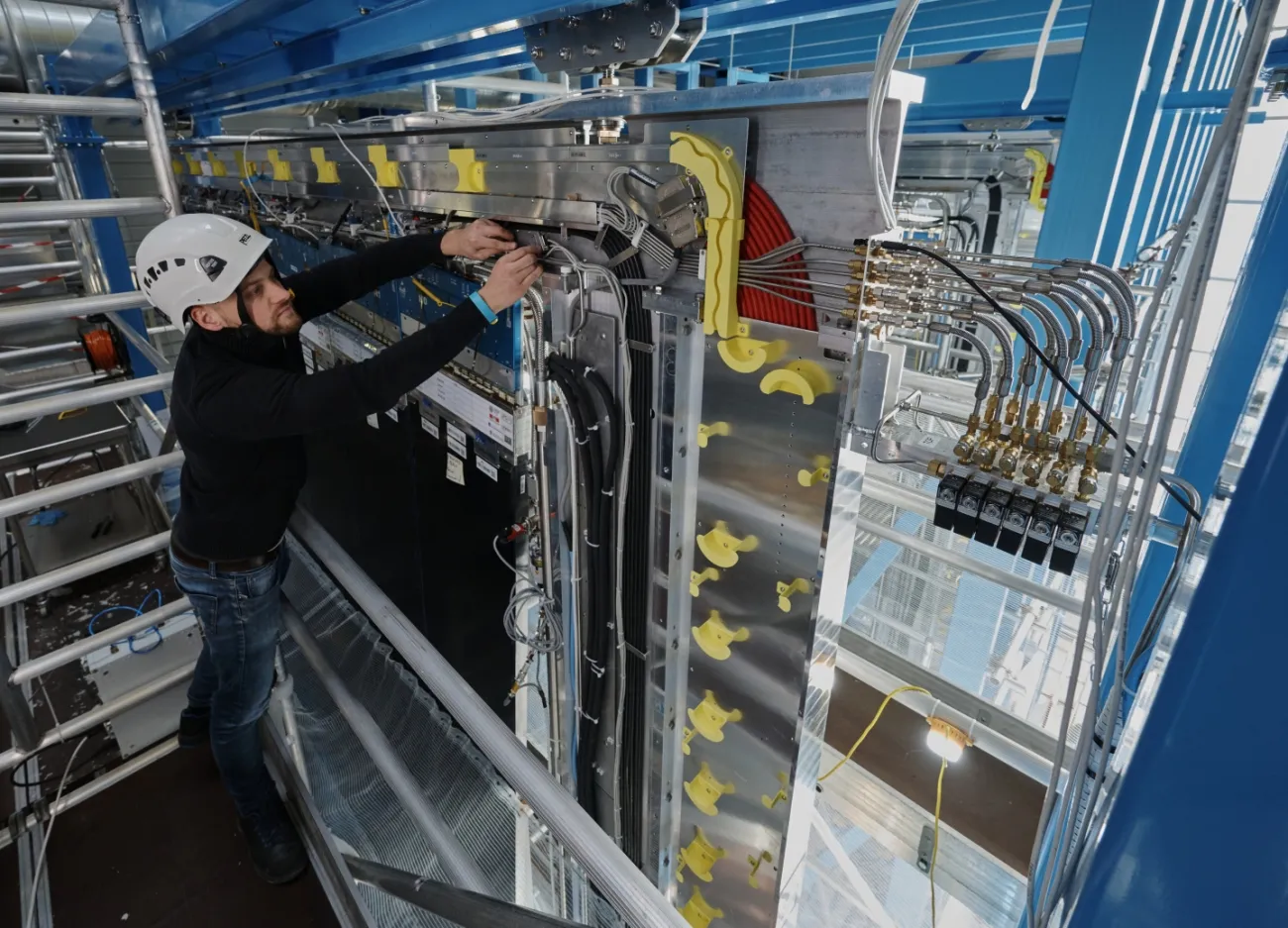
DT group publishes 2020 annual report
DT group publishes 2020 annual report Last week, CERN's EP-DT group published their annual report for 2020; a detailed accound of the group activities at CERN conducted over the year in collaboration with the LHC and non-LHC experimental groups along with their academic and industrial partners worldwide. These activities are part of the group's mandate
-

ISOLDE determines precise nuclear moments by devising novel experimental technique
ISOLDE determines precise nuclear moments by devising novel experimental technique Nuclear quadrupole moments (Q), a measure of charge asymmetry in nuclei, are experimentally accessible via the quadrupole interaction frequency νQ=eQVzz/h. To extract Q from this information one needs to know Vzz, the electric-field gradient at the nuclear site. This must come from theory, to date