
Tag: June 2022 – September 2022
-
A word from the Deputy Head of the EP department – June 2022
A word from the Deputy Head of the EP department – June 2022 Dear Colleagues, dear Members of the EP Department and CERN Users, It is a pleasure to introduce the summer issue of the EP newsletter. Ten years after the Higgs discovery in July 2012, CERN is preparing to enter full physics mode! As
-
ASACUSA excites antimatter hybrid atoms immersed in superfluid helium
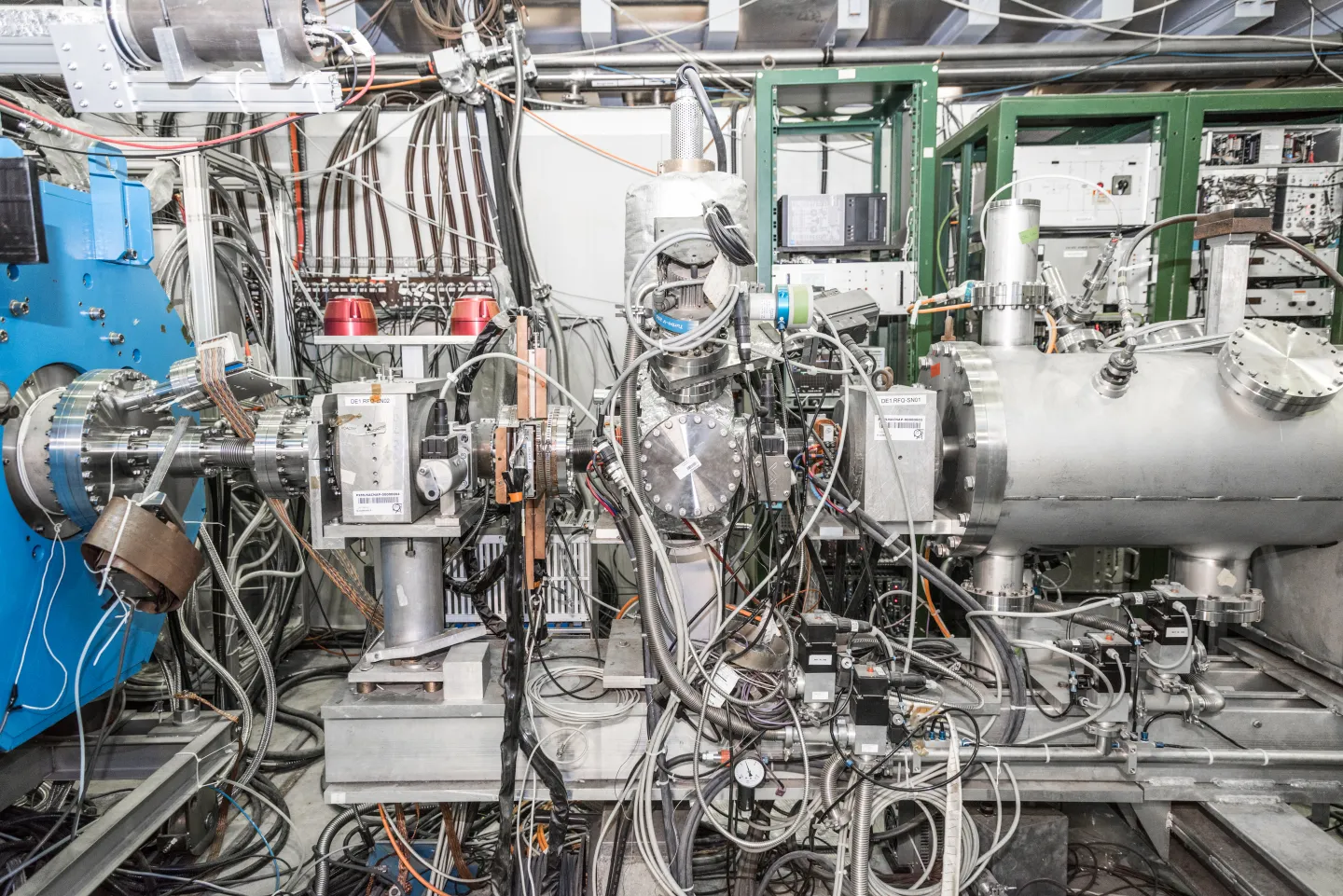
ASACUSA excites antimatter hybrid atoms immersed in superfluid helium When atoms are immersed into liquids, their atomic spectral lines at visible wavelengths become greatly broadened compared to those of single, isolated atoms. A million-fold increase in the linewidth is often observed, which obscures spectroscopic structures and prevents high-resolution optical spectroscopy. In fact, the distortions are
-
ALICE Inner Tracking System is ready for data taking
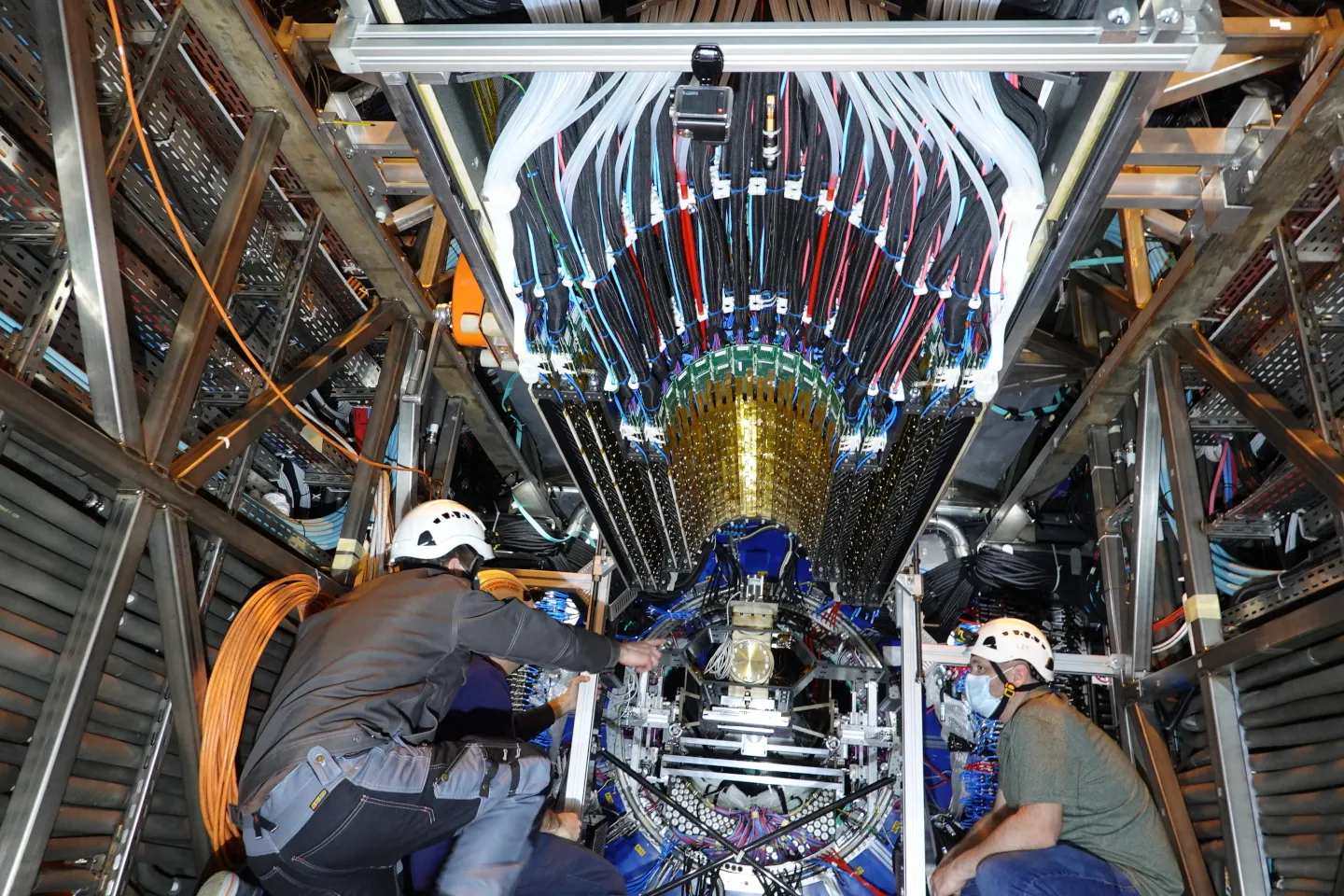
ALICE Inner Tracking System is ready for data taking The new Inner Tracking System (ITS) of the ALICE detector was installed inside the Time Projection Chamber (TPC) in spring 2021. The new ITS consists of 7 layers of monolithic pixel sensors, named ALPIDE, tiled up on linear staves of different lengths as described in (ref
-
Deciphering the Electro-Weak Phase Transition at Current and Future Colliders
Deciphering the Electro-Weak Phase Transition at Current and Future Colliders Over the past century, a whole zoo of particles has been discovered and their interactions have been investigated. This led to a puzzling mystery; on the one hand we discovered a property of Nature, known as electro-weak symmetry, which gave a unified explanation of radioactive
-

Intelligent Design for Particle Detectors
Intelligent Design for Particle Detectors Particle detectors are becoming ubiquitous: originally designed as tools for fundamental physics (collider physics experiments, neutrino observatories, etc.), they are also increasingly used in medical and industrial applications. For all use cases, the main challenge in the design of a detector can always be described by the same terms: achieving
-
n_TOF restarts its experimental programme
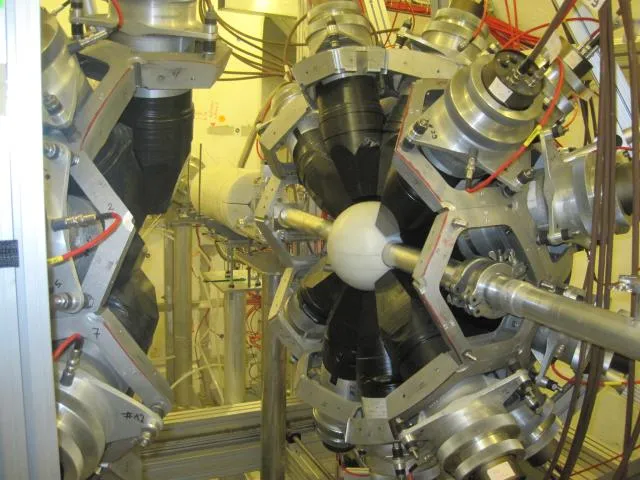
n_TOF restarts its experimental programme Following the installation of the new spallation target during LS2 and the successful commissioning during the 2021 run [1,2], the n_TOF Collaboration started in March, this year, an intense experimental programme for all three experimental areas of the facility. The n_TOF core experimental programme is the measurement of neutron induced
-
SND@LHC gears up for data taking
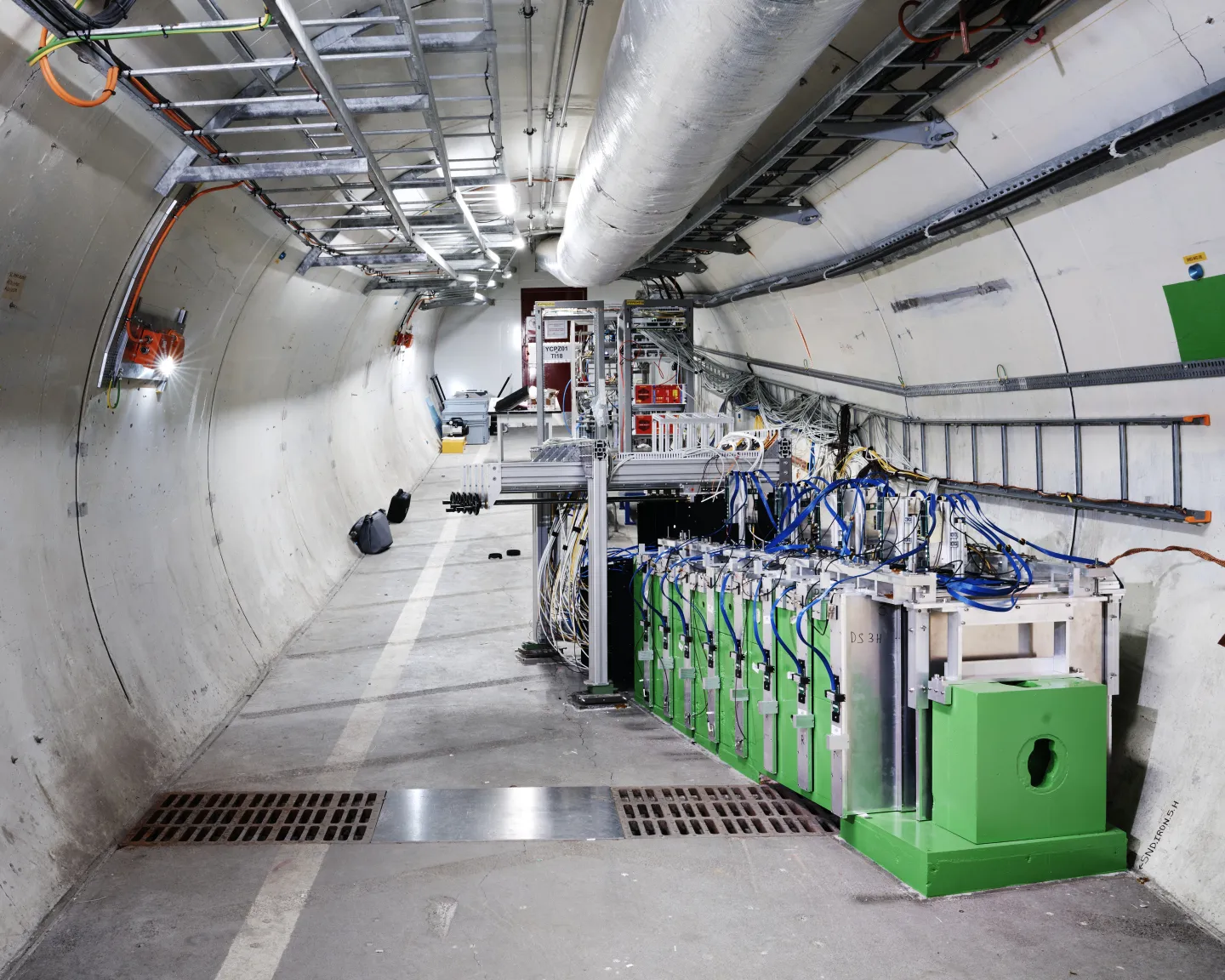
SND@LHC gears up for data taking The last fifteen months have been a full-fledged race against the clock for the SND@LHC Collaboration. The experiment was approved by the Research Board in March 2021 with the goal of taking data in Run 3 of the LHC. The Collaboration has had to construct and test the sub-detectors
-
A new High-Granularity pre-shower detector for FASER
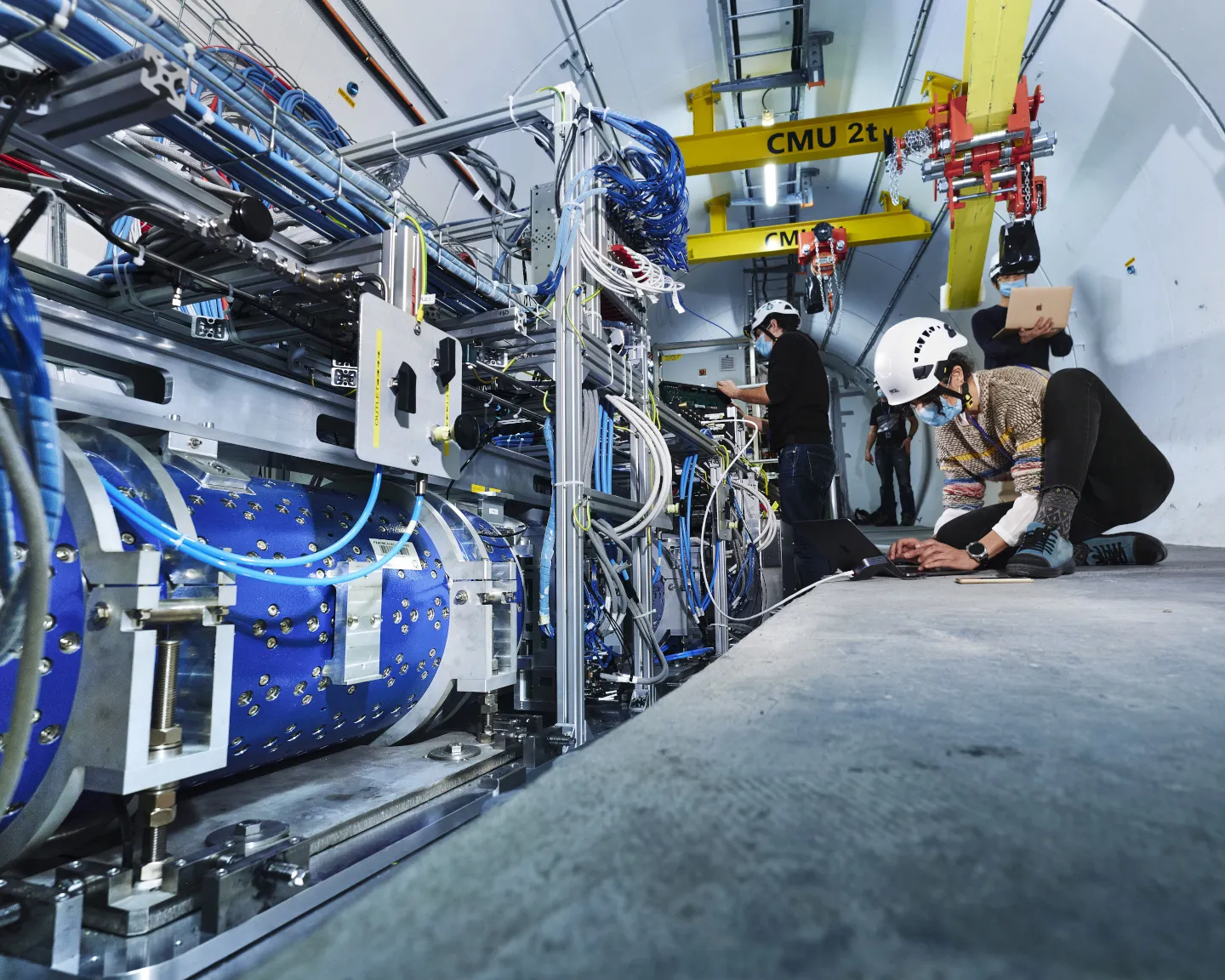
A new High-Granularity pre-shower detector for FASER The ForwArd Search ExpeRiment (FASER) is searching for new light and weakly interacting particles decaying into charged final states at the LHC [1][2]. While the first physics data taking has just started an upgrade is already foreseen to enhance the sensitivity also to Long-Lived Particles (LLP) decaying into
-
Start up of the ATLAS and CMS magnets
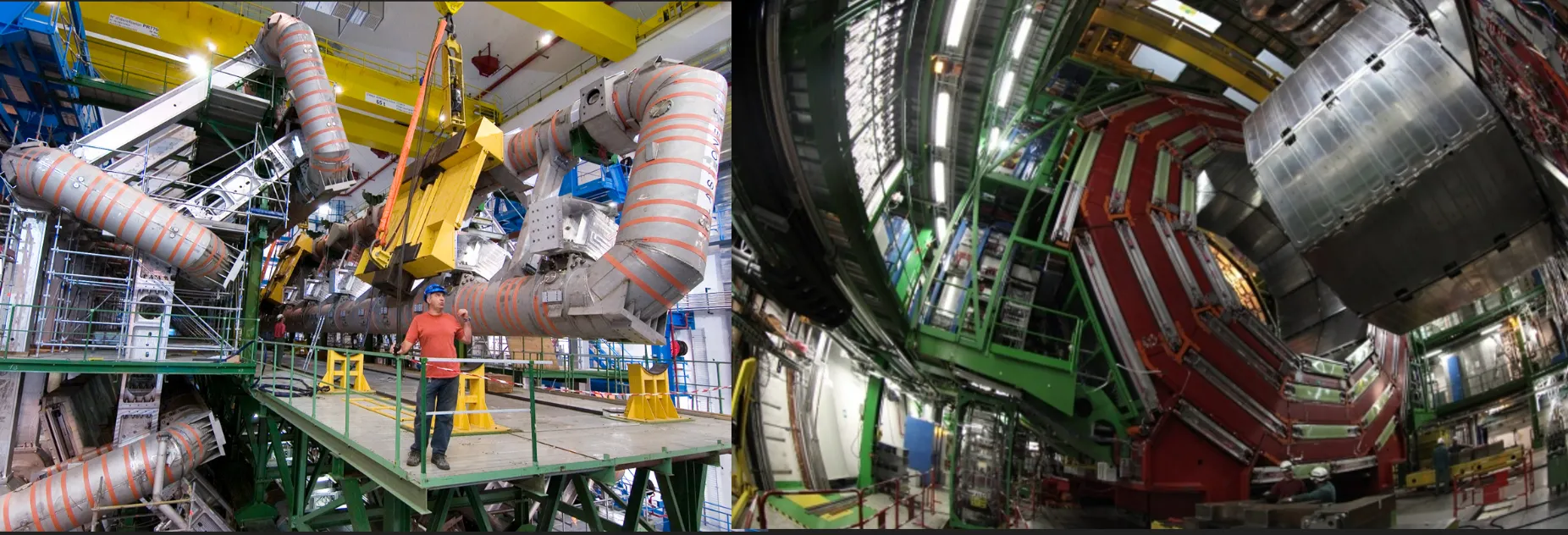
Start up of the ATLAS and CMS magnets LS2 works and commissioning of the ATLAS Superconducting Magnets In the last few years, the ATLAS superconducting magnets and associated systems have received extensive maintenance and upgrades. Following this, the magnets have recently been successfully commissioned and are now running at nominal current. During LS2, the ATLAS
-
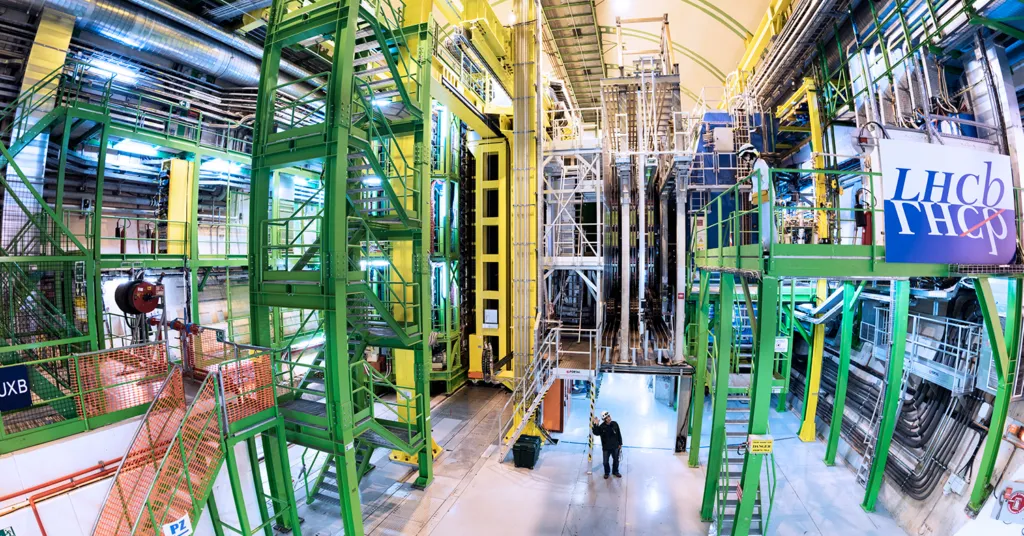
Installation of the second half of the LHCb SciFi detector
Installation of the second half of the LHCb SciFi detector The installation of the first half of the LHCb SciFi detector was already discussed in a previous EP newsletter article. The second half also proved to be rather challenging. First of all, the remaining six C-frames had to be assembled. Following CERN’s reopening and the