
Tag: Superconducting Magnets
-
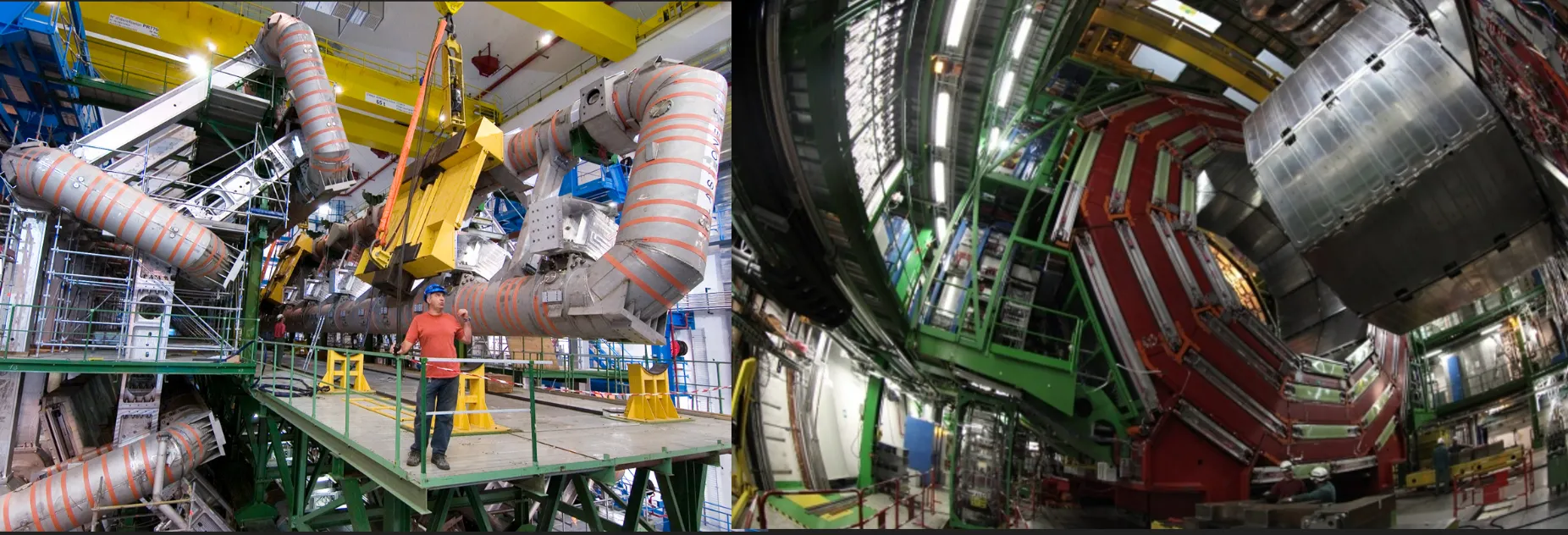
Start up of the ATLAS and CMS magnets
Start up of the ATLAS and CMS magnets LS2 works and commissioning of the ATLAS Superconducting Magnets In the last few years, the ATLAS superconducting magnets and associated systems have received extensive maintenance and upgrades. Following this, the magnets have recently been successfully commissioned and are now running at nominal current. During LS2, the ATLAS
-
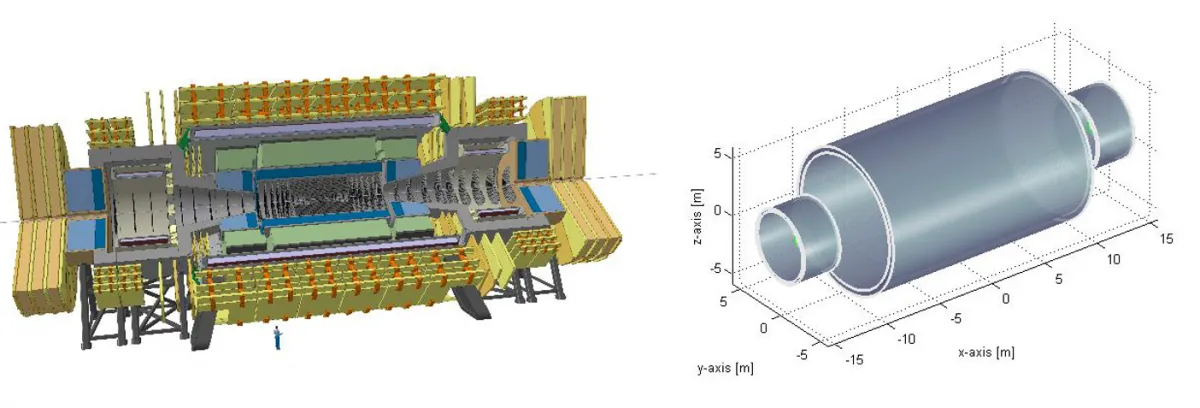
Towards an FCC-hh Detector Magnet System
Towards an FCC-hh Detector Magnet System The Future Circular Collider (FCC) study is well on its way, and will culminate in the publication of the Conceptual Design Report (CDR) early 2019. The most ambitious proposed future machine is a hadron-hadron accelerator (FCC-hh) of 100 km in circumference foreseeing proton-proton collisions at a center of mass
-
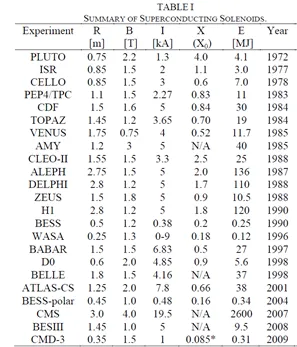
Superconducting Magnets for Particle Detectors
Superconducting Magnets for Particle Detectors BROKEN IMAGE NOT MOVED (drupal url : https://ep-news.web.cern.ch//content/superconducting-magnets-particle-detectors) Experimental particle physics at the energy frontier has been performed with colliding beam accelerators and particle detectors. Superconducting magnets for these detectors and for physics experiments including astroparticle physics have much advanced in the past years based on advancements in superconductivity. In
-
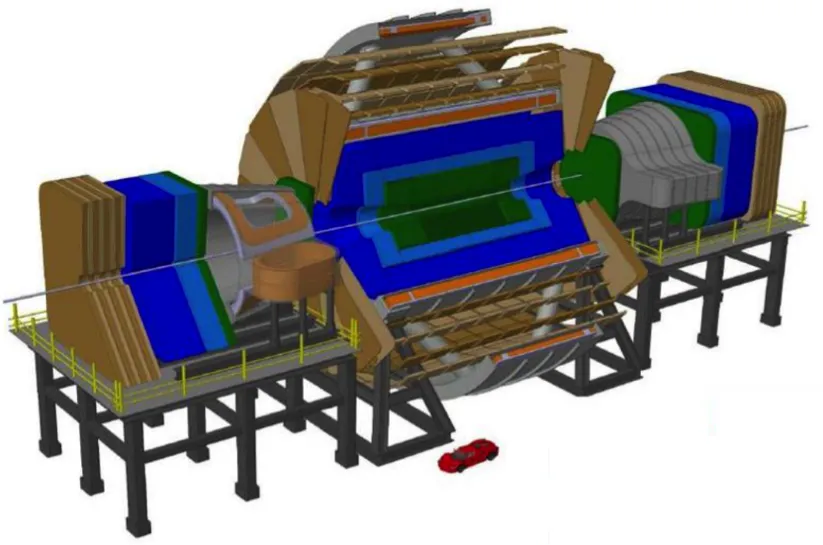
Design of Twin Solenoid & Dipoles Detector Magnet System for the Future Circular Collider
Design of Twin Solenoid & Dipoles Detector Magnet System for the Future Circular Collider The Future Circular Collider study for hadron-hadron collisions/collider (FCC-hh) foresees a collision energy of 100 TeV, which is about 7 times higher than the LHC. For the detectors this means that in order to determine the properties of the particles the