
Tag: TH
-
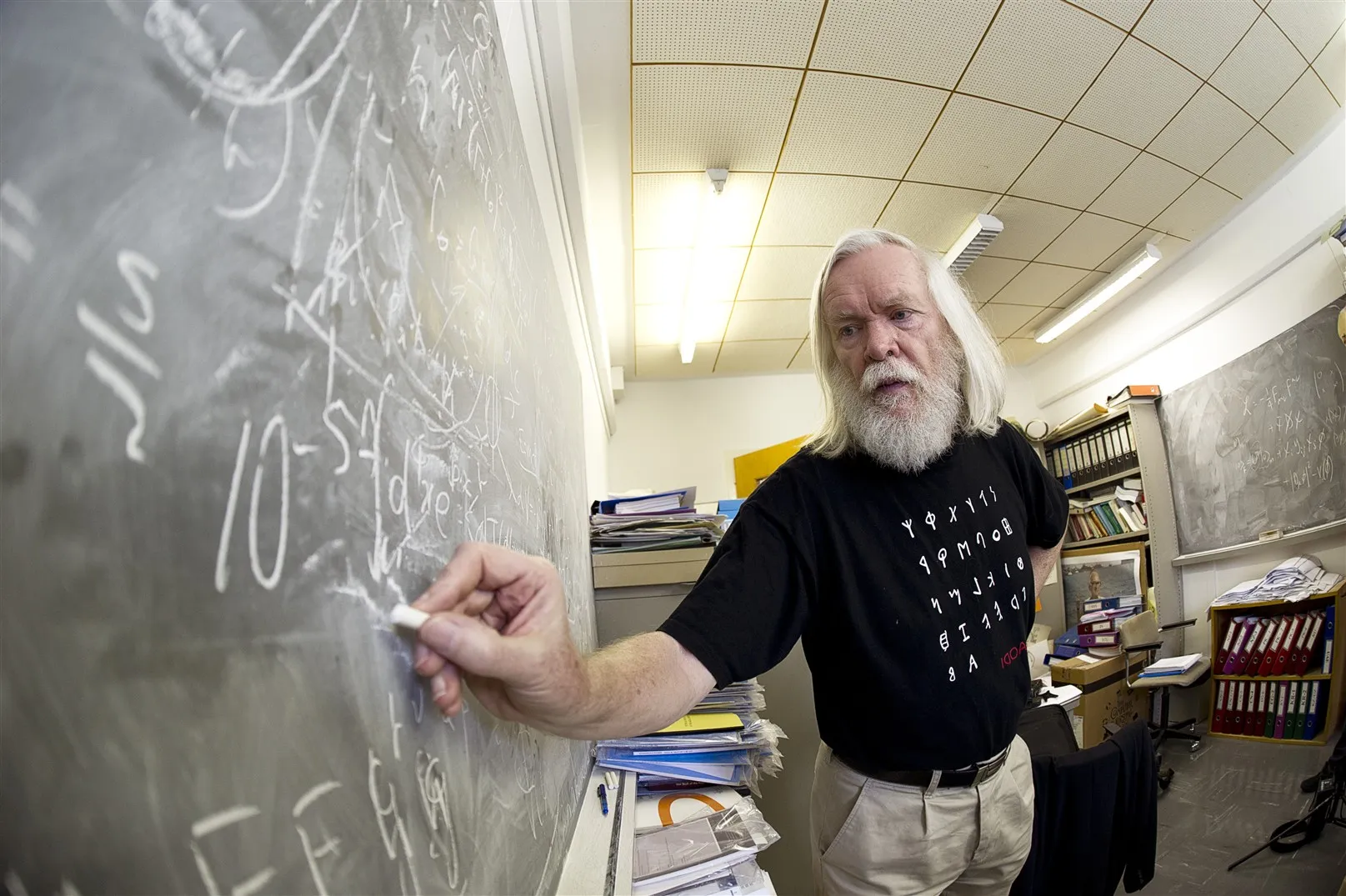
In discussion with John Ellis: The Higgs, Patience and Perseverance in Science
In discussion with John Ellis: The Higgs, Patience and Perseverance in Science For John Ellis, the history of the Higgs boson is not a neat, short story that begins with a theory paper and ends with a discovery announcement. It is a long intellectual adventure, beginning in superconductivity, moving through the construction of the electroweak
-
AI for Gravitational Waves: Building Bridges Between Scientific Communities
AI for Gravitational Waves: Building Bridges Between Scientific Communities As gravitational-wave observatories enter a new phase of sensitivity, scale and scientific ambition, the challenge is no longer only to detect faint ripples in spacetime. It is also to analyse, interpret and respond to them fast enough to open new windows on the Universe. This was
-
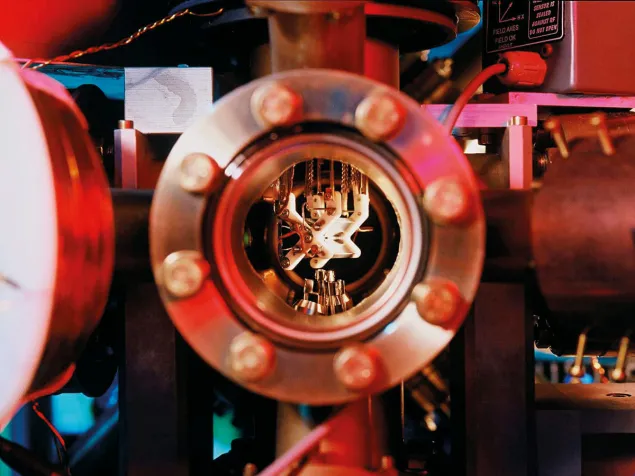
Quantum Science and Technologies and High-Energy Physics
Quantum Science and Technologies and High-Energy Physics Trapped ions: A quantum simulator at the University of Innsbruck. Credit: C Lackner/Innsbruck On 27–28 October 2025, CERN hosted the Symposium on Quantum Science and Technologies and High-Energy Physics (HEP), co-organised through the CERN Quantum Technology Initiative (QTI) (https://indico.cern.ch/event/1565747/). The event brought together experts from quantum information science,
-
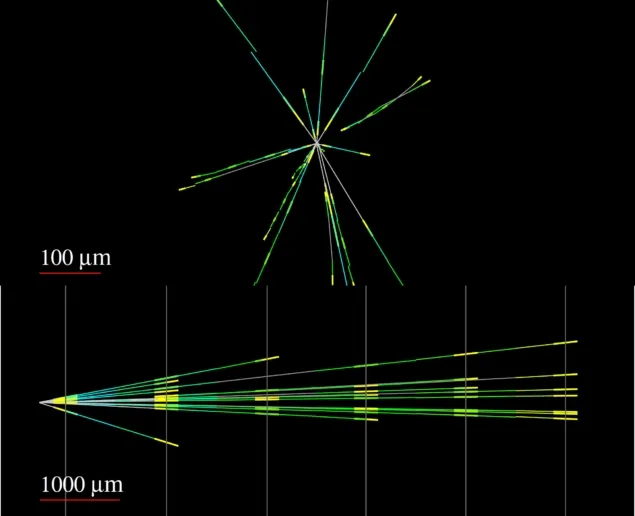
Welcome to the Collider Neutrino Era!
Welcome to the Collider Neutrino Era! Searches for new fundamental particles and interactions at hadron collider experiments such as the SPS, the TeVatron, and the LHC have traditionally focused on heavy and relatively strongly interacting states. The two general-purpose experiments of the LHC, ATLAS and CMS, were for this reason designed to cover the central
-
The origin of Lead and the s-process branching points
The origin of Lead and the s-process branching points Lead is an abundant element of the solar system and is particularly abundant on the Earth’s crust (Figure 1). The origin of three of its four stable isotopes (206Pb, 207Pb, and 208Pb) can be partially traced back to the decay of uranium and thorium (radiogenic origin)
-

Extended Scalar Sectors are considered from all angles at CERN
Extended Scalar Sectors are considered from all angles at CERN It has been more than ten years since the discovery of the first scalar particle at the electroweak scale. This particle was discovered at the LHC in 2012, and it was quickly found to be a scalar that is compatible with the Higgs boson predicted
-
DESI-Y1 and the Mystery of the Neutrino Mass
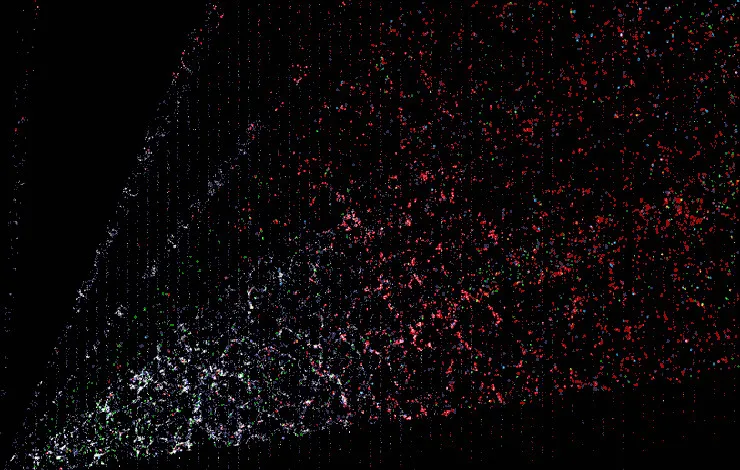
DESI-Y1 and the Mystery of the Neutrino Mass In April 2024, the Dark Energy Spectroscopic Instrument (DESI) collaboration released their first cosmological results [1]. These results made the news primarily because they showed some hints of dynamical dark energy (see the article in the same issue of the EP newsletter). However, they also had key
-
DESI may have initiated a paradigm shift in cosmology
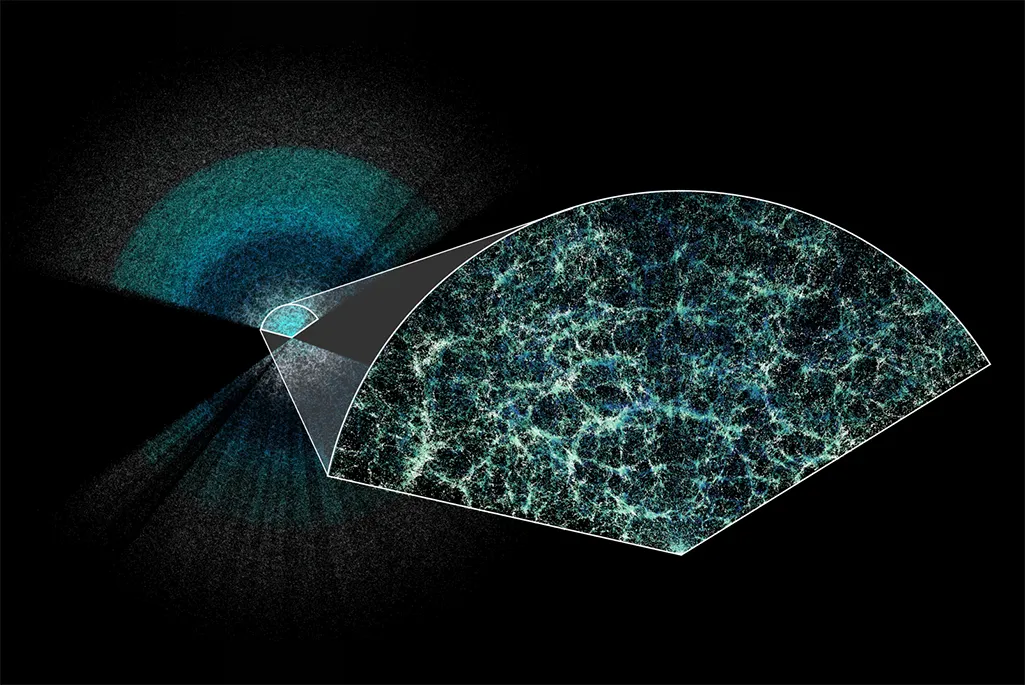
DESI may have initiated a paradigm shift in cosmology DESI has made the largest 3D map of our universe to date. Earth is at the center of this thin slice of the full map. In the magnified section, it is easy to see the underlying structure of matter in our universe. Claire Lamman/DESI collaboration. The
-

LHC anomalies hint at possible light Higgs boson signature
LHC anomalies hint at possible light Higgs boson signature In 2012 the ATLAS and CMS collaborations discovered a new particle that – within the present theoretical and experimental uncertainties – is consistent with the predictions for the Higgs boson of the Standard Model (SM) at a mass of about 125 GeV. However, it is also
-
All the Objects in the Universe (and Some Questions)
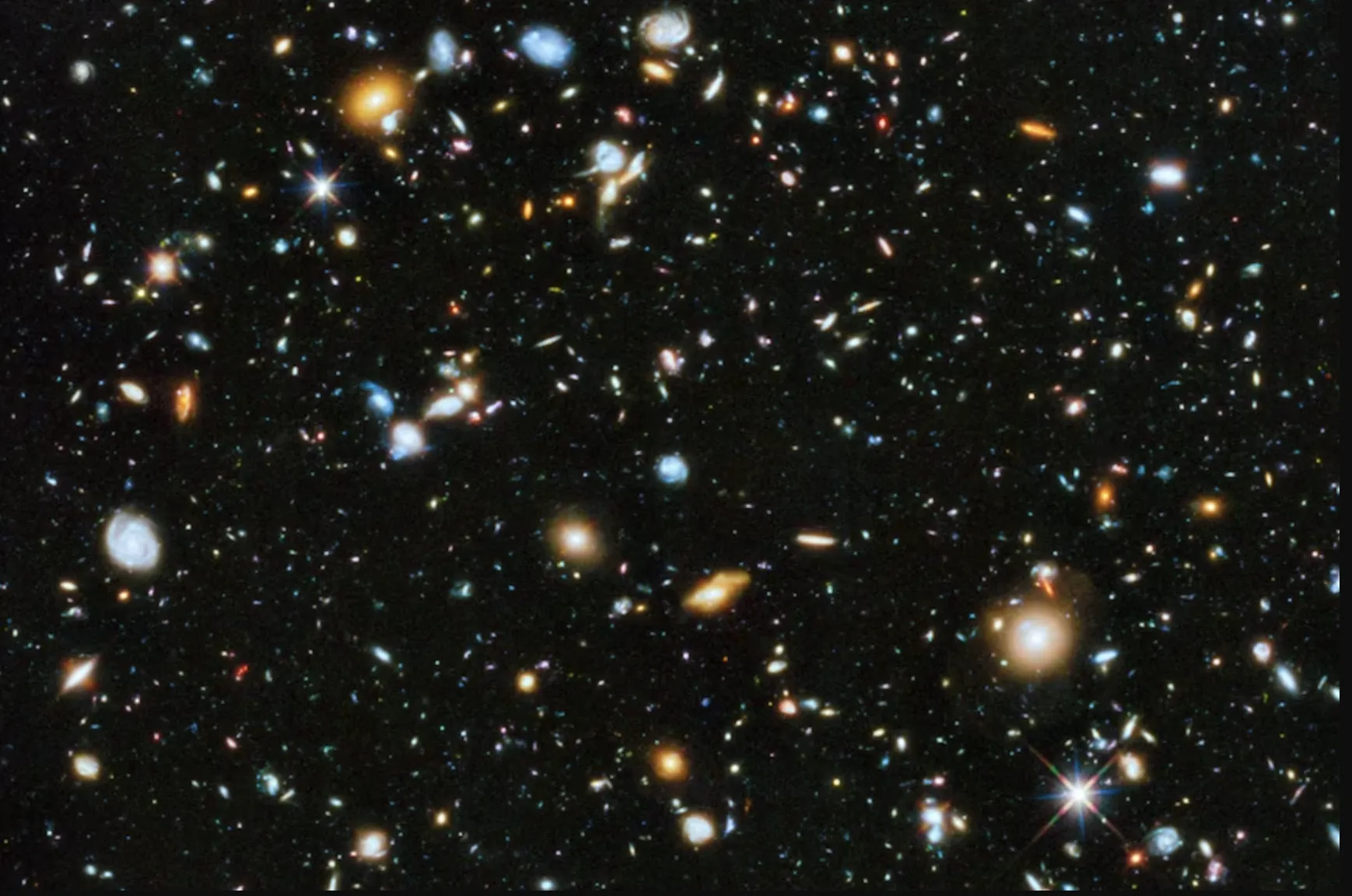
All the Objects in the Universe (and Some Questions) When astronauts look at the Earth from orbit, they are often awed by its beauty and isolation. They speak of the overview effect; a cognitive shift to a new larger perspective that gives context and meaning to their lives. For physicists, a similar, more abstract overview