
Tag: Trigger
-

New Staff Members and Fellows
New Staff Members and Fellows Maximilian Babeluk Hi, I’m Max. I recently joined the ALICE ITS3 team, where I work on sensor testing, functional verification, and in the future also chip design – particularly on MOSAIX. My main activities include testing and yield assessment across multiple integration levels (wafer probing to system tests), including data
-
Triggering in ATLAS in Run 3
Triggering in ATLAS in Run 3 The ATLAS collaboration recently celebrated its 30th anniversary following the submission of the experiment’s Letter of Intent in 1992 and has accomplished great achievements during these years. However, it is still a young experiment, with only 6% of the total data set acquired to date. During the LHC Long
-

System-on-Chip in Particle Physics Experiments
System-on-Chip in Particle Physics Experiments Many experiments in particle physics use custom-built electronics boards in order to perform event triggering and data readout. For many years now, those electronics boards have been using Field-Programmable Gate Arrays (FPGAs) for processing data. An FPGA is a type of integrated circuit that is reconfigurable and that provides fast
-
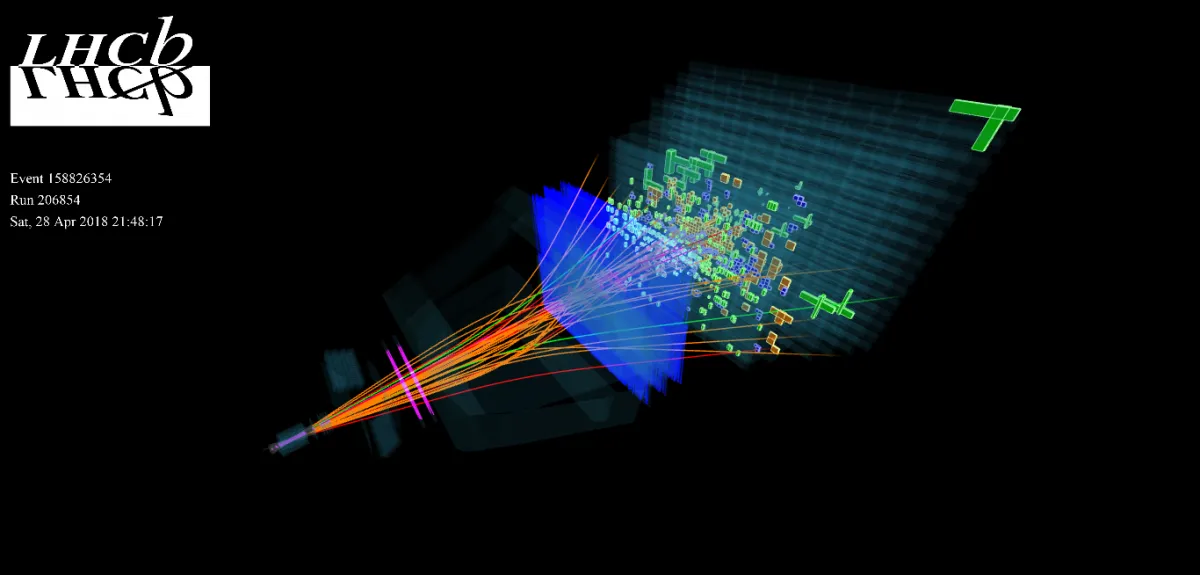
LHCb adopts GPUs in Run 3 trigger
LHCb adopts GPUs in Run 3 trigger The LHCb experiment is currently being upgraded to continue its study of beauty and charm hadrons at a five times higher instantaneous luminosity in LHC Run 3 that is now set to start in 2022. At the increased luminosity, these hadrons are produced so abundantly that selections based
-
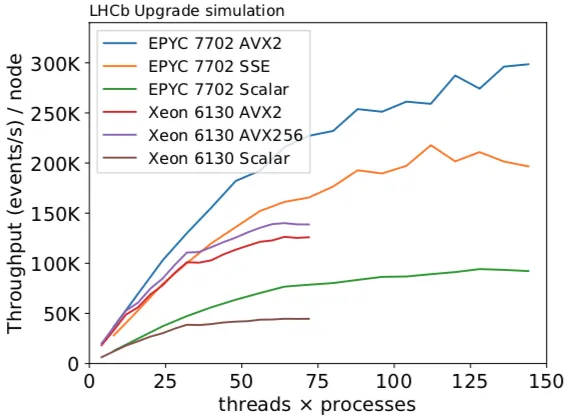
Upgrading the LHCb trigger system
Upgrading the LHCb trigger system BROKEN IMAGE NOT MOVED (drupal url : https://ep-news.web.cern.ch//content/upgrading-lhcb-trigger-system) The LHCb experiment is undergoing a significant upgrade during LS2 in order to allow it to run at a five times higher instantaneous luminosity in LHC Run 3. In order to deal with the corresponding increase in pileup per bunch crossing, most
-
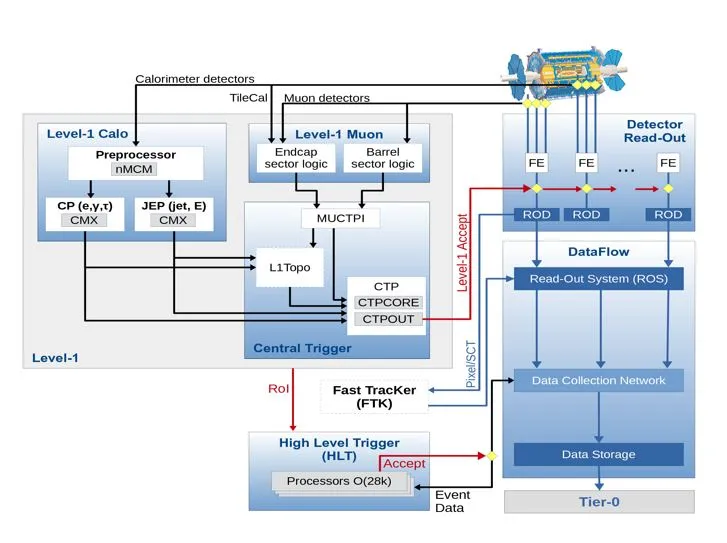
ATLAS trigger system meets the challenges of Run 2
ATLAS trigger system meets the challenges of Run 2 The trigger system is an essential component of any collider experiment as it is responsible for deciding whether or not to keep an event from a given bunch-crossing interaction for later study. During Run 2 (2015 to 2018) of the Large Hadron Collider (LHC), the trigger
-
ALICE trigger system: Present and Future
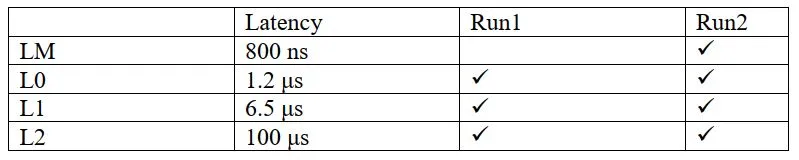
ALICE trigger system: Present and Future The purpose of any trigger system is to select an event sample strongly enriched in physics processes of interest, while rejecting those not of interest, and to do so in such a way as to make efficient use of the available detectors. The prime objective of the ALICE experiment
-
Trigger strategies for the LHCb experiment
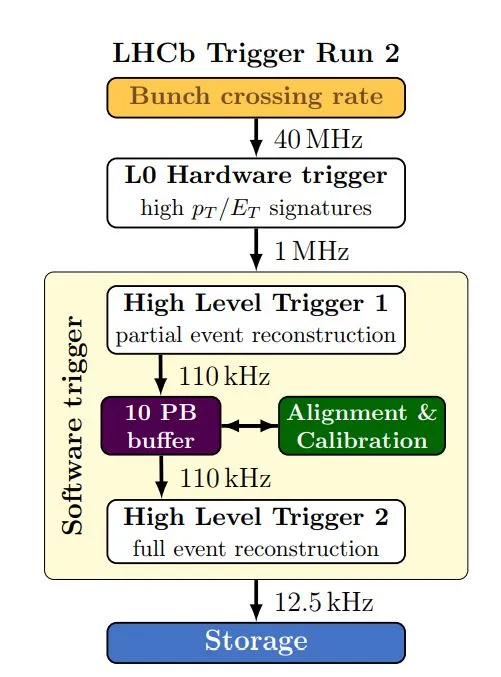
Trigger strategies for the LHCb experiment The LHCb experiment has finished a very successful data taking period in Run 2, collecting an additional 6 inverse femtobarns of proton-proton collisions. A significant modification to the Reconstruction and Trigger system of LHCb was implemented during the first LHC long shutdown period that both enhanced the physics goals
-
CMS Trigger: Lessons from LHC Run 2
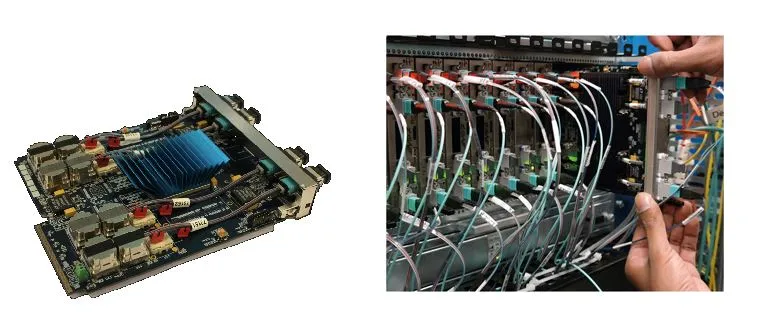
CMS Trigger: Lessons from LHC Run 2 The CMS experiment has a two-level trigger system [1], to reduce the number of events stored from the LHC bunch crossing rate of 40 MHz to around 1 kHz. The first level (the Level-1) uses custom electronics to reduce the rate of events to 100 kHz, and the