
Category: Newsletter
-
Medipix presented at TEDx@CERN
Medipix presented at TEDx@CERN On May 3rd CERN hosted the TEDx@CERN event. TED is a nonprofit organisation devoted to the concept of ‘Ideas Worth Spreading’. The TEDx@CERN event included a number of speakers covering a wide range of topics from cosmology (by Nobel Prize-winner, George Smoot) to the Higgs Boson to DNA research. Among the
-
RD50 and RD51 research projects on silicon and gaseous detector developments
RD50 and RD51 research projects on silicon and gaseous detector developments Common Research and Development consortia provide CERN and CERN member institutions with many benefits. For many detector developments significant R&D is needed in order to bring new detector concepts to a state where they are mature enough to be proposed as part of a
-
The CERN – Latin America School
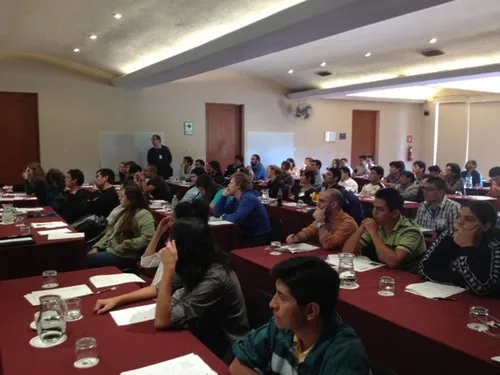
The CERN – Latin America School Each year CERN organizes a number of schools that give junior researchers the chance to study the latest research topics in High Energy Physics. Two Schools are held by CERN every year: namely the European School that is annually organized and another School that is organized successively in Latin
-
The RD50 Collaboration – Radiation tolerant silicon detectors
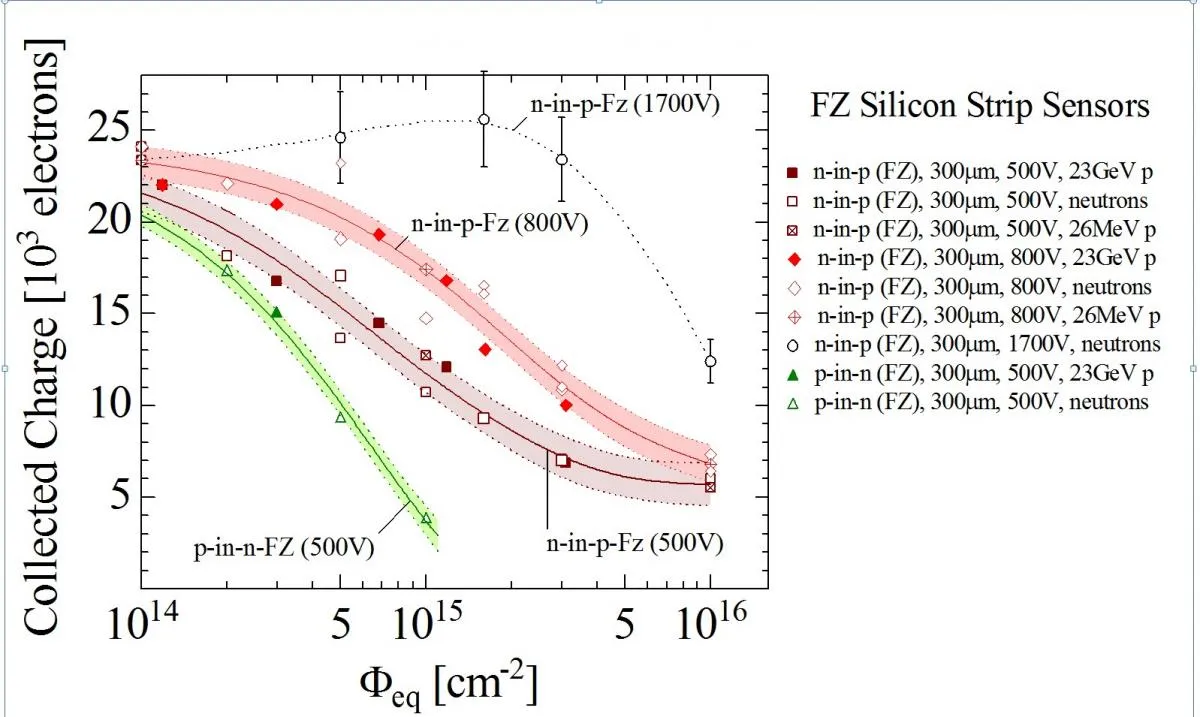
The RD50 Collaboration – Radiation tolerant silicon detectors In 2001 the RD50 Collaboration “Radiation hard semiconductor devices for high luminosity colliders” was formed in view of the first luminosity upgrade scenarios for the LHC. It was obvious that the LHC tracking detectors would not survive the radiation damage arising from a foreseen luminosity upgrade and
-
The new proton & mixed-field Irradiation facility at CERN PS
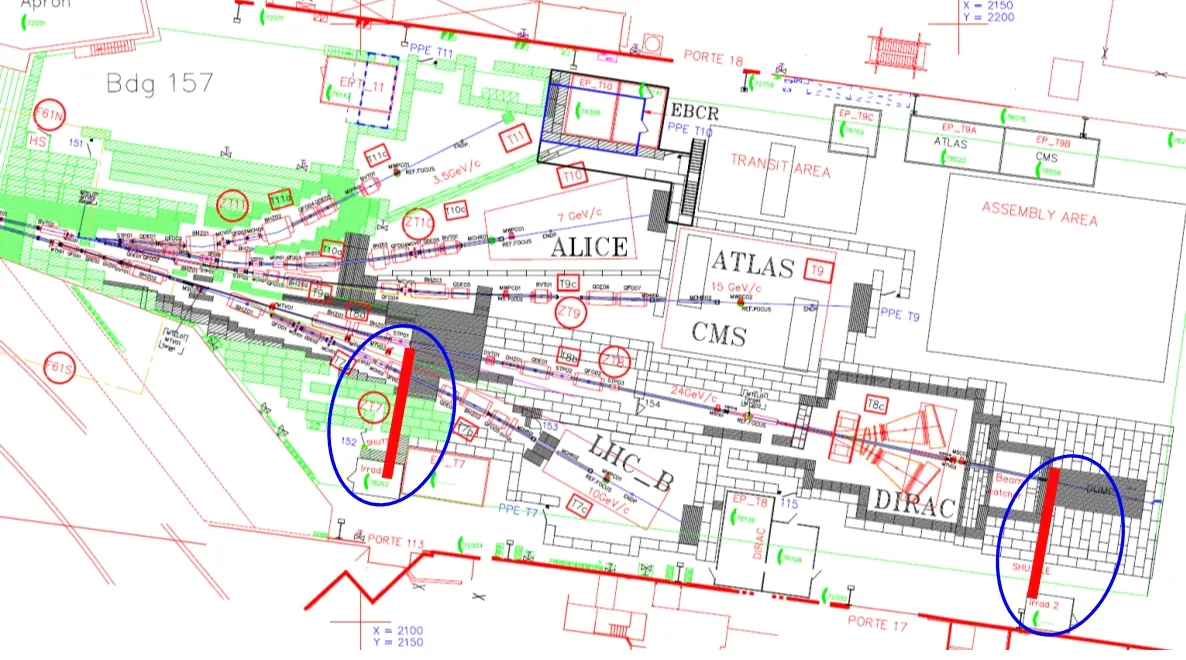
The new proton & mixed-field Irradiation facility at CERN PS Irradiation is the process by which an object is exposed to radiation. Although this term is fairly generic, the performing of irradiation experiments has a very important meaning for the PH department. In fact, the PH department is deeply involved in radiation tolerance testing since
-

Plancks results: Theoretical cosmologists’ perspective
Plancks results: Theoretical cosmologists' perspective Julien Lesgourgues and Jan Hamann, respectively staff and post-doctoral fellows of the TH unit here at CERN, are members of the Planck collaboration, and have contributed to the analysis of the Planck data presented in the series of articles published by collaboration in March. Another staff member of the TH
-
Planck mission releases first cosmology results
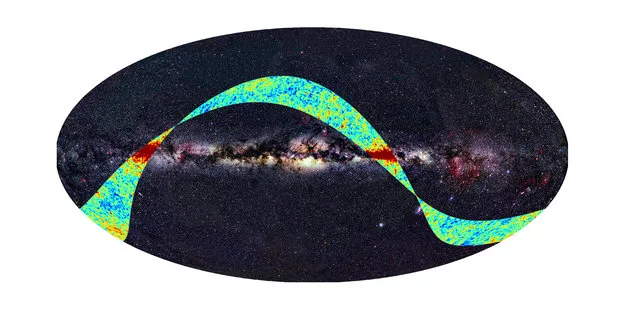
Planck mission releases first cosmology results The «Planck» was launched by the European Space Agency aiming at a detailed record of the microwave background radiation, a relic of the primordial plasma filling the universe during the first hundred thousand years after the Big Bang, that is still observable today. ESA’s Planck satellite has been surveying
-

Collecting the pieces of the Infinity Puzzle – An Interview with Frank Close
Collecting the pieces of the Infinity Puzzle – An Interview with Frank Close So what is the Infinity Puzzle about? When quantum electrodynamics was used beyond the simplest approximations it gave nonsense: infinity came as the answer for quantities that have sensible measured values. This problem was solved in 1947, when a way was found
-
Interview with Peter Jenni
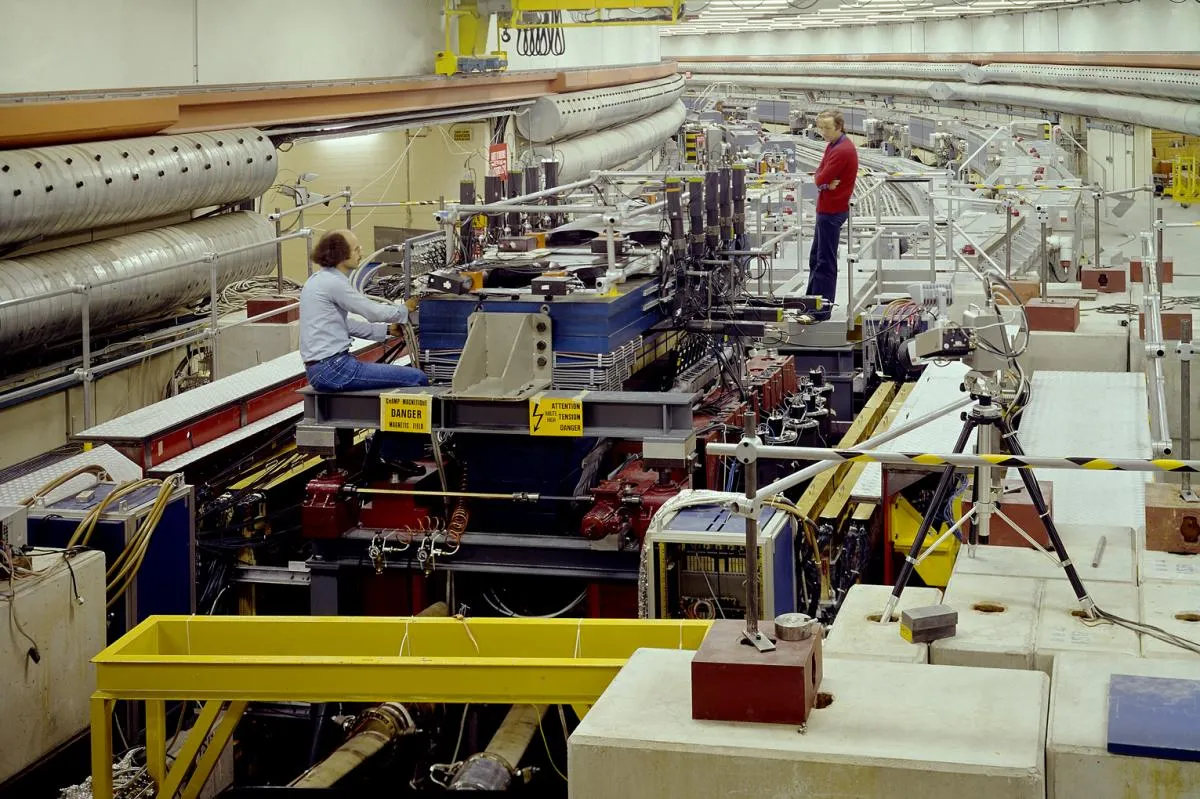
Interview with Peter Jenni Peter Jenni's interest in physics began in a very young age. He had always enjoyed reading about physics although his high-school physics teacher wasn’t very inspiring as an educator. Studying Physics seemed as a natural choice, hence he decided to focus on experimental physics as well as astronomy and mathematics. He
-
TODO List
TODO List