
Category: Newsletter
-

Statistics Matter: An interview with Constantino Tsallis
Statistics Matter: An interview with Constantino Tsallis Constantino Tsallis introduced what is presently known as Tsallis entropy and Tsallis statistics, also known as q-statistics, in his 1988 paper "Possible generalization of Boltzmann–Gibbs statistics" published in the Journal of Statistical Physics. Tsallis-statistics is based on the idea of generalizing the Boltzmann-Gibbs entropy by using probabilities q;
-
The impact of fundamental Physics on Medicine
The impact of fundamental Physics on Medicine BROKEN IMAGE NOT MOVED (drupal url : https://ep-news.web.cern.ch//content/impact-fundamental-physics-medicine) We warmly invite members of the PH department to attend Professor Ugo Amaldi's (TERA Foundation and Technische Universität München) lecture on: "Science and society: the impace of fundamental physics on medicine" The event will take place on Thursday 10 April
-
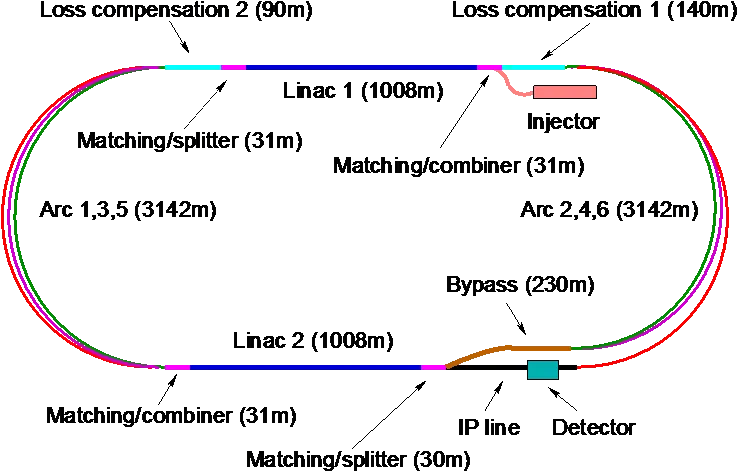
FCC-he: A Renaissance of Deep Inelastic Scattering at CERN
FCC-he: A Renaissance of Deep Inelastic Scattering at CERN There was a time when CERN was the Mecca of deep inelastic lepton-hadron scattering (DIS). Roughly 30-40 years ago, various muon and neutrino scattering experiments were pursued to develop the Quark-Parton Model of hadronic matter establishing Quantum Chromodynamics as the appropriate gauge field theory of strong
-

A future e+e- circular collider
A future e+e- circular collider As discussed during the FCC kick-off meeting, there is more than one variety of FCC under study. Besides the long-term goal of a 100 TeV proton-proton collider, the study includes, as a first step, a 90-400 GeV high-luminosity e+e– machine, FCC-ee, a.k.a. TLEP,sensitive to new physics but not only at
-
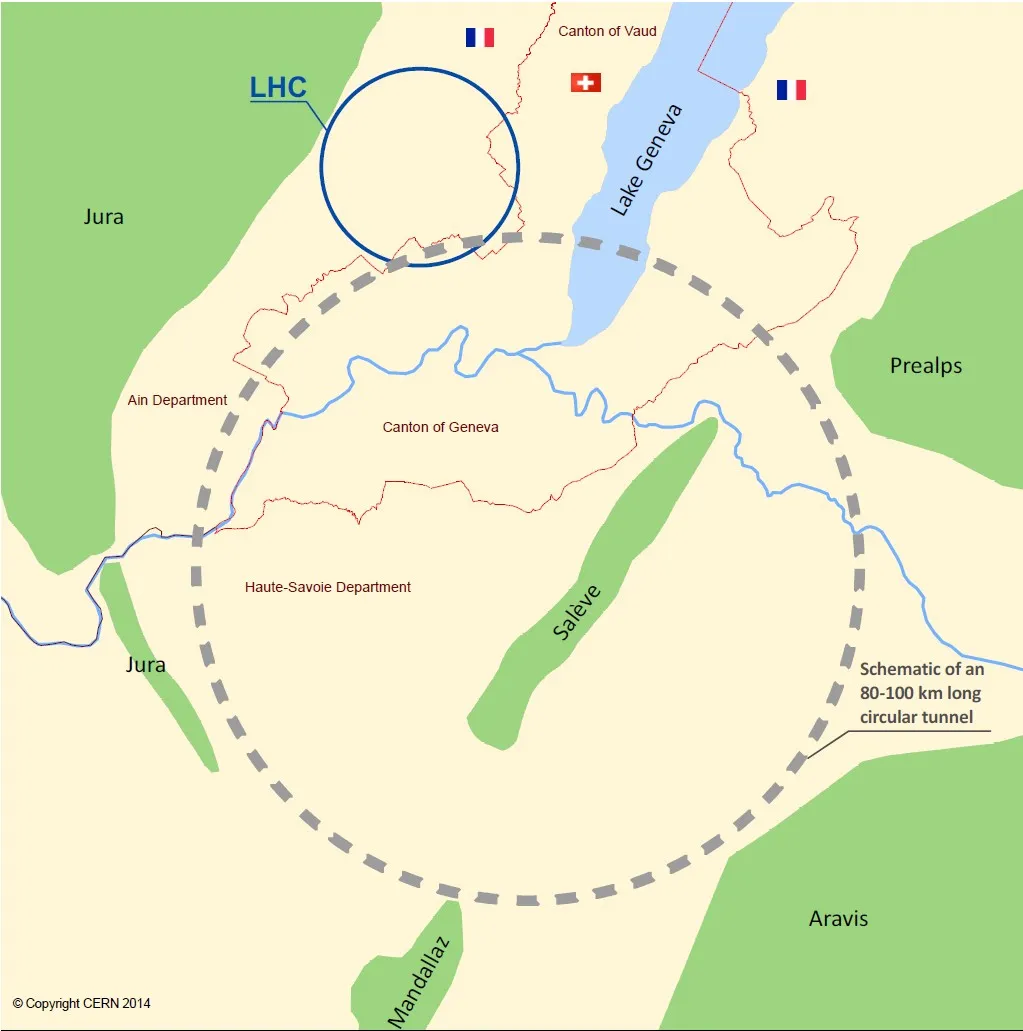
A future proton-proton collider
A future proton-proton collider The very stimulating FCC kick-off meeting was an occasion to discuss preliminary ideas about the physics case and potential of a 100 TeV proton-proton collider (FCC-hh), the experimental challenges and possible detector layouts. The FCC-hh activity started in November 2013. It already benefitted a lot from previous and ongoing efforts elsewhere
-
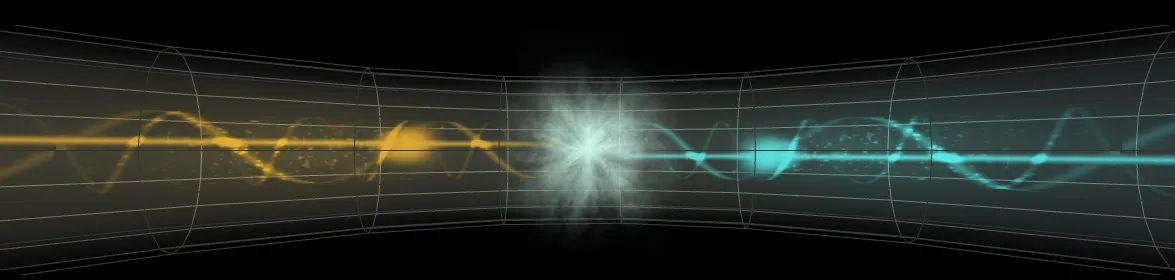
Virtual Atom Smasher: contribute to CERN’s scientific discoveries
Virtual Atom Smasher: contribute to CERN's scientific discoveries Theoretical physicists at CERN are testing different theories that describe the nature of the particle world and their interactions in subatomic level. They create mathematical models that describe the theories and they use them to simulate high-energy particle collisions. The software used for this process are called
-

Asia-Europe-Pacific School of High-Energy Physics, AEPSHEP2014
Asia-Europe-Pacific School of High-Energy Physics, AEPSHEP2014 The second Asia-Europe-Pacific School of High-Energy Physics, AEPSHEP2014, will be held in Puri, India, 4-17 November 2014, is open for applications (deadline 11 April 2014). AEPSHEP is held every second year, hosted in countries in the Asia-Pacific region. The first School in the series was held in Fukuoka, Japan
-
Why is physics beautiful?
Why is physics beautiful? The physics done at CERN aims at understanding how particles and forces act in the subatomic world and are organized to form everything we observe around us. By using what we learn on the path towards larger and larger collision energies, we also model the first instants after the Big Bang,
-

ICTR-PHE 2014: Uniting physics, biology and medicine
ICTR-PHE 2014: Uniting physics, biology and medicine The ICTR-PHE 2014 conference, co-chaired by Jacques Bernier and Manjit Dosanjh, introduced a fresh approach to the medical applications that the fundamental research conducted at CERN can have. Detector techniques developed by physicists are no longer confined to cancer treatment; innovative solutions for better healthcare are on the
-

Editorial – May 2014
Editorial – May 2014 Dear Colleagues, Although still in full swing of the preparation of the next round of data taking, due to start early next year, the LHC experiments are more and more intensively looking into the future. Therefore, this issue of the PH Newsletter is focused on their upgrade programmes, in particular the