
Probing lithium dynamics at buried interfaces with β-detected NMR at ISOLDE
Spin-polarised probes have been central to nuclear and particle physics since the discovery of parity violation by Chien-Shiung Wu in 1956, who detected asymmetric emission of β-radiation from low-temperature 60Co in a magnetic field. The directional distribution of radiation from aligned spins provides access to key properties, including nuclear moments, hyperfine interactions, spin parameters, and local magnetic or structural characteristics of materials[1]. This makes spin-polarised beams a unique tool across both fundamental and applied research domains, including investigations of fundamental interactions, nuclear structure, condensed matter, and materials science.
The Versatile Ion-polarized Techniques Online (VITO) beamline at the ISOLDE facility is dedicated to providing spin-polarised beams of unstable nuclei for such studies, achieved through laser optical pumping of atomic hyperfine states[2]. VITO is the only setup of its kind in Europe, while the ISAC facility at TRIUMF in Canada hosts the only other beamline worldwide capable of delivering polarised beams. Recent studies at VITO include decay-spectroscopy measurements with spin-oriented nuclei, funded by the EU Horizon 2020 Marie Skłodowska-Curie programme and a project focused on determining the magnetisation distribution in potassium isotopes, funded by an ERC Consolidator Grant PresOBEN[3][4].
The β-detected nuclear magnetic resonance (β-NMR) technique, routinely employed at VITO, is based on measuring the asymmetry of β-decay following the implantation of short-lived, spin-polarised nuclei into a host material. Similarly to conventional NMR, β-detected NMR provides detailed information on the local magnetic environment of the nucleus, revealing insights into its local structure and mobility. However, the uniqueness of β-NMR, with specific reference to materials science, lies in its exceptional sensitivity and high spatial and temporal resolution, allowing probing of specific spatial regions. Low-energy, non-destructive implantations also enable the study of buried interfaces that are otherwise difficult to access using conventional techniques.
These features make β-NMR particularly suited for solid-state battery (SSB) research, as it enables detailed investigation of interfacial and nanoscale processes that are critical for successfully transitioning from liquid-based electrolytes to all-solid-state systems. This area of research is extremely active; SSBs are widely viewed as the next generation in energy storage, offering superior energy density, enhanced safety, and longer lifetimes compared to their traditional liquid-electrolyte counterparts. SSBs are attracting major scientific and industrial attention and, with the global market expected to hit €42 billion by 2035, the push to advance this technology is only growing stronger[5].
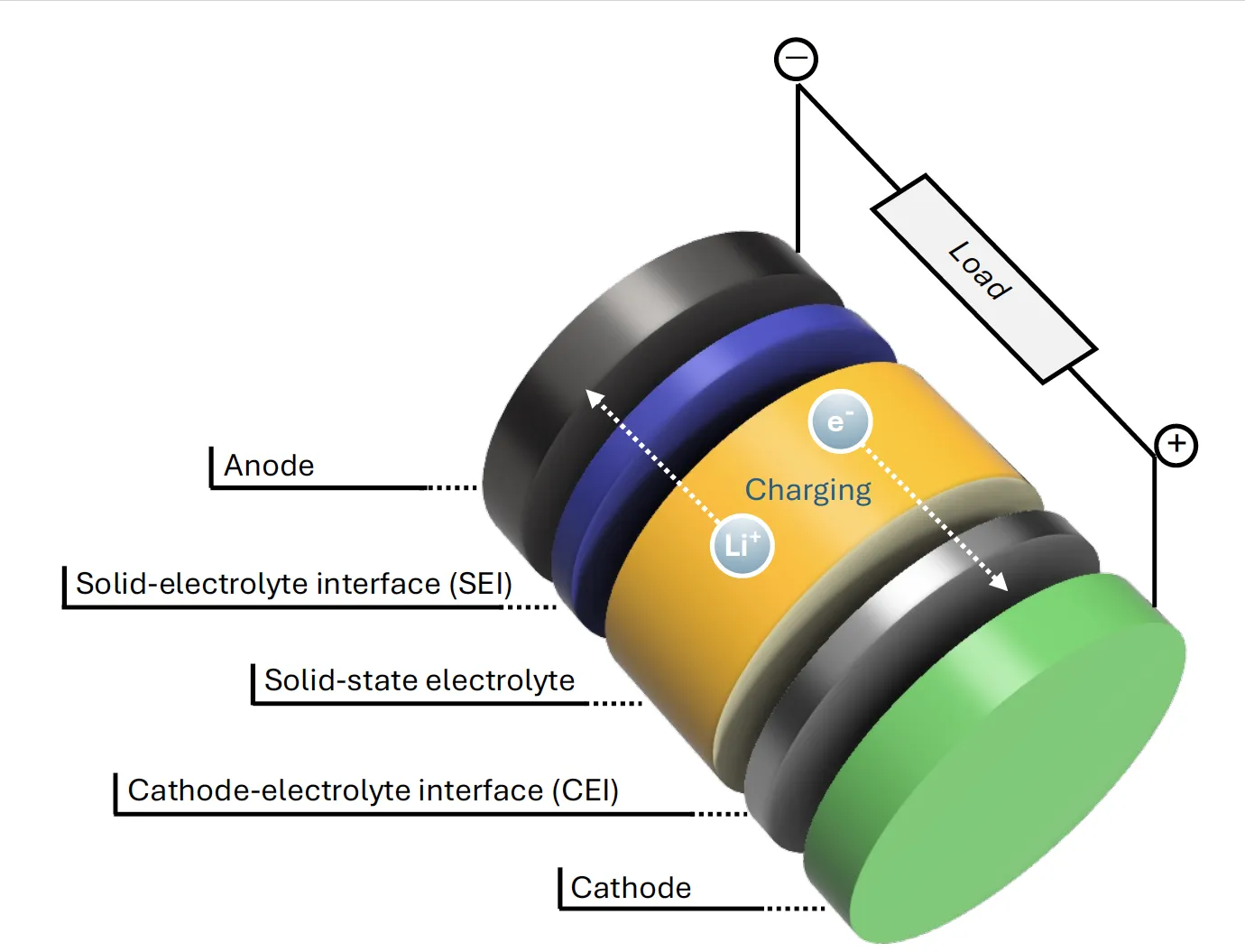
Figure 1: A schematic of the layers in a simple SSB showing the direction of Li+ and e− movement during charging.
Figure 1 presents the structure of the simplest SSB, highlighting the anode, cathode, and electrolyte, along with the interfaces that can develop during material layering: the solid-electrolyte interface (SEI) and cathode-electrolyte interface (CEI). Lithium metal anodes are key in achieving high energy density, but their reaction with solid electrolytes often leads to the formation of an SEI. While this interface is usually self-passivating, it can impede ion transport, limiting charge transfer and rate capability[6]. This challenge underscores the need for more advanced techniques that can directly examine the resistivity over these buried interfaces. Such methods are crucial for improving SSB performance and understanding the relationship between interfacial composition, ion transport, and overall battery performance, which remains uncertain due to the fundamental limitations of conventional techniques, including low resolution, destructive etching, and radiation-induced damage[7].
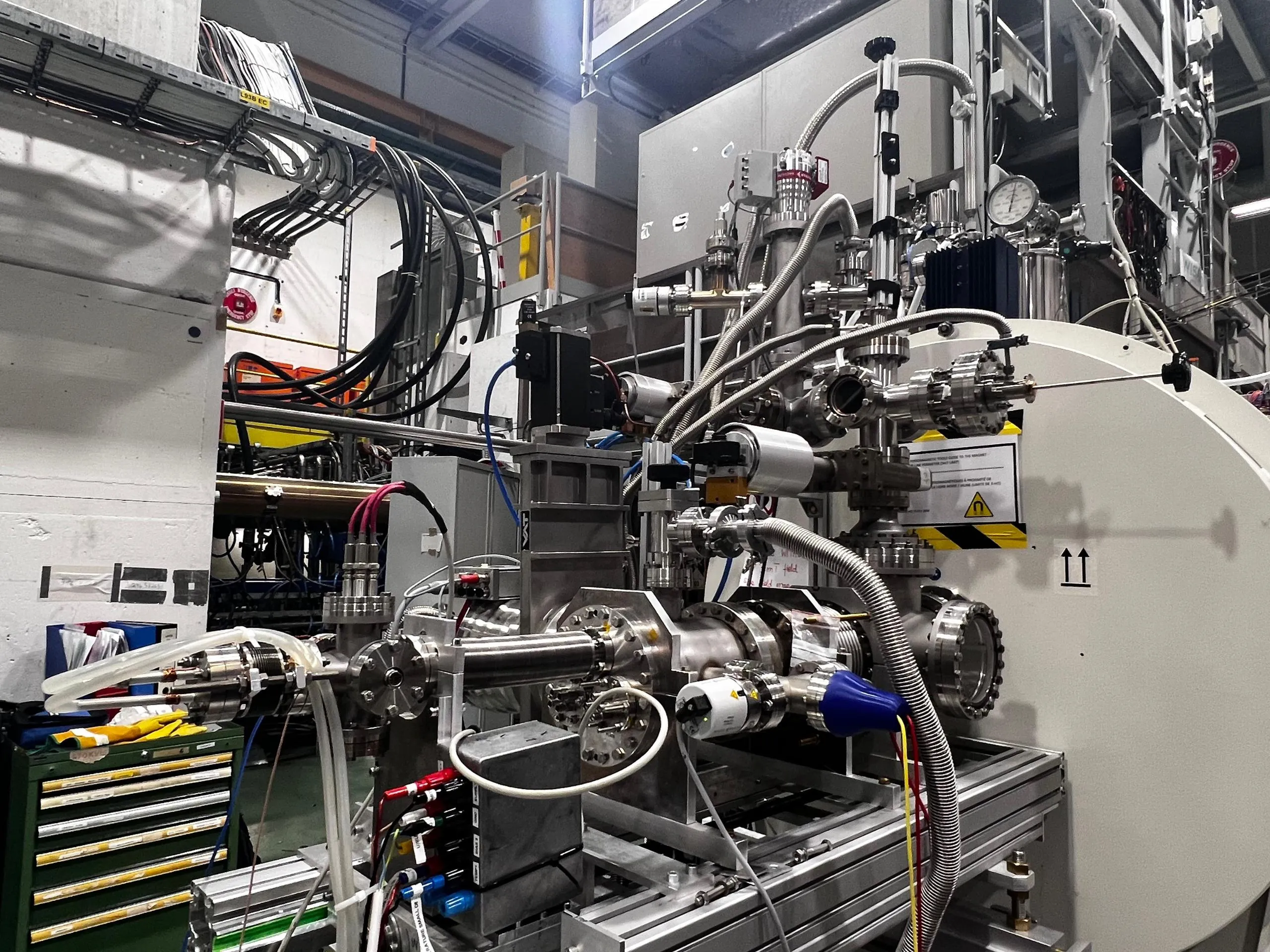
The SSB project represents the introduction of materials science applications of β-detected NMR at VITO, and the expansion necessitated the reconstruction of the end station, shown in Figure 2, made possible thanks to funding from CERN’s Knowledge Transfer (KT) group. The new end station encompassed many new features: a) ultra-high vacuum capabilities, b) controlled heating and cooling of samples, c) insertion of multiple air-sensitive samples via a load-lock, d) new radio-frequency coils, e) remote transport of samples using manipulators, and f) a cryogenic trap. Synergy with VITO’s magnetisation distribution project, which also ran in 2025 with the same station, enabled integration of new energy-resolving β-detectors and a collimator, demonstrating the setup’s adaptability for other nuclear physics campaigns[8]. Figure 3 illustrates the main internal components of the station, with two β-detectors placed at 0° and 180° relative to the polarisation axis. A movable carriage hosts one of the detectors, together with two radio-frequency coil capacitors, two radio-frequency coils, a resistive heater, and the sample. A cryogenic trap positioned between the sample and the second β-detector improves the vacuum in the sample region.
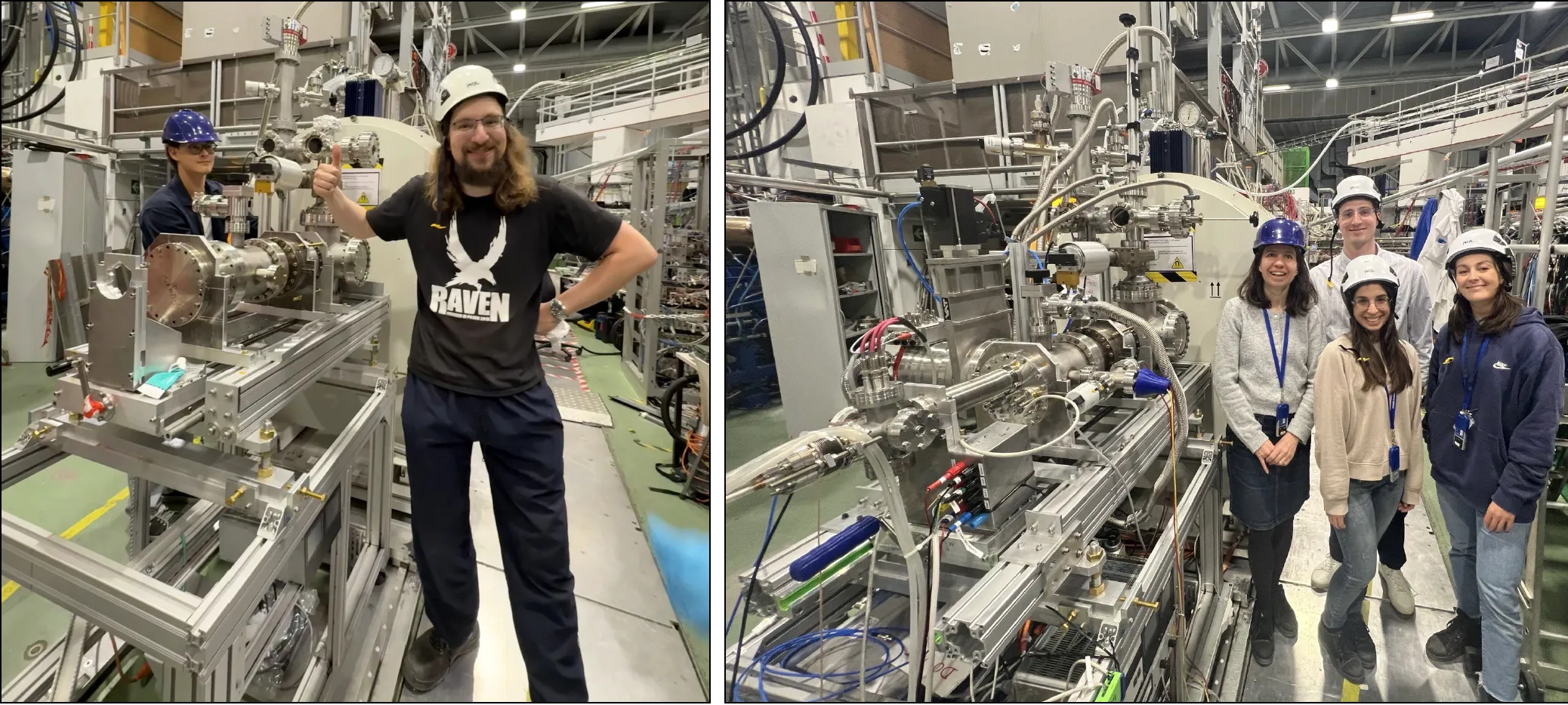
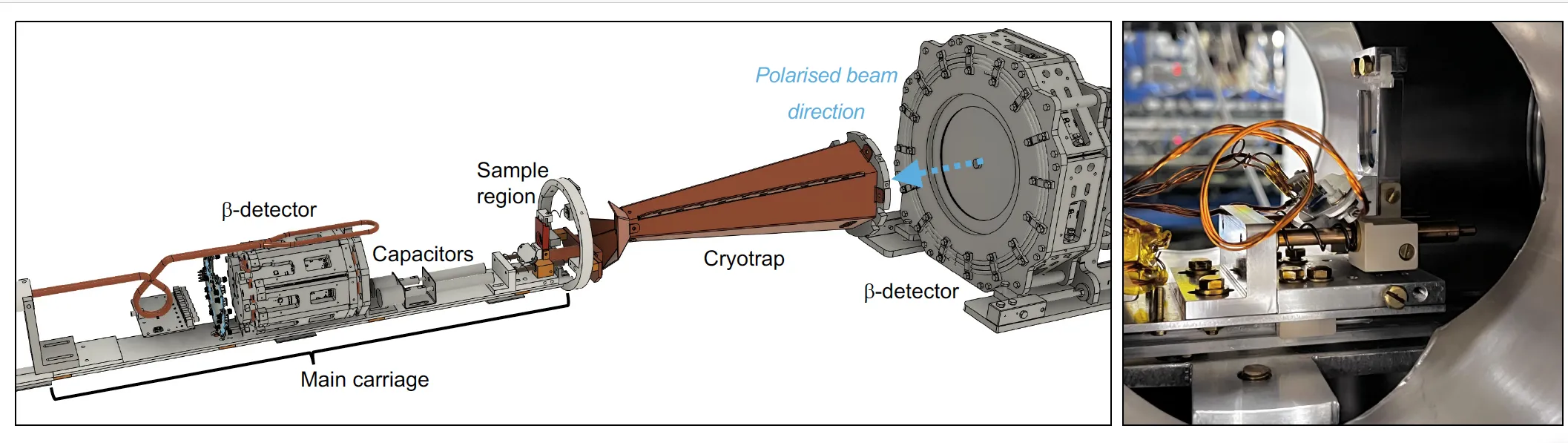
Figure 2: The newly developed end station at VITO to accommodate material science studies. Left: Michal Lupinski (CERN technical student) and Michael Pešek (CERN fellow). Right: Magdalena Kowalska (VITO team leader), Ilaria Michelon (PhD student), Jiří Jalůvka (CERN technical student), and Amy Sparks (CERN fellow and SSB project spokesperson).
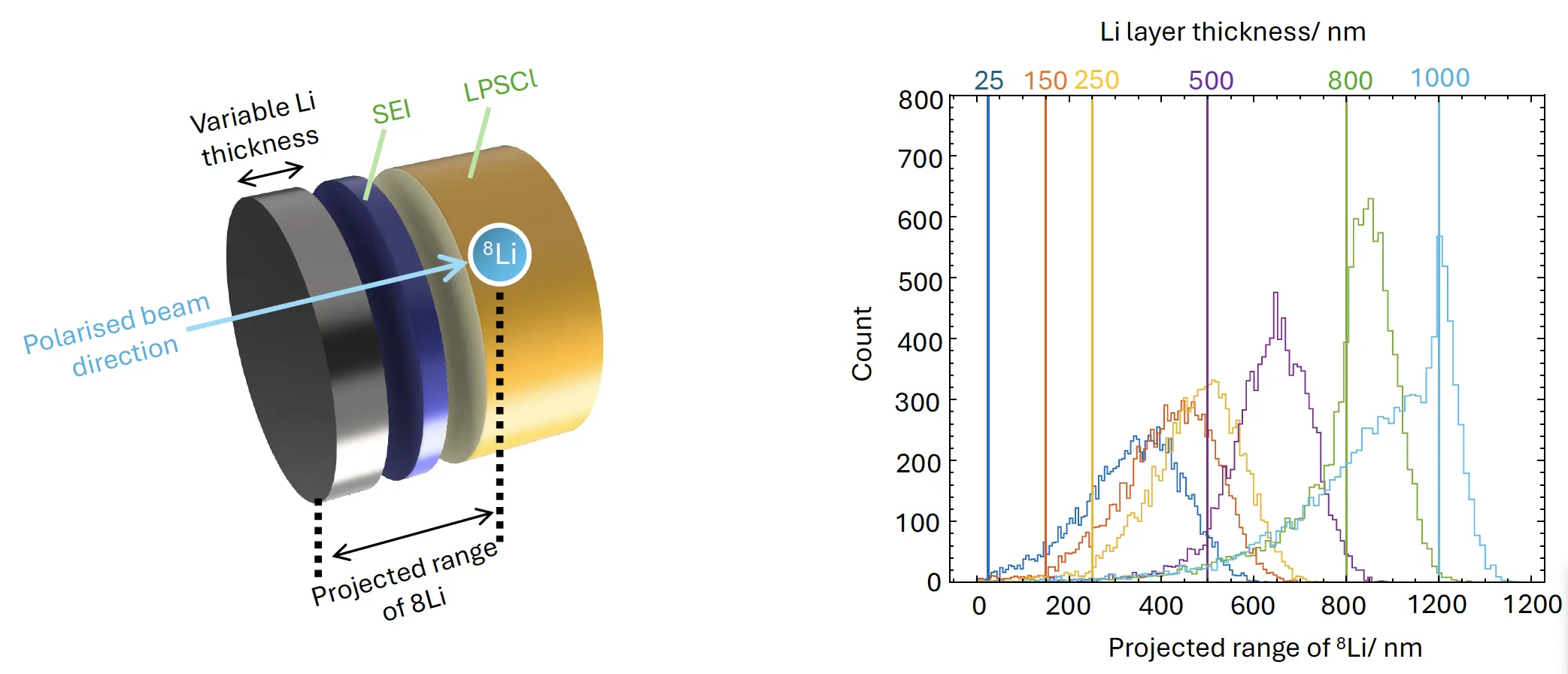
Figure 2: The newly developed end station at VITO to accommodate material science studies. Left: Michal Lupinski (CERN technical student) and Michael Pešek (CERN fellow). Right: Magdalena Kowalska (VITO team leader), Ilaria Michelon (PhD student), Jiří Jalůvka (CERN technical student), and Amy Sparks (CERN fellow and SSB project spokesperson).