
Tag: News from the experiments
-
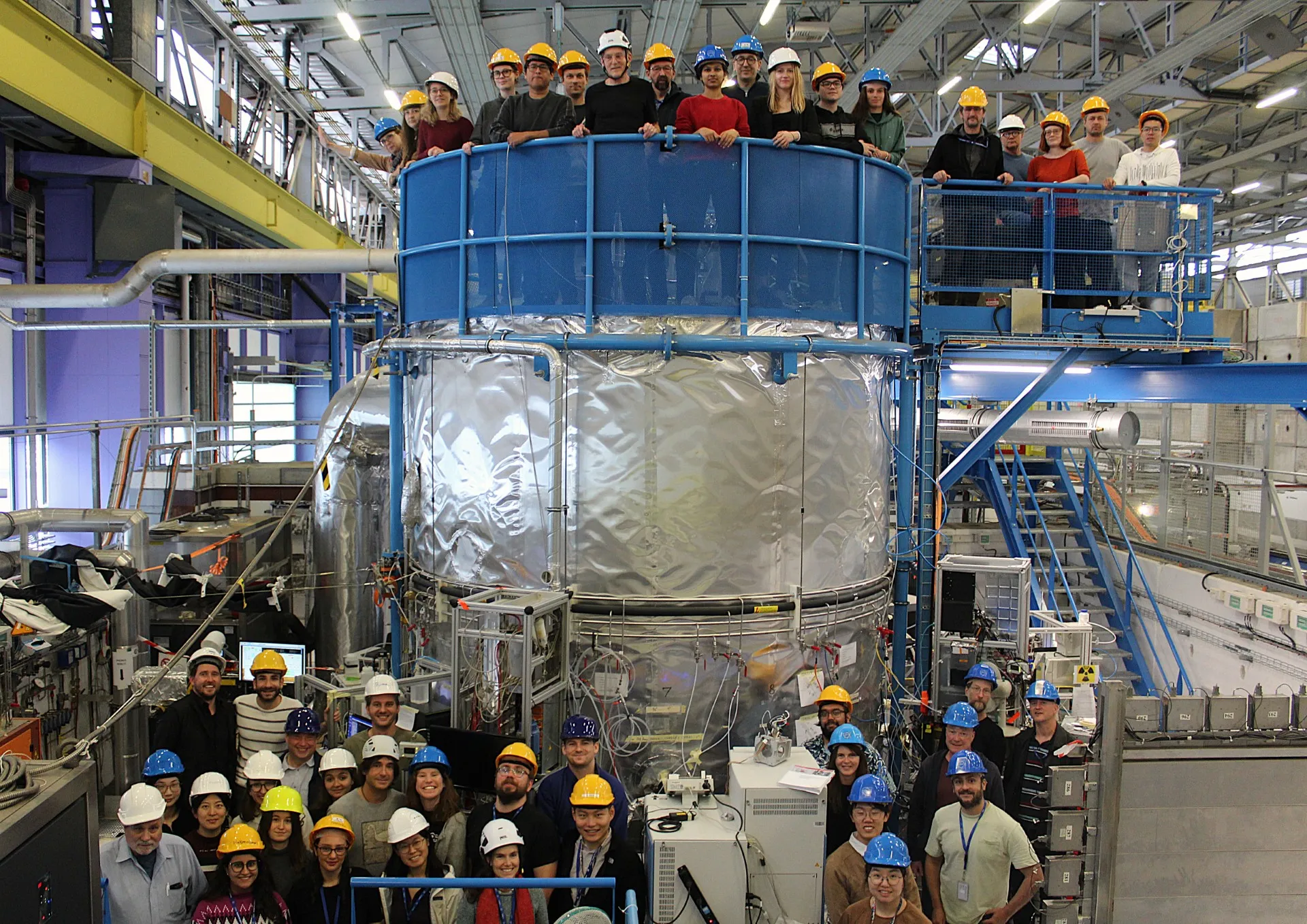
CLOUD experiment reveals a major new source of marine aerosol particles
CLOUD experiment reveals a major new source of marine aerosol particles Clouds form when water vapour condenses onto tiny airborne particles known as aerosols. Once these particles grow larger than about 50 nanometres, they can act as cloud condensation nuclei, or CCN, on which cloud droplets form. Increased aerosol particles influence the climate in several
-
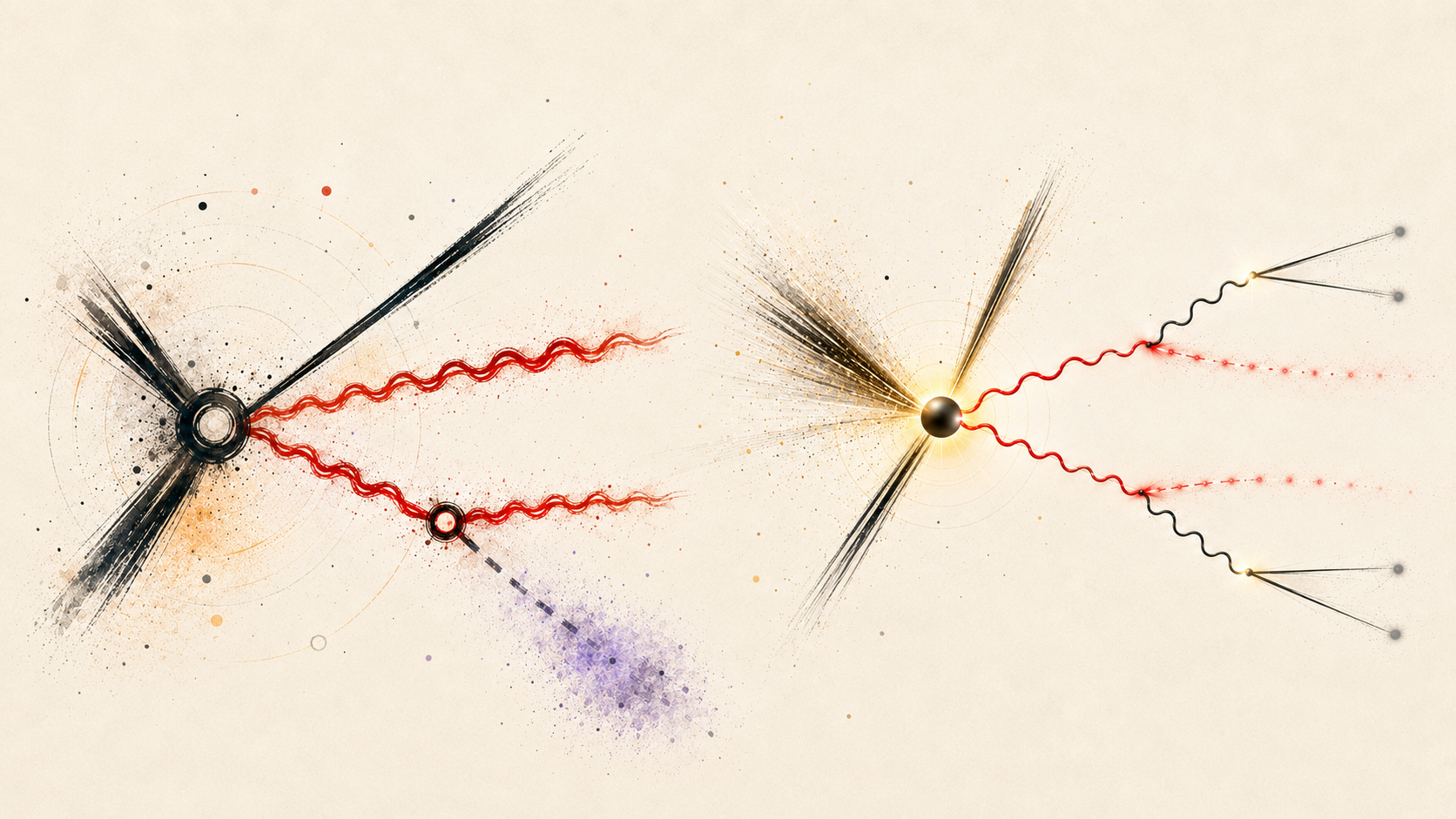
New ATLAS and CMS searches narrow the gap for compressed higgsinos
New ATLAS and CMS searches narrow the gap for compressed higgsinos Supersymmetry plays a prominent role in the landscape of models that push beyond the Standard Model. Higgsinos, the supersymmetric partners of the Higgs boson, may help in addressing a number of unsolved puzzles, particularly if their masses are near the electroweak scale. Not only
-
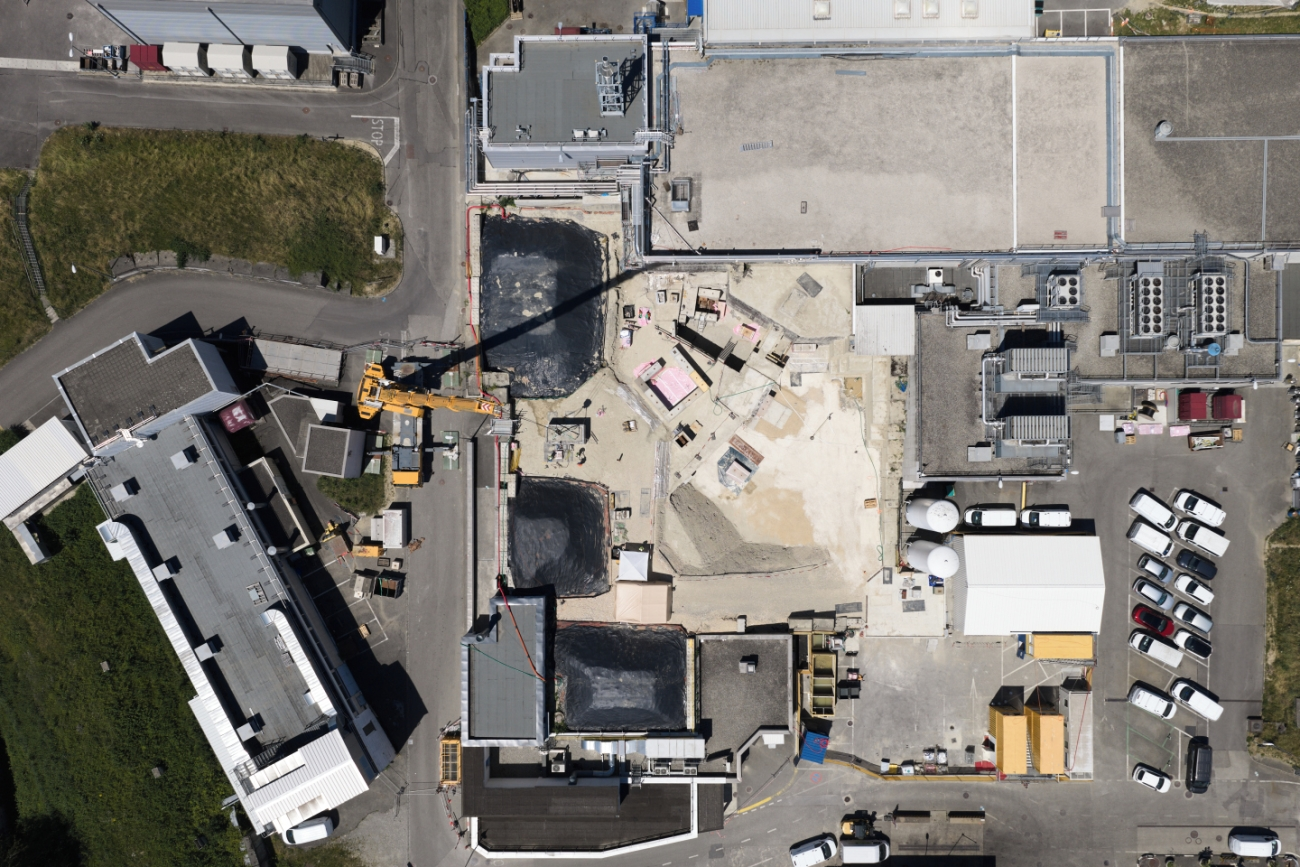
The ISOLDE Improvement Programme
The ISOLDE Improvement Programme The ISOLDE Improvement Programme (IIP) brings together a series of upgrades and consolidation activities to maintain and further develop the ISOLDE facility. The programme includes projects addressing the accelerator infrastructure, beam production, and delivery systems, and experimental facilities, with the objective of improving operational flexibility, reliability, and long-term sustainability. Among the
-
Towards monitoring in Run 4 and beyond: LHC experiments exchange perspectives on data quality at the HL-LHC
Towards monitoring in Run 4 and beyond: LHC experiments exchange perspectives on data quality at the HL-LHC In March of 2026, experts from ALICE, ATLAS, CMS and LHCb gathered at CERN for a dedicated workshop on Data Quality Monitoring (DQM), bringing together developers, coordinators and detector specialists to discuss how the LHC experiments monitor the
-
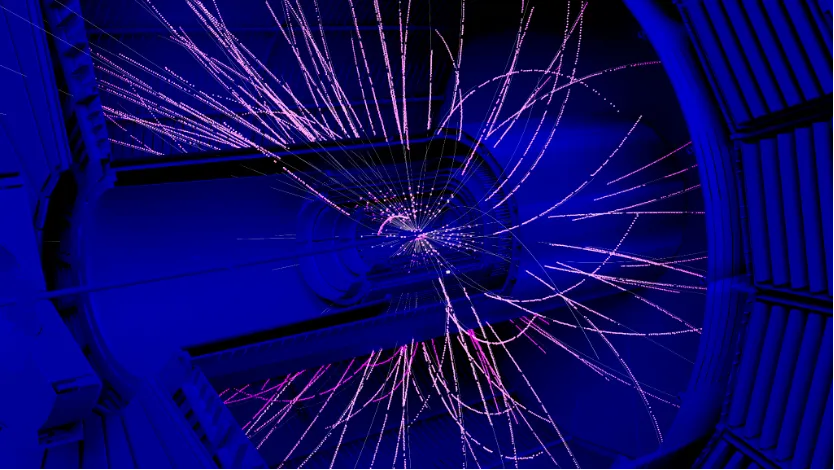
Online use of AI within ALICE
Online use of AI within ALICE A reconstructed event of particles in the ALICE TPC, with data taken with the neural network cluster finding algorithm. Pink dots are reconstructed clusters. AI applications have rapidly expanded in everyday life, and ALICE, among other high-energy physics experiments at CERN, is increasingly exploring their use in fundamental physics
-
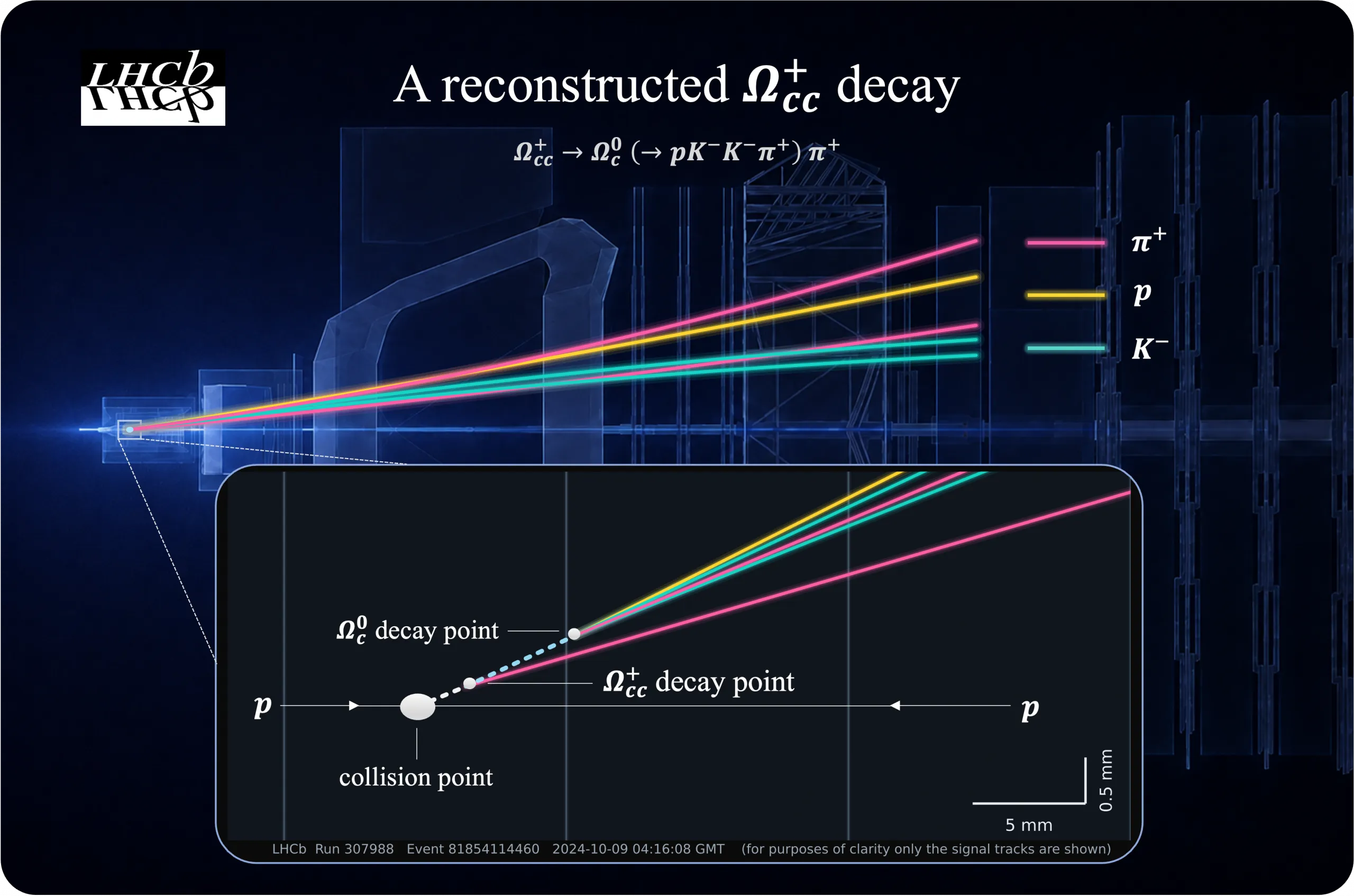
LHCb completes a long-awaited family of doubly charmed baryons
LHCb completes a long-awaited family of doubly charmed baryons More than sixty years ago, particle physics was facing a problem of abundance. New subatomic particles were appearing in experiments, but there was not yet a clear organising principle to explain their relationships. In the early 1960s, Murray Gell-Mann and Yuval Ne’eman independently proposed the “Eightfold
-
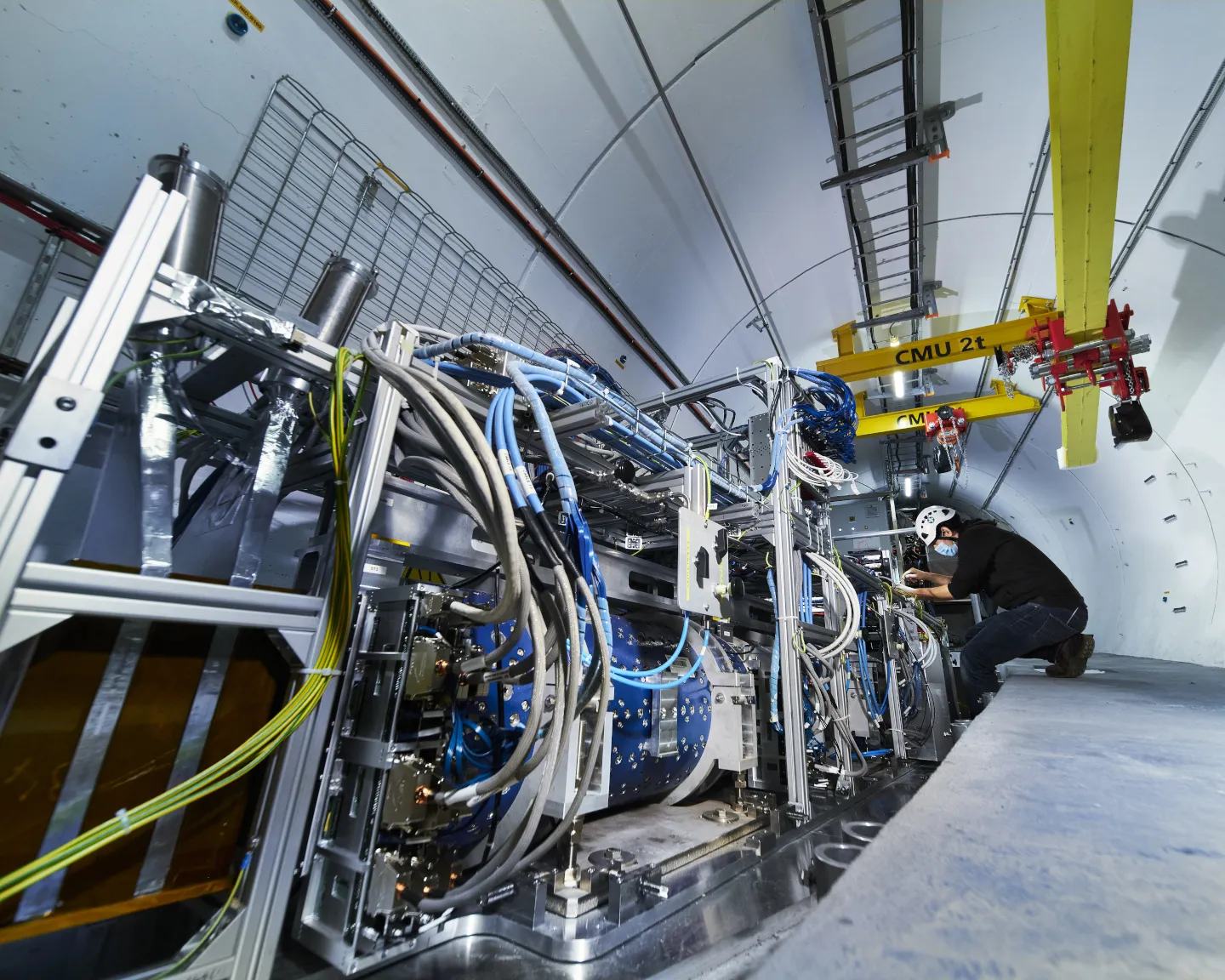
FASER opens new windows on dark sectors and TeV neutrino physics
FASER opens new windows on dark sectors and TeV neutrino physics The FASER experiment has presented a series of new results that highlight the growing breadth of its physics programme at the LHC. These include a search for dark photons with the main FASER detector, a first search for neutrino-induced charm production with FASERν, and
-
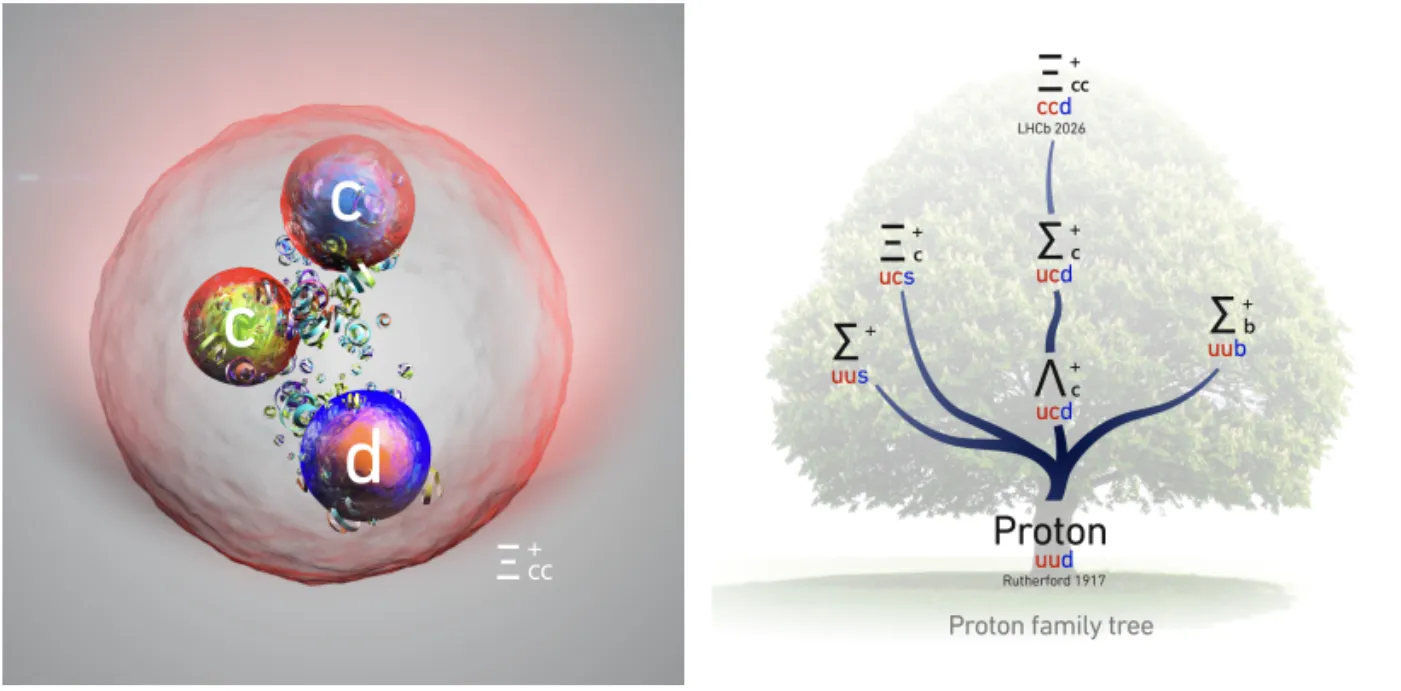
Doubly charmed baryon doublet completed with upgraded LHCb
Doubly charmed baryon doublet completed with upgraded LHCb The image on the left presents an artist’s impression of this exotic particle, while the diagram on the right shows a kind of “family tree” of the proton, illustrating how heavier relatives emerge when its quarks are replaced by strange (s), charm (c), or bottom (b) quarks.
-
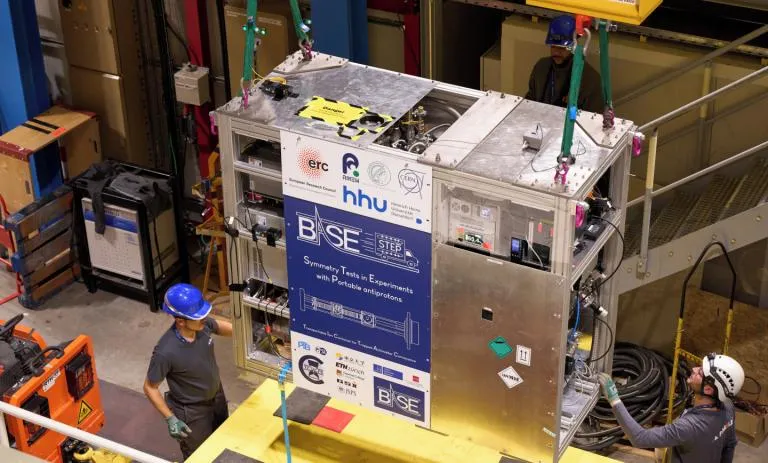
Moving antimatter beyond the lab
Moving antimatter beyond the lab For decades, antimatter experiments have been bound to a single place: the laboratory in which the particles are produced and trapped. At CERN’s Antimatter Factory, antiprotons are routinely produced, decelerated and confined in Penning traps, where electric and magnetic fields are used to store charged particles for high-precision studies. Yet
-
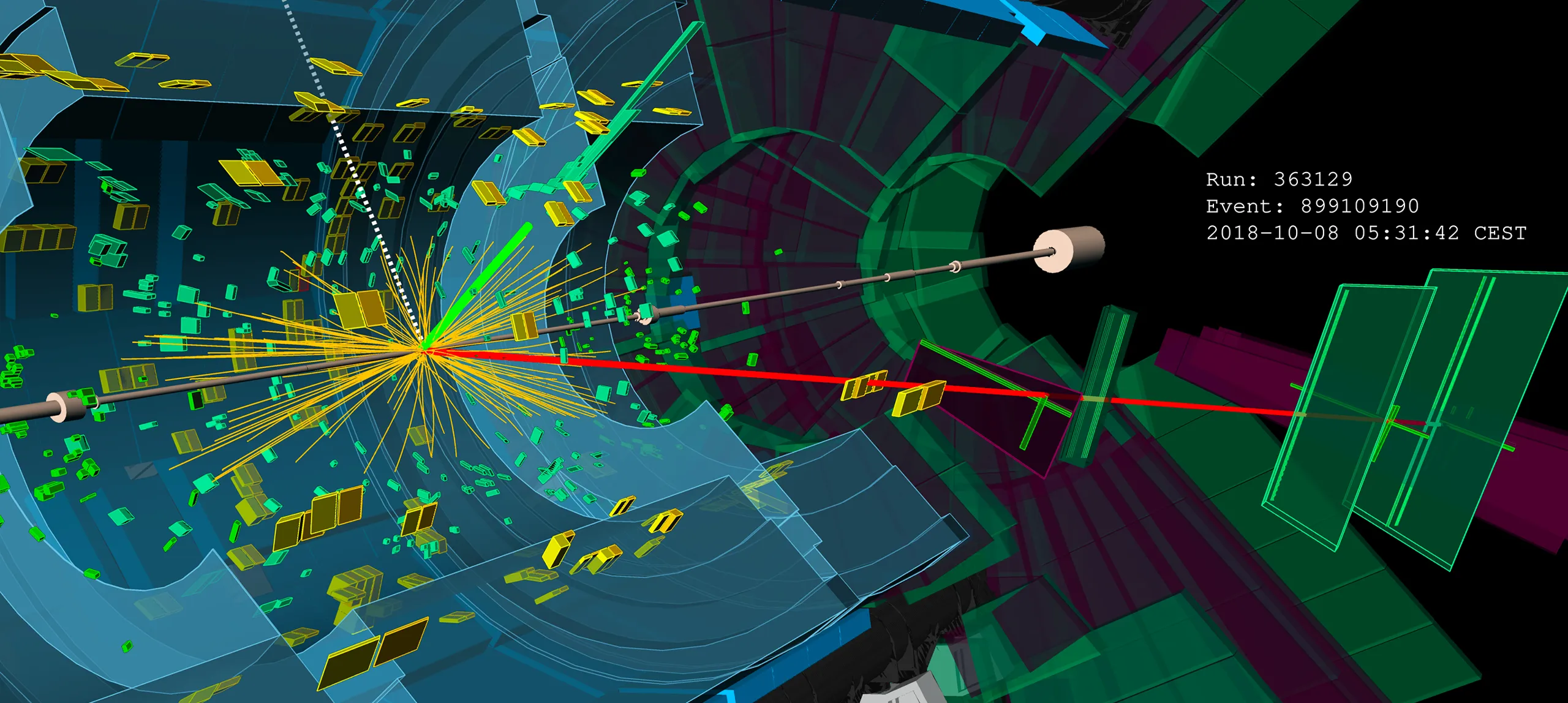
Probing flavour violations of the Standard Model with ATLAS
Probing flavour violations of the Standard Model with ATLAS Every aspect of our world – from atomic nuclei and molecular chemistry to biology and astrophysics – emerges from the interactions of particles so small they are considered point-like. While some particles, like the electron, were discovered over a century ago, most remained hidden until the