
Tag: ATLAS
-

Results from ATLAS & CMS shed light on Higgs properties
Results from ATLAS & CMS shed light on Higgs properties Three years after the announcement of the discovery of a new particle, the Higgs boson, the ATLAS and CMS Collaborations have recently presented for the first time combined measurements of many of its properties, at the third annual Large Hadron Collider Physics Conference (LHCP 2015).
-
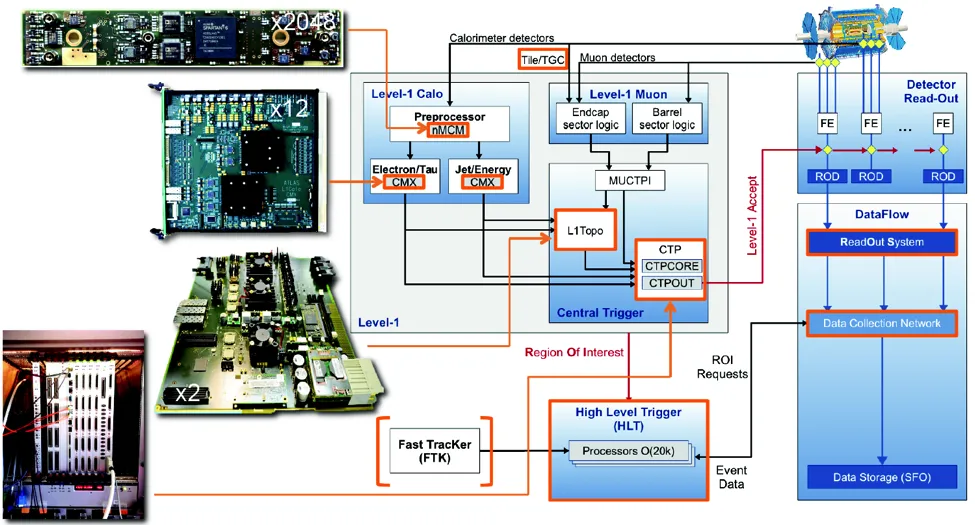
LHC experiments upgraded trigger plans
LHC experiments upgraded trigger plans As the LHC prepares for higher energies and luminosities all four experiments have upgraded their triggering to record data more efficiently and make sure that their detectors are ready to find evidence for new physics. The trigger teams from the experiments describe the changes made between Run1 and Run 2
-
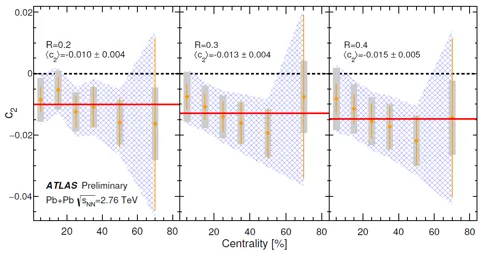
ATLAS results from lead-lead and proton-lead collision
ATLAS results from lead-lead and proton-lead collision The ATLAS results from PbPb data included a measurement of high-pΤ photons and W mesons, high-precision measurement of jet and charged particle RΑΑ, studies of jet fragmentation, path length dependence of jet quenching, neighbouring jet production and studies of flow and correlations of low pΤ particles. The pPb
-
LHC experiments present latests results from heavy-ion runs (old)
LHC experiments present latests results from heavy-ion runs (old) The 7th edition of the Hard Probes International Conference series was hosted by McGill University in Montréal, Québec, Canada, from 29 June to 3 July. During the last two decades, high-energy nuclear physics has seen a tremendous progress; thanks to the combined efforts of CERN SPS,
-
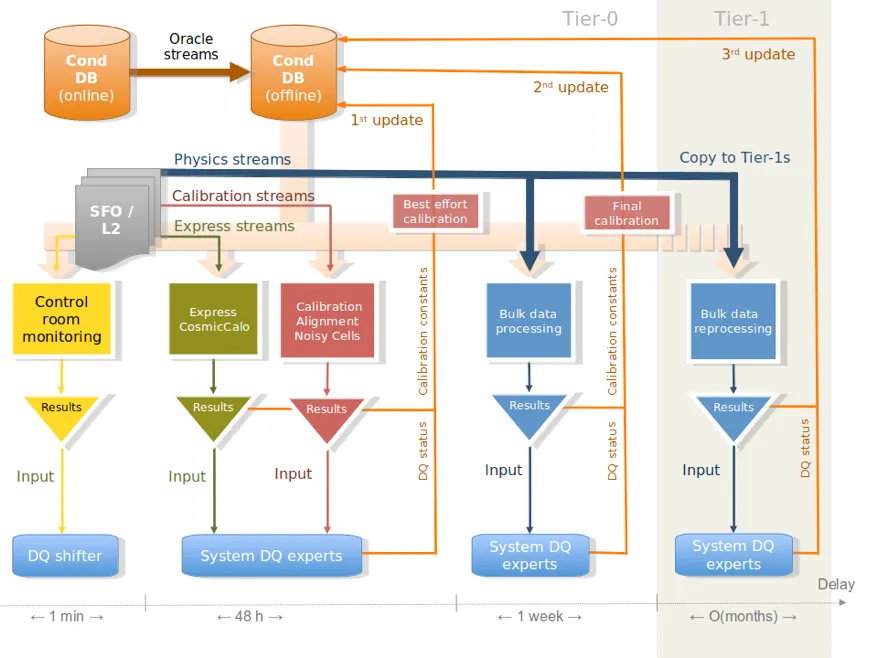
Data Quality Monitoring: An important step towards new physics
Data Quality Monitoring: An important step towards new physics Data Quality Monitoring (DQM) is an important aspect of every high-energy physics experiment. In the era of LHC, when the detectors are extremely sophisticated devices, an online feedback on the quality of the data recorded is needed to avoid taking low quality data and to guarantee
-
LHC experiment release data in CERN’s Open Data Portal
LHC experiment release data in CERN's Open Data Portal On 20 November 2014, CERN launched the Open Data Portal, making data from real collision events at the LHC experiments available for the first time to the general public. This project is part of the Organisation's policy of openness, which is enshrined in its founding convention
-
LHC experiments back in business at record energy
LHC experiments back in business at record energy BROKEN IMAGE NOT MOVED (drupal url : https://ep-news.web.cern.ch//content/lhc-experiments-back-business-record-energy) The Large Hadron Collider (LHC) started delivering physics data on 3rd of June for the first time in 27 months. After an almost two year shutdown and several months re-commissioning, the LHC is now providing collisions to all of
-
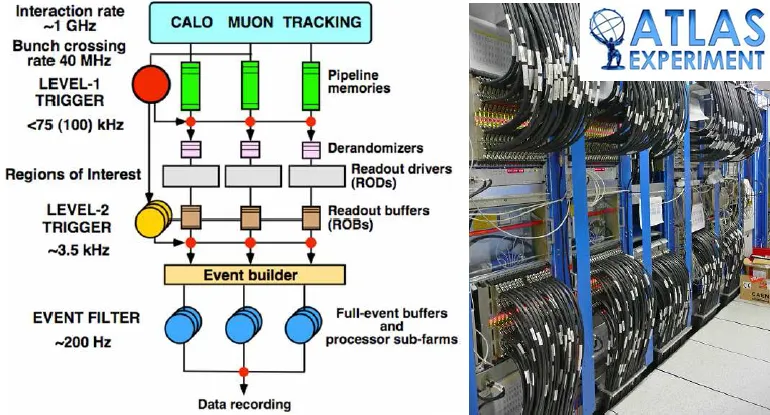
LS1 Upgrade of the ATLAS Level-1 Central Trigger Processor
LS1 Upgrade of the ATLAS Level-1 Central Trigger Processor Triggering at the LHC is a challenge: during Run-1 in ATLAS, the task was to select out of the 40 million bunch crossings per second the 1000 events most promising for data analysis. The first of three levels of this selection is the Level-1 trigger system,
-
LHC sees first circulating beams
LHC sees first circulating beams Long Shutdown 1 officially came to an end on 5 April 2015, when a beam of protons circulated the LHC for the first time after two years. Following this long period of upgrades, repairs, and consolidation, the LHC is now ready to restart at 13 TeV, almost double its previous
-
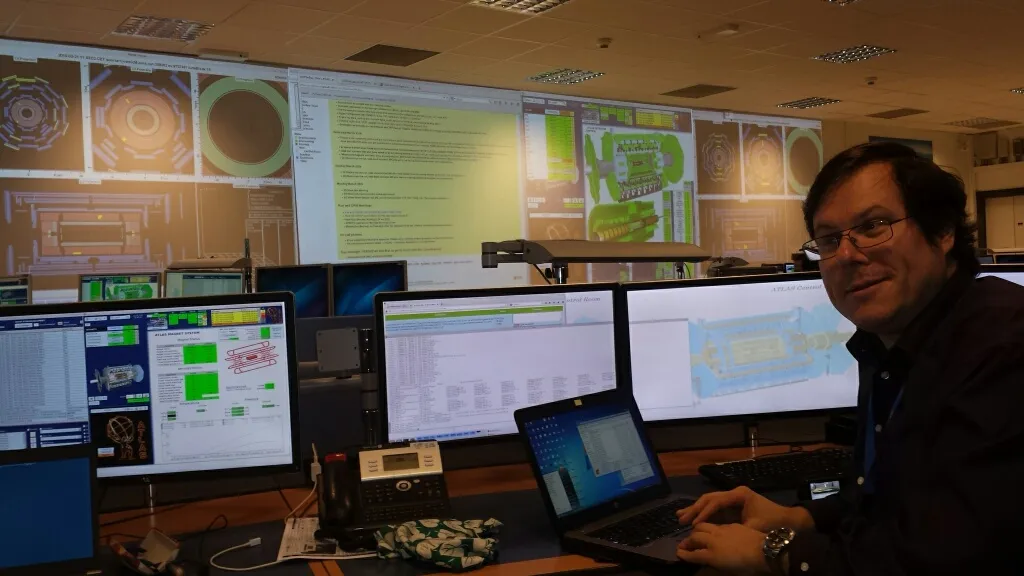
Focus on the Run Coordinators of the LHC Experiments (Part 2)
Focus on the Run Coordinators of the LHC Experiments (Part 2) Following two years of maintenance and consolidation work, the Long Shutdown 1 officially ended on 5 April 2015, when the first proton beams circulated the LHC. Now the LHC experiments are getting ready to operate once more and record the first collision data. In