
Tag: ATLAS
-
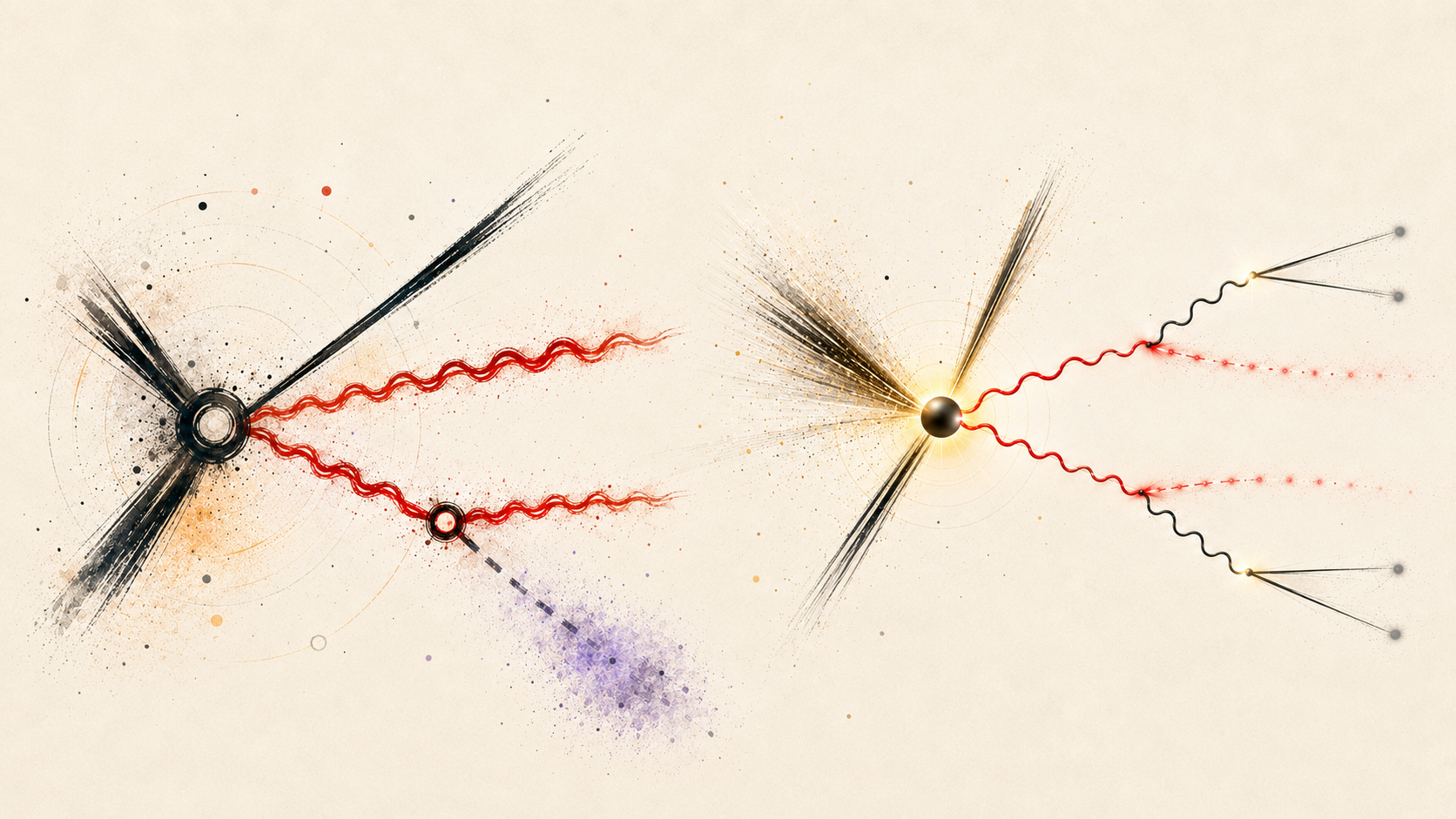
New ATLAS and CMS searches narrow the gap for compressed higgsinos
New ATLAS and CMS searches narrow the gap for compressed higgsinos Supersymmetry plays a prominent role in the landscape of models that push beyond the Standard Model. Higgsinos, the supersymmetric partners of the Higgs boson, may help in addressing a number of unsolved puzzles, particularly if their masses are near the electroweak scale. Not only
-
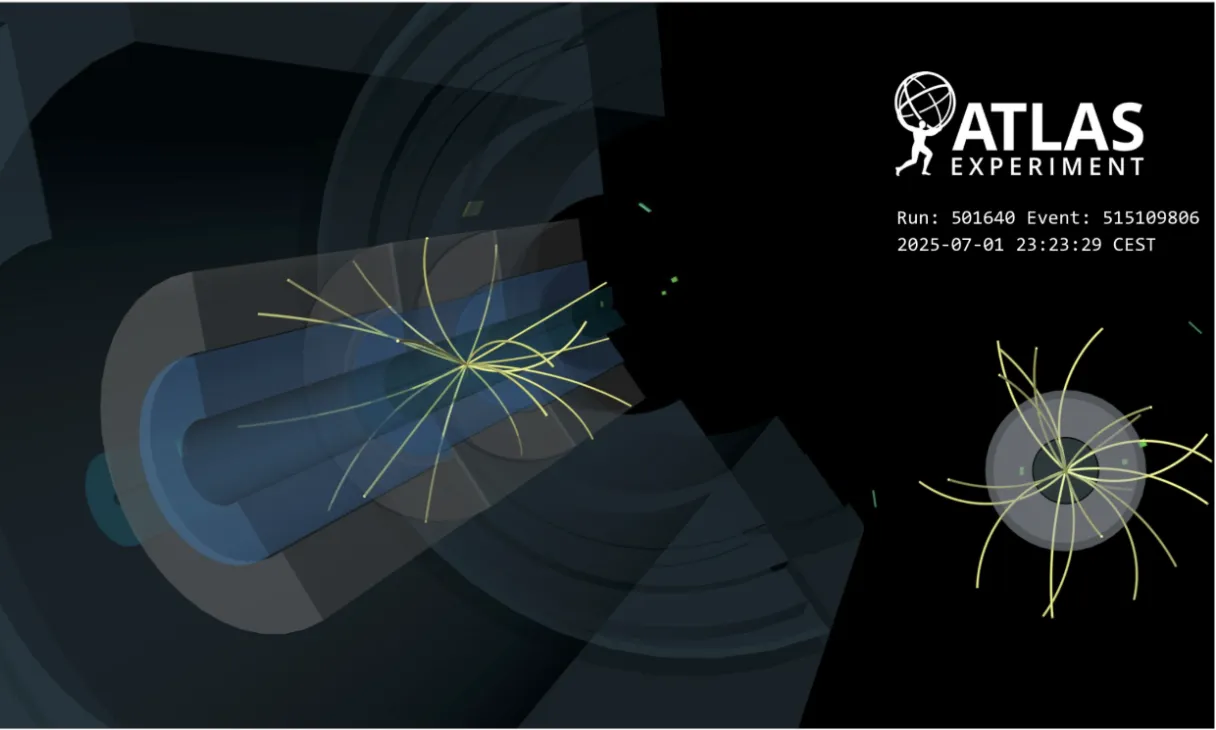
ATLAS Turns Into a Precision Cosmic Ray Laboratory
ATLAS Turns Into a Precision Cosmic Ray Laboratory Event display of a proton-oxygen collision recorded in ATLAS Run 501640 on 1st July 2025 at 23:23:29 CEST. The event contains 19 reconstructed tracks (yellow lines) satisfying pT > 500 MeV with at least one Pixel hit and at least six SCT hits. Every second, roughly one
-
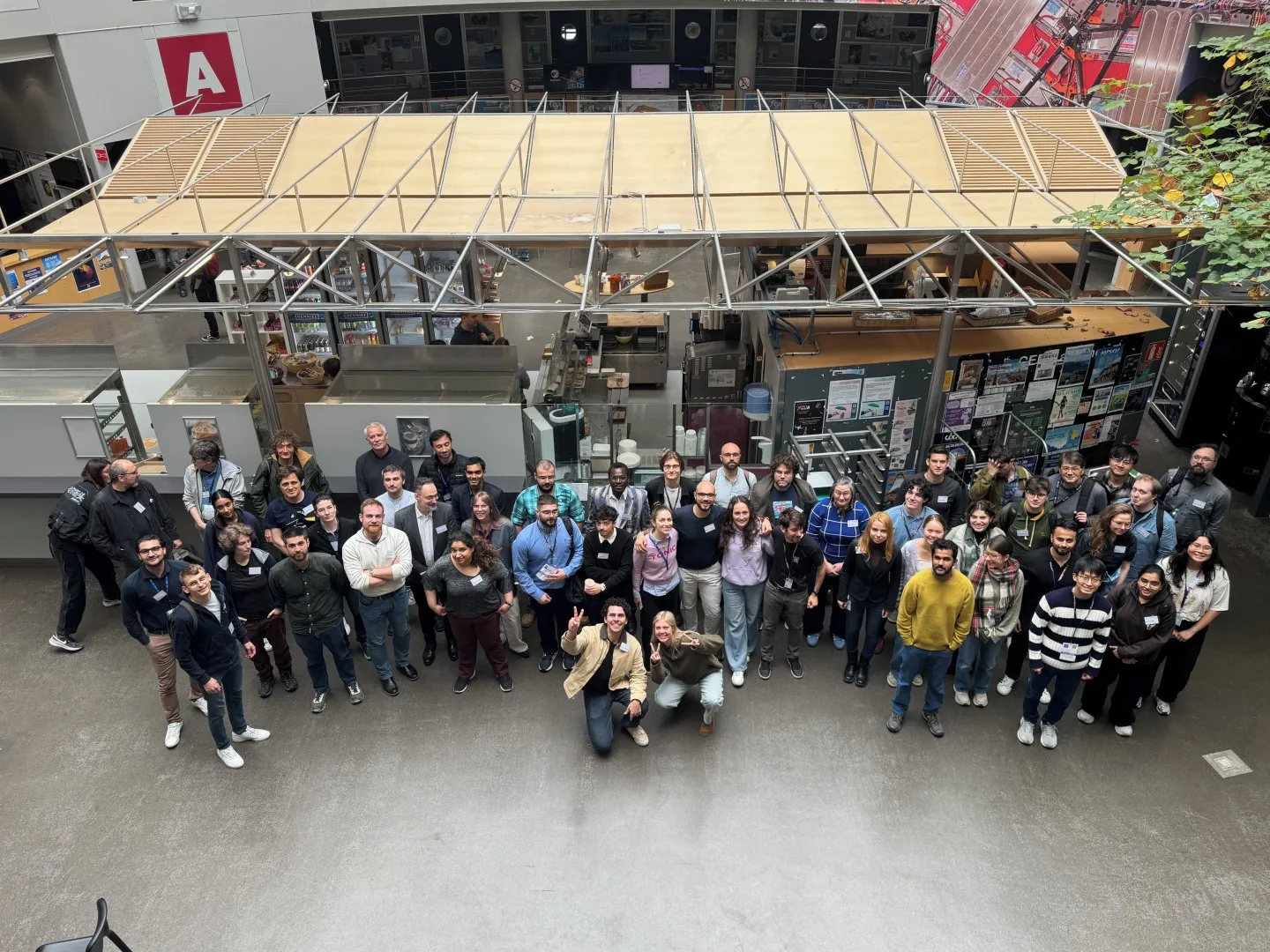
AI for Gravitational Waves: Building Bridges Between Scientific Communities
AI for Gravitational Waves: Building Bridges Between Scientific Communities As gravitational-wave observatories enter a new phase of sensitivity, scale and scientific ambition, the challenge is no longer only to detect faint ripples in spacetime. It is also to analyse, interpret and respond to them fast enough to open new windows on the Universe. This was
-
Rucio crosses the exabyte horizon
Rucio crosses the exabyte horizon When we last wrote in these pages about Rucio, ATLAS had just passed the half-exabyte mark and the community counted around thirty organisations. Six years on, a threshold that was then a distant projection has been crossed: both ATLAS and CMS, the two largest LHC experiments, now each manage more
-
Towards monitoring in Run 4 and beyond: LHC experiments exchange perspectives on data quality at the HL-LHC
Towards monitoring in Run 4 and beyond: LHC experiments exchange perspectives on data quality at the HL-LHC In March of 2026, experts from ALICE, ATLAS, CMS and LHCb gathered at CERN for a dedicated workshop on Data Quality Monitoring (DQM), bringing together developers, coordinators and detector specialists to discuss how the LHC experiments monitor the
-

ATLAS scales up AI for jet physics and reveals flavour-tagging scaling laws
ATLAS scales up AI for jet physics and reveals flavour-tagging scaling laws High Energy Physics (HEP) and Machine Learning (ML/AI) are uniquely aligned: The data recorded by particle physics experiments are so rich, heterogeneous and complicated that scientists crucially depend on advanced pattern recognition in order to extract physics results. It’s for this reason that
-
New Staff Members and Fellows
New Staff Members and Fellows Maximilian Babeluk Hi, I’m Max. I recently joined the ALICE ITS3 team, where I work on sensor testing, functional verification, and in the future also chip design – particularly on MOSAIX. My main activities include testing and yield assessment across multiple integration levels (wafer probing to system tests), including data
-
Probing flavour violations of the Standard Model with ATLAS
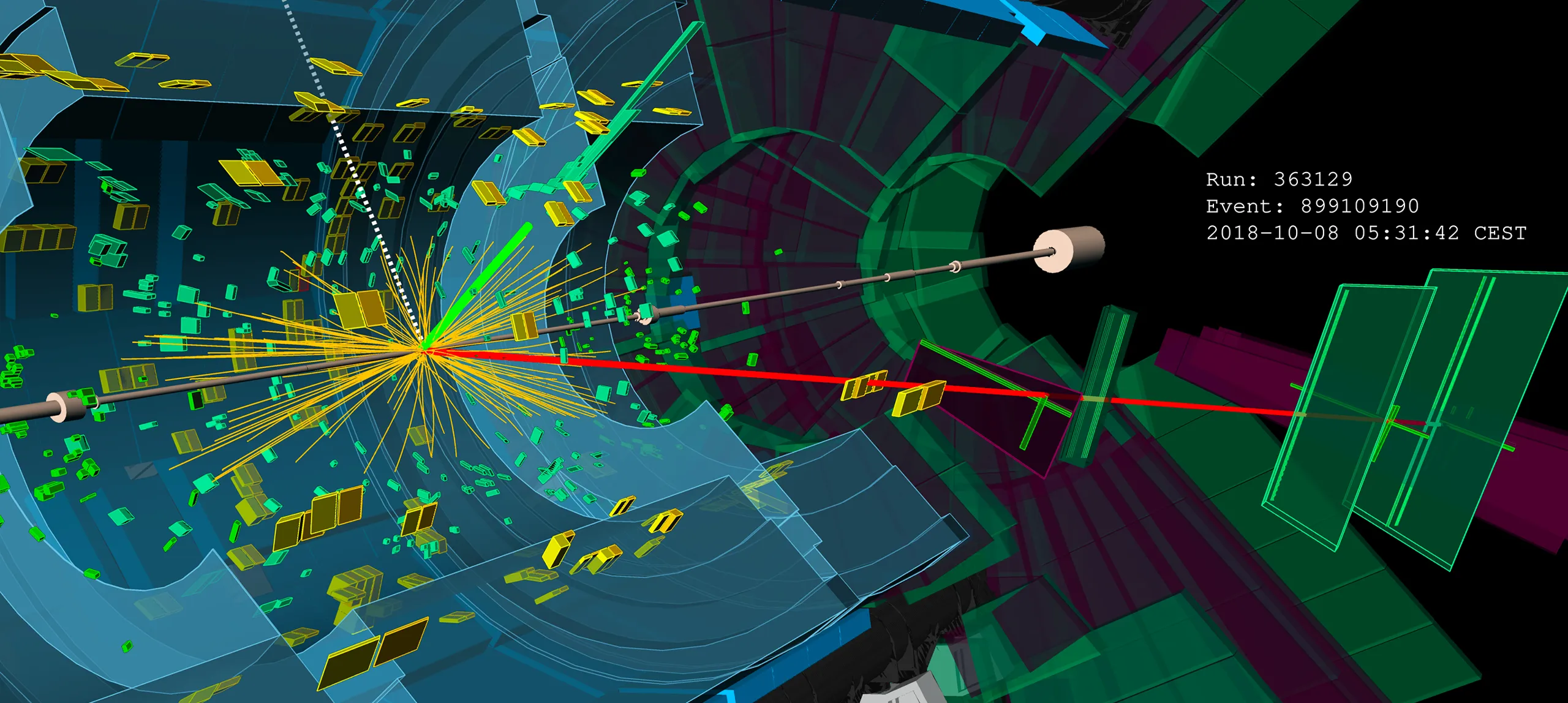
Probing flavour violations of the Standard Model with ATLAS Every aspect of our world – from atomic nuclei and molecular chemistry to biology and astrophysics – emerges from the interactions of particles so small they are considered point-like. While some particles, like the electron, were discovered over a century ago, most remained hidden until the
-
Dark Showers at the LHC: from benchmarks to Run-3 readiness
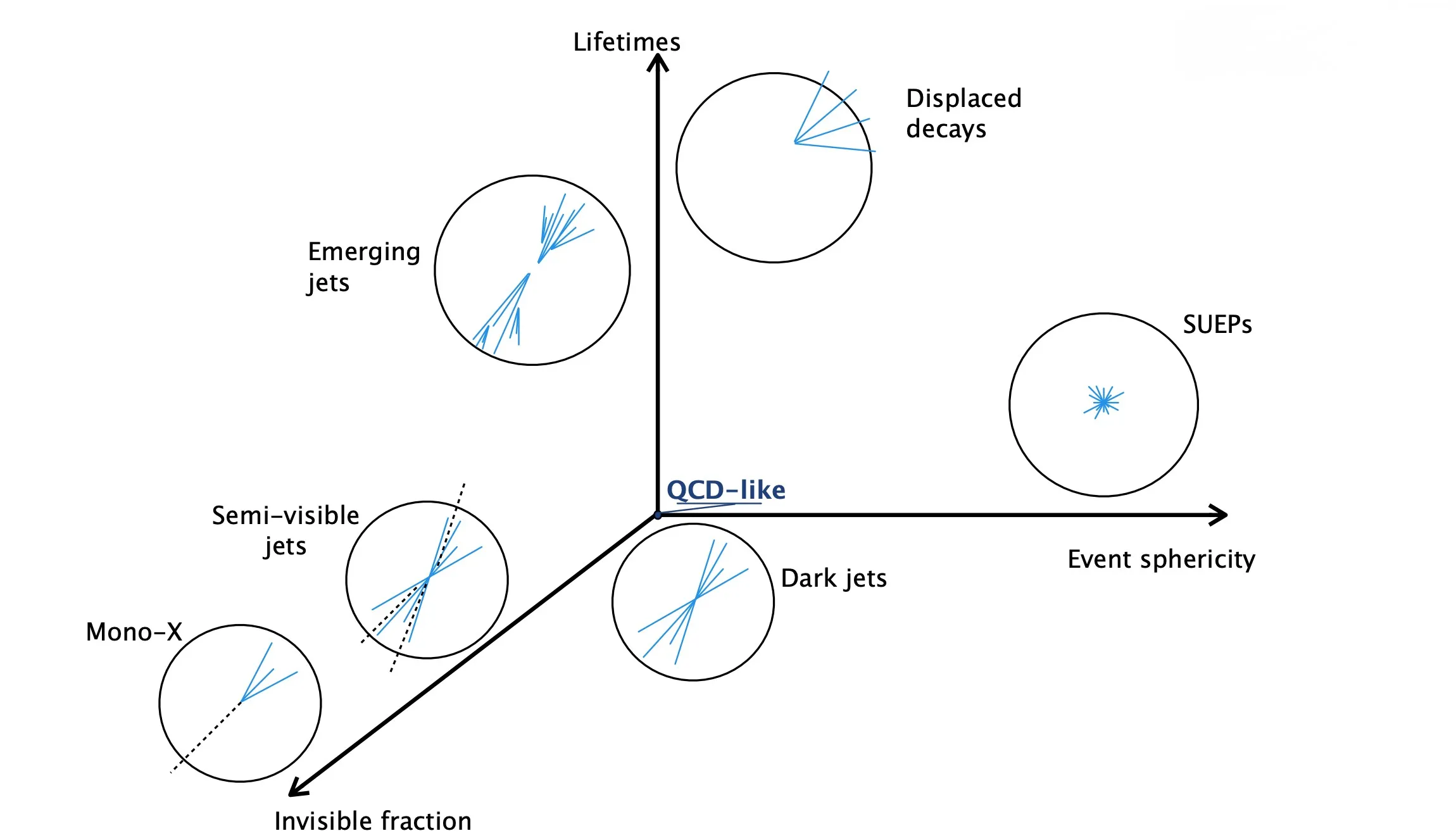
Dark Showers at the LHC: from benchmarks to Run-3 readiness The search for new physics at the LHC increasingly pushes beyond traditional signatures. Among the most intriguing possibilities are dark showers—complex cascades of particles emerging from dark-sector dynamics, capable of producing rich, unconventional final states. These scenarios naturally arise in models where dark matter interacts
-
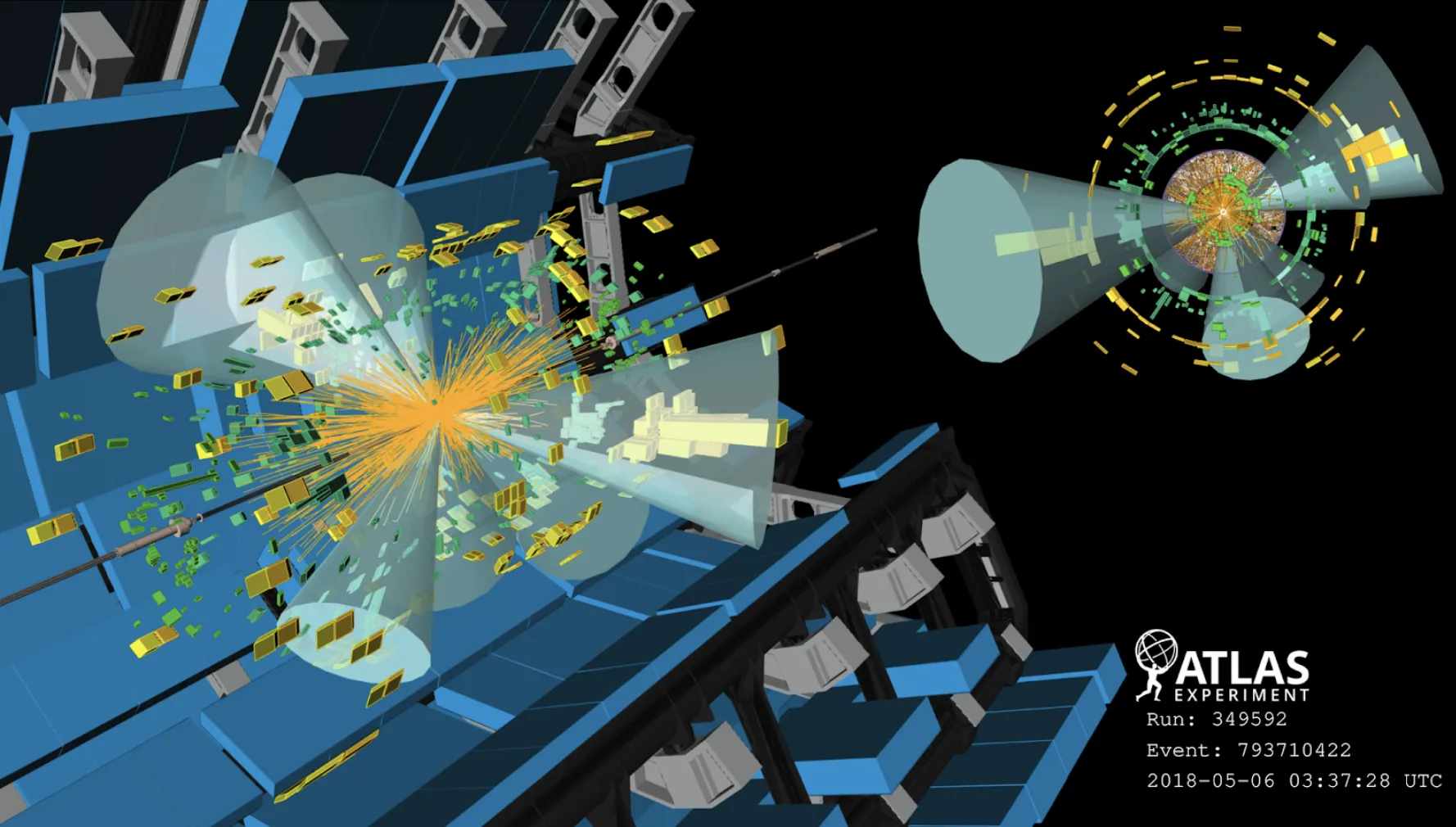
Triple Higgs Frontiers: Mapping the Higgs self-couplings at the 2025 HHH workshop
Triple Higgs Frontiers: Mapping the Higgs self-couplings at the 2025 HHH workshop More than a decade after the discovery of the Higgs boson, attention is shifting from finding the Higgs to mapping its self-interactions. These self-couplings determine the shape of the Higgs potential, and with it the stability of our vacuum and the early Universe.