
Tag: CMS
-
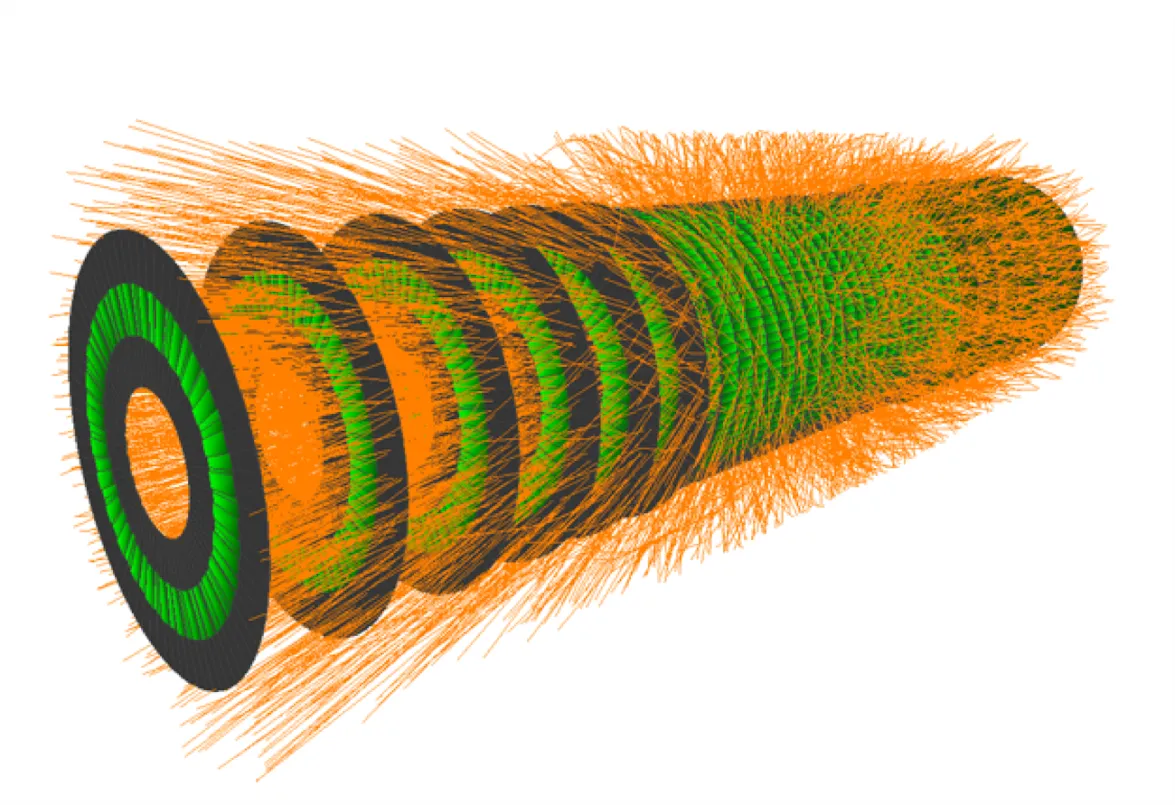
Can AI help us to find tracks?
Can AI help us to find tracks? Data science (DS) and machine learning (ML) are amongst the fastest growing sectors in science and technology, not at least due to their strong rooting in industrial and commercial applications. Global players such as Google, Facebook and Amazon have surpassed HEP in both, computing complexity and data volume.
-

Removal of the CMS beam pipe during Long Shutdown 2
Removal of the CMS beam pipe during Long Shutdown 2 The CMS detector is built from several different layers, surrounding the beam pipe in which the LHC beams collide. The subdetector that is closest to the collisions is the pixel detector. It has a functionality similar to a digital camera taking 40 million snapshots of
-

INSIGHTS: A new network of statistics for HEP and beyond
INSIGHTS: A new network of statistics for HEP and beyond Following the success of the AMVA4NewPhysics network, a new 4-year Innovative Training Network funded by the Horizon 2020 program of the European Commission will develop new statistical methods and boost the use of machine learning (ML) to solve some of the most challenging problems in
-
CMS upgrade plans for LS2
CMS upgrade plans for LS2 To achieve the full benefit of the HL-LHC, CMS must continue to be able to reconstruct at the much higher luminosity all the standard physics analysis objects with high efficiency, low fake rate, and high resolution. Excellent electron, photon, and muon reconstruction is needed for Higgs decays to γγ, ZZ*
-
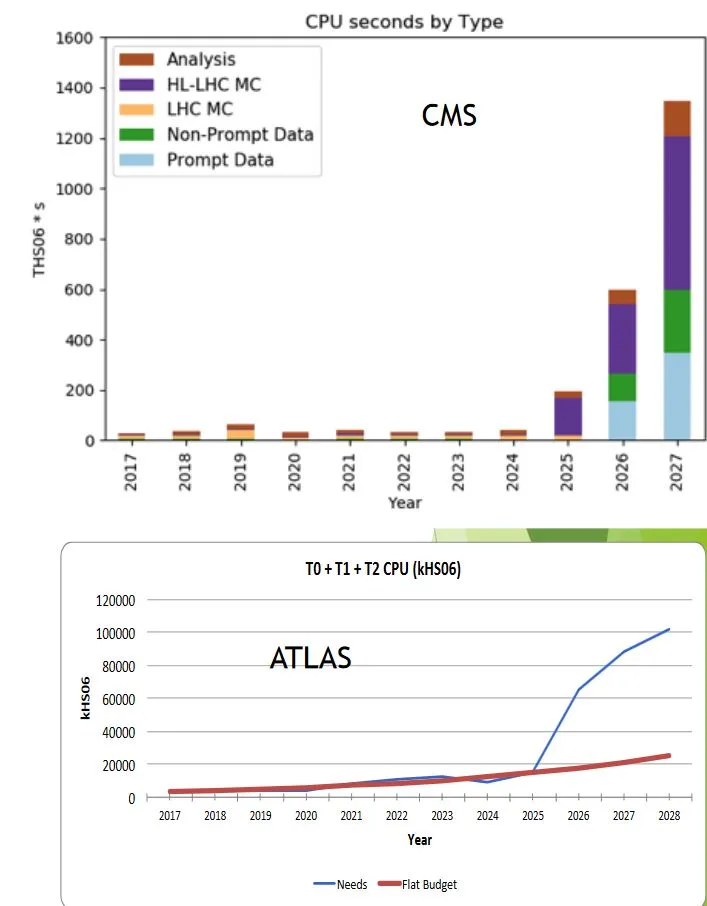
HL-LHC computational challenge for ATLAS and CMS experiments
HL-LHC computational challenge for ATLAS and CMS experiments The two general purpose LHC Experiments, ATLAS [1] and CMS [2], are going to be confronted with challenging experimental conditions at the High Luminosity LHC Run (HL-LHC), starting in 2026. In particular, computing systems will have to cope with greatly increased data samples and data acquisition and
-
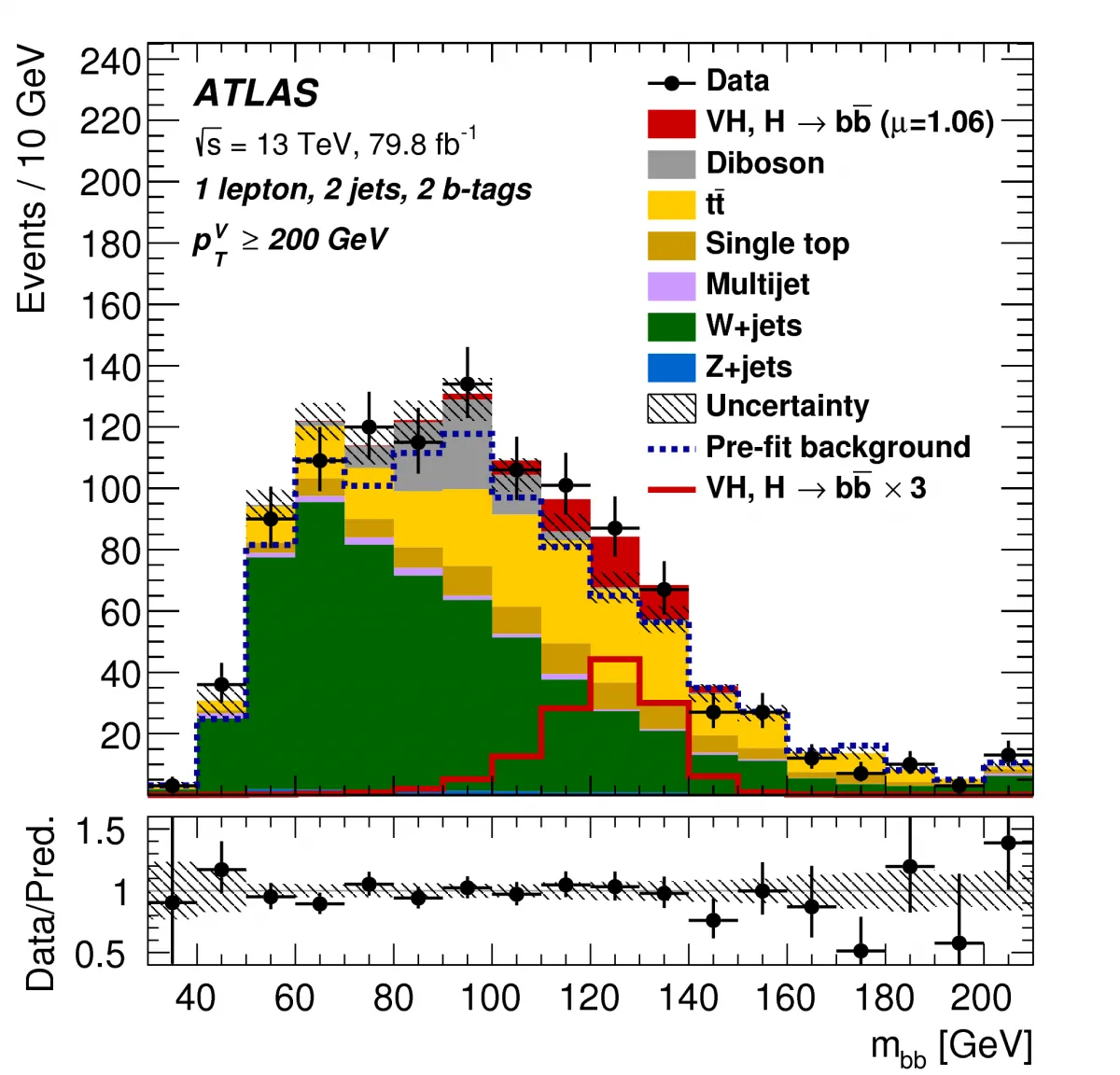
Higgs boson observed decaying to bottom quarks
Higgs boson observed decaying to bottom quarks Last month, the ATLAS and CMS collaborations jointly announced the discovery of the Higgs boson decaying into a matter-antimatter pair of bottom quarks. Previously, the Higgs boson has been observed decaying to photons, tau-leptons, and W and Z bosons. However, these impressive achievements represent only 30 percent of
-
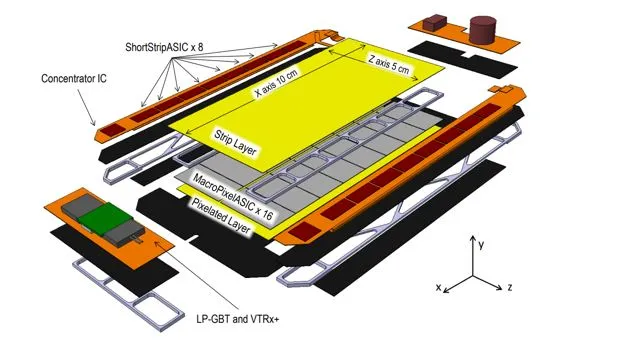
Developing new electronics for the CMS tracking system
Developing new electronics for the CMS tracking system The High Luminosity Large Hadron Collider (HL-LHC) entails a substantial upgrade of the CMS tracking system, to cope with much more demanding requirements and to implement additional functionalities. One of the main challenges for the experiments is the increased number of pile up events which for an
-
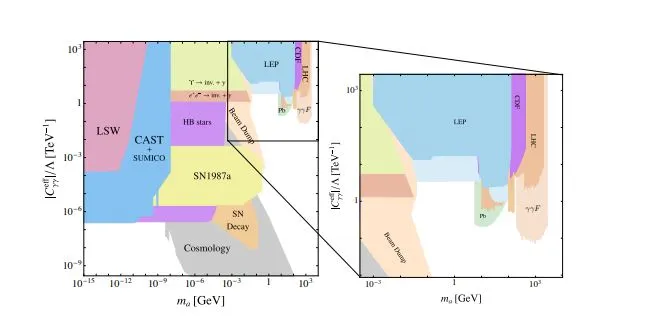
Axion-like particle searches at the LHC
Axion-like particle searches at the LHC The Standard Model (SM) of Particle Physics is plagued by some longstanding conceptual and practical questions, and we have to go beyond the Standard Model to address them. A guiding principle of the Standard Model is that we should expect to see all processes which are consistent with its
-
Mapping the CMS inner tracking system with unprecedented precision
Mapping the CMS inner tracking system with unprecedented precision In an experiment like CMS, it is important to know where all the detector material is. For example, in order to properly simulate the detector response, you need to know not only where the sensors are, but also the locations of the inactive material. Suppose you
-
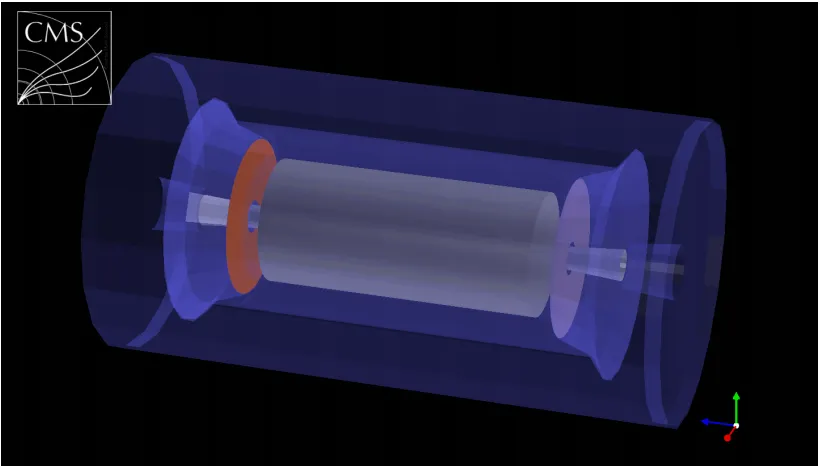
Precise timing detectors for the LHC experiments
Precise timing detectors for the LHC experiments The ATLAS and CMS experiments physics programme at the HL-LHC will target a very wide range of measurements, including in-depth studies of the Higgs boson properties and direct searches for physics beyond the standard model (BSM). Timing detectors will help improve vertex identification, acceptance extension for isolated objects,