
Tag: CMS
-
Charting the Unknown: interpreting LHC data from the energy frontier
Charting the Unknown: interpreting LHC data from the energy frontier The LHC has started its Run2, exploring for the first time the high-energy frontier at 13 TeV. Collected data will give decisive information on the dynamics behind electroweak symmetry breaking and allow testing the weak-scale naturalness. A TH Institute “Charting the Unknown: Interpreting LHC data
-
LHC Restart 2016
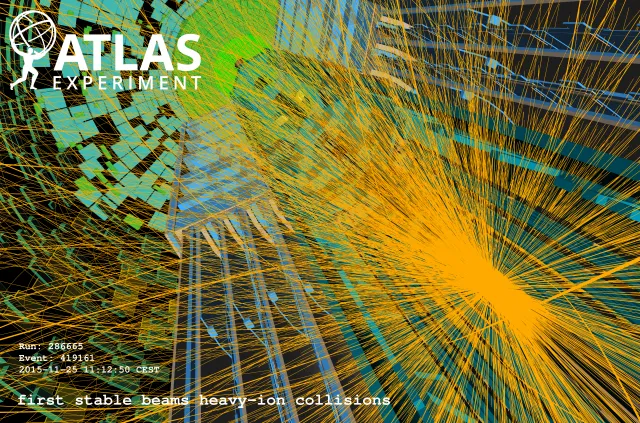
LHC Restart 2016 The Large Hadron Collider (LHC) and its experiments are back in action, now taking physics data at 13TeV. The goal is to improve our understanding of fundamental physics which ulitmately in decades to come can drive innovation and inventions by researchers in other fields. The Higgs was the last piece of the
-
CMS releases new data
CMS releases new data Rediscover the Standard Model of particle physics and much more with open data from the Large Hadron Collider Today, the CMS Collaboration at CERN has released more than 300 terabytes (TB) of high-quality open data. These include over 100 TB, or 2.5 inverse femtobarns (fb−1), of data from proton collisions at
-
CMS 2015 – taking data under difficult conditions
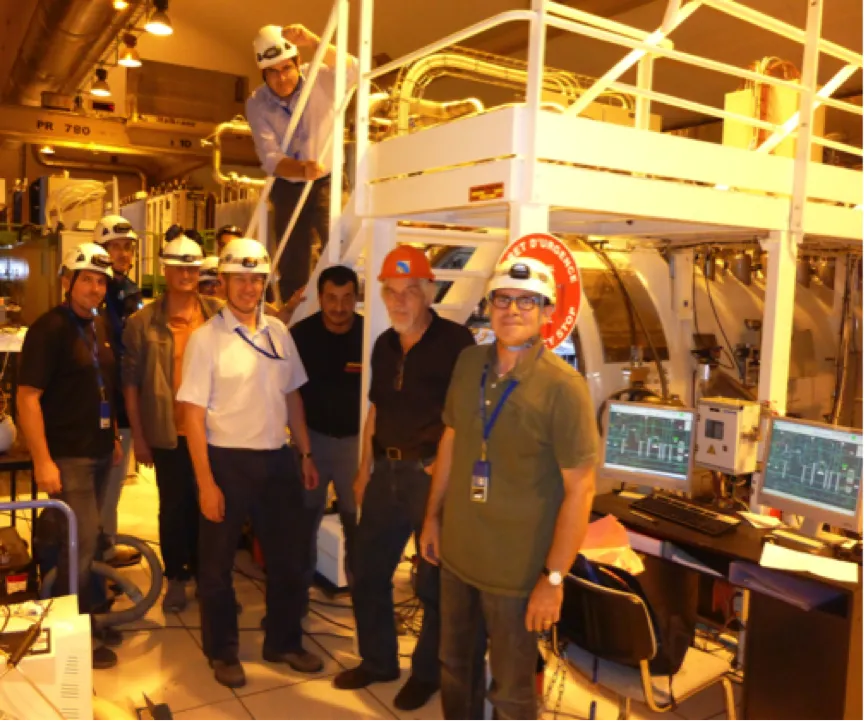
CMS 2015 – taking data under difficult conditions The last edition of this letter ended with the optimistic remark that CMS after the end of LS1 would be perfectly prepared for the exciting times ahead of us. And indeed the final steps of LS1 went smoothly with CMS ready for the first beams. In April
-
Results from ATLAS & CMS shed light on Higgs properties
Results from ATLAS & CMS shed light on Higgs properties Three years after the announcement of the discovery of a new particle, the Higgs boson, the ATLAS and CMS Collaborations have recently presented for the first time combined measurements of many of its properties, at the third annual Large Hadron Collider Physics Conference (LHCP 2015).
-
CMS results in Hard Probes 2015
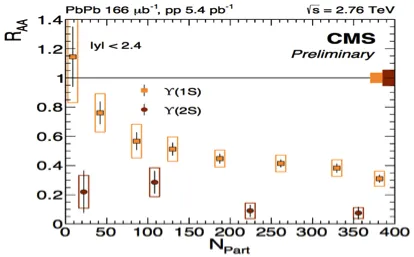
CMS results in Hard Probes 2015 CMS has delivered a comprehensive set of differential RAA measurements, quantifying the jet quenching effect for hard probes of various flavors. Profound suppression of strongly interacting probes in 2.76 TeV PbPb collisions is established with high precision for inclusive charged hadrons, spanning the wide range of transverse momenta from
-
LHC experiments present latests results from heavy-ion runs (old)
LHC experiments present latests results from heavy-ion runs (old) The 7th edition of the Hard Probes International Conference series was hosted by McGill University in Montréal, Québec, Canada, from 29 June to 3 July. During the last two decades, high-energy nuclear physics has seen a tremendous progress; thanks to the combined efforts of CERN SPS,
-
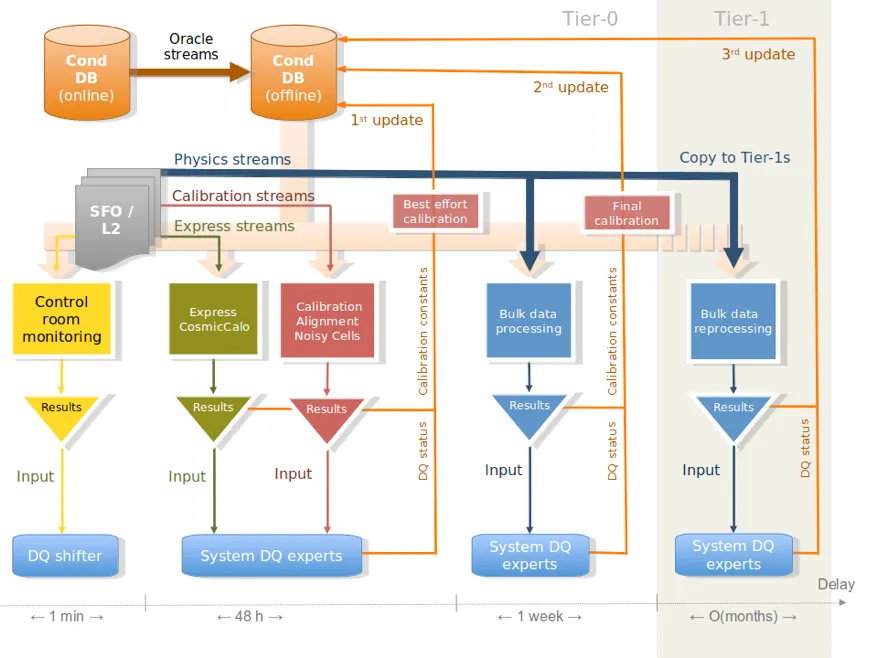
Data Quality Monitoring: An important step towards new physics
Data Quality Monitoring: An important step towards new physics Data Quality Monitoring (DQM) is an important aspect of every high-energy physics experiment. In the era of LHC, when the detectors are extremely sophisticated devices, an online feedback on the quality of the data recorded is needed to avoid taking low quality data and to guarantee
-
LHC experiment release data in CERN’s Open Data Portal
LHC experiment release data in CERN's Open Data Portal On 20 November 2014, CERN launched the Open Data Portal, making data from real collision events at the LHC experiments available for the first time to the general public. This project is part of the Organisation's policy of openness, which is enshrined in its founding convention
-

EPS announces the 2015 prizes in the field of high energy physics.
EPS announces the 2015 prizes in the field of high energy physics. Last month, the High Energy and Particle Physics division of the European Physical Society announced the 2015 prizes for outstanding contributions in the field of high energy physics. The 2015 Young Experimental Physicist Prize was awarded to Jan Fiete Grosse-Oetringhaus and Giovanni Petrucciani,