
Tag: CMS
-
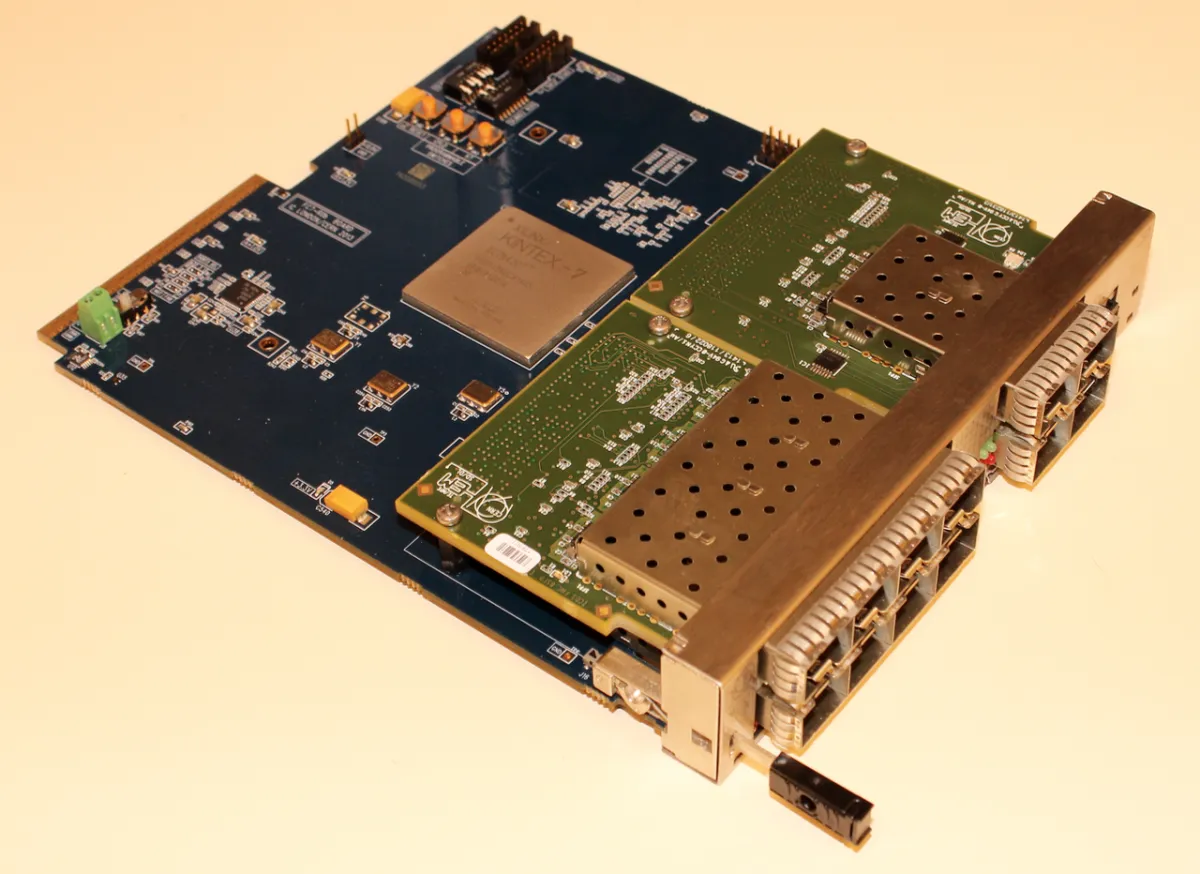
The new CMS Timing and Control Distribution System
The new CMS Timing and Control Distribution System It is of paramount importance that all parts of an LHC experiment are synchronized to each other and to the passage of particles in the centre of the experiment. The original CMS Timing, Trigger, and Control (TTC) system made this possible during the first period of data-taking
-
LHC experiments back in business at record energy
LHC experiments back in business at record energy BROKEN IMAGE NOT MOVED (drupal url : https://ep-news.web.cern.ch//content/lhc-experiments-back-business-record-energy) The Large Hadron Collider (LHC) started delivering physics data on 3rd of June for the first time in 27 months. After an almost two year shutdown and several months re-commissioning, the LHC is now providing collisions to all of
-
Focus on the Run Coordinators of the LHC Experiments
Focus on the Run Coordinators of the LHC Experiments As the preparations for Run2 are coming to an end, and the first collisions are scheduled to take place in a few weeks, the control rooms of the LHC experiments have become hives of activity, getting ready to record the first data. Run Coordinators are responsible
-
Greg Rakness: CMS co-Run Coordinator
Greg Rakness: CMS co-Run Coordinator The CMS Run Coordination team is made up of three people: Christoph Schwick and myself as co-Run Coordinators and Silvia Goy Lopez as coordinator of the Detector Performance Groups. Together we manage the commissioning and operation of the CMS detector with the overarching goal to deliver physics quality data efficiently
-
CMS: LS1 – A Short Summary and an Outlook to the Endgame
CMS: LS1 – A Short Summary and an Outlook to the Endgame After almost two years of shutdown, all planned upgrades of CMS have been performed. The endcap muon system now has a complete forth layer with additional Cathode Strip Chambers (CSC) and Restive Plate Chambers (RPC), enclosed by two new 120t shielding disks made
-
CMS tests new Resistive Plate Chambers
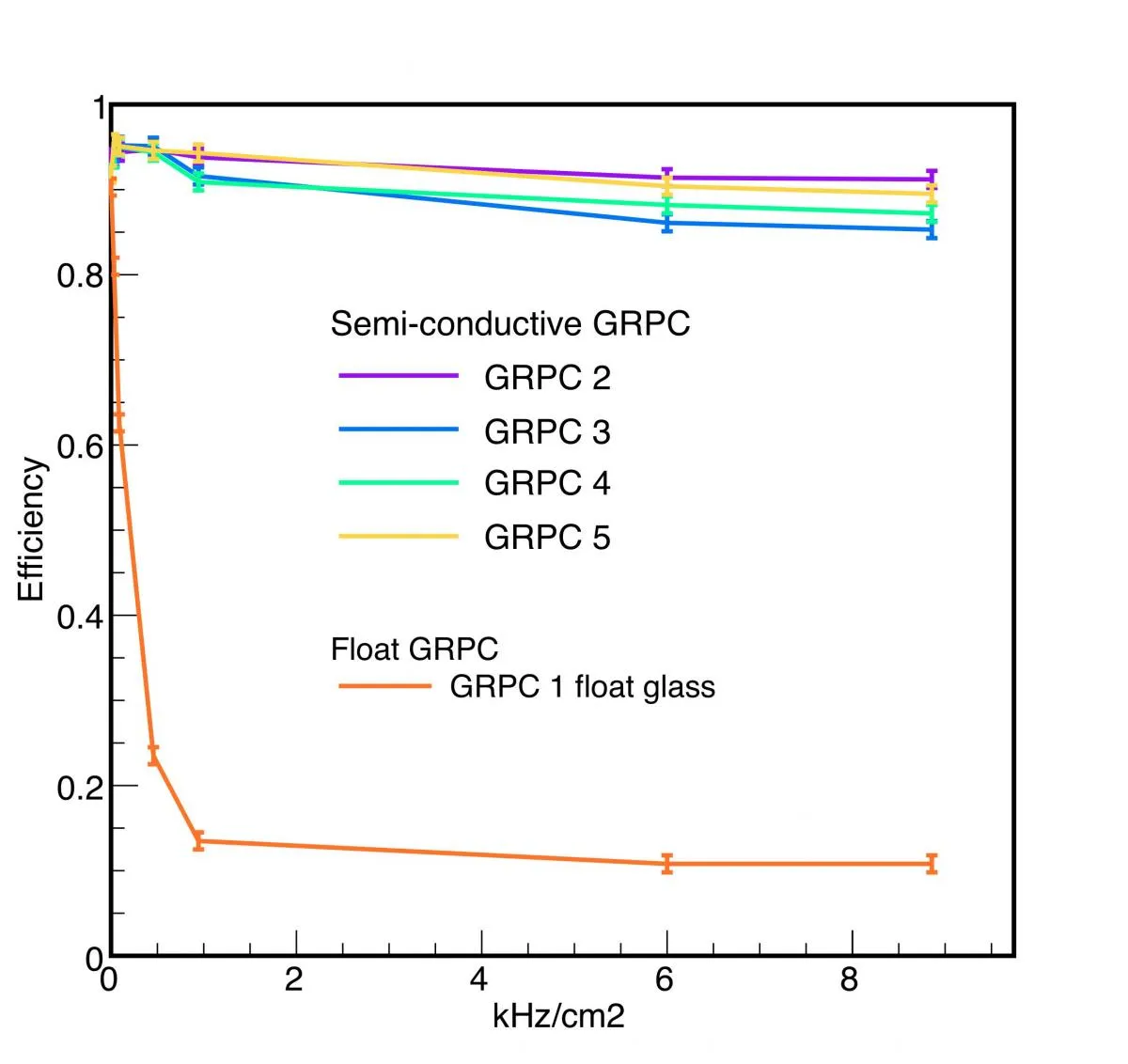
CMS tests new Resistive Plate Chambers With the increase of the LHC luminosity foreseen in the coming years many detectors currently used in the different LHC experiments will be dramatically impacted and some will have to be replaced. The new ones should be capable not only to support the high particle rate but also to
-
RD53: Development of pixel readout integrated circuits for extreme rate and radiation.
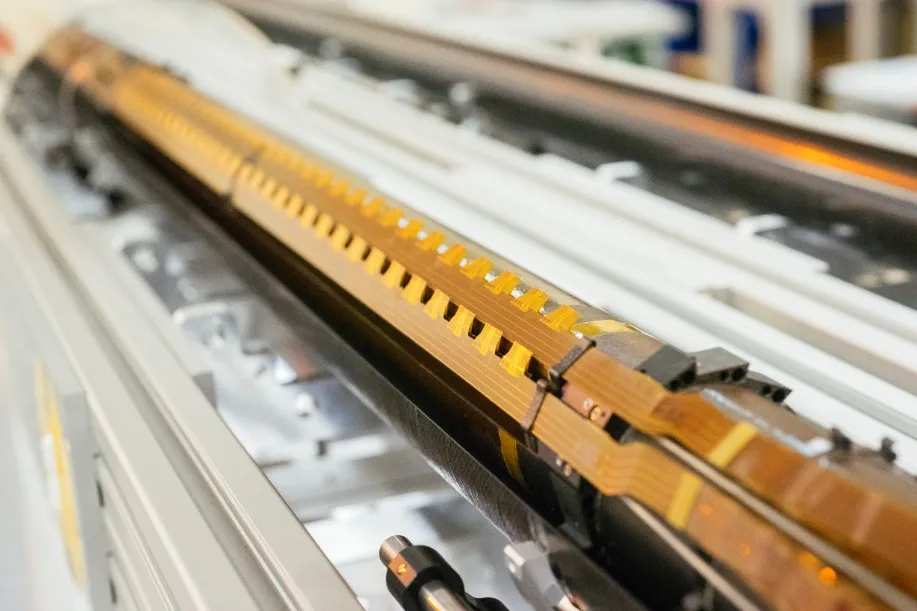
RD53: Development of pixel readout integrated circuits for extreme rate and radiation. In June 2013 the LHCC has endorsed the establishment of a new R&D collaboration, RD53, to address the challenges of making readout integrated circuits for the phase 2 pixel detector upgrades of ATLAS and CMS, as well as long term developments of interest
-
The CMS PIX Phase I upgrade CO2 cooling: a full scale prototype ready for tests
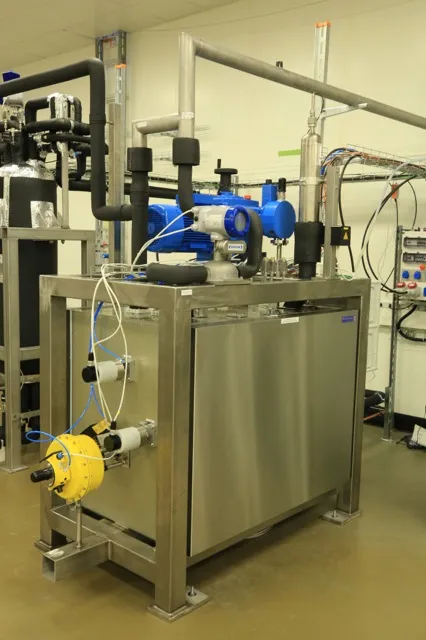
The CMS PIX Phase I upgrade CO2 cooling: a full scale prototype ready for tests Low temperature cooling systems using evaporative Carbon Dioxide (CO2) have been used for particle detectors since 2000 by the Silicon Tracker of the AMS02 experiment at the ISS (International Space Station) and for the VELO vertex detector of the LHCb
-
CMS – Highlights and Perspectives from UXC55
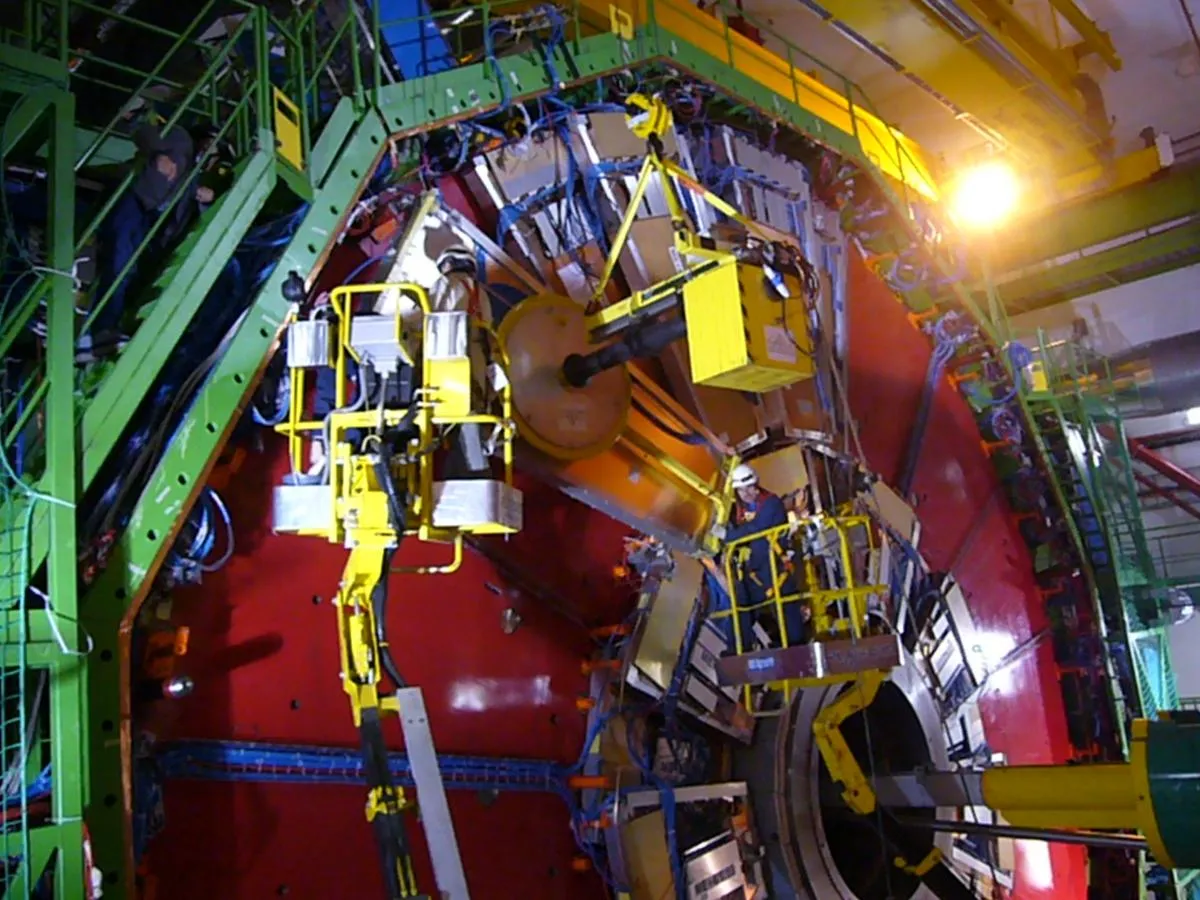
CMS – Highlights and Perspectives from UXC55 A very busy year of shutdown activities comes to an end, bringing us to the half-way-point of LS1. The most visible change of CMS is an additional fourth shielding disk on the +z end (pointing towards the Jura) of the detector, which is currently parked at the head
-
Scintillating crystals: a new window in medical imaging
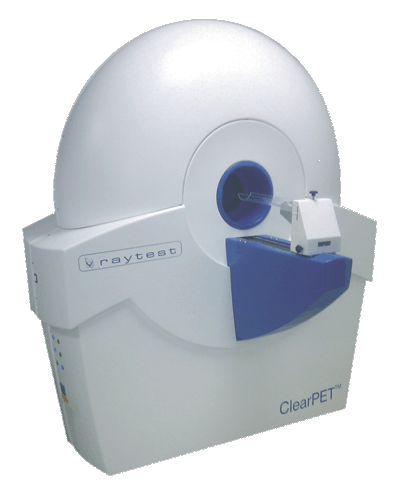
Scintillating crystals: a new window in medical imaging For science fiction fans antimatter is the high energy fuel that accelerates spaceships faster than the speed of light. In the real world however it has more down to Earth yet extremely useful applications, mainly in the medical field. Positrons are used in Positron Emission Tomography (PET)