
Tag: ESE
-
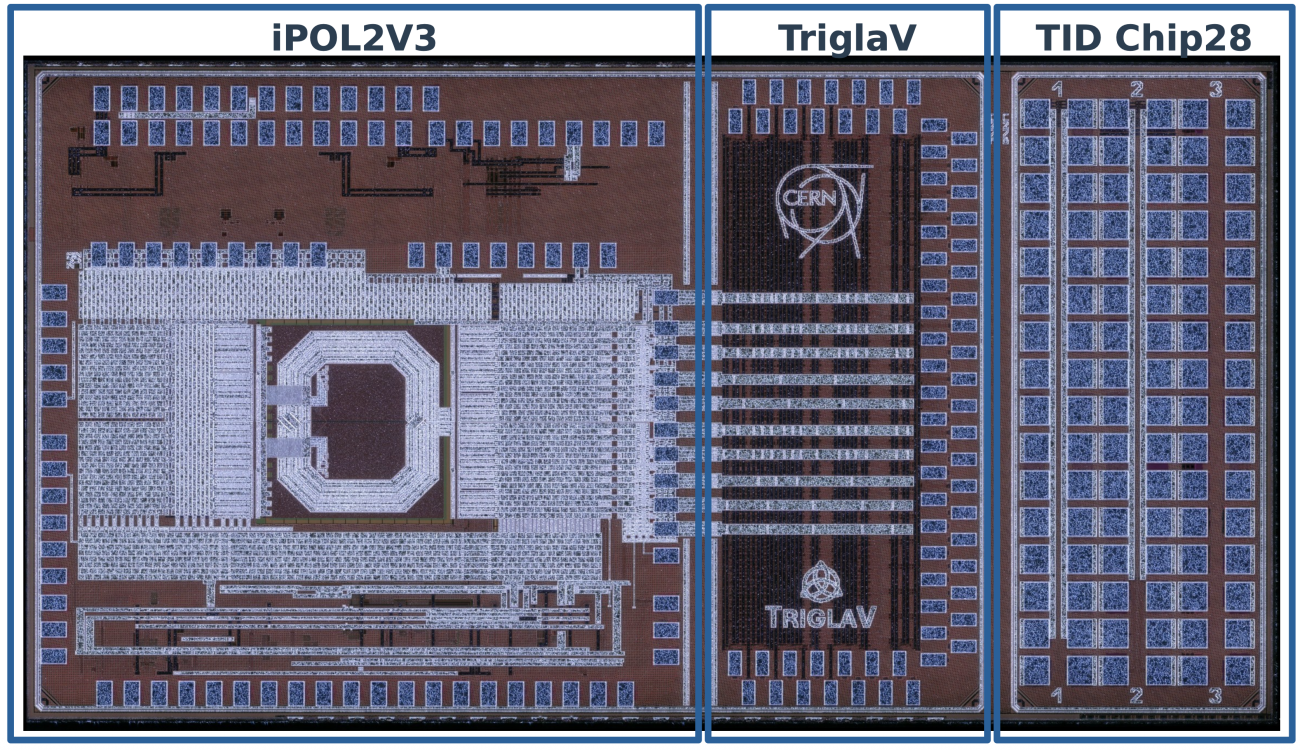
Building a Microelectronics Foundation for Tomorrow’s Detectors
Building a Microelectronics Foundation for Tomorrow’s Detectors The challenge: smarter chips in harsher places Particle physics detectors have always pushed electronics to their limits. The next generation of tracking systems and calorimeters will depend critically on dense, intelligent, low power and radiation-hard microelectronics: front-end ASICs that can survive for decades in harsh environments, having their
-

New Staff Members and Fellows
New Staff Members and Fellows Maximilian Babeluk Hi, I’m Max. I recently joined the ALICE ITS3 team, where I work on sensor testing, functional verification, and in the future also chip design – particularly on MOSAIX. My main activities include testing and yield assessment across multiple integration levels (wafer probing to system tests), including data
-
White Rabbit: Revolution of Timing Distribution for HL-LHC experiments
White Rabbit: Revolution of Timing Distribution for HL-LHC experiments As CERN prepares for HL-LHC, fine timing is becoming a critical factor for success, especially for detectors aiming to time-tag hits to a precision of tens of picoseconds. For decades, the good old Timing, Trigger, and Control (TTC) backbone has fulfilled the role of distributing timing
-
CWDM Link: A High-Bandwidth Optical Upgrade for LHC Beam Instrumentation
CWDM Link: A High-Bandwidth Optical Upgrade for LHC Beam Instrumentation The Versatile Link project[1] was initially developed to provide a point-to-point radiation-hardened optical link common to most CERN experiments which upgraded during Long Shutdown 2 (LS2). The Beam Instrumentation group (SY-BI) also adopted it as backbone of the SPS beam instrumentation (BI) front-end electronics upgrade[2],
-
Probing Noise Sensitivity in FBCM: From ASIC Design to EMC Testing Teaser:
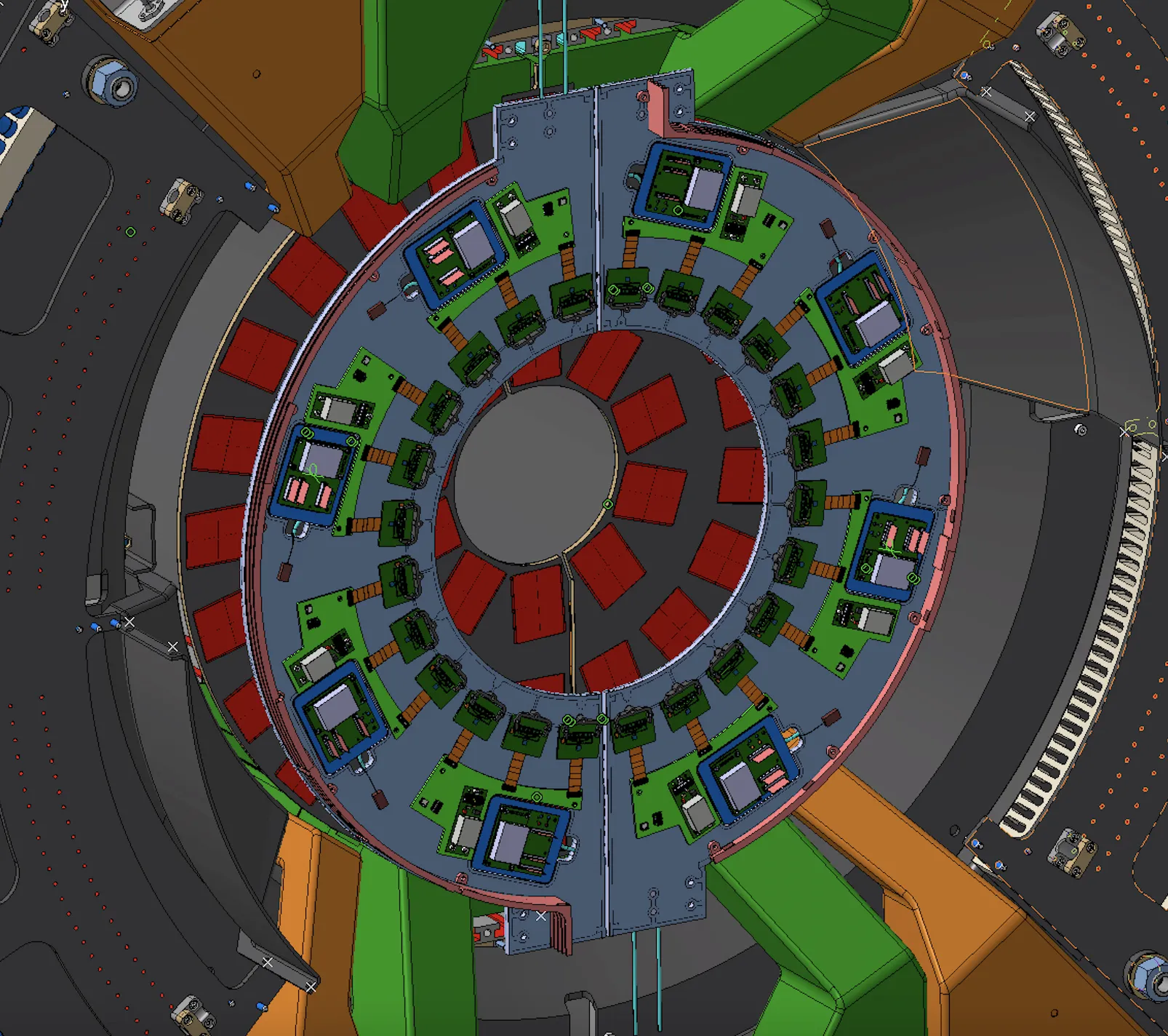
Probing Noise Sensitivity in FBCM: From ASIC Design to EMC Testing Teaser: Sketch of the FBCM location behind the last disk of the inner tracker (left) and a zoom to the two FBCM half discs forming a ring around the beam pipe with a detailed representation of the components on each service quadrant (right). The
-
Silicon Photonics Circuits for Integrated Optical Readout of future High Energy Physics detectors
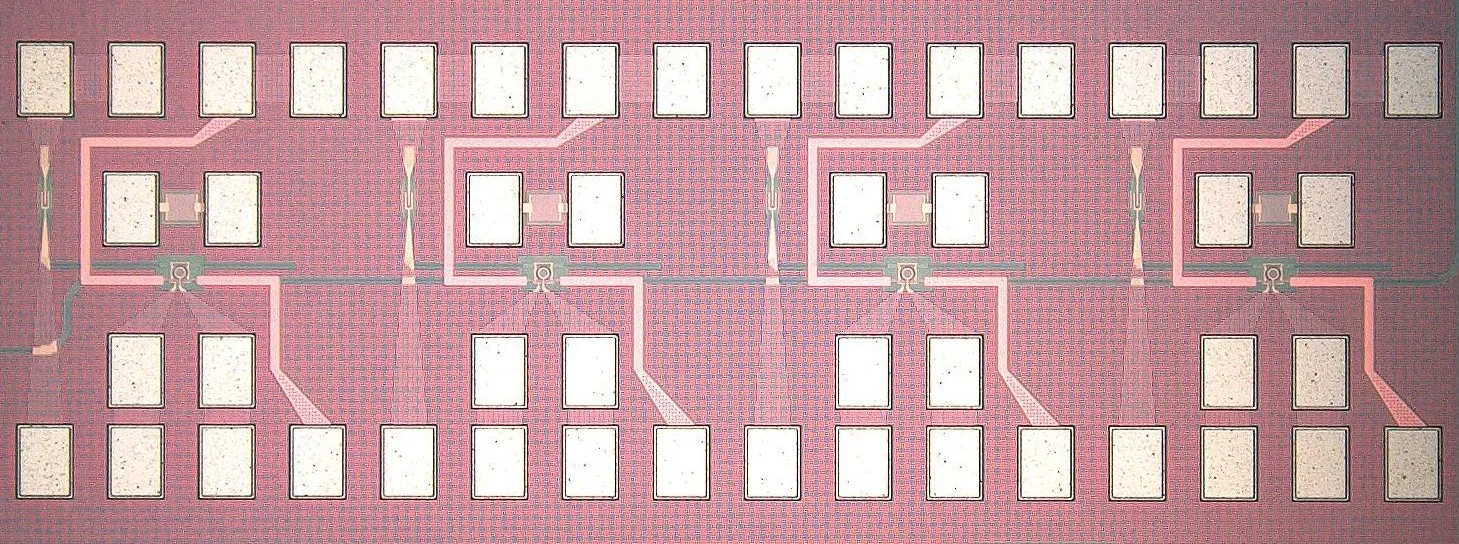
Silicon Photonics Circuits for Integrated Optical Readout of future High Energy Physics detectors Fibre optic links are crucial in High Energy Physics (HEP) experiments, allowing the transmission of large volumes of data from particle detectors operating in harsh radiation environments to radiation-free zones. Silicon Photonics (SiPh) [1] has emerged as a promising optoelectronic technology for
-
In discussion with Michael Campbell: Unpacking the Medipix/Timepix Revolution
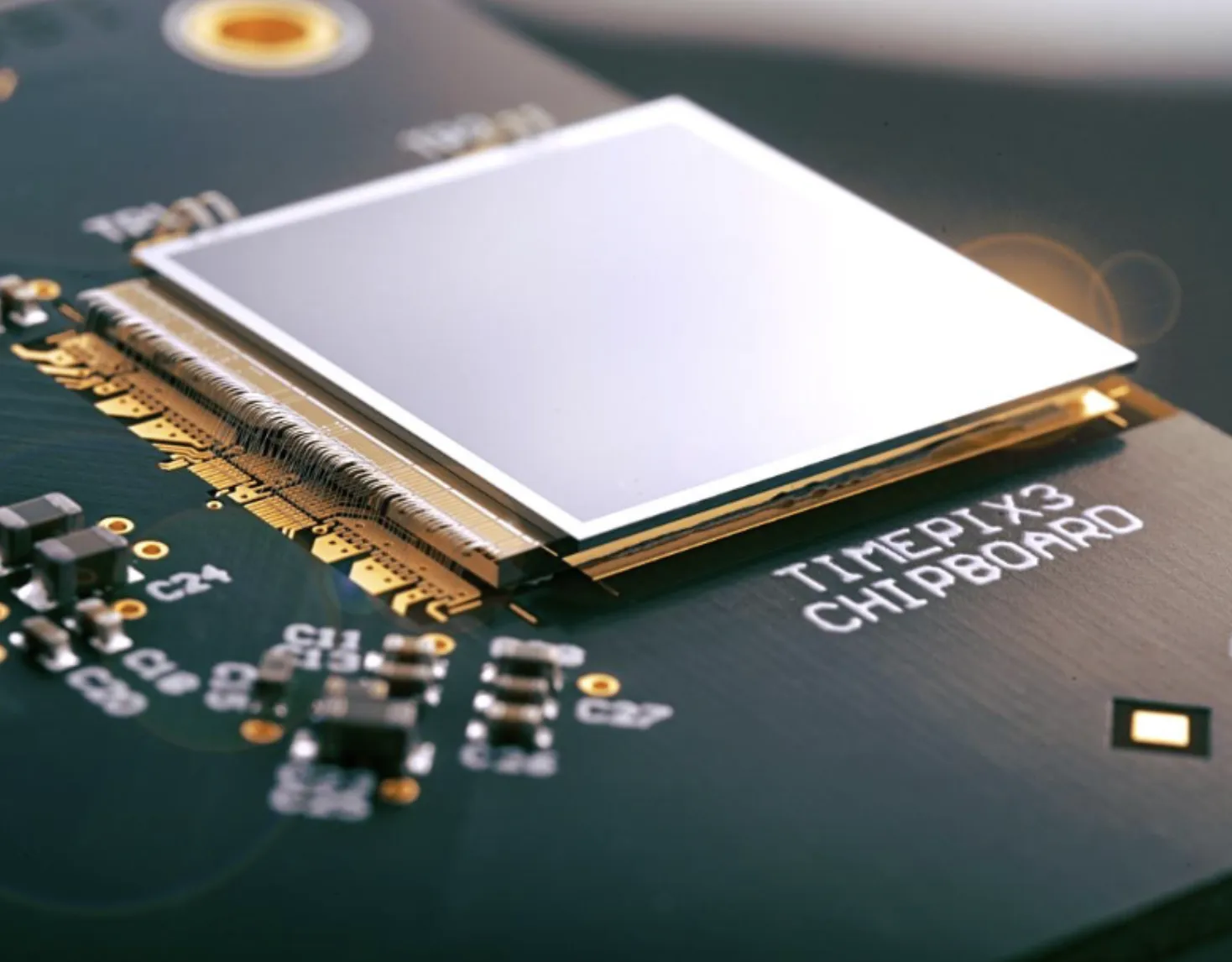
In discussion with Michael Campbell: Unpacking the Medipix/Timepix Revolution The Medipix and Timepix family of hybrid pixel detectors represents one of the most groundbreaking innovations to emerge from CERN’s detector technology. These chips, based on the hybrid pixel technology developed for high-energy physics experiments, have found remarkable applications in diverse fields such as medical imaging,
-
DRD7: An R&D Collaboration Pioneering Electronics for Future Particle Detectors
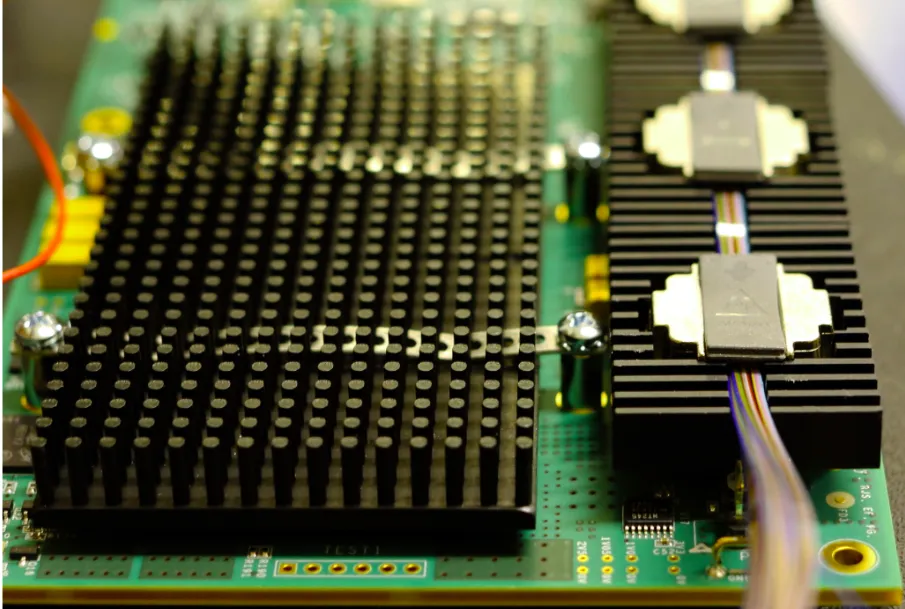
DRD7: An R&D Collaboration Pioneering Electronics for Future Particle Detectors On June 5, 2024, the CERN Research Board approved the DRD7 Collaboration for an initial three-year period. The collaboration will focus on developing and demonstrating new electronic hardware, firmware, and software concepts. Its main goal is to pursue disruptive and transformative innovations, but it will
-
Pushing the boundaries of monolithic CMOS sensor technologies
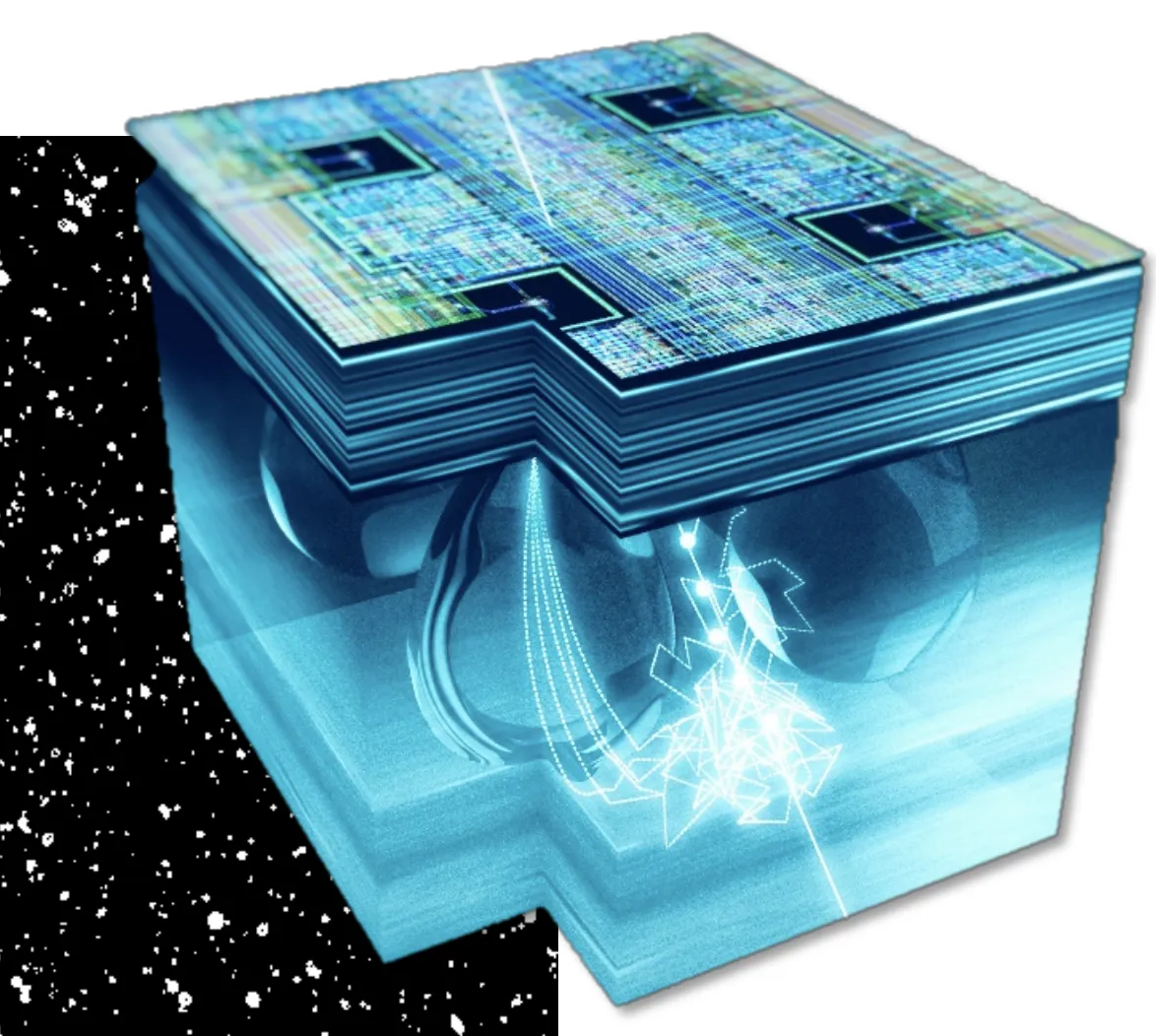
Pushing the boundaries of monolithic CMOS sensor technologies Silicon solid state detectors have been developed over a long time to address the challenges of particle tracking and vertexing. At the LHC, when the machine reaches its full design regime, it collides proton bunches at a rate of 40 million times per second. To capture these
-

Asterix in Switzerland
Asterix in Switzerland This episode of the adventures of the winged-helmed Gaul was published in 1970 and foretold what would happen 28 years later, when the CERN microelectronics group (MIC at the time, now the ME section in EP-ESE) welcomed the arrival of its first X-ray irradiation system. The need for such equipment emerged with