
Tag: ESE
-
lpGBT ASIC Production
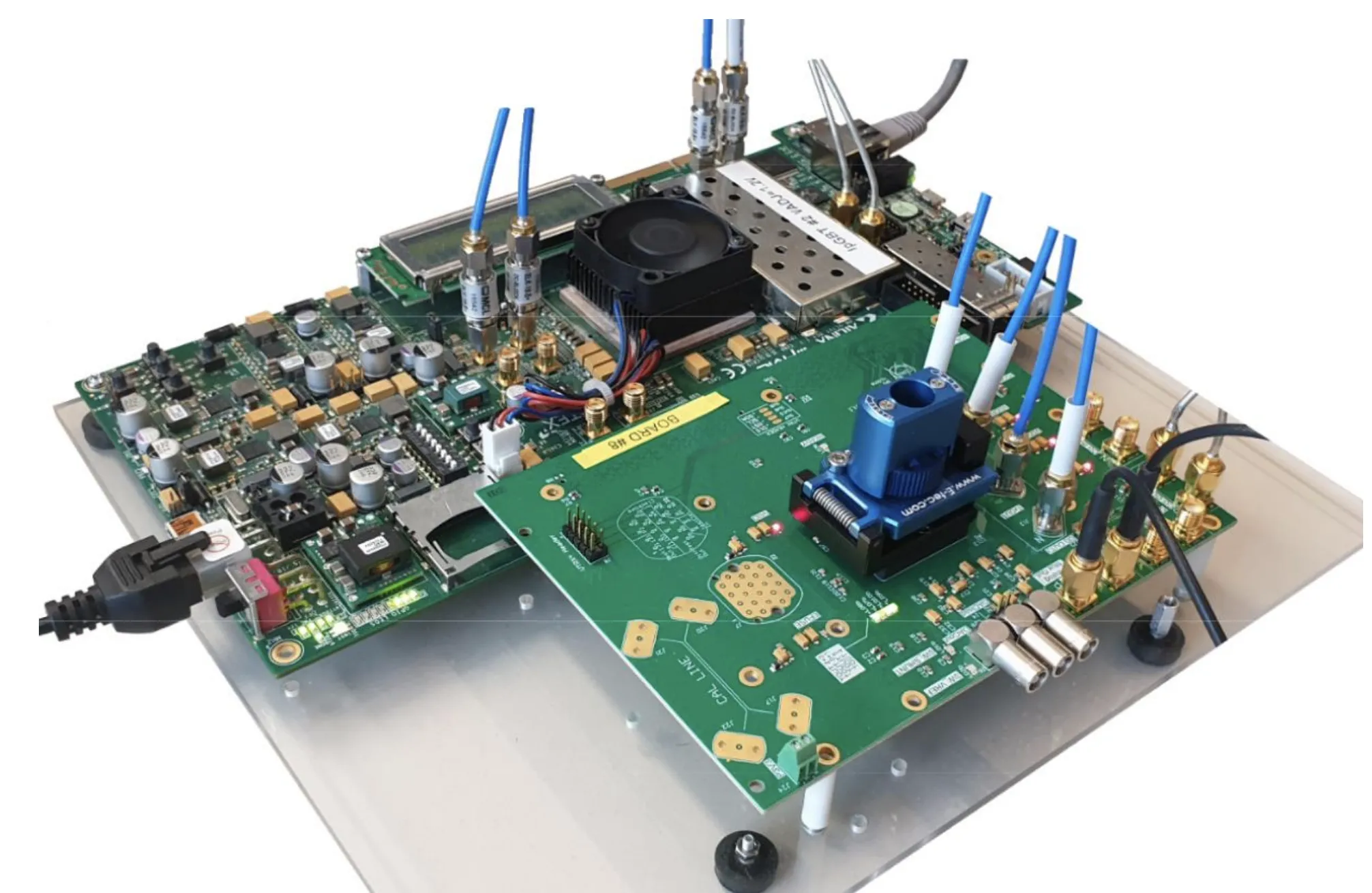
lpGBT ASIC Production What is the lpGBT ASIC ? Figure 1: The lpGBT silicon die on the package substrate (left) and the finished product with overmold (right) The Low Power Giga Bit Transceiver (lpGBT) is a reliable, radiation-tolerant ASIC designed for use in multiple detector systems of the Large Hadron Collider (LHC) (see Figure 1).
-
Wafer-level testing of CMS Outer Tracker ASICs
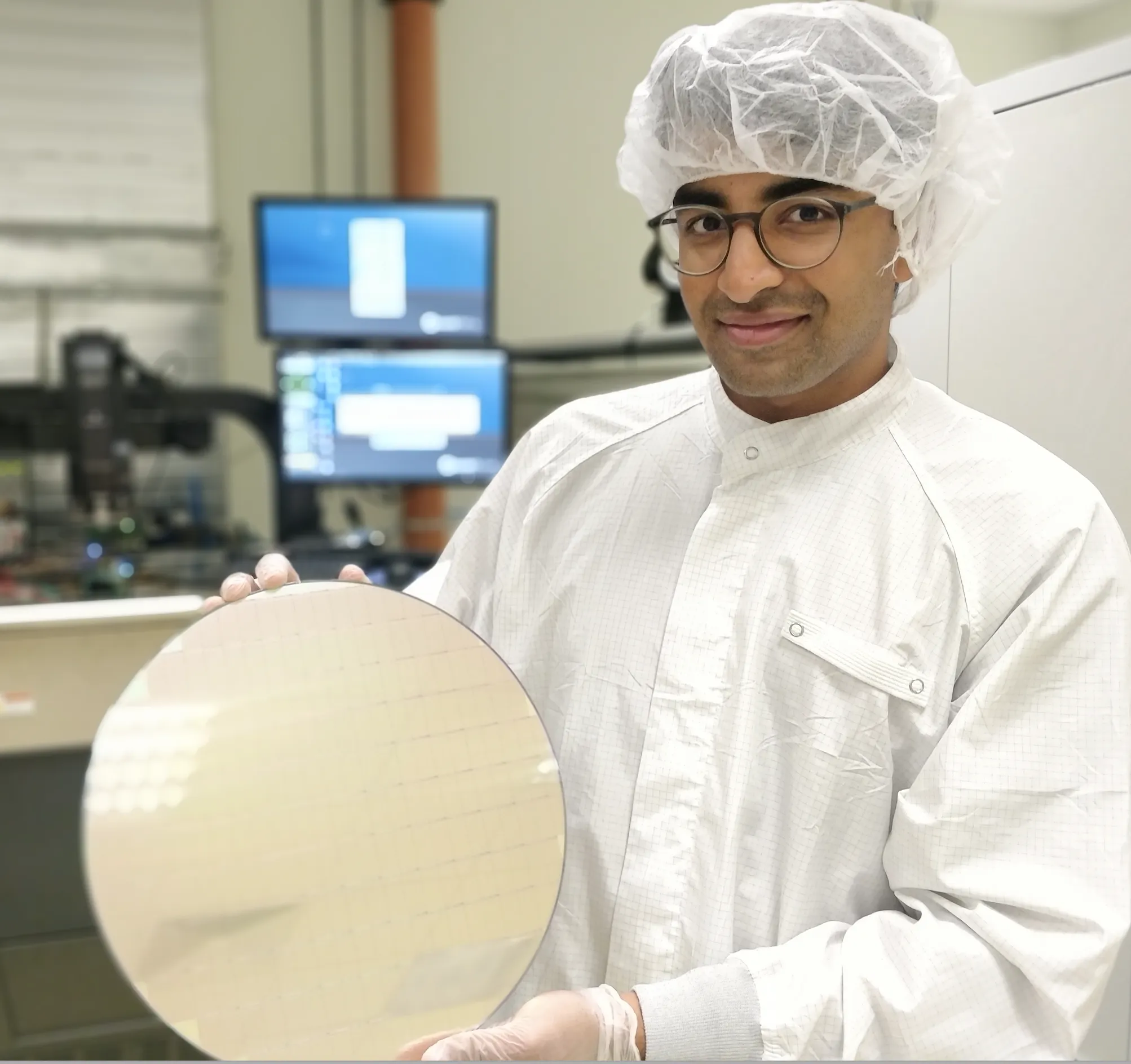
Wafer-level testing of CMS Outer Tracker ASICs The Macro-Pixel ASIC (MPA) and Short-Strip ASIC (SSA) are the new read-out chips used to process particle hit signals of pixel and strip sensors in the upcoming CMS Outer Tracker of the High-Luminosity LHC Upgrade (HL-LHC). The two chips are produced by TSMCs 65nm fabrication process and were
-
64 channel picosecond time resolution instrumentation in 25 milligrams of silicon
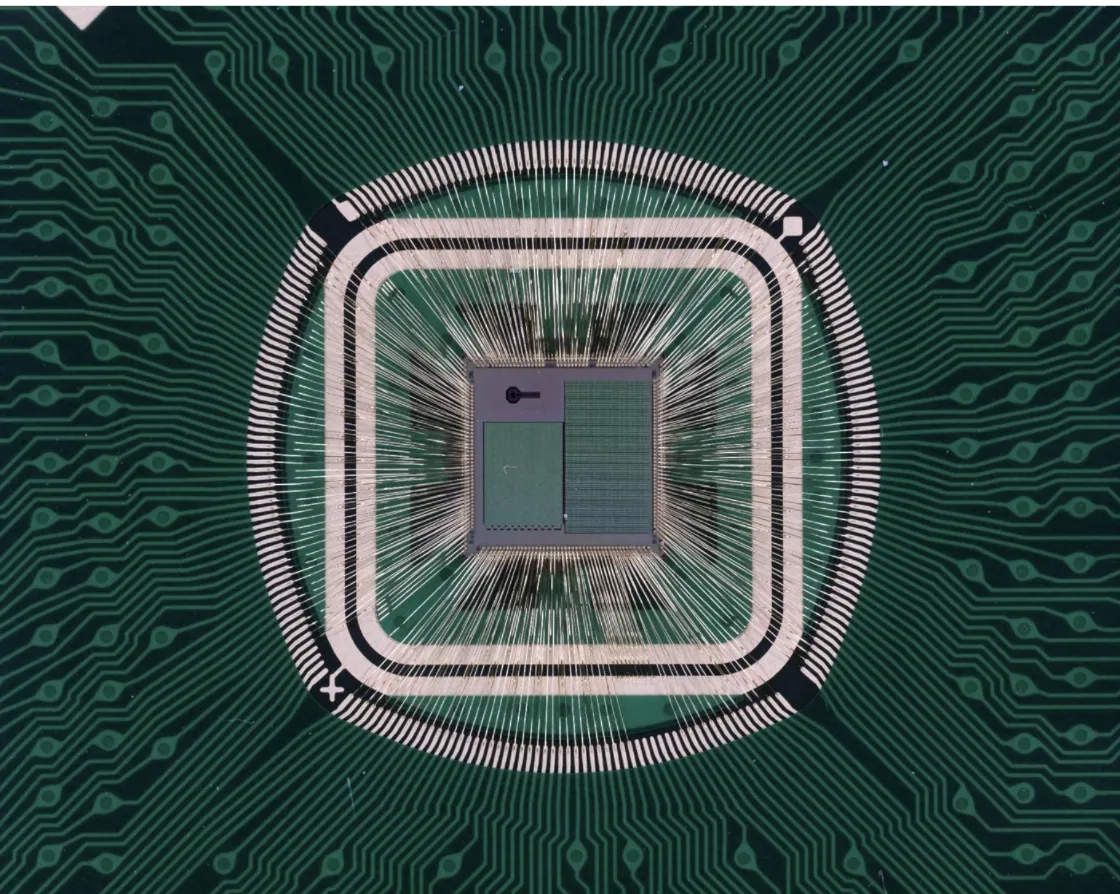
64 channel picosecond time resolution instrumentation in 25 milligrams of silicon The EP-ESE group has finalized the development of a 64 channel picosecond TDC (Time to Digital Converter) ASIC and 20 thousand pieces have been produced. One of the key challenges for future HEP experiments is the development of very high time resolution detectors and
-
HEP responds to the global chips crisis
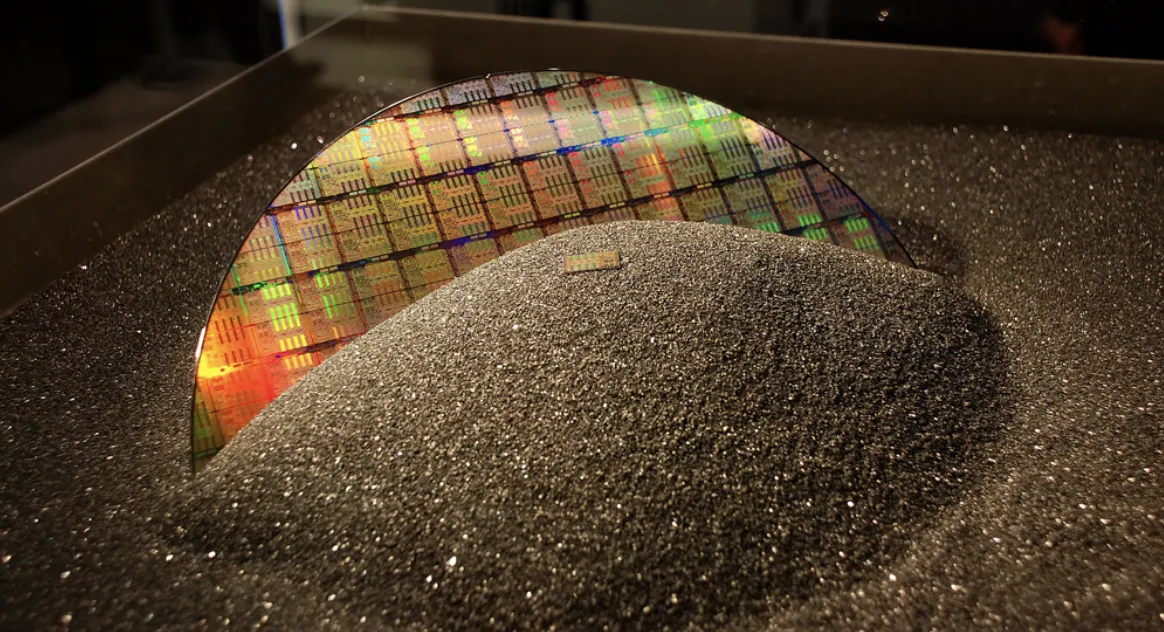
HEP responds to the global chips crisis Over the past year, semiconductor prices have been surging in Europe as demand increases globally. While this is happening with most products, it's been a larger problem given the role of semiconductors in most electronics, such as consumer electronics (smartphones, laptops, gaming consoles), automotive industry and home appliances.
-
Medipix3 reaches the clinic
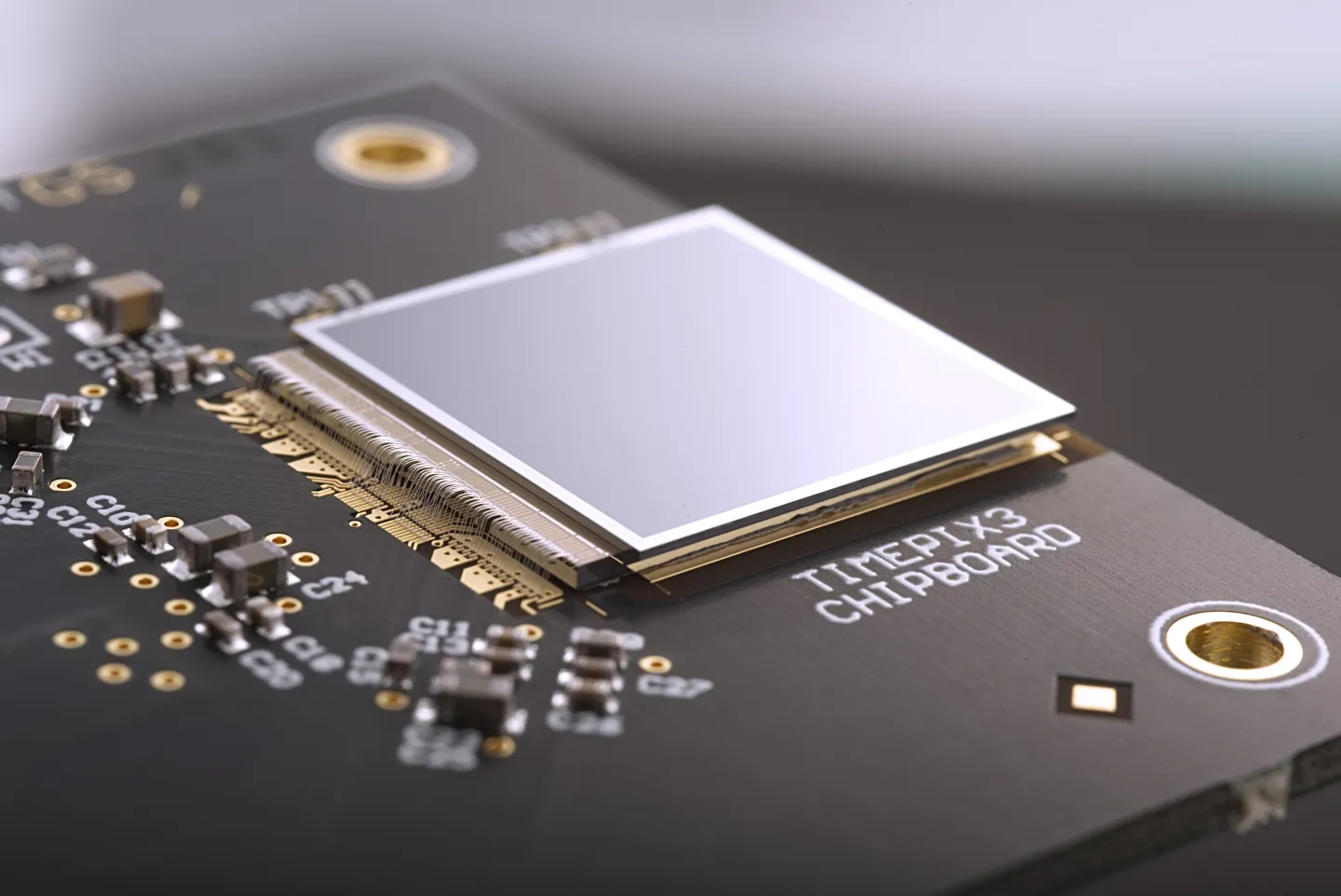
Medipix3 reaches the clinic In early October, the CERN Medipix Team (EP-ESE-ME) visited the newly installed Medipix3-based spectroscopic CT scanner at the Lausanne University Hospital CHUV, Lausanne. The 3D colour X-ray scanner has been developed in New Zealand by MARS Bioimaging, a spin-out company of the University of Canterbury which is a member of the
-
System-on-Chip in Particle Physics Experiments
System-on-Chip in Particle Physics Experiments Many experiments in particle physics use custom-built electronics boards in order to perform event triggering and data readout. For many years now, those electronics boards have been using Field-Programmable Gate Arrays (FPGAs) for processing data. An FPGA is a type of integrated circuit that is reconfigurable and that provides fast
-

A safety and reliability perspective of the CERN RadiatiOn Monitoring Electronics (CROME).
A safety and reliability perspective of the CERN RadiatiOn Monitoring Electronics (CROME). CERN has the legal obligation to protect the public and the people working on its premises from any unjustified exposure to ionising radiation. In this context, radiation monitoring is one of the main tasks of the Radiation Protection Group. Currently, around 800 radiation
-
FastIC and FastICpix developments
FastIC and FastICpix developments Precise time tagging is a hot topic in High Energy Physics and in other fields. A number of detector technologies are available but there are few multi-channel front-end ASICs capable of providing time tagging in the region of 10ps. This article describes two developments that are going on within the microelectronics
-
CHIPS: A new EP-ESE service for the HEP community
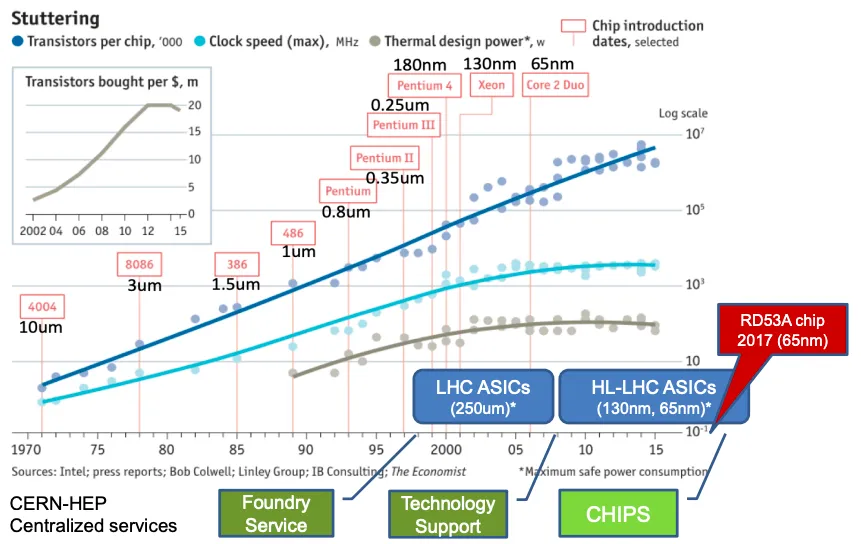
CHIPS: A new EP-ESE service for the HEP community ASIC technology and designs are becoming increasingly complex but bring potentially huge benefits to HEP experiments (see also previous EP article “A bright future for microelectronics“). Figure 1 summarises the evolution of CMOS technologies in the last decades, and their increasingly delayed adoption in HEP. Each
-
Optical Data Transmission for LHC Experiment Phase-2 Upgrades
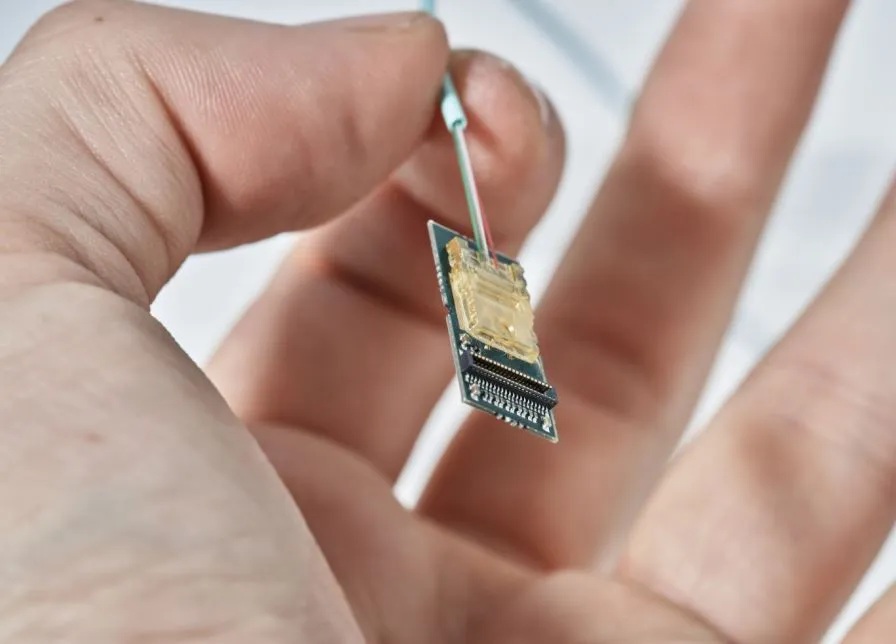
Optical Data Transmission for LHC Experiment Phase-2 Upgrades Optical Readout and Control Systems have become ubiquitous with the LHC-era of Particle Physics Experiments, with each generation of detector upgrades bringing a need to transfer ever-greater amounts of data. Just like in our everyday lives where we now take for granted the ability to watch movies