
Tag: April 2024 – June 2024
-

Discover how CERN’s innovative cryostat technology is advancing neutrino physics
Discover how CERN's innovative cryostat technology is advancing neutrino physics As stated in the 2020 Update of the European Strategy for Particle Physics, the existence of non-zero neutrino masses is a compelling sign of new physics. The worldwide neutrino physics program explores the full scope of the rich neutrino sector and commands strong support in
-
A high-dimensional jet-powered measurement of the strong force
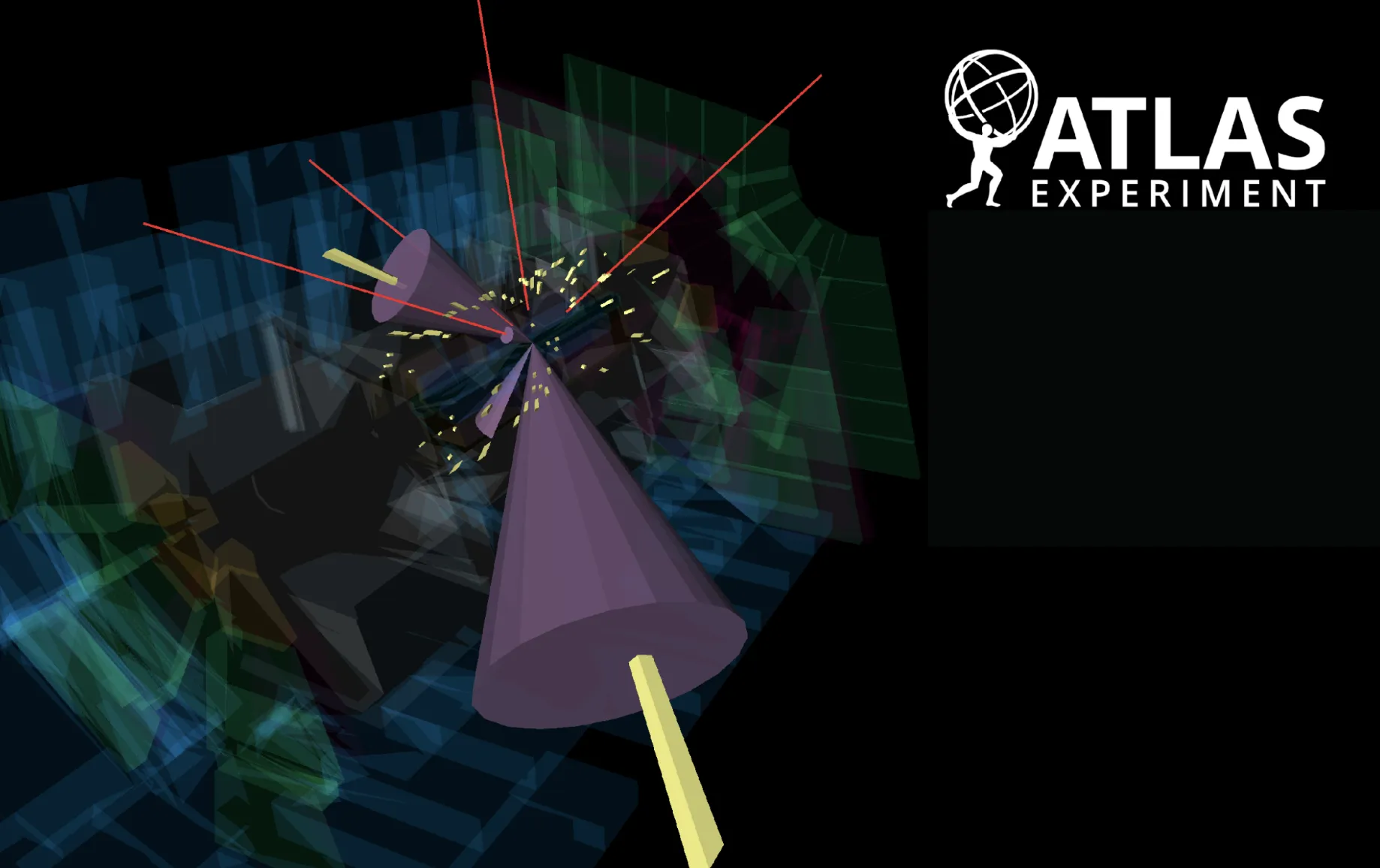
A high-dimensional jet-powered measurement of the strong force Top image: An event display of a high-momentum Z boson event in the ATLAS detector associated with a number of “jets”, which are complex clusters of particles created via interactions mediated by the strong force. Precise measurements of fundamental particles at the Large Hadron Collider (LHC) are
-
MoEDAL-MAPP Experiment’s Quest for Anomalously Charged Avatars of New Physics
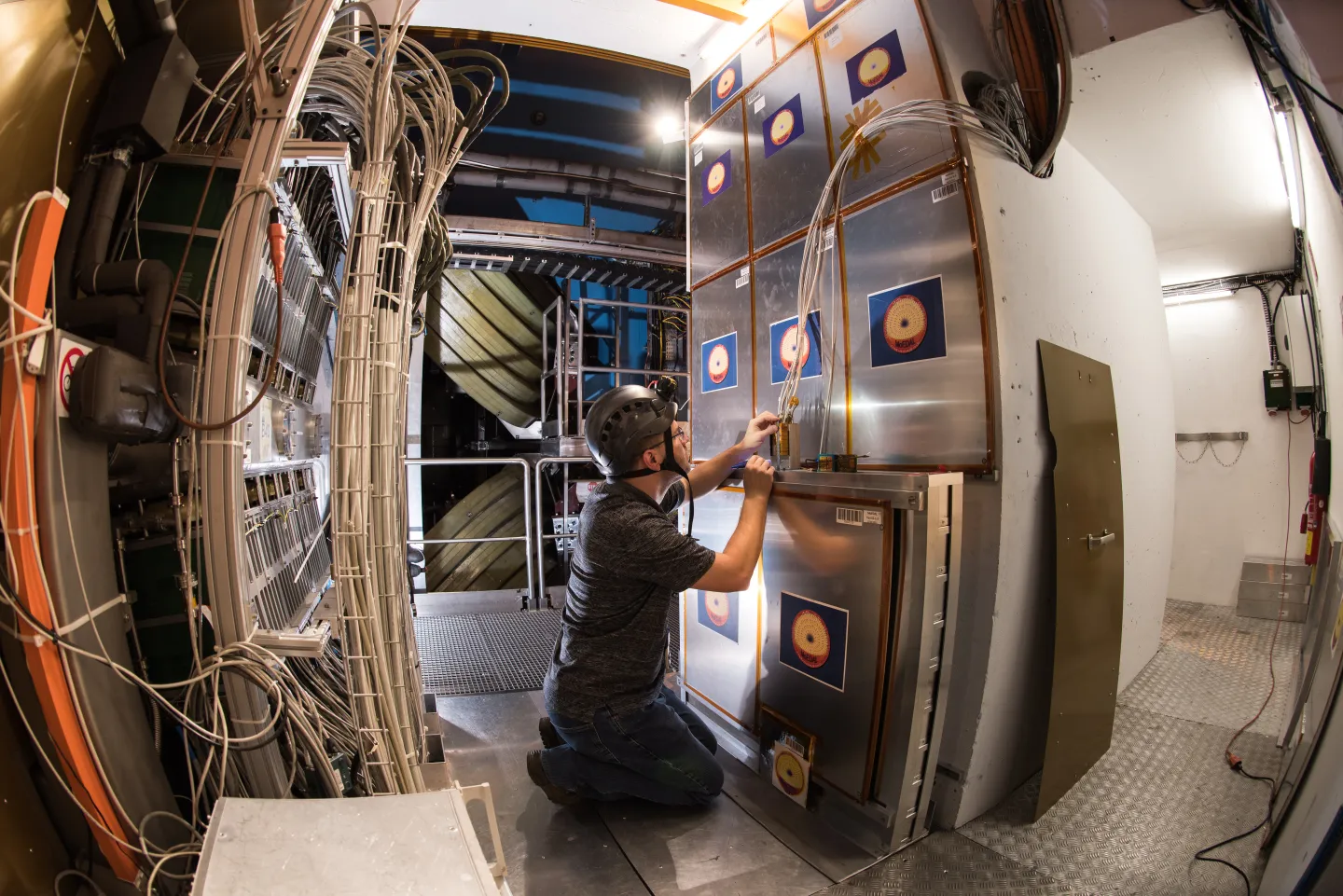
MoEDAL-MAPP Experiment’s Quest for Anomalously Charged Avatars of New Physics Nature, as described by the Standard Model (SM), has decreed that stable or pseudo-stable subnuclear charged particles can only have an observable electrical charge of ±1e, where e is the charge of an electron and that there is no magnetic charge. Thus, searching for anomalously
-

Exploration with LHCb: from unseen to rare
Exploration with LHCb: from unseen to rare Flavour physics, even at low-energy scales, offers a glimpse at energy scales far higher than those reachable directly thanks to the quantum loop effects, which are present in the quark transitions. The rarer or more suppressed a given transition is within the standard model (SM) of particle physics,
-
NextGen Triggers: Pioneering R&D for HL-HC Data Acquisition and Event Processing
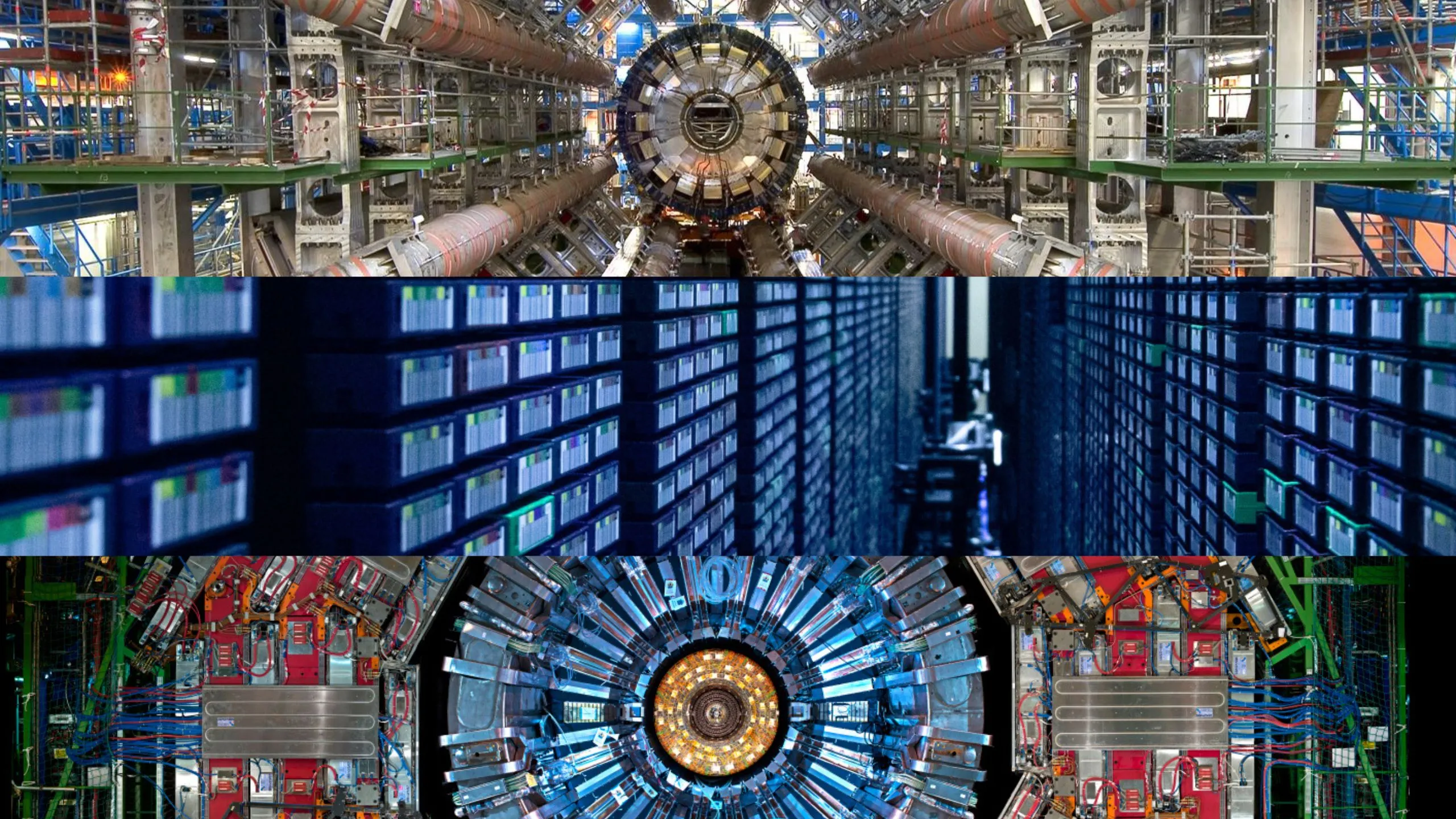
NextGen Triggers: Pioneering R&D for HL-HC Data Acquisition and Event Processing The High-Luminosity LHC upgrade will provide an unprecedented challenge to the data acquisition and online event processing capabilities of ATLAS and CMS. Both experiments are currently undergoing major upgrades to prepare their detectors to cope with the expected threefold increase in event level pile-up
-

Edge SpAIce: Leveraging CERN’s AI for Real-Time Ocean Plastic Tracking from Space
Edge SpAIce: Leveraging CERN's AI for Real-Time Ocean Plastic Tracking from Space Earth Observation (EO) and particle physics research have more in common than you might think. In both environments, whether capturing fleeting particle collisions or detecting transient traces of ocean plastics, rapid and accurate data analysis is paramount. We are excited to present a
-
Looking in all directions for long-lived particles at the LHC
Looking in all directions for long-lived particles at the LHC In 1984, Alvaro de Rujula pointed out that the proton-proton collisions at the LHC would produce large fluxes of very high energy neutrinos in the forward direction [1]. In 2023, almost 40 years later, the FASER and SND experiments ushered in the era of collider
-
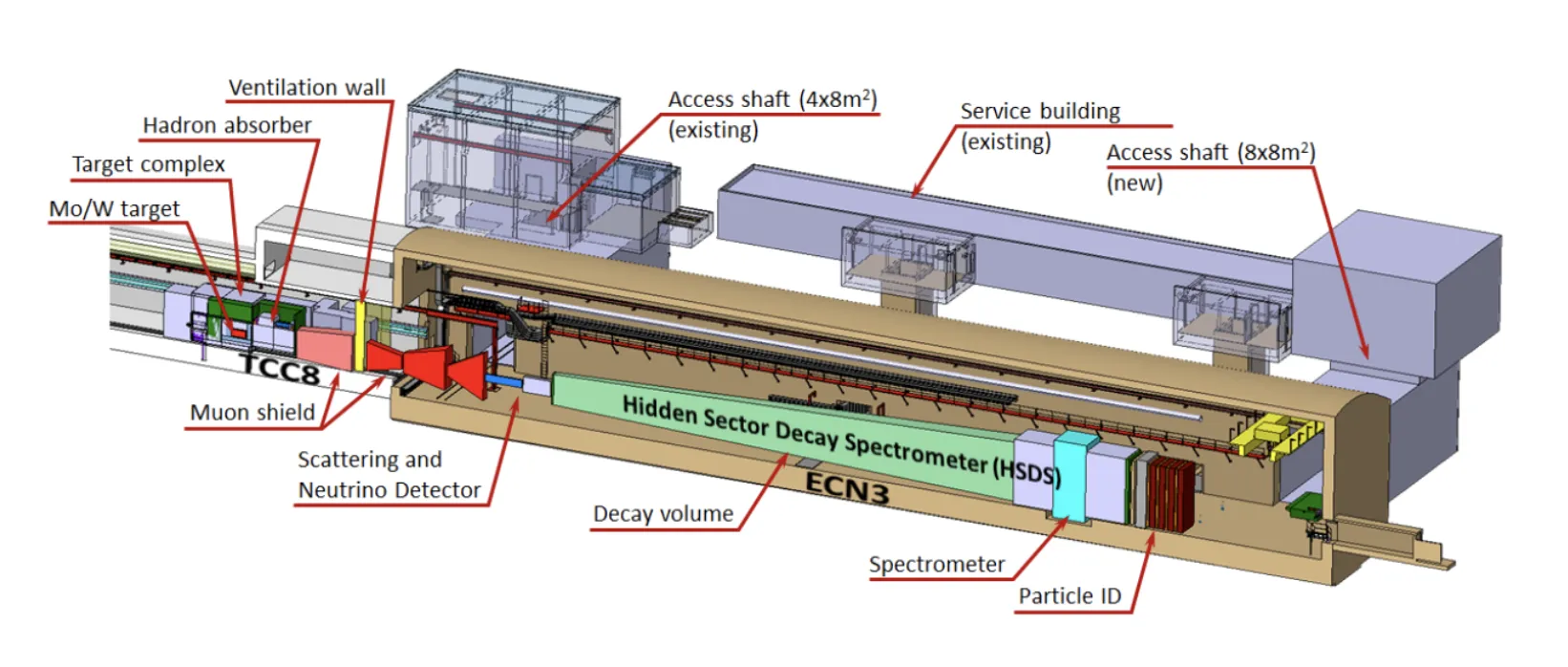
SHiP Experiment: Charting New Territory in Particle Physics
SHiP Experiment: Charting New Territory in Particle Physics Full speed ahead Layout of the SHiP experiment, with the target on the left and the experiment in the ECN3 hall. Credit: SHiP collaboration. In a significant step forward for particle physics, CERN’s Research Board recently approved the SHiP (Search for Hidden Particles) experiment, slated to begin