
Tag: December 2022 – February 2023
-
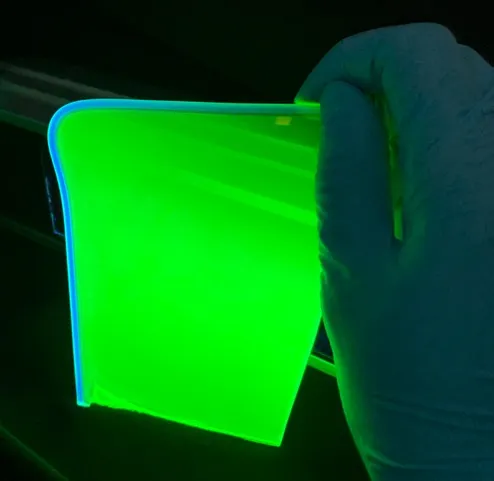
The birth of NanoCal
The birth of NanoCal High-performance electromagnetic calorimeters often make use of inorganic crystal scintillators. Their high density makes them well suited for the construction of large homogeneous detectors where the scintillating material simultaneously serves as both the absorber and the active detector medium. An appropriate choice of inorganic crystal can provide both high light yield
-
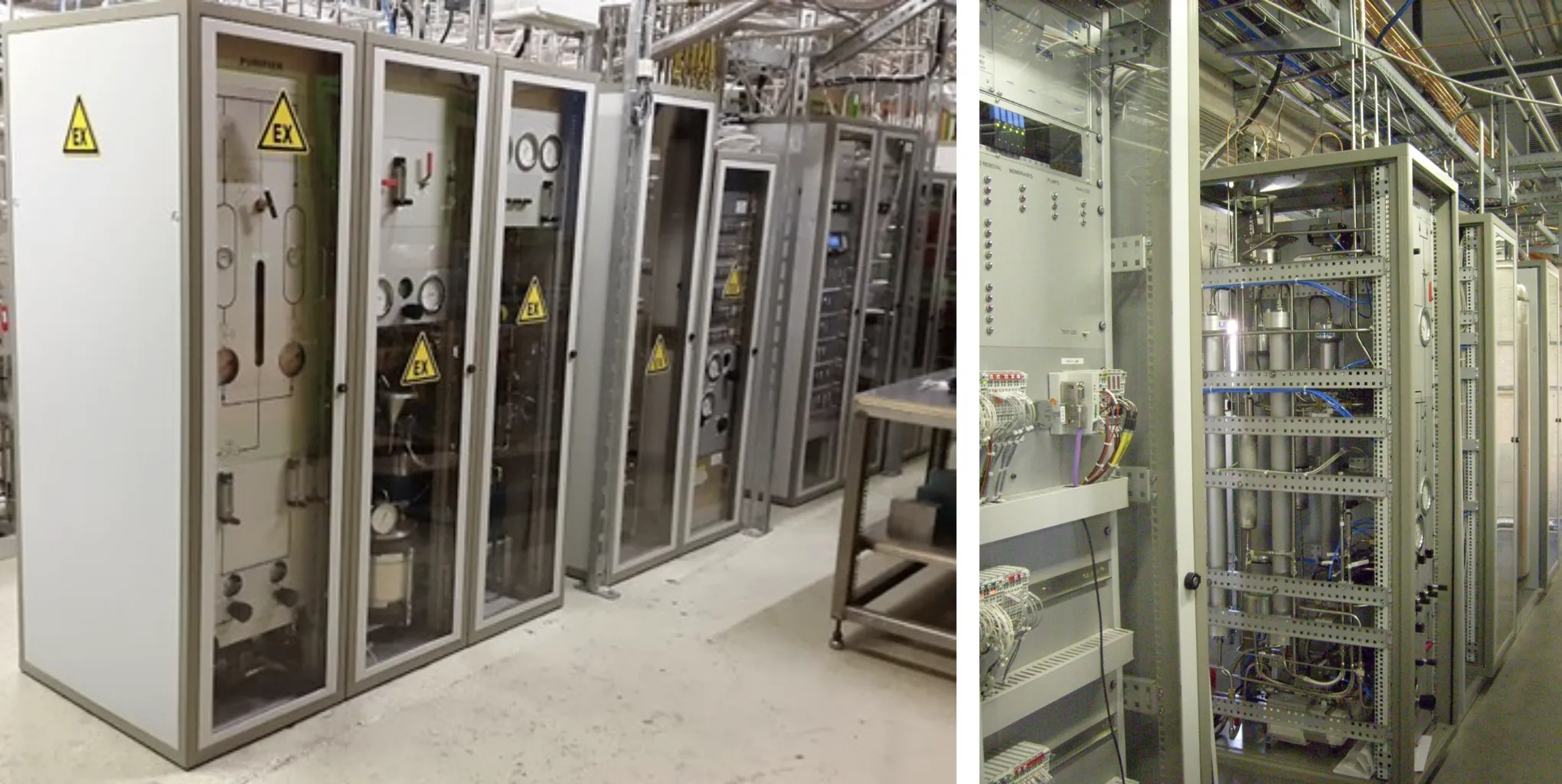
R&D on gas usage in the LHC particle detection systems.
R&D on gas usage in the LHC particle detection systems. A wide range of gas mixtures is used for the operation of different gaseous detectors for particle physics research. Among them there are greenhouse gases like C2H2F4 (R134a), CF4 (R14), C4F10 (R610) and SF6, which are needed because they allow to achieve specific detector performance
-
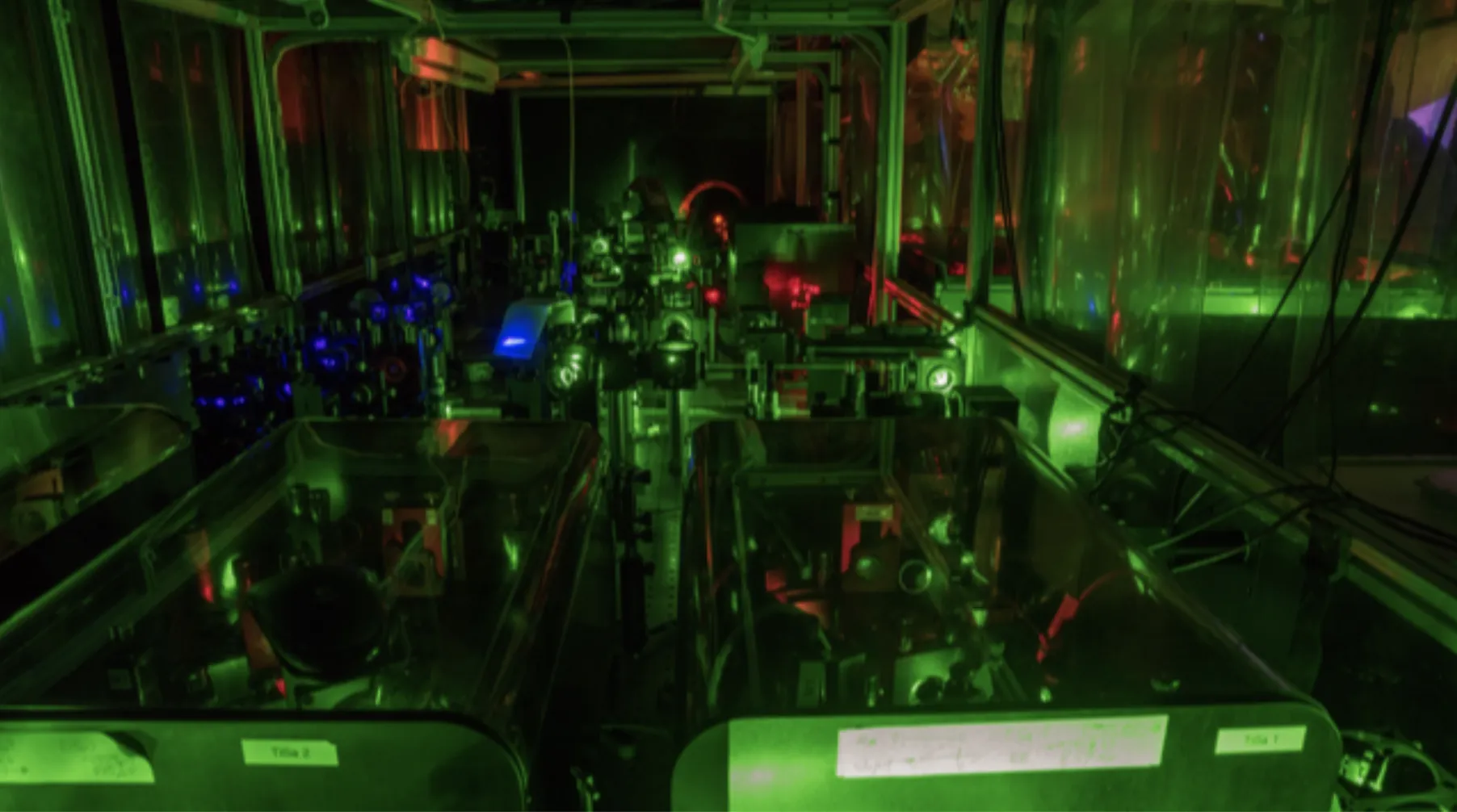
The LISA project at CERN-ISOLDE
The LISA project at CERN-ISOLDE The LISA (Laser Ionisation and Spectroscopy of Actinides) consortium aims to train a new generation of experts in radioactive ion beam research and applications, laser spectroscopy, scientific laser technologies and atomic theorists whilst they work towards the goal of vastly improving our understanding of the atomic and nuclear properties of
-
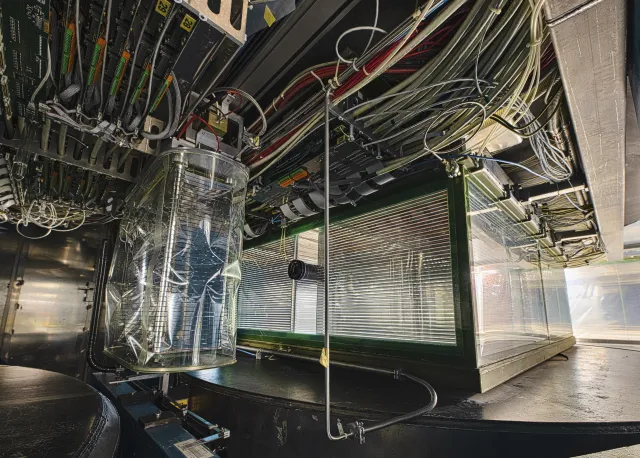
Hunting for charm with lead and SHINE
Hunting for charm with lead and SHINE SHINE (SPS Heavy Ion and Neutrino Experiment) [1] is a multi-purpose experiment studying hadron production in hadron-proton, hadron-nucleus and nucleus-nucleus collisions. The programme on strong interactions includes studying the properties of the onset of deconfinement [2] and searching for the critical point of strongly interacting matter [3]. Additionally,
-
A new CEDAR for the NA62 experiment
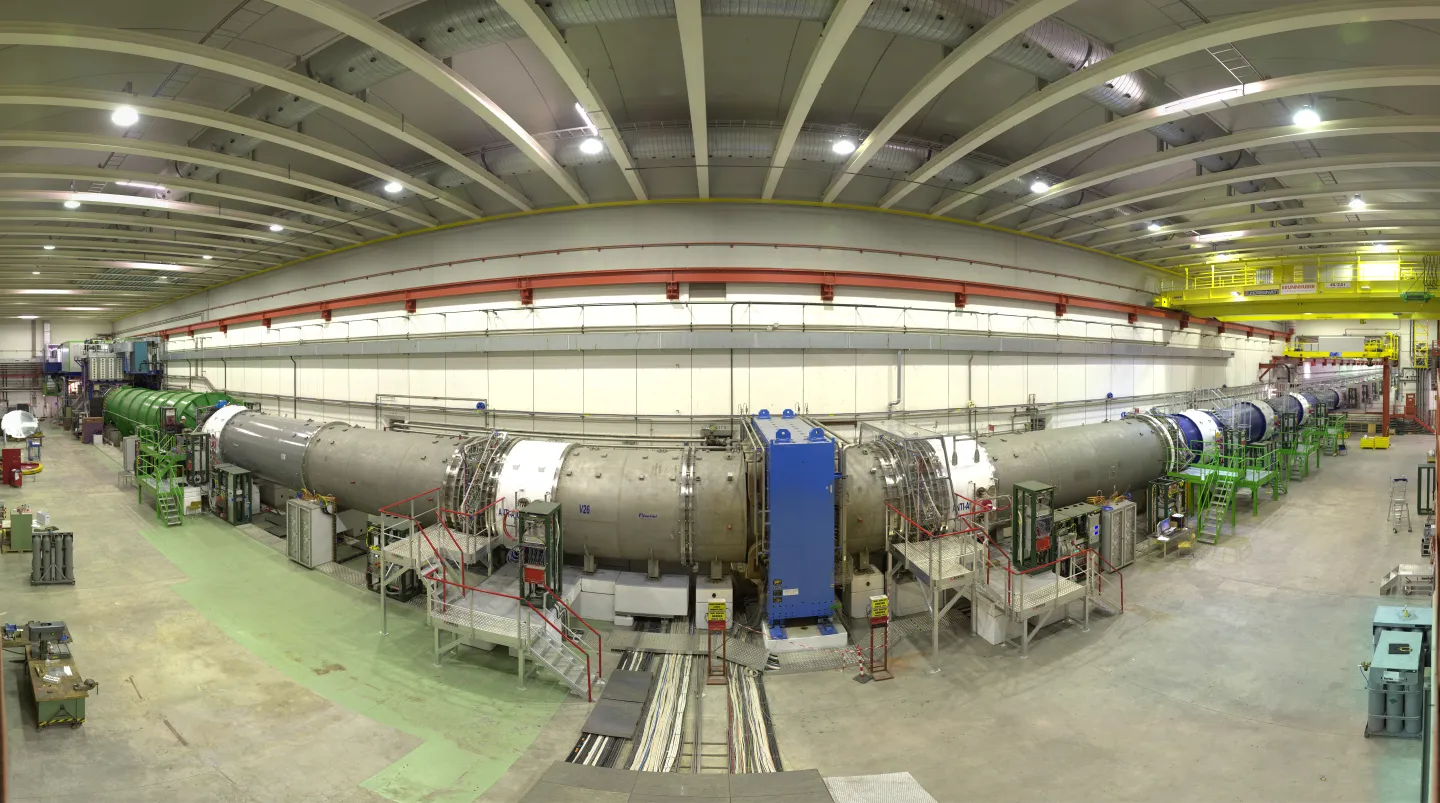
A new CEDAR for the NA62 experiment The NA62 experiment at CERN studies kaon decays using a decay-in-flight technique, with the primary aim of the precise measurement of the K+ → π+νν branching fraction. The kaons are delivered to the experiment in a beam of 75 GeV/c positively-charged hadrons, with the beam composition dominated by
-
LHCf and cosmic ray investigation in run 3
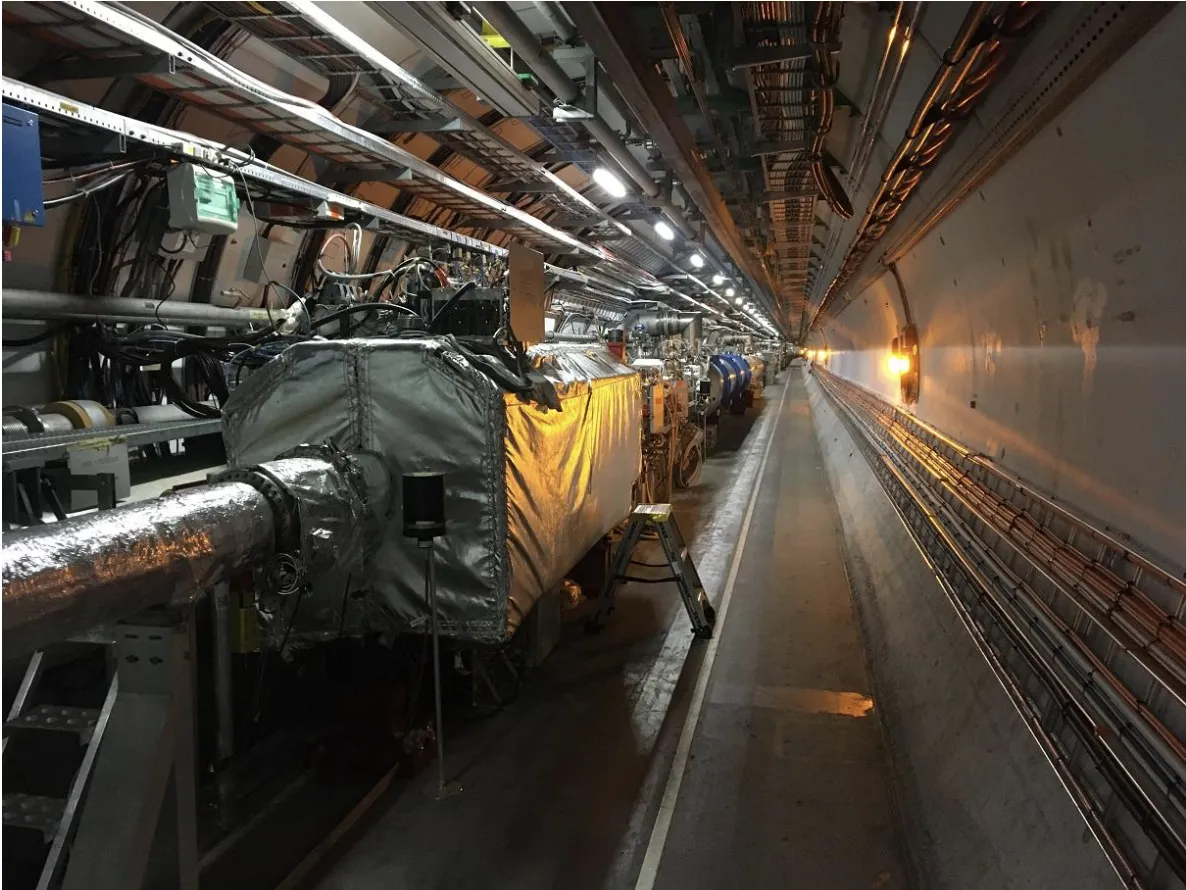
LHCf and cosmic ray investigation in run 3 Installation location of the LHCf Arm2 detector in the absorber region 140m right of the ATLAS interaction point The first LHCf special run of the LHC Run 3 was successfully completed in September 2022, with the LHC providing the highest collision energy ever reached by a particle
-
LHCb VELO closes fully for the first time
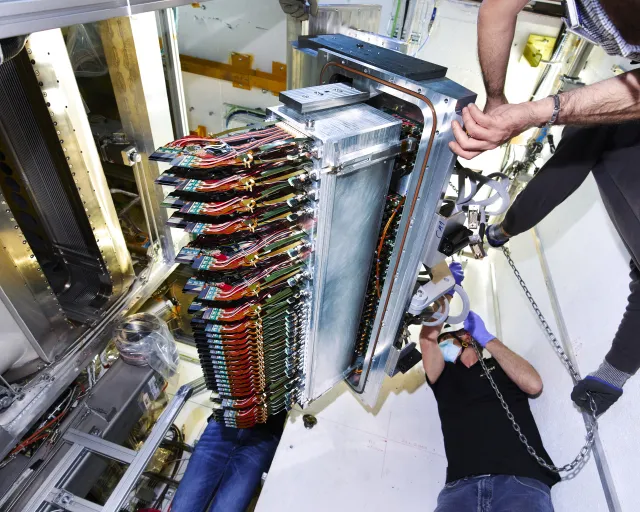
LHCb VELO closes fully for the first time At the end of October, the two halves of the new Vertex Locator (VELO) approached the LHC proton-proton collision point in a process referred to as VELO closing – following the installation of the upgraded detector. Replacing the previous VErtex LOcator (VELO) detector has been one of
-
Casting light on the dark sector of the universe
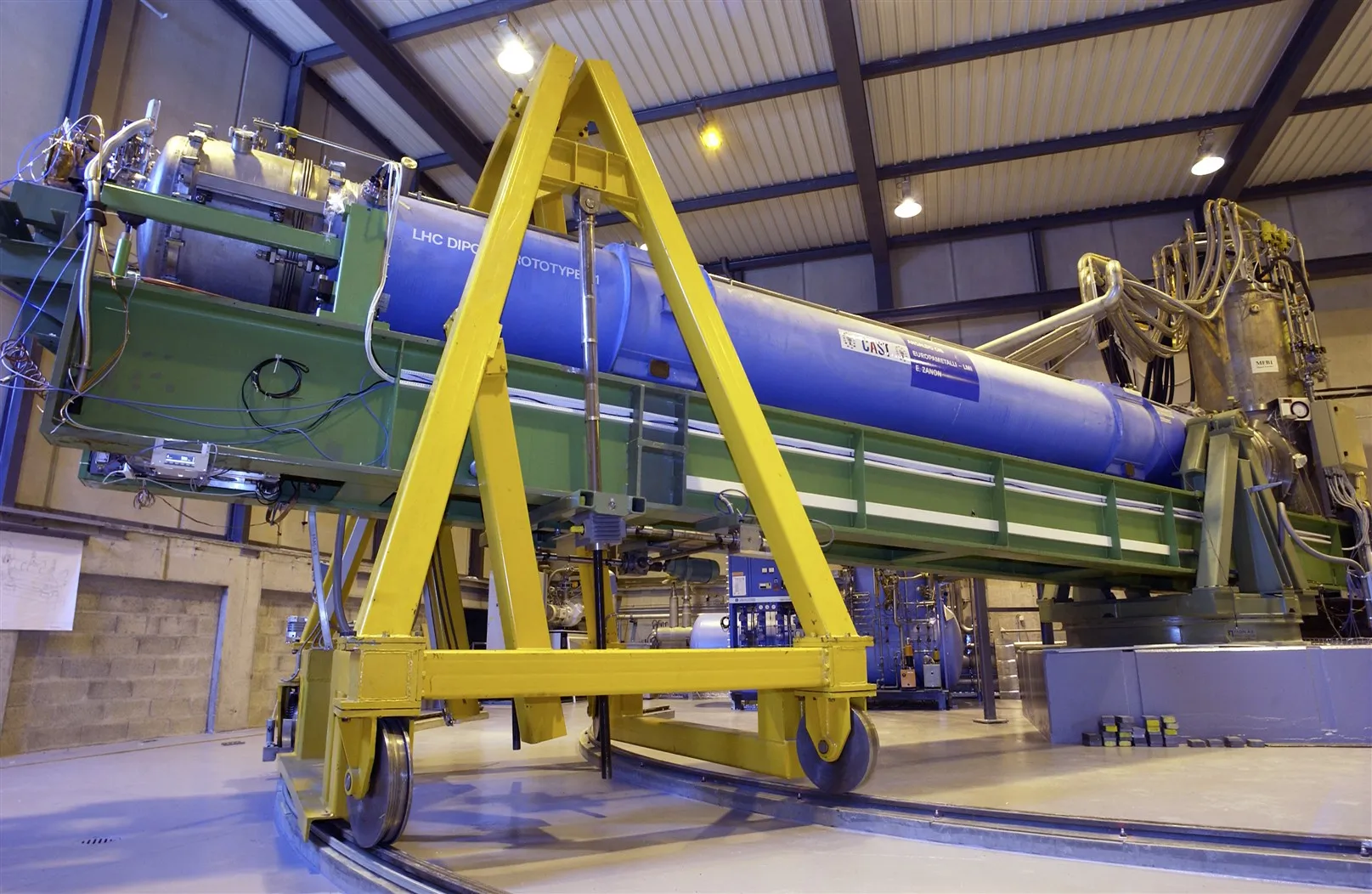
Casting light on the dark sector of the universe On axions The cosmologically established cold dark matter (CDM) makes about 84% of the Universe’s total mass. In the era of precision cosmology, the composition of the CDM remains a mystery. Among the proposed hypothetical particles which could address this fundamental question in physics, certainly, the
-
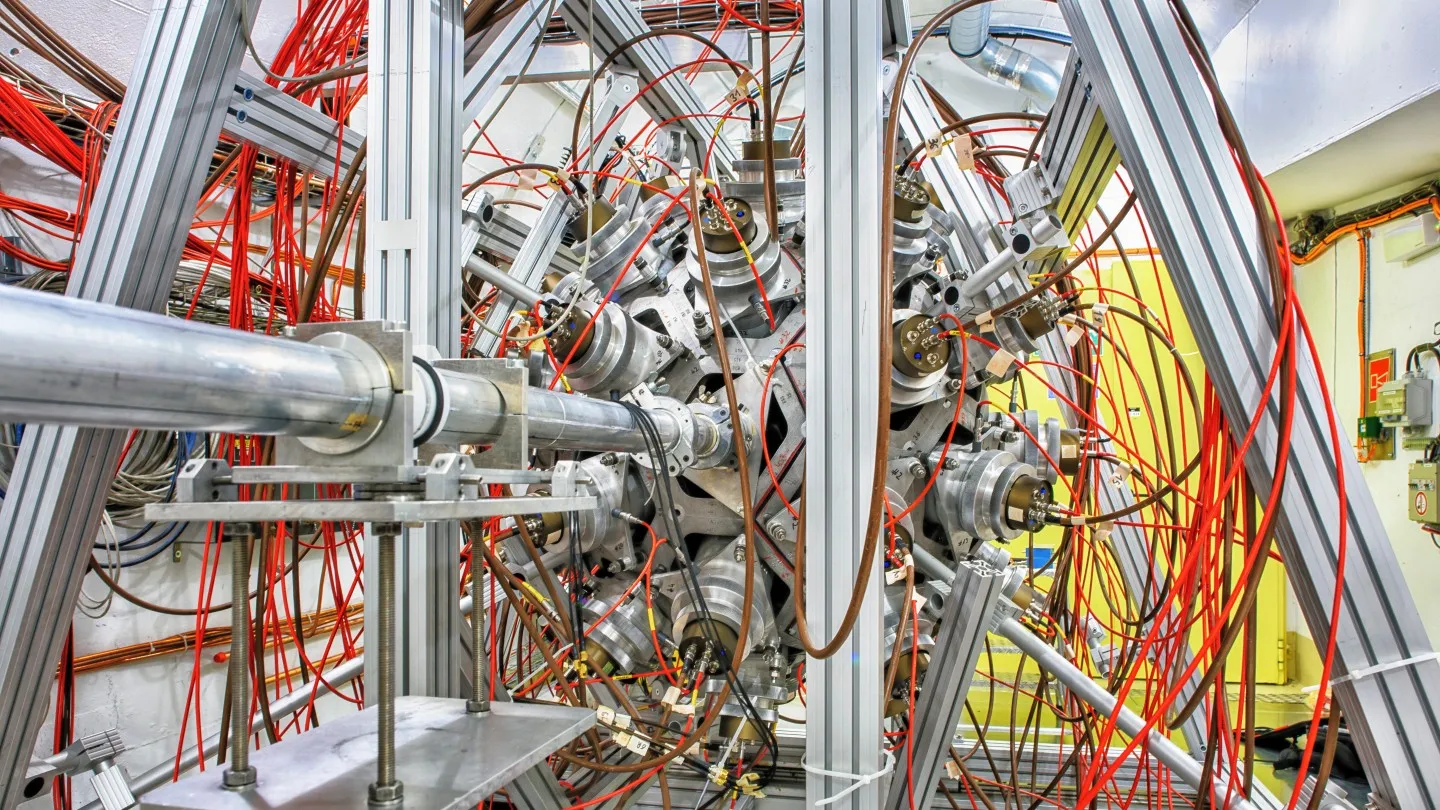
Highlights of the n_TOF 2022 data taking run
Highlights of the n_TOF 2022 data taking run The outcome of the first year of data-taking after LS2 [1] was fruitful for n_TOF. The long beam-on period, along with the establishment of a third experimental area, the NEAR Station, resulted in a wealth of new experimental data taken at the facility. Thanks to the excellent