
Tag: January 2026 – March 2026
-
Moving antimatter beyond the lab
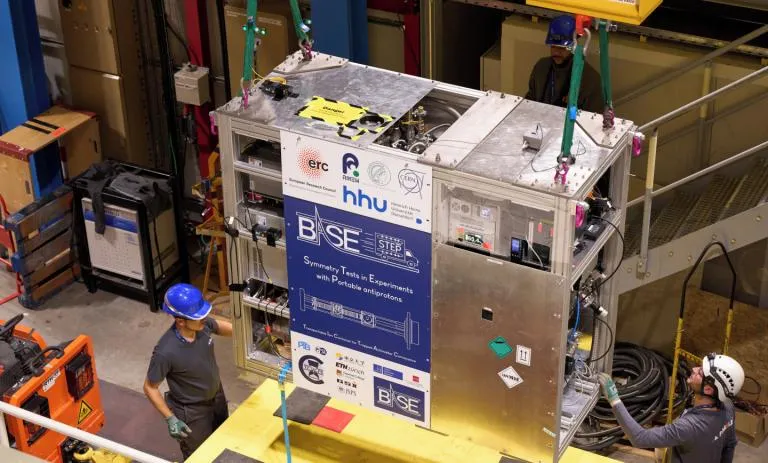
Moving antimatter beyond the lab For decades, antimatter experiments have been bound to a single place: the laboratory in which the particles are produced and trapped. At CERN’s Antimatter Factory, antiprotons are routinely produced, decelerated and confined in Penning traps, where electric and magnetic fields are used to store charged particles for high-precision studies. Yet
-
From particle flow to learned reconstruction at CMS
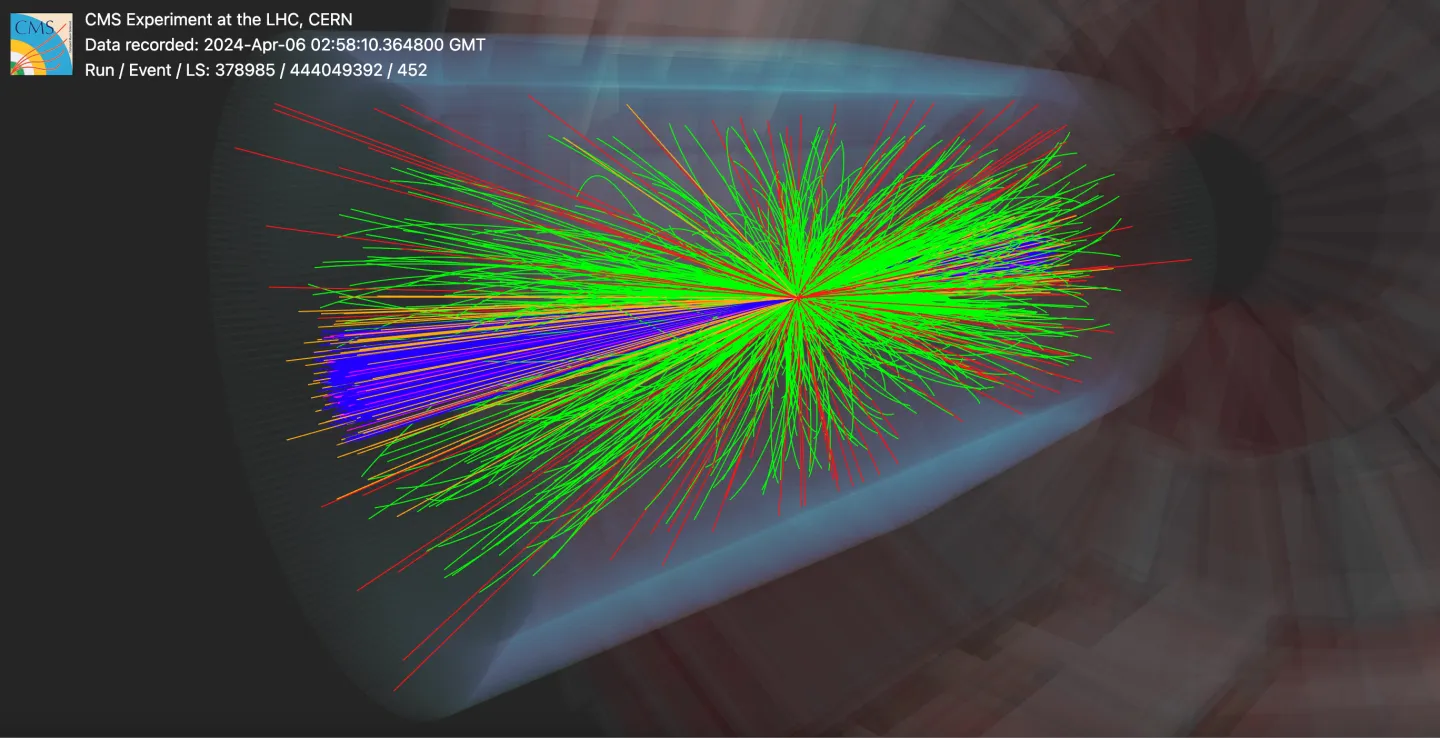
From particle flow to learned reconstruction at CMS An interactive version of the above event display can be found on this page. For more than a decade, particle-flow reconstruction has been at the core of CMS event interpretation. It was instrumental in the discovery of the Higgs boson and remains foundational for virtually every analysis
-
Probing flavour violations of the Standard Model with ATLAS
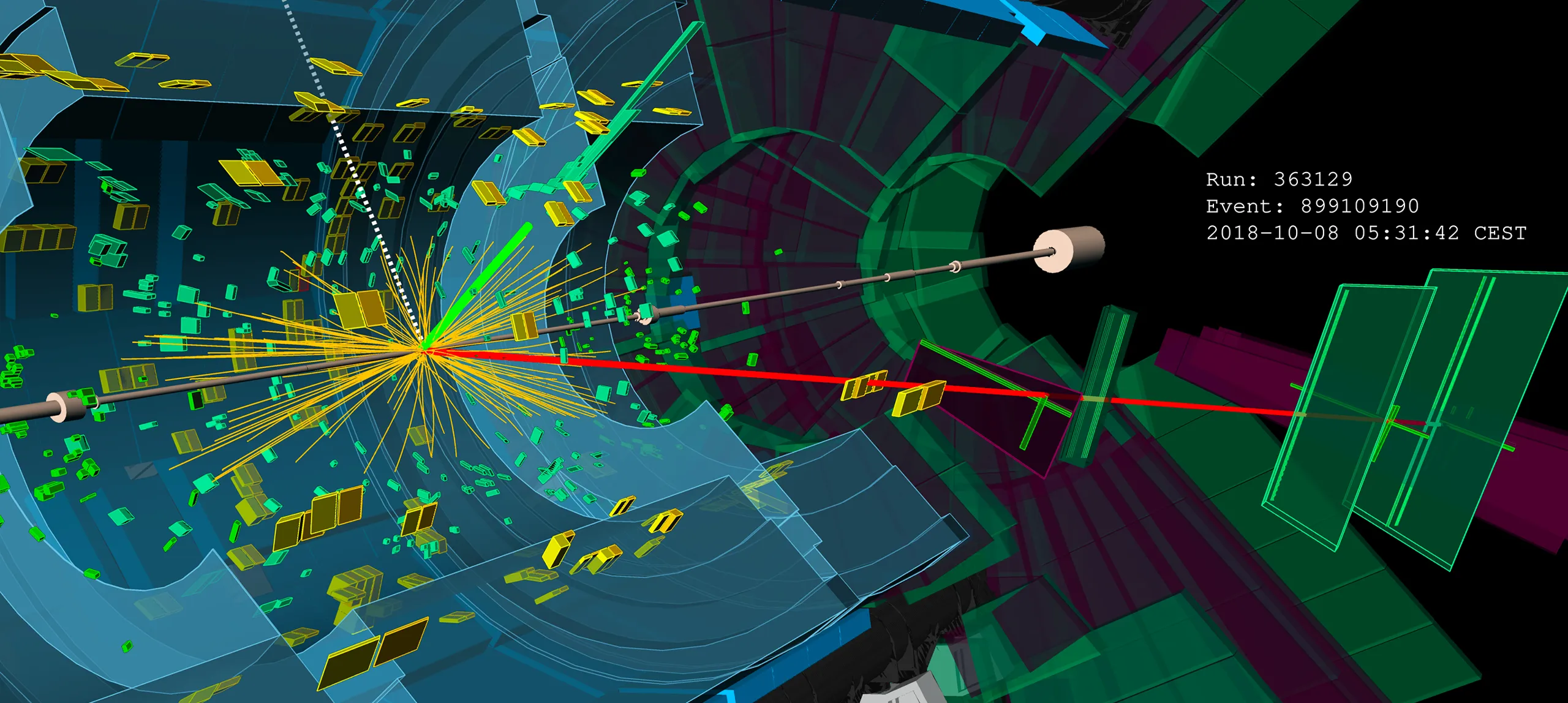
Probing flavour violations of the Standard Model with ATLAS Every aspect of our world – from atomic nuclei and molecular chemistry to biology and astrophysics – emerges from the interactions of particles so small they are considered point-like. While some particles, like the electron, were discovered over a century ago, most remained hidden until the
-
First HGCAL absorber structure delivered to CERN for assembly
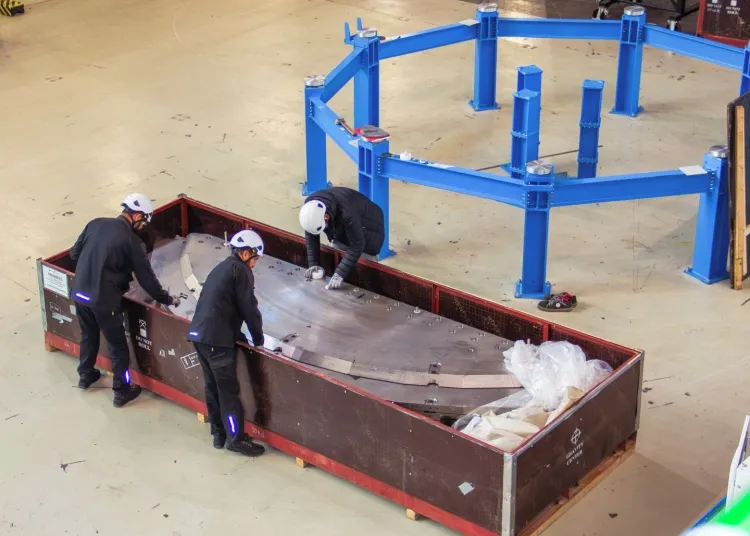
First HGCAL absorber structure delivered to CERN for assembly After an eight-week journey, the first HGCAL absorber structure (CE-H1) was delivered to CERN and is ready to be assembled, just 100 metres above the location where the detector will eventually be installed. Seventeen enormous boxes were delivered at the CMS experimental site at the beginning
-
Probing lithium dynamics at buried interfaces with β-detected NMR at ISOLDE
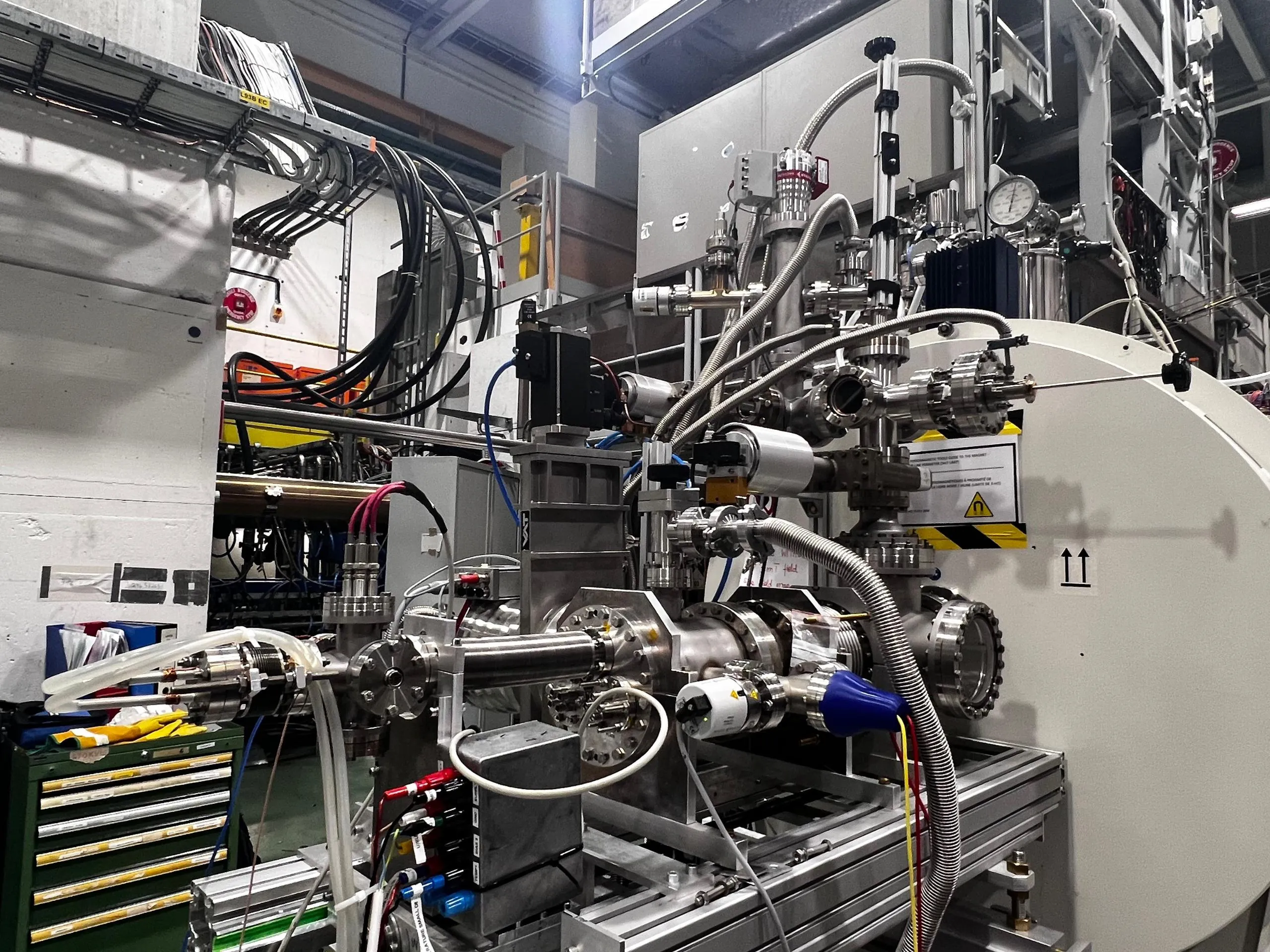
Probing lithium dynamics at buried interfaces with β-detected NMR at ISOLDE Spin-polarised probes have been central to nuclear and particle physics since the discovery of parity violation by Chien-Shiung Wu in 1956, who detected asymmetric emission of β-radiation from low-temperature 60Co in a magnetic field. The directional distribution of radiation from aligned spins provides access
-
NA62 sharpens the picture of one of nature’s rarest particle decays
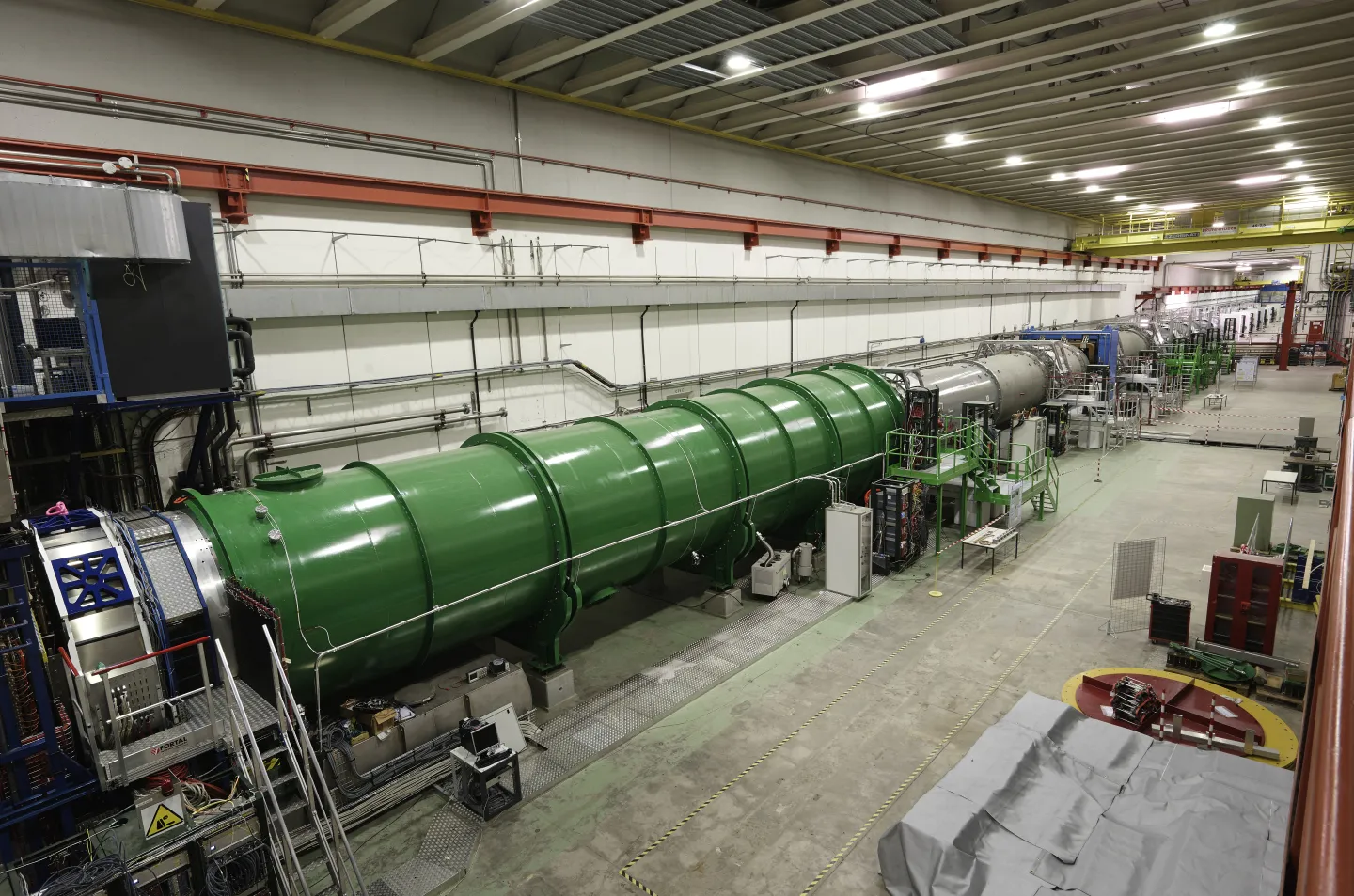
NA62 sharpens the picture of one of nature’s rarest particle decays The NA62 experiment at CERN has achieved a major milestone in flavour physics with the first observation of one of the rarest particle decays ever measured. The process — the decay of a positively charged kaon into a pion and a neutrino–antineutrino pair —
-

ROOT Users Workshop 2025
ROOT Users Workshop 2025 ROOT is a software framework at the heart of HEP’s Software Ecosystem. It is an open source project, hosted on GitHub. Laboratories such as GSI, FNAL, CERN, as well as several universities contribute to it. Moreover, many talented and motivated individuals develop ROOT: during 2025, more than 90 distinct contributors made
-
Understanding the formation of fragile light nuclei with ALICE
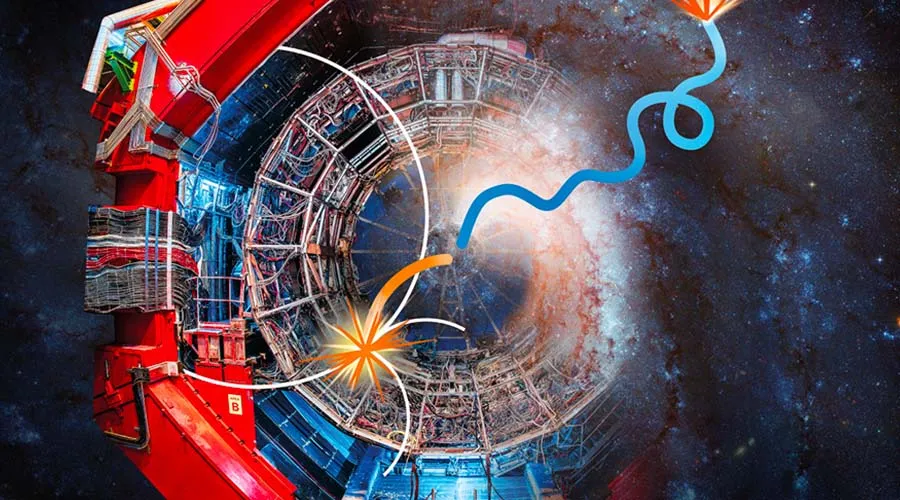
Understanding the formation of fragile light nuclei with ALICE Light nuclei such as the deuteron are surprisingly fragile. A deuteron is bound by only a few mega-electronvolts, yet at the Large Hadron Collider it is produced in environments that are tens of trillions of degrees – about 100,000 times hotter than the centre of the
-
Momentum Builds for the Future Circular Collider at the 9th FCC Physics Workshop in Munich
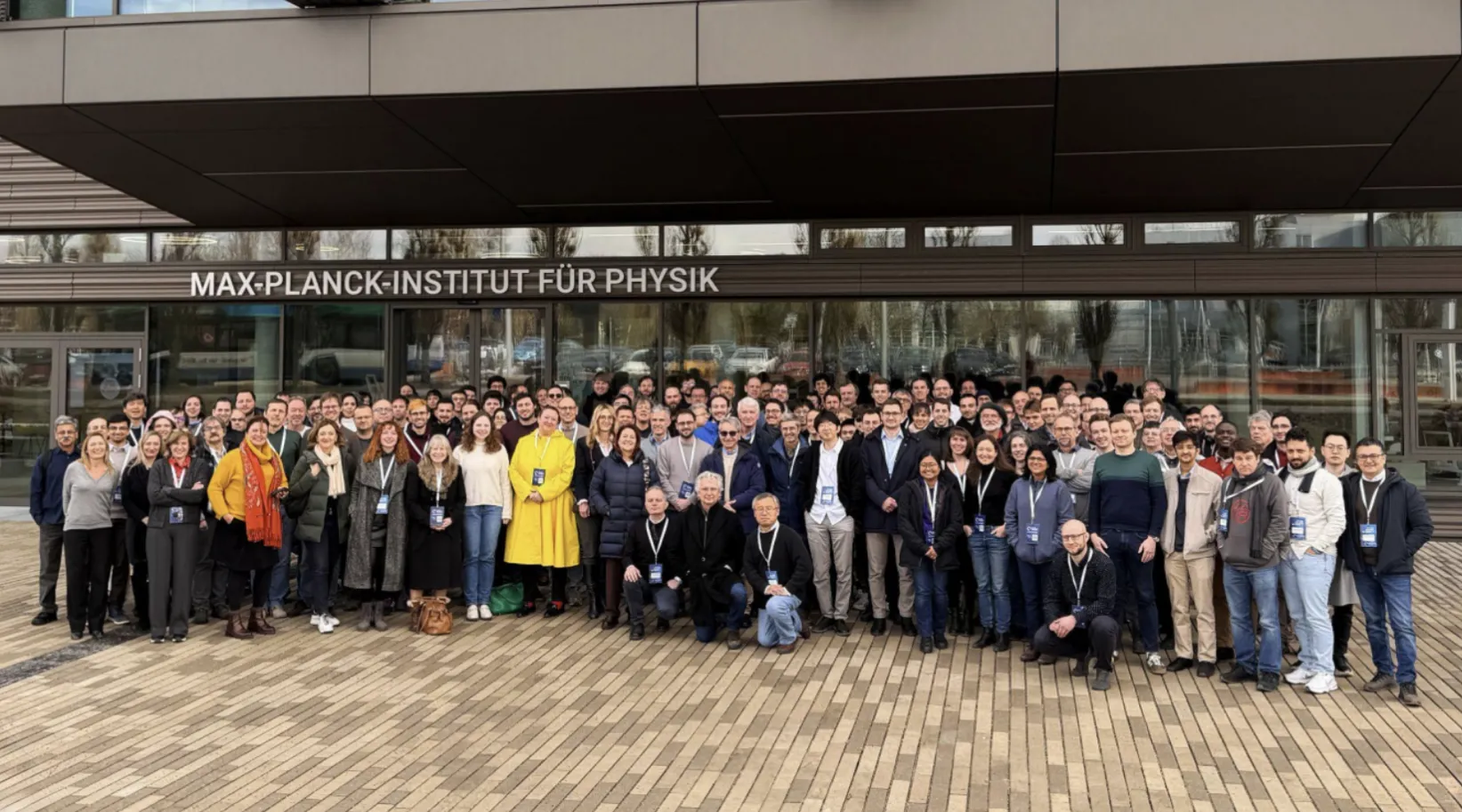
Momentum Builds for the Future Circular Collider at the 9th FCC Physics Workshop in Munich From 26 to 30 January 2026, the Max Planck Institute for Physics in Garching, near Munich, hosted the 9th FCC Physics Workshop, a major gathering of theorists and experimentalists advancing the physics case, solving the experimental challenges, and developing detector