
Tag: July 2024 – September 2024
-
LHC Run 3: A Marathon of Progress and Perseverance
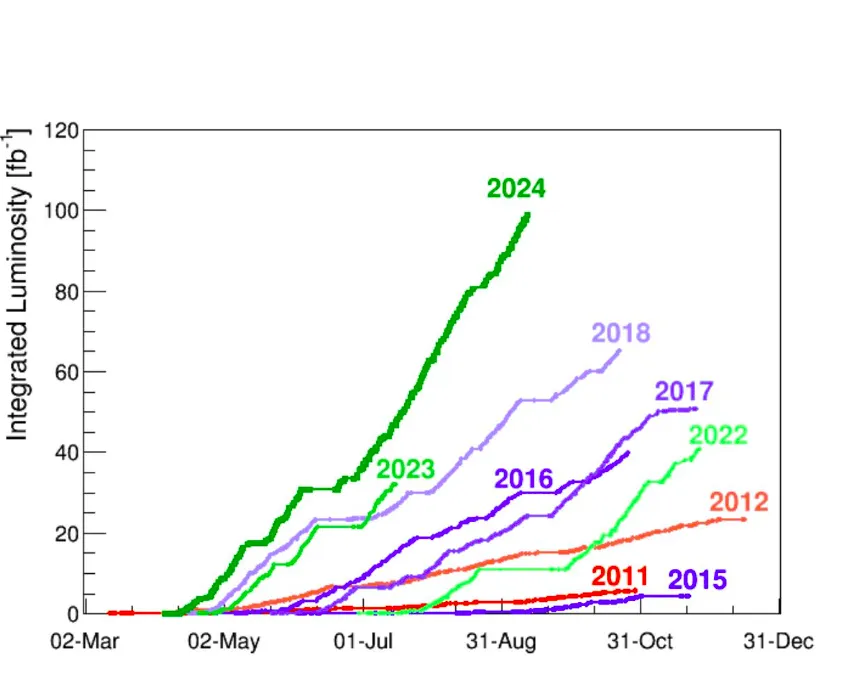
LHC Run 3: A Marathon of Progress and Perseverance Earlier this month, the Large Hadron Collider reached an unprecedented milestone of 100 inverse femtobarns – equivalent to 10 million billion collisions – delivered to the ATLAS and CMS experiments in 2024, with 28 days of proton-proton collisions remaining. This marks a historic first in a
-
ATLAS Operations: Progress and Highlights from 2023/2024
ATLAS Operations: Progress and Highlights from 2023/2024 Great progress has been made in the ATLAS operation since the last EP news article. There we presented the fantastic Phase-I upgrades of the ATLAS detector installed during LS2, described the steps towards their commissioning, and summarized the experience of the first data-taking year of Run 3. What
-
Breakthrough in the cooling technologies of a single antiproton/proton at the BASE experiment
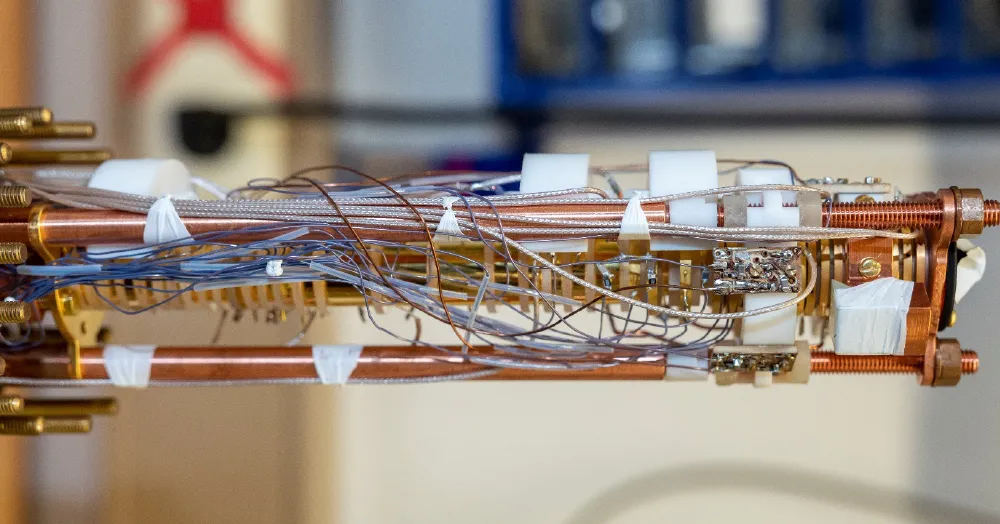
Breakthrough in the cooling technologies of a single antiproton/proton at the BASE experiment The Baryon Antibaryon Symmetry Experiment (BASE) is recognized for performing the most precise measurements of the fundamental properties of antiprotons and protons, such as the 16 p.p.t. precision measurement of the antiproton-to-proton charge-to-mass ratio [1], the 1.5 p.p.b. precision measurement of the
-
Characterization, modelling and radiation hardening of silicon-detectors for future experiments.
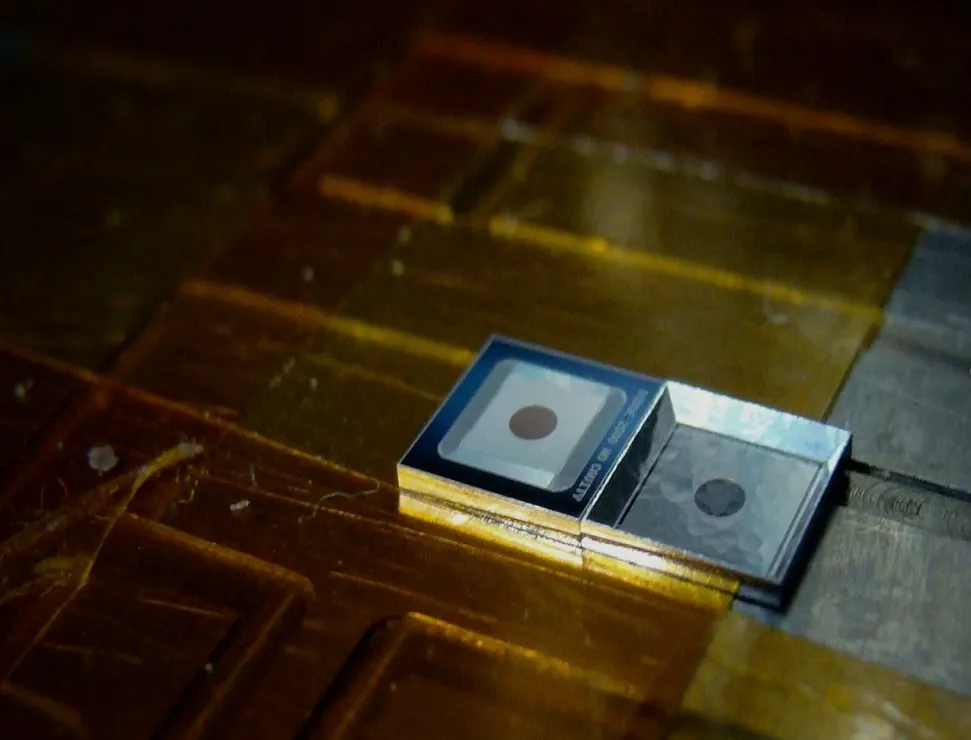
Characterization, modelling and radiation hardening of silicon-detectors for future experiments. The Strategic R&D Programme on Technologies for Future Experiments of the EP Department (EP R&D) develops the detector technologies needed for the next generation of High Energy Physics experiments and recently concluded phase I (2020-2023) of its ambitious work plan with a close-out report [1].
-

A word from the EP Deputy Department Head – September 2024
A word from the EP Deputy Department Head – September 2024 Dear colleagues, As I write in mid-September, the days are getting shorter and colder, and we are in the midst of marking the 70th birthday of CERN, with the community party on 17th September, and the official celebrations on 1st October. It is an
-
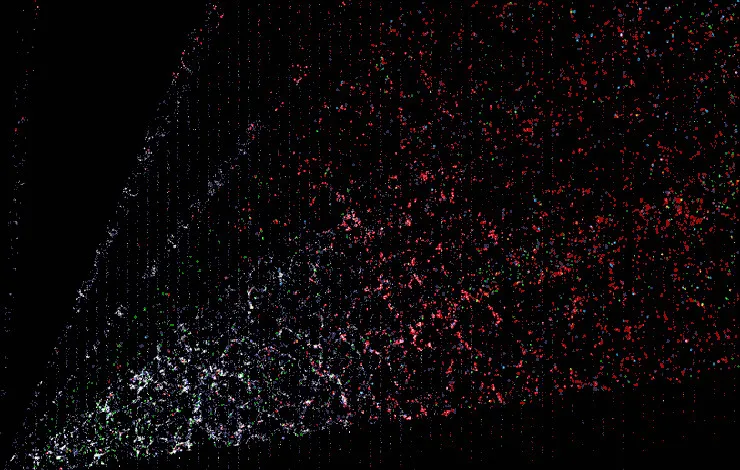
DESI-Y1 and the Mystery of the Neutrino Mass
DESI-Y1 and the Mystery of the Neutrino Mass In April 2024, the Dark Energy Spectroscopic Instrument (DESI) collaboration released their first cosmological results [1]. These results made the news primarily because they showed some hints of dynamical dark energy (see the article in the same issue of the EP newsletter). However, they also had key
-
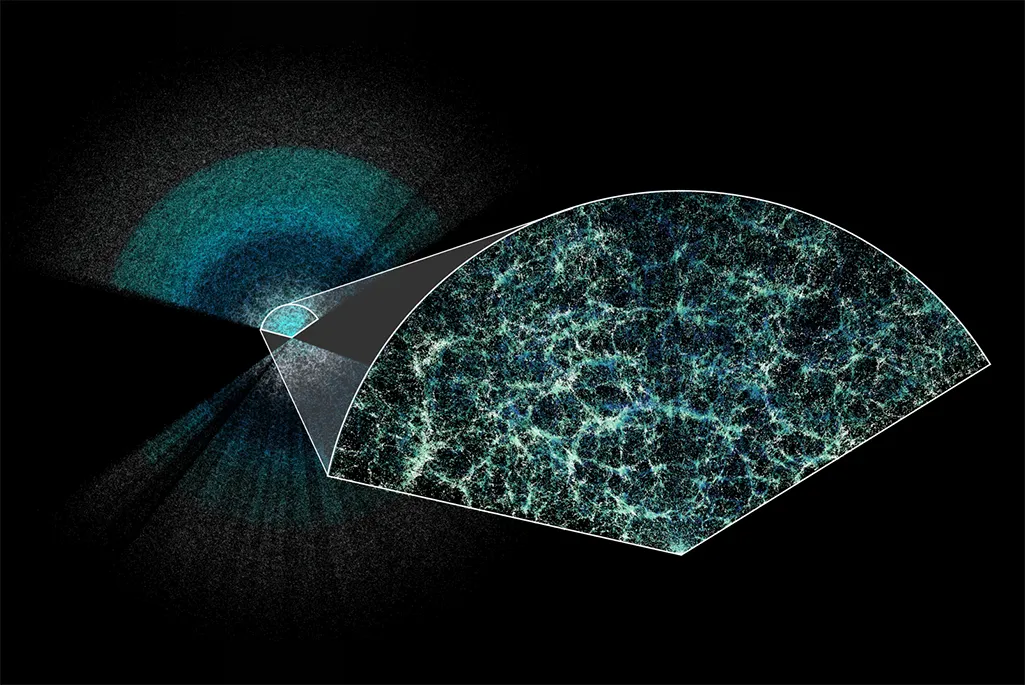
DESI may have initiated a paradigm shift in cosmology
DESI may have initiated a paradigm shift in cosmology DESI has made the largest 3D map of our universe to date. Earth is at the center of this thin slice of the full map. In the magnified section, it is easy to see the underlying structure of matter in our universe. Claire Lamman/DESI collaboration. The
-
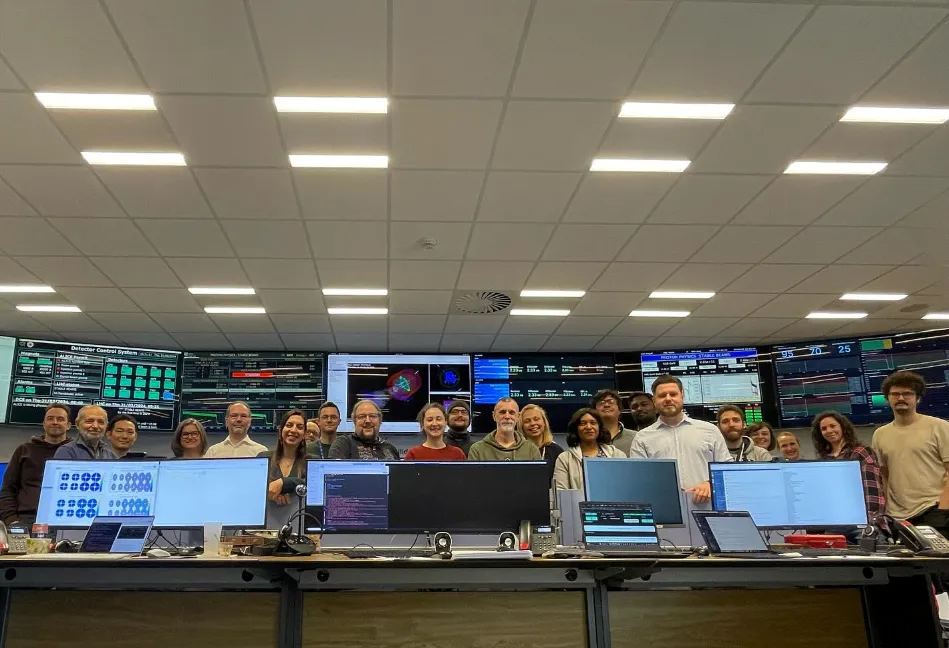
From Upgrade to Upsurge: ALICE Experiment Achieves Milestone Luminosity in Run 3
From Upgrade to Upsurge: ALICE Experiment Achieves Milestone Luminosity in Run 3 The ALICE experiment has successfully resumed physics data-taking in RUN 3 following a major upgrade of its detectors and data acquisition system during the LHC Long Shutdown 2 (LS2). While a portion of the delivered luminosity in 2022 was allocated to commissioning the
-
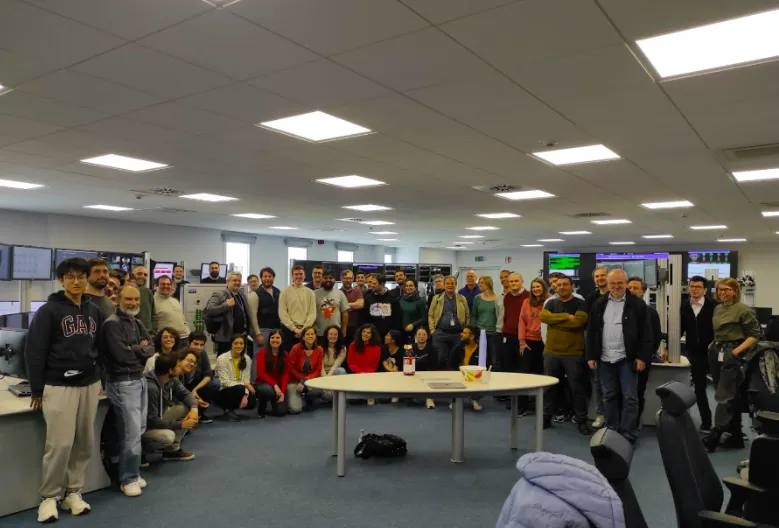
Navigating Challenges: LHCb’s Milestone Achievements and Intensive Data Collection in 2024
Navigating Challenges: LHCb's Milestone Achievements and Intensive Data Collection in 2024 Photo of LHCb collaboration members gathered in the control room in April 2024. The LHCb experiment achieved significant milestones by the end of 2023, despite the challenges related to the LHC vacuum incident in the Vertex Locator (VELO) volume and the premature stop of
-
CMS Detector in 2024: Advancements in Data Collection and Detector Performance
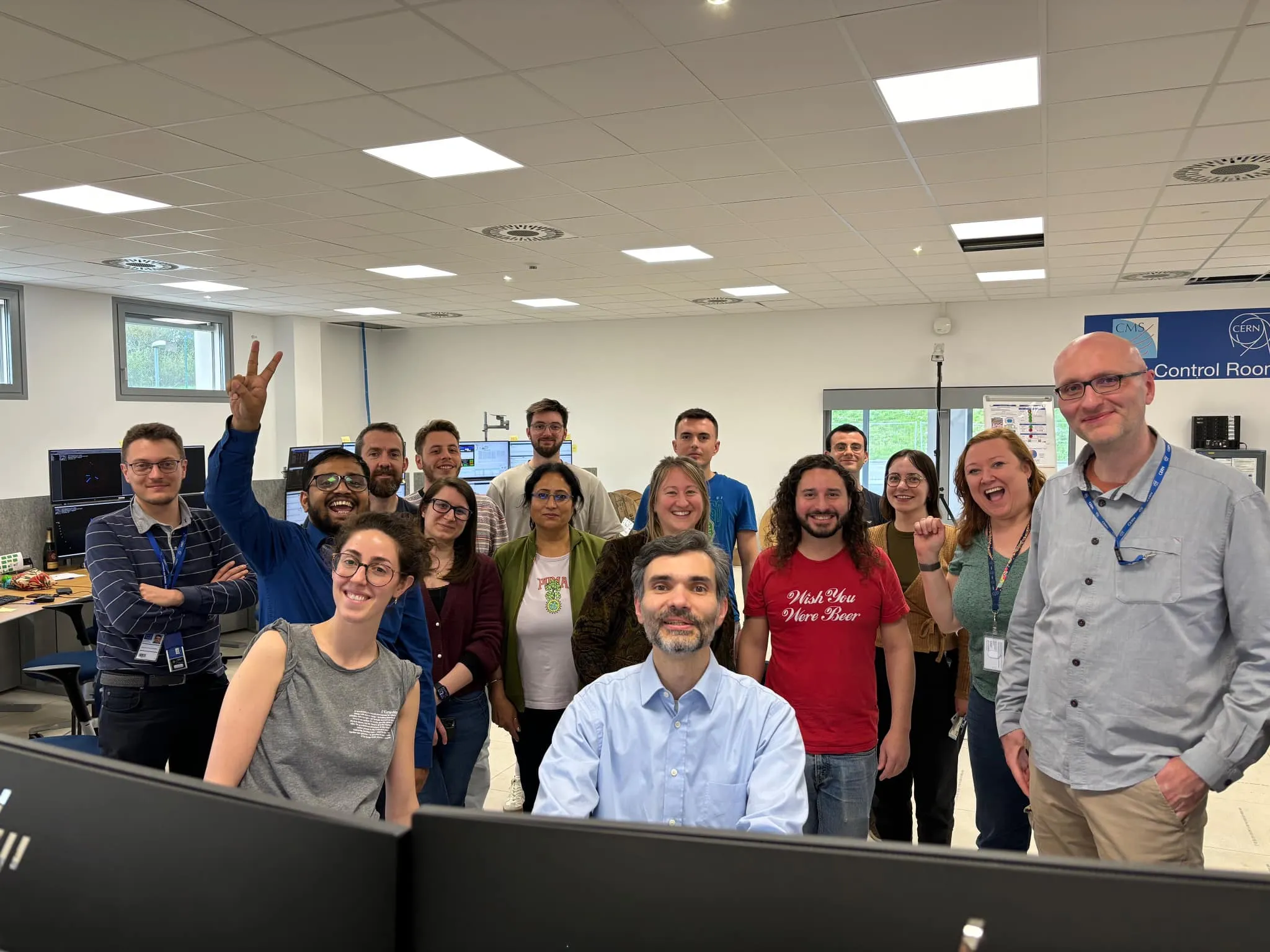
CMS Detector in 2024: Advancements in Data Collection and Detector Performance On April 5th, 2024, stable beams returned to the LHC, marking the official start of the 2024 physics data-taking season. The photo captures CMS’ Run Coordination team in the newly upgraded CMS control center, ready to oversee the exciting season ahead. The CMS detector