
Tag: March 2021 – May 2021
-

The likelihood is dead, long live the likelihood
The likelihood is dead, long live the likelihood Among the sciences, particle physics has the luxury of having a well established theoretical basis. Often we focus on the elementary particles and model them mathematically with quantum field theories like the Standard Model. In order to compare with data, we must also model the additional radiation,
-

CERN launches Quantum Technology Initiative
CERN launches Quantum Technology Initiative CERN has recently launched its Quantum Technology Initiative (QTI) to coordinate its contribution in the rapidly advancing landscape of quantum technologies and coordinate activities with other global players in the field. We discussed with Michael Doser, co-coordinator of the quantum sensing strand of the QTI and the EP Department’s representative,
-
Designing the SND@LHC experiment
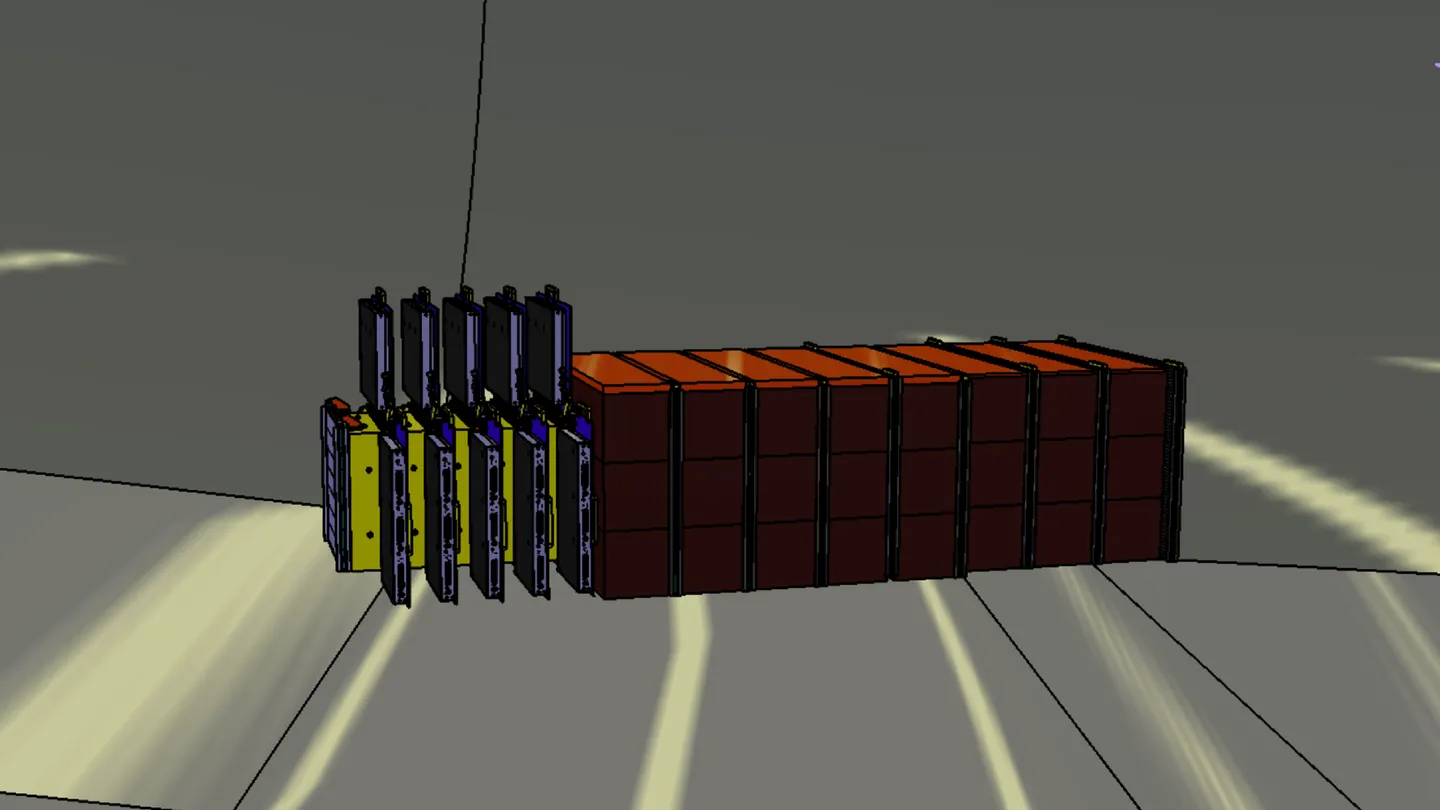
Designing the SND@LHC experiment SND@LHC is a newly proposed, compact and stand-alone experiment to perform measurements with neutrinos produced at the LHC in a hitherto unexplored pseudo-rapidity range of 7.2 < 𝜂 < 8.6, complementary to all the other experiments at the LHC, including FASER. Today, two effects make it possible and particularly interesting to
-
BASE develops a new technique to detect ultralight dark matter.
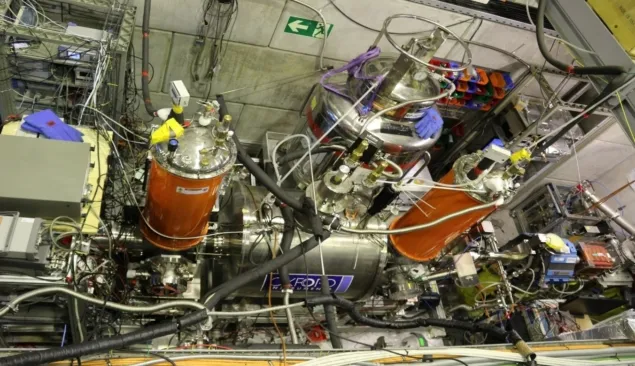
BASE develops a new technique to detect ultralight dark matter. In a recent work published in Physical Review Letters [1], the Baryon Antibaryon Symmetry Experiment (BASE) at CERN has placed new limits on a possible coupling between photons and hypothetical axionlike dark matter particles with masses between 2.7906-2.7914 neV. We evaluated the signals from our
-

Latest Results from the AMS on the International Space Station
Latest Results from the AMS on the International Space Station The Alpha Magnetic Spectrometer, AMS, is a particle physics detector operating on the International Space Station (Figure 1) since May 2011 with the aim to address long-standing open questions in fundamental physics, such as the matter-antimatter asymmetry, the nature of dark matter, the existence of
-
Do opposites attract? ALPHA-g prepares to explore antimatter gravity
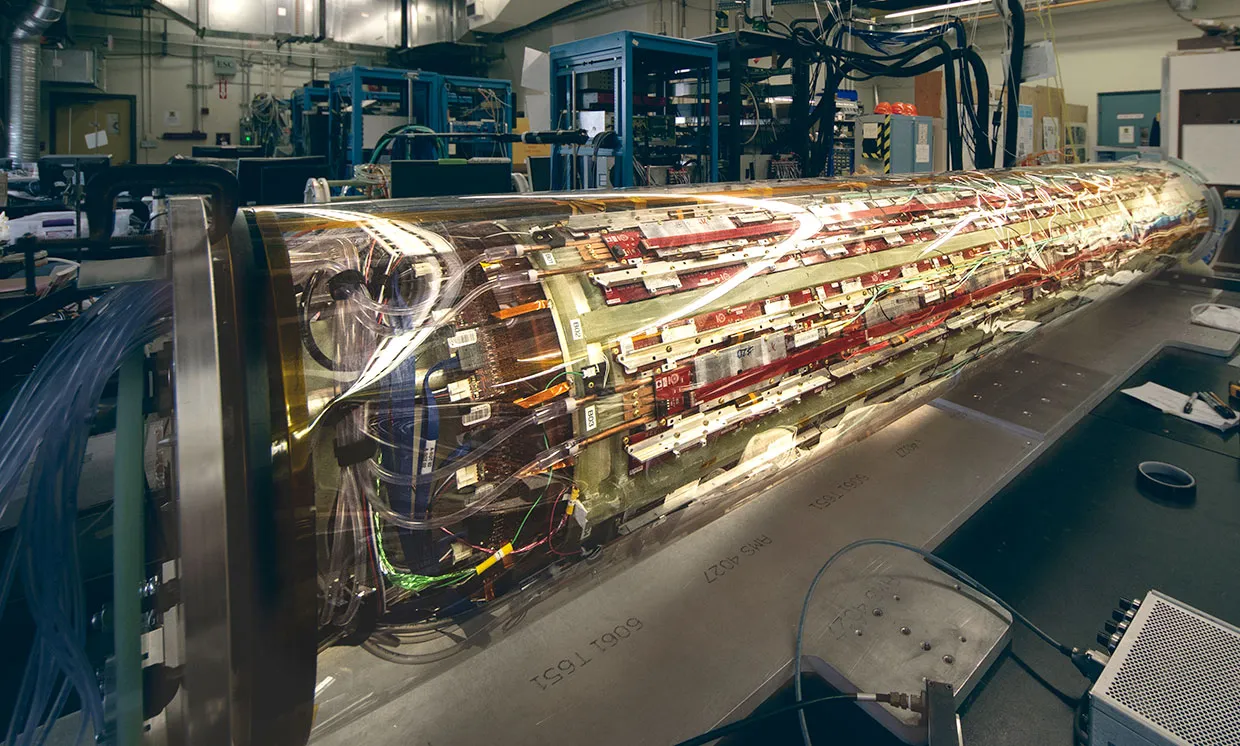
Do opposites attract? ALPHA-g prepares to explore antimatter gravity Stuff falls down. This is the universal experience we all have with the gravitational interaction of matter on Earth. Yet one may still wonder if this holds true in the case of the most elusive stuff you can imagine dropping: antimatter. Might it be the case
-
BabyIAXO submits for publication its Conceptual Design Report
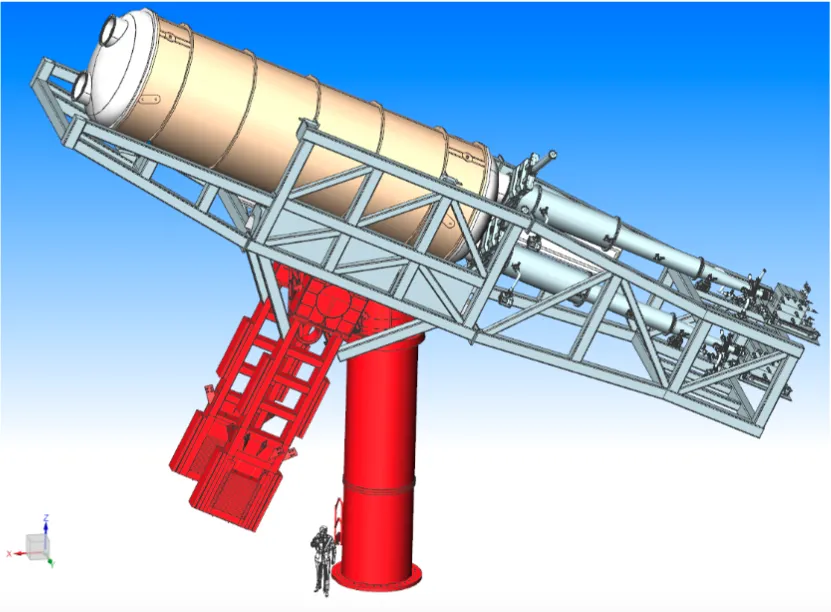
BabyIAXO submits for publication its Conceptual Design Report The International Axion Observatory (IAXO) will search for axions or axion-like particles emitted by the Sun with unprecedented sensitivity. Axions are hypothetical particles that appear in extensions of the Standard Model that include the Peccei-Quinn mechanism [1–4], proposed to solve the “strong-CP problem”, or why the strong
-
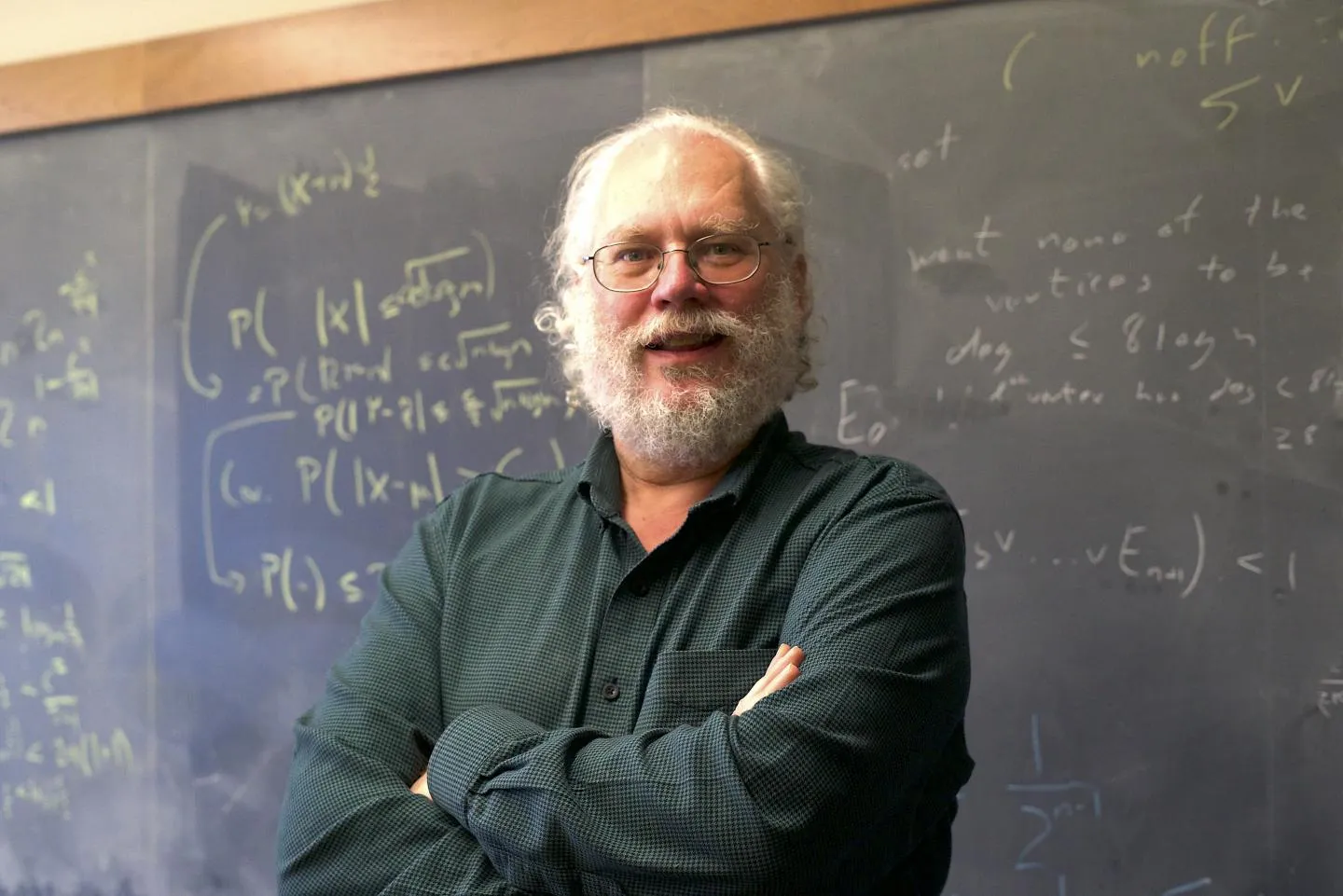
Interview with Peter Shor
Interview with Peter Shor Peter Shor has carried out pioneering work in combinatorial analysis and the theory of quantum computing. He received worldwide recognition in 1994 when he presented a computational method for “factoring large numbers” which, theoretically, could be used to break many of the existing coding systems. The discovery of Shor’s algorithm along