
Tag: SME
-
PUMA: Exploring exotic nuclear phenomena with antimatter
PUMA: Exploring exotic nuclear phenomena with antimatter PUMA is a new experiment proposed at both the CERN AD and ISOLDE facilities, that would for the first time transport antiprotons trapped at AD/ELENA to ISOLDE, by carrying them in a trap loaded onto a truck. The antiprotons would then be used for nuclear physics experiments at
-
CAST: from Solar to Dark Matter Axions searches
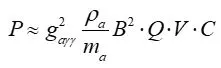
CAST: from Solar to Dark Matter Axions searches CERN’s Axion Solar telescope (CAST) has been running since 2003 searching for the axion: a hypothetical particle introduced in 1978 as a consequence of the Peccei-Quinn mechanism aiming to solve the strong CP problem, i.e why is the neutron electric dipole moment limit some ten orders of
-
Finding the best candidates for atomic EDM searches
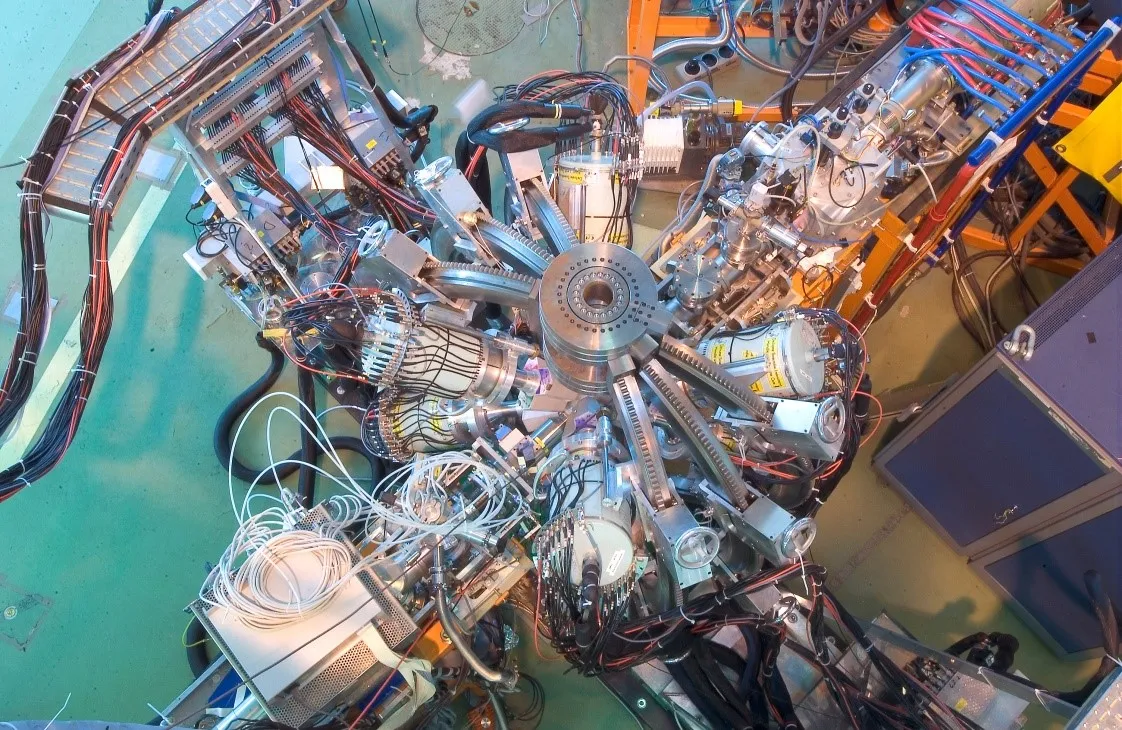
Finding the best candidates for atomic EDM searches The search for hints of new physics Beyond the Standard Model (BSM) calls for a combination of experimental strategies including both direct searches but also a number of very high-precision measurements of certain quantities looking for deviations that could be interpreted in the framework of BSM physics.
-
BASE probes antimatter – dark matter interaction
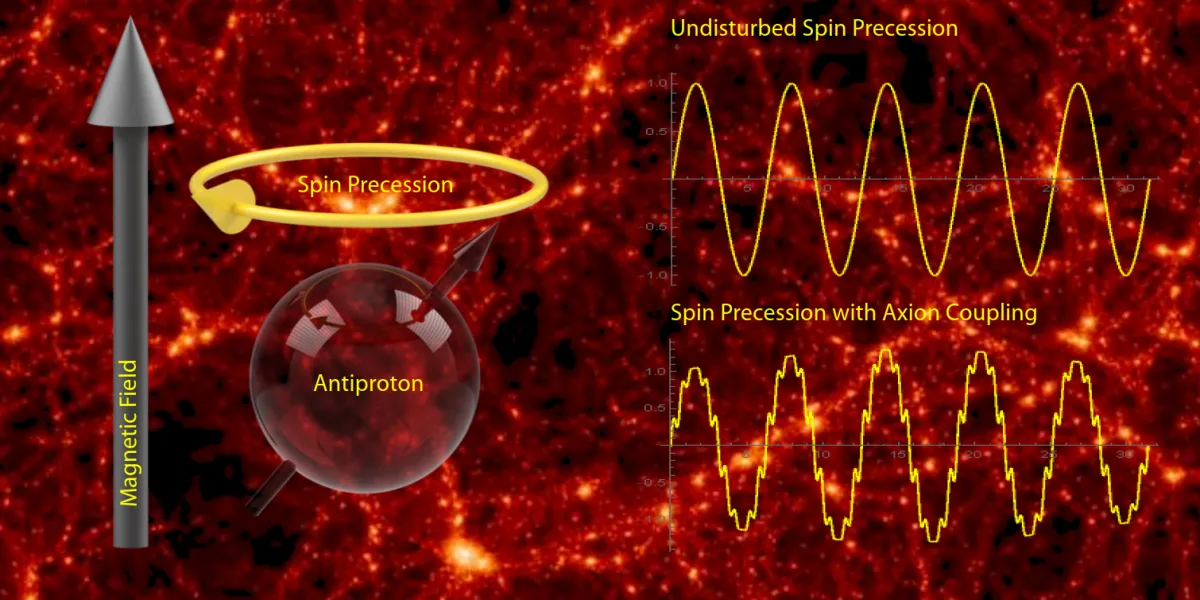
BASE probes antimatter – dark matter interaction In a recent paper, the BASE collaboration presented results from a direct search for interactions of antimatter with dark matter and placed direct constraints on the interaction of ultralight axion-like particles (dark-matter candidates) with antiprotons. Their analysis constrained the value of the axion–antiproton interaction parameter in the range
-
Shining more light on the onset of deconfinement
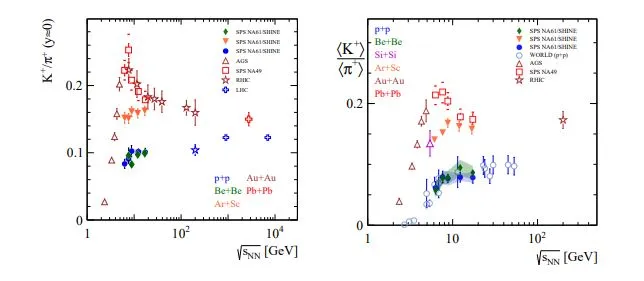
Shining more light on the onset of deconfinement “It was easier to know it than to explain why I know it.” said Sherlock*. – A Study in Scarlet, Sir Arthur Conan Doyle 1886 NA61/SHINE has recently completed data acquisition for its original programme on strong interactions. The Collaboration has gathered a rich data on collisions
-
NA62 experiment presents new results
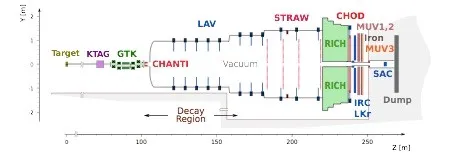
NA62 experiment presents new results The NA62 experiment presented the latest result on the search for the ultra-rare kaon decay K+ → π+νν ̄ using 2017 data at the KAON2019 Conference, at the Physics in Collision Conference and during a recent CERN’s EP Seminar Kaons, the lightest elementary particles containing the strange quark, have always
-
COMPASS results guiding future exploration of hadron structure in CERN’s North Area.
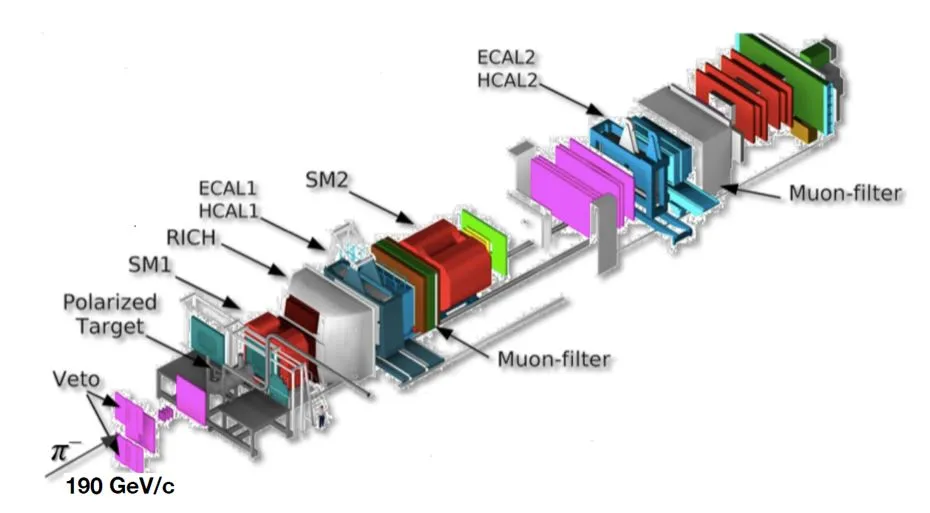
COMPASS results guiding future exploration of hadron structure in CERN’s North Area. The COMPASS (COmmon Muon and Proton Apparatus for Structure and Spectroscopy) Collaboration at CERN is the most recent one in pursuing the more than 40-years old objective to experimentally elucidate the nucleon’s internal structure, in particular its spin dependence. It uses the M2
-
LHCf sheds light on hadronic interaction models
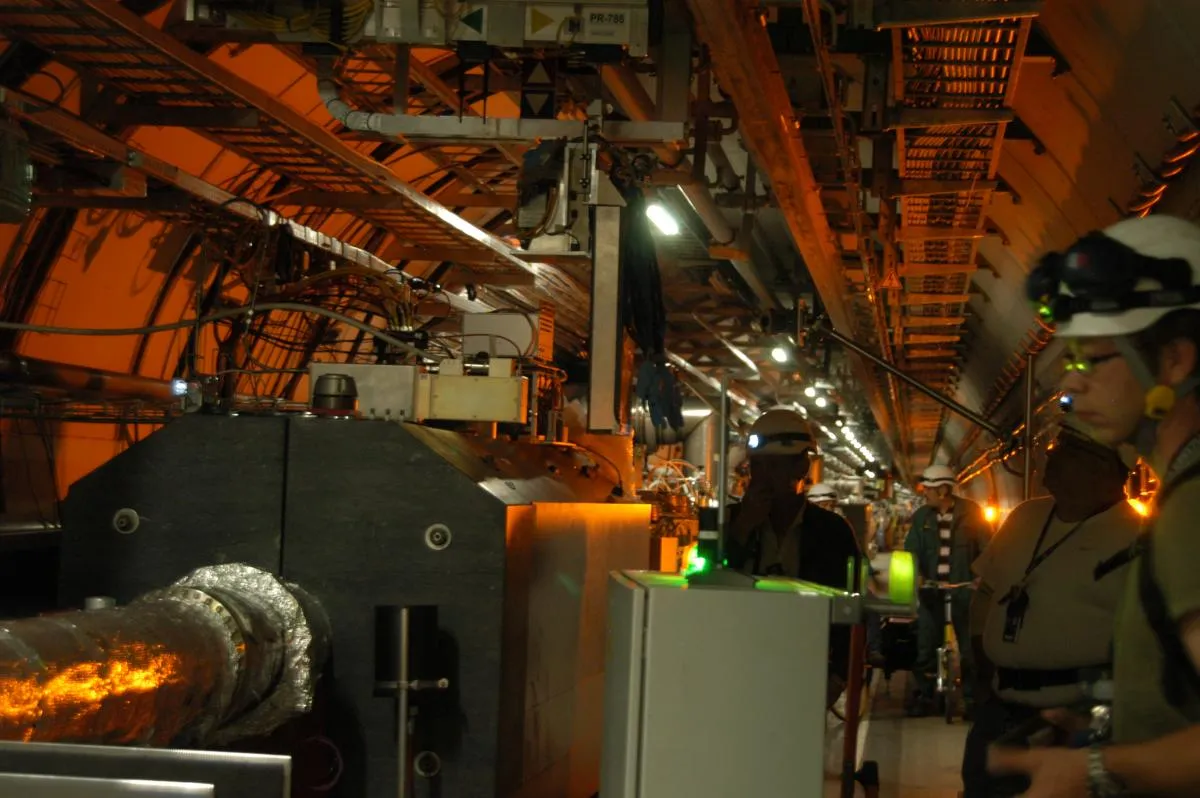
LHCf sheds light on hadronic interaction models The experience of the small LHCf collaboration, matured within the cosmic ray physics community, began in 2004 with the idea of designing a very thin detector to be installed along the LHC beam line, in such a way to cover the so called “very forward region” of the
-
Nuclear Physics Meets Neutrinos
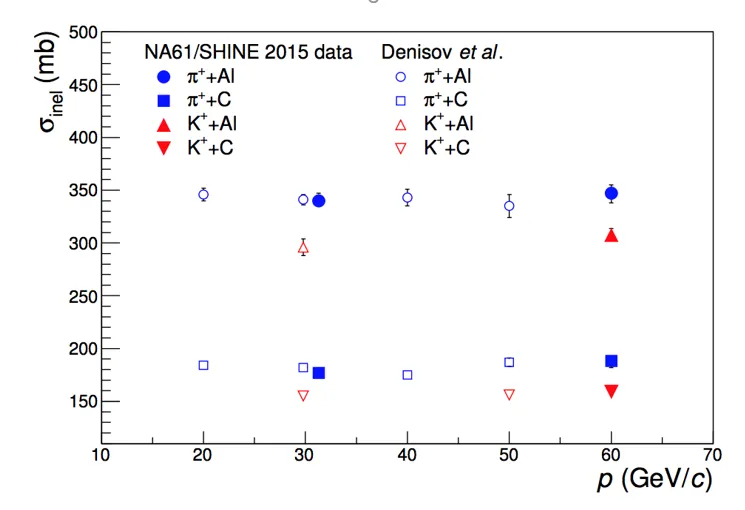
Nuclear Physics Meets Neutrinos Neutrino beams, such as those currently operating at Fermilab in the USA and J-PARC in Japan, are typically produced by colliding high-energy proton beams with long, thin solid targets. These collisions result in a spray of particles including short-lived hadrons such as pions or kaons. The hadrons are focused using magnetic
-
Baby MIND prepares for first physics run with WAGASCI at T2K
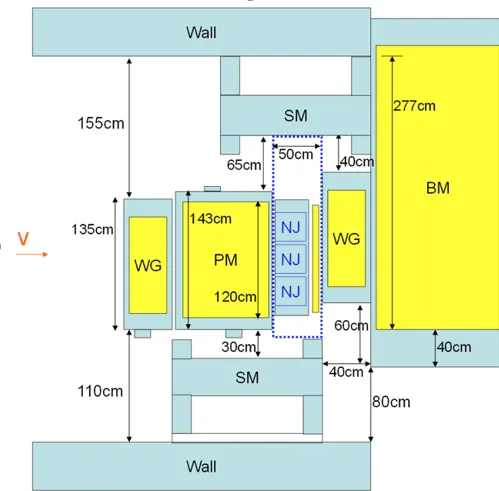
Baby MIND prepares for first physics run with WAGASCI at T2K Extracting ever more precise information from long-baseline neutrino oscillation experiments calls for a better understanding of neutrino production and neutrino interactions with their target detectors, through experimental programmes dedicated to neutrino cross-section measurements and validation of neutrino interaction models. The challenge is in the