
Tag: Special Feature
-

Pinning down the muon (g-2) anomaly at the CERN SPS
Pinning down the muon (g-2) anomaly at the CERN SPS The Dirac equation predicts the muon gyromagnetic ratio g=2. Loop effects from quantum field theory lead to a small deviation from this value, parameterized by the so called anomalous magnetic moment which is defined as aμ=(g-2)/2. The difference between the theoretical prediction and the experimental
-
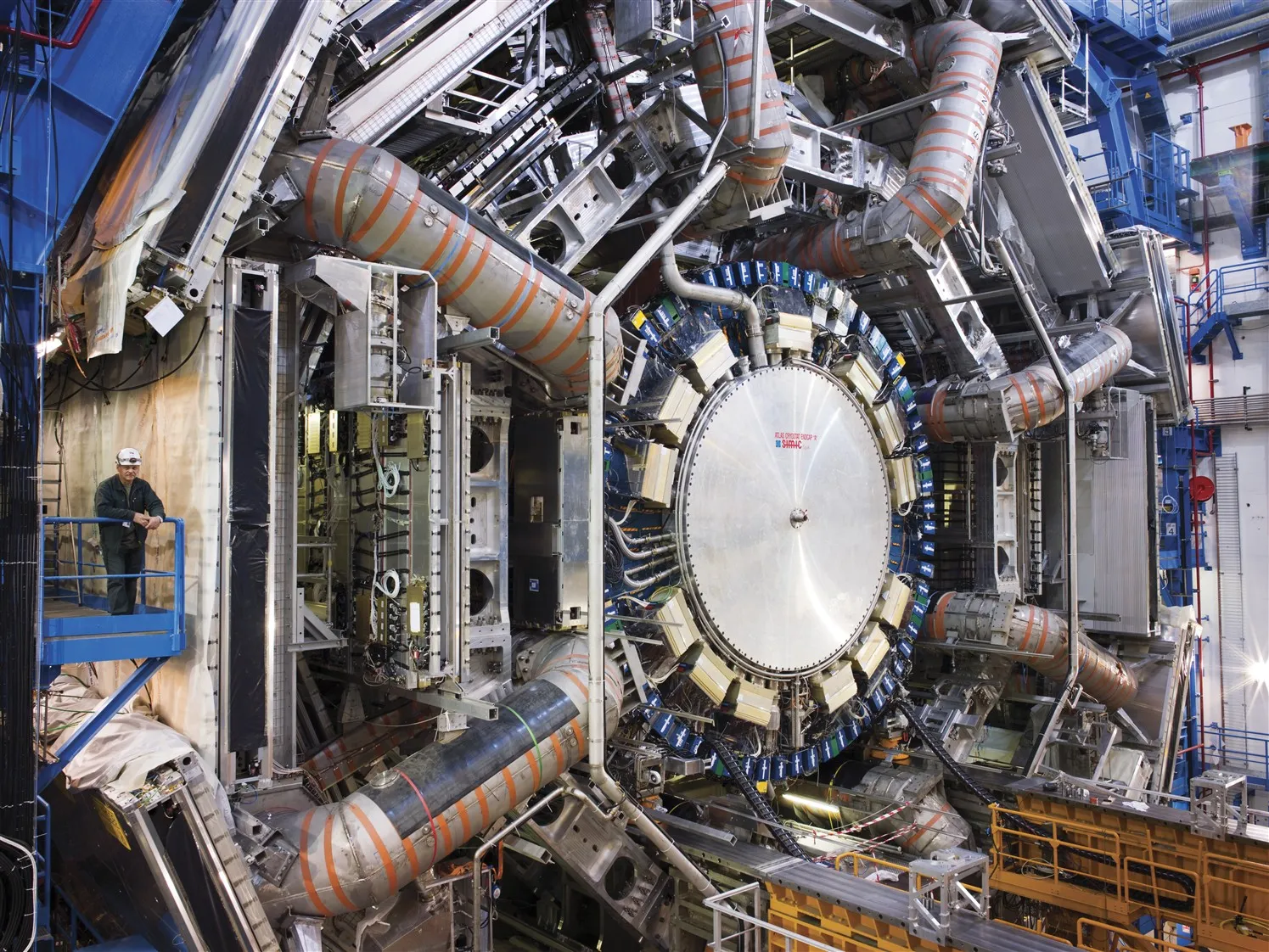
ATLAS faces the challenge of Run 3
ATLAS faces the challenge of Run 3 The ATLAS experiment is a general-purpose particle detector operating at the LHC. It consists of several concentric layers of particle detectors occupying a cylindrical volume 46m long and 25m in diameter. The innermost detectors reconstruct the trajectories of charged particles produced in the beam collisions with high precision.
-
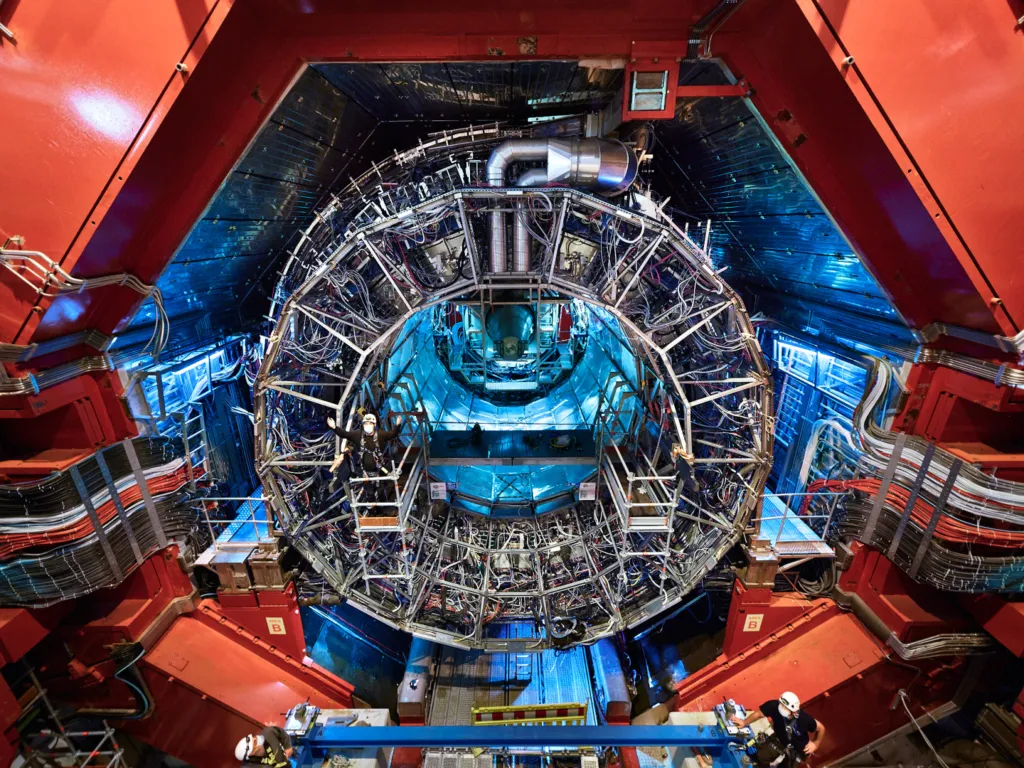
ALICE gears up towards a rich Run 3 QCD programme
ALICE gears up towards a rich Run 3 QCD programme Quantum Chromodynamics (QCD), the theory of strong interactions, is characterised by a rich phase diagram. The elementary coloured degrees of freedom of the theory, quarks and gluons, under ordinary conditions are confined in colour-neutral hadrons and get free to propagate over distances larger than the
-
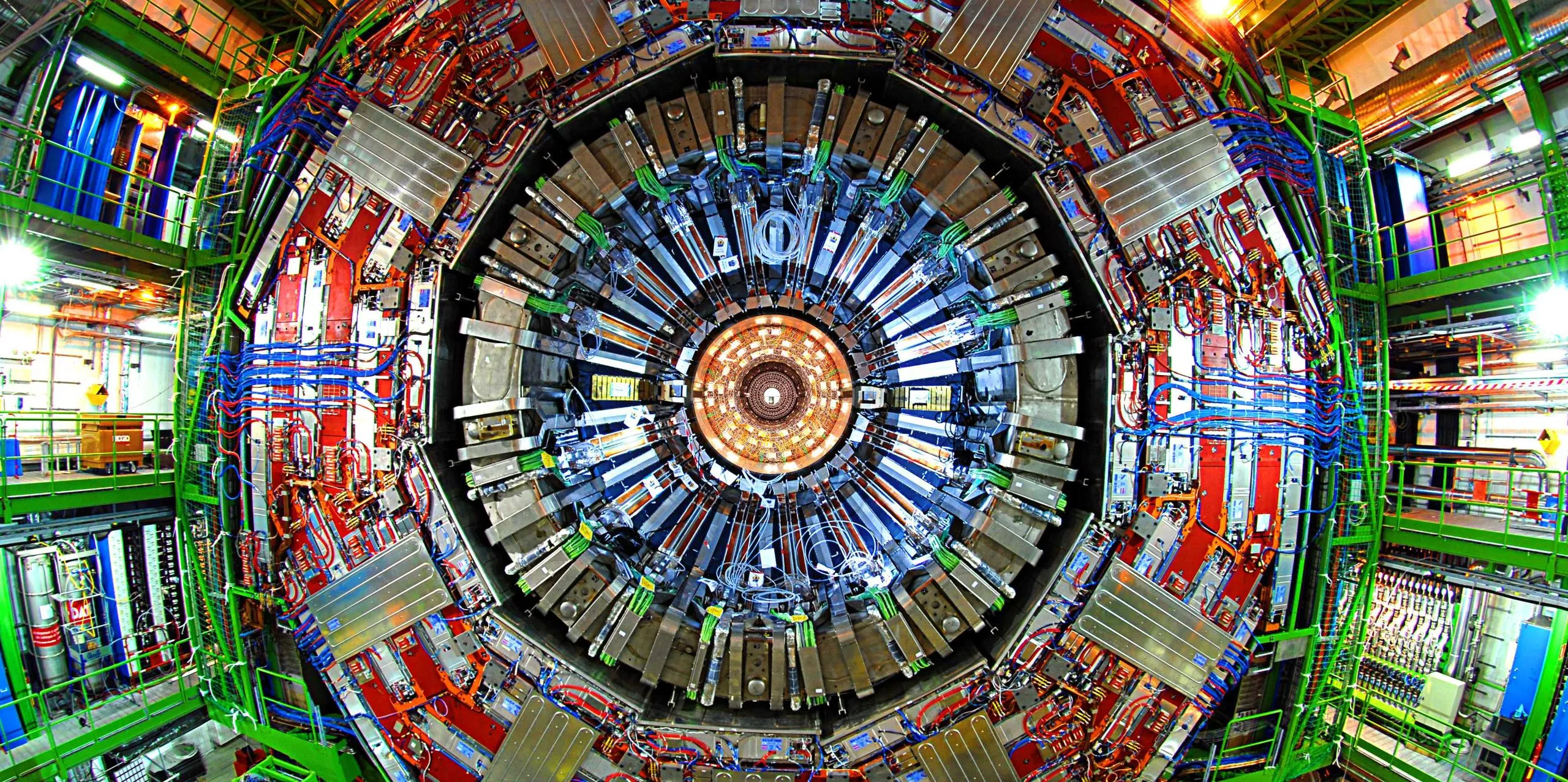
CMS experiment prepares for Run 3
CMS experiment prepares for Run 3 The CMS experiment is one of the four large experiments at the LHC and a detailed description of the detector’s inner and outer layers can be found here. The detector successfully operated with LHC collisions since 2010 leading to the Higgs boson discovery in 2012 by the CMS and
-
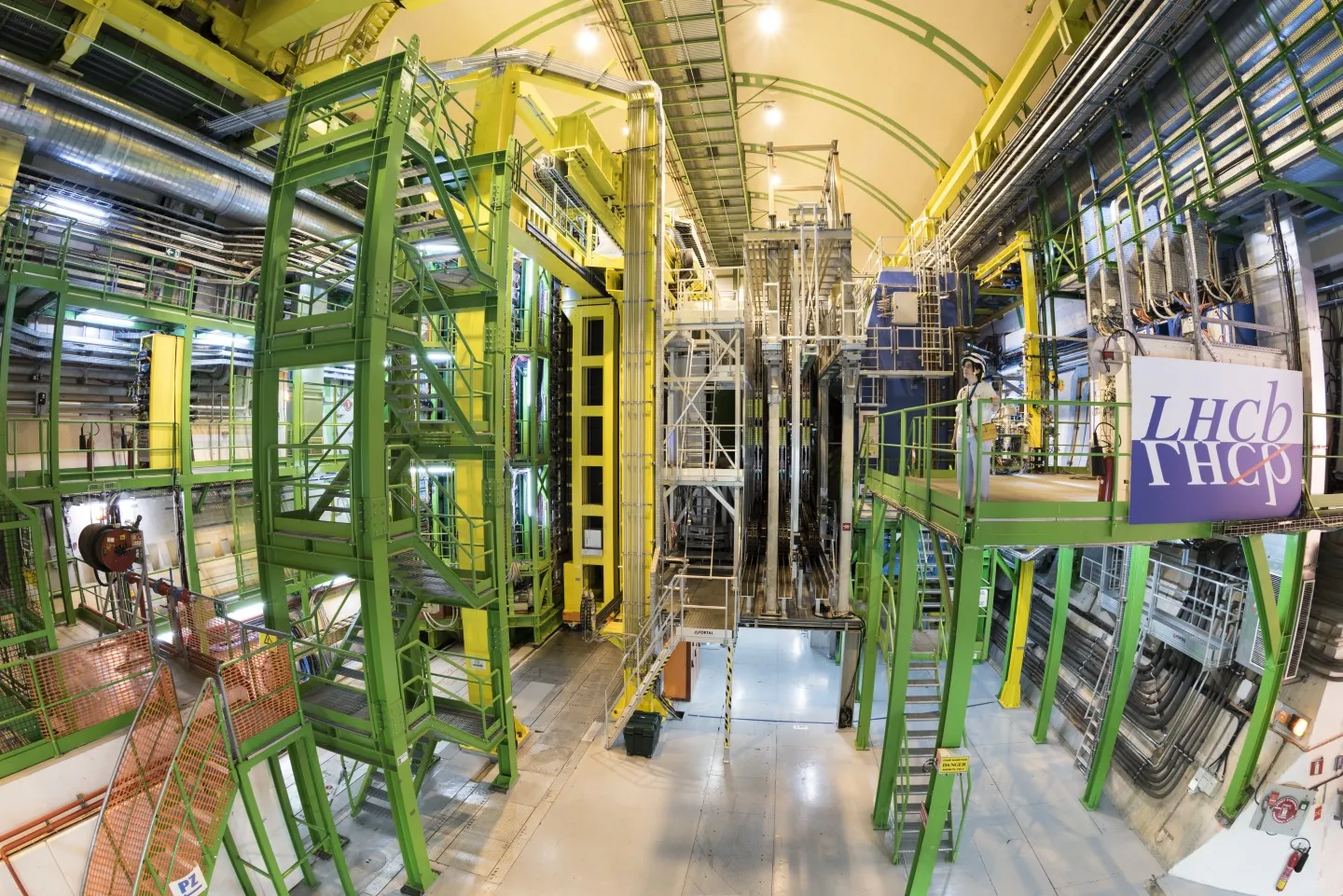
LHCb experiment looks forward
LHCb experiment looks forward The LHCb detector provides unique precision coverage of the forward region at the LHC, enabling world-leading studies of flavour physics and more. The collaboration is currently installing the first major upgrade of the detector. This upgrade will allow proton collisions with an instantaneous luminosity of 2 x 1033 cm-2s-1, an increase
-
Cornering right-handed neutrinos
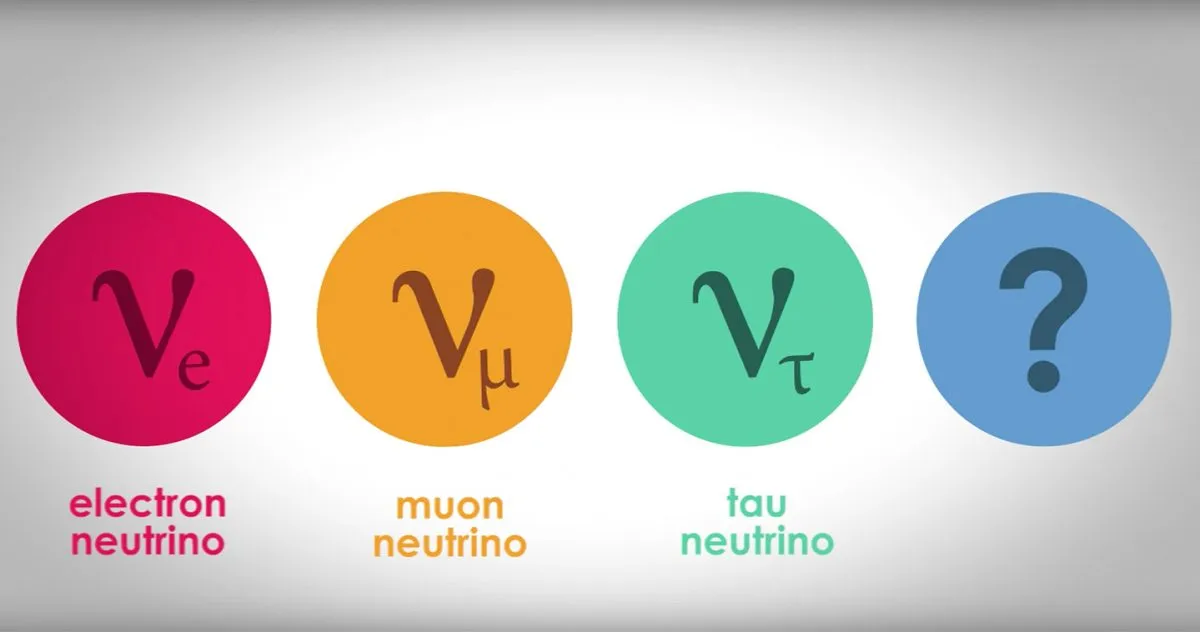
Cornering right-handed neutrinos Right-handed neutrinos: the missing piece of the puzzle? The Standard Model (SM) of particle physics is one of the most successful scientific theories ever developed. Together with the theory of General Relativity it can describe most of the observed phenomena in nature at a fundamental level. However, a number of established experimental
-
Uniting Leptogeneses
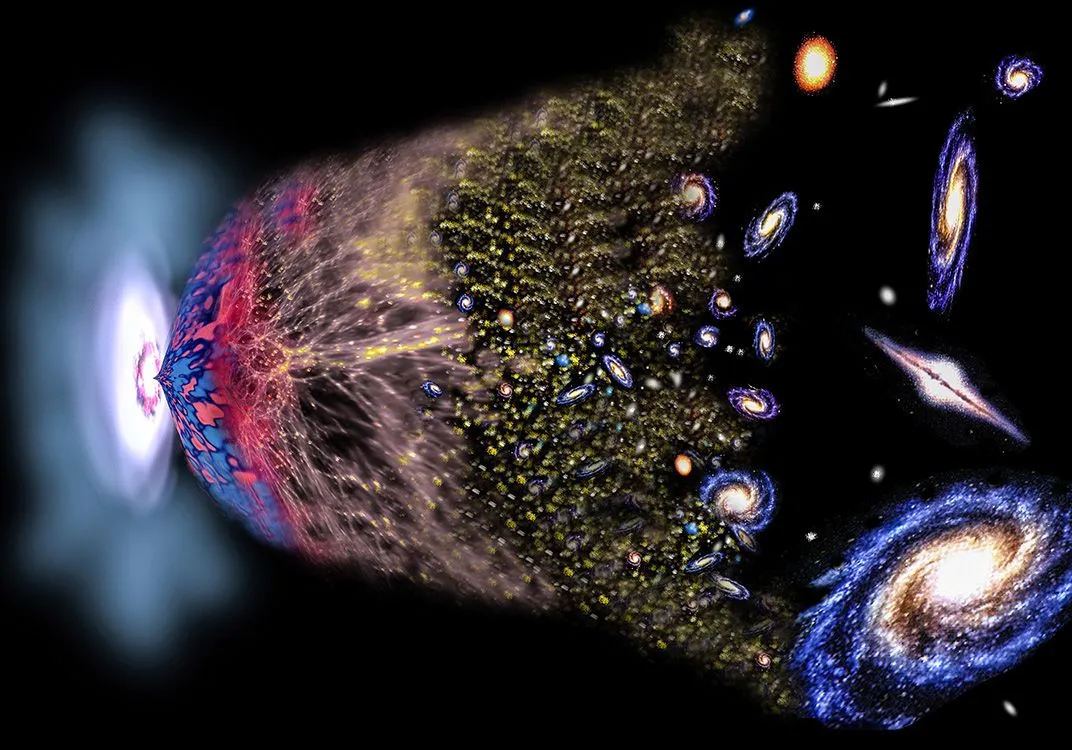
Uniting Leptogeneses With the discovery of the Higgs boson, particle physics has reached an era of unprecedented success. Almost all phenomena in nature can in principle be explained with known particles of the Standard Model (SM). Some puzzles still remain unsolved, like the origin of observed matter-antimatter asymmetry of the Universe (BAU), the existence of
-
Accelerating for dark discoveries
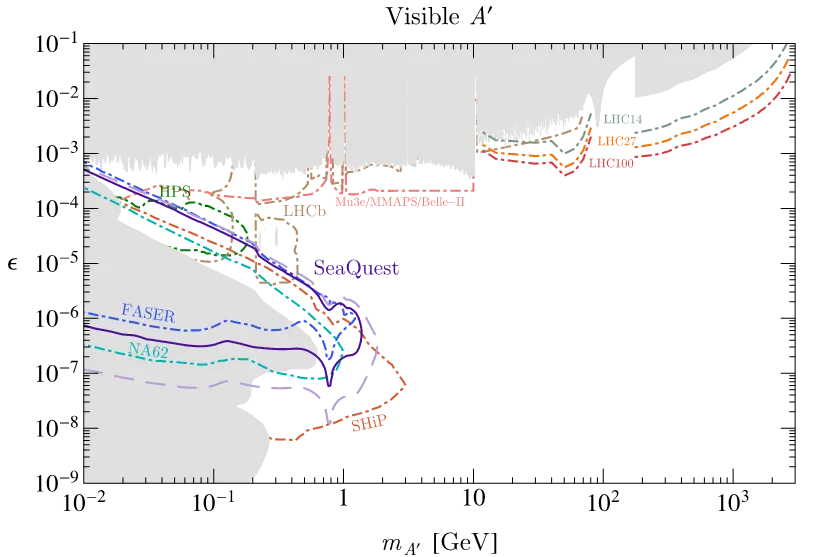
Accelerating for dark discoveries Cosmological and astrophysical observations indicate that the Standard Model (SM) particles account for less than 5% of the total energy density of our Universe, while the remaining unknown 95% arises from the so-called dark energy and dark matter (DM). The existence of dark matter is inferred from its gravitational effects, but
-

Random Number Generators for Precision Monte Carlos
Random Number Generators for Precision Monte Carlos The Monte Carlo method is used primarily for calculations that are too difficult or even impossible to perform analytically, so that as our experiments and theories become more accurate, we become more dependent on the quality of our MC calculations and hence on the random numbers they use.
-
What is the likelihood function, and how is it used in particle physics?
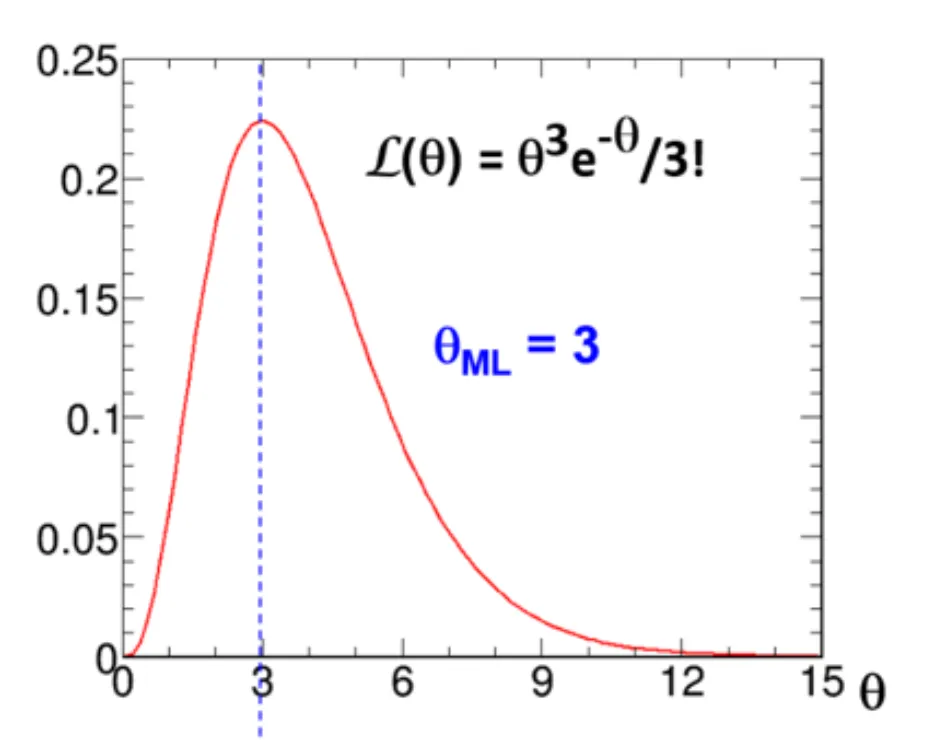
What is the likelihood function, and how is it used in particle physics? In statistical data analysis, “likelihood” is a key concept that is closely related to, but crucially distinct from, the concept of “probability”, which is often a synonym in everyday English. In this article, I first lay some necessary foundations for defining likelihood,