
Category: Newsletter
-
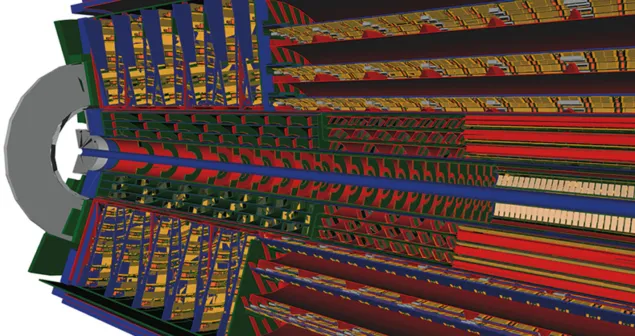
The ATLAS Inner Tracker Integration at CERN
The ATLAS Inner Tracker Integration at CERN Introduction The ATLAS ITk (Inner TracKer) is a new all-silicon tracker that will replace the existing ATLAS Inner Detector (ID) to meet the requirements imposed by the high-radiation and high-hit occupancy environments of the HL-LHC (High-Luminosity LHC). The ITk consists of multiple layers of silicon detectors arranged into
-

A word from the EP Deputy Department Head – June 2025
A word from the EP Deputy Department Head – June 2025 As I write this editorial, the 2025 experimental programme is in full swing, and the high temperatures are a reminder that summer is here. Many of you will be extremely busy with the ongoing data-taking, producing new results for the summer physics conferences, or
-
Shaping Detector Innovation: Highlights from CERN’s EP-DT Group Annual Report
Shaping Detector Innovation: Highlights from CERN’s EP-DT Group Annual Report The Detector Technologies (EP-DT) group has played a vital role in 2024 in advancing experimental capabilities across CERN’s LHC and non-LHC programmes. As outlined in the group’s recently published annual report, their contributions span from detector construction and integration to critical R&D on enabling technologies,
-

FCC Week 2025: First Gathering After Feasibility Study to Discuss the Way Forward
FCC Week 2025: First Gathering After Feasibility Study to Discuss the Way Forward FCC Week 2025, held in Vienna, provided a timely opportunity to review the project’s scientific and technical progress, ushering in the next phase of design and development. The results of the Feasibility Study will serve as a key input to the next
-

CWDM Link: A High-Bandwidth Optical Upgrade for LHC Beam Instrumentation
CWDM Link: A High-Bandwidth Optical Upgrade for LHC Beam Instrumentation The Versatile Link project[1] was initially developed to provide a point-to-point radiation-hardened optical link common to most CERN experiments which upgraded during Long Shutdown 2 (LS2). The Beam Instrumentation group (SY-BI) also adopted it as backbone of the SPS beam instrumentation (BI) front-end electronics upgrade[2],
-

CMS Inaugurates Its New Control Room
CMS Inaugurates Its New Control Room On 15 May 2025, CMS officially inaugurated its new control room at Point 5 in Cessy, France. The celebration brought together guests from CERN management and representatives of all LHC experiments to mark this significant upgrade to CMS’s operational infrastructure. If CMS were a human body, the control room
-
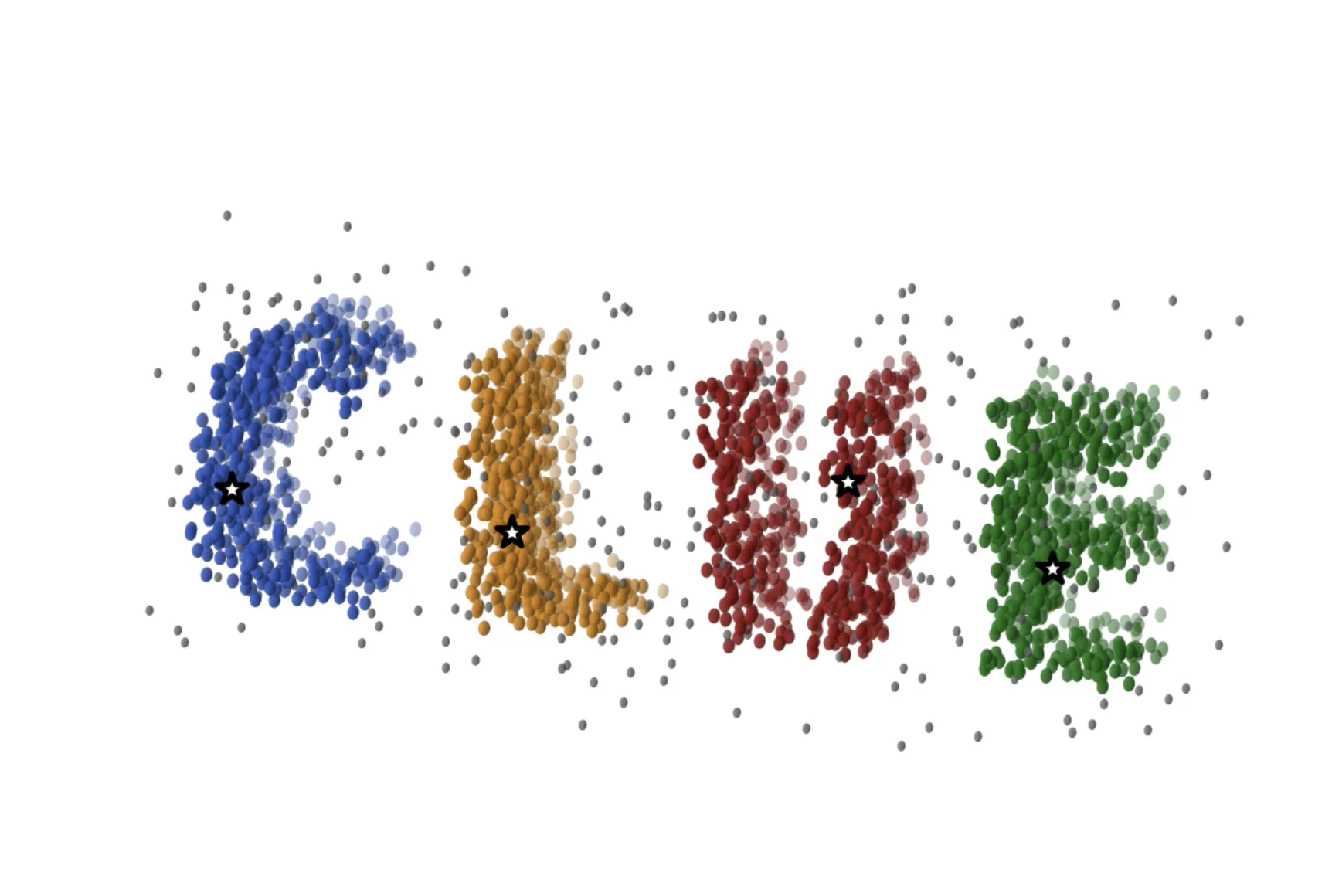
CLUE: A Scalable Clustering Algorithm for the Data Challenges of Tomorrow
CLUE: A Scalable Clustering Algorithm for the Data Challenges of Tomorrow The foreseen increase in luminosity and pileup at the High-Luminosity Large Hadron Collider (HL-LHC) [1] will challenge both the detector hardware and the reconstruction software. With higher pile-up, calorimeter energy reconstruction depends even more on pattern-recognition algorithms. These algorithms have to cluster together deposits
-
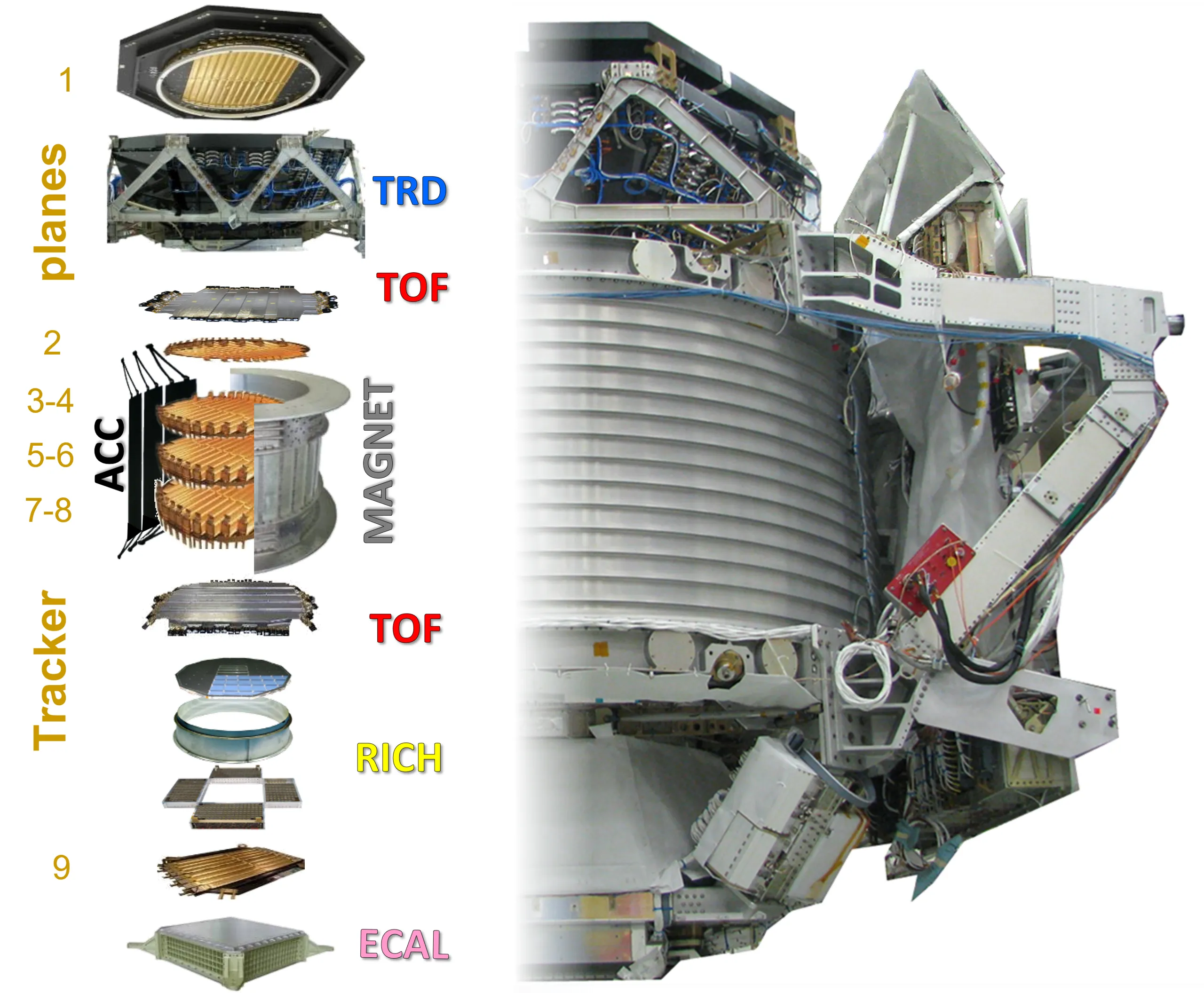
AMS-02: A New Chapter in Orbit to Probe the Nature of Cosmic Rays
AMS-02: A New Chapter in Orbit to Probe the Nature of Cosmic Rays Since its launch aboard the International Space Station (ISS) in May 2011, the Alpha Magnetic Spectrometer (AMS-02) has recorded more than 250 billion cosmic-ray events, offering precision measurements of the composition and energy spectra of protons, nuclei, electrons, and positrons across an
-
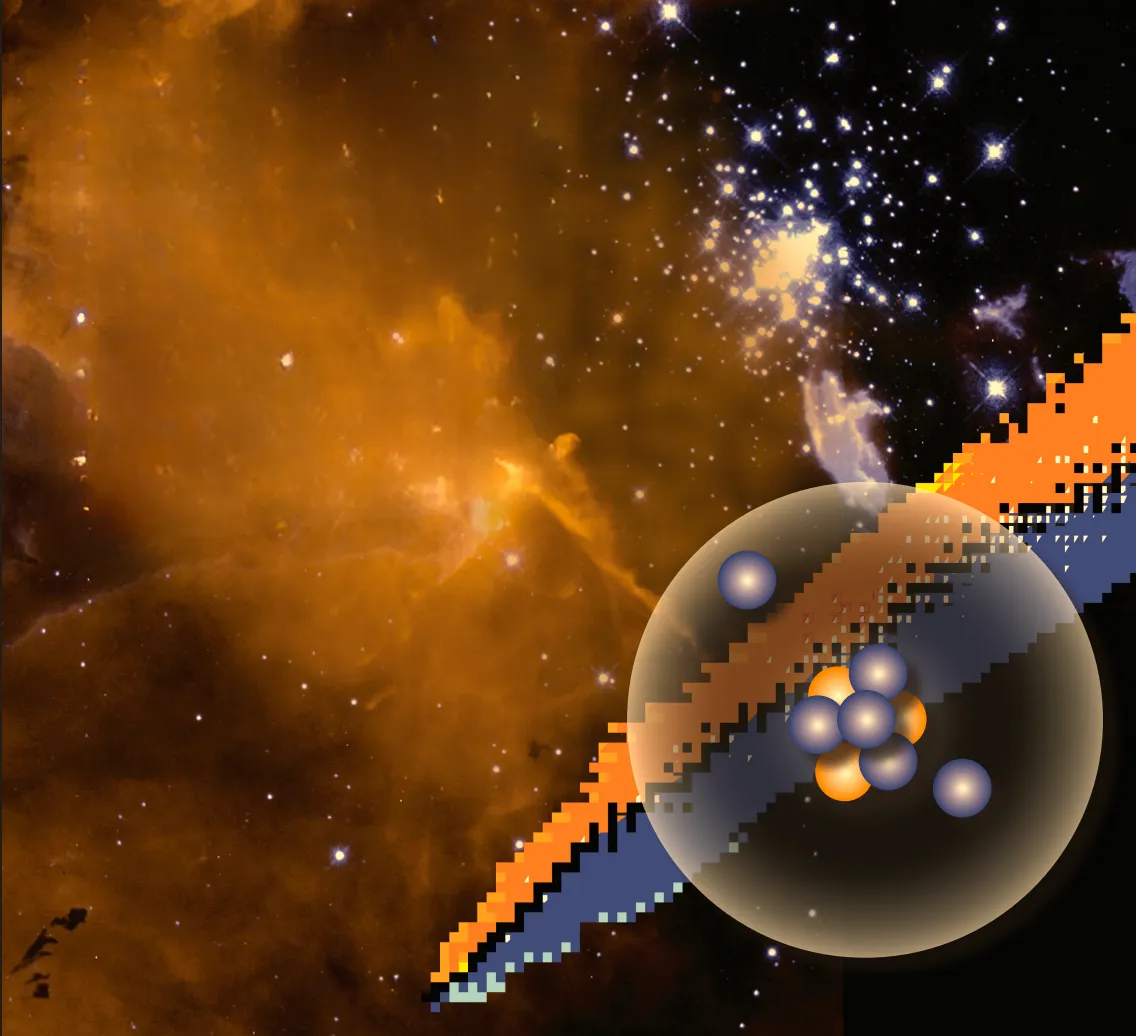
Decoding r-Process Nucleosynthesis: Precision Studies of Exotic Indium Isotopes at ISOLDE
Decoding r-Process Nucleosynthesis: Precision Studies of Exotic Indium Isotopes at ISOLDE How are the chemical elements synthesised in stellar environments? Which processes lead to their creation? What impact does nuclear physics have on their production? Describing the origins of the chemical elements and their observed abundances remains one of the most significant challenges in modern
-
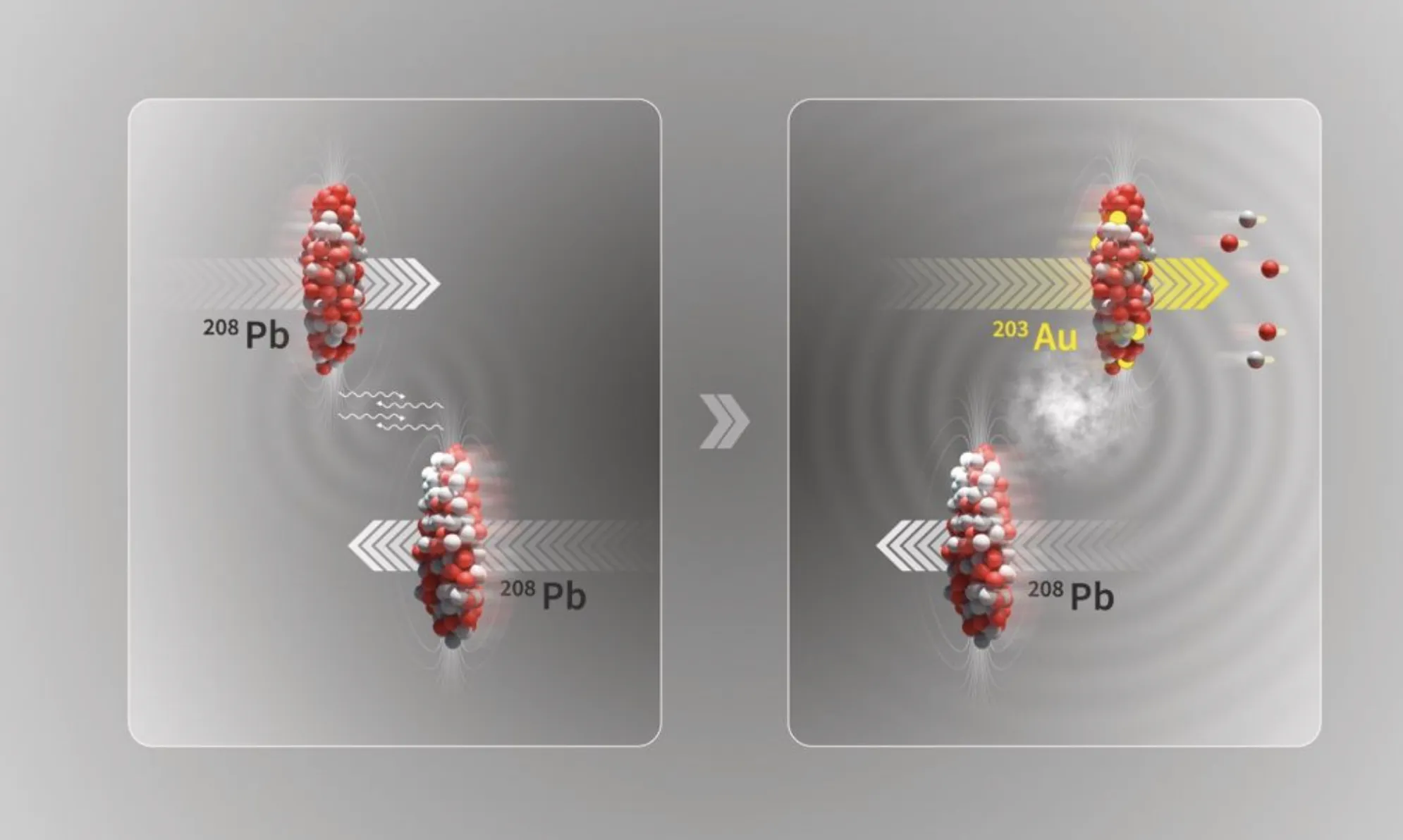
Heavy isotopes production via electromagnetic interactions at the LHC
Heavy isotopes production via electromagnetic interactions at the LHC The ALICE experiment at LHC studies ultra-relativistic heavy-ion collisions to characterize the Quark-Gluon Plasma (QGP) — a state of matter where quarks and gluons are deconfined. This state existed briefly in the early Universe, just a few millionths of a microsecond after the Big Bang. However,