
Category: Newsletter
-
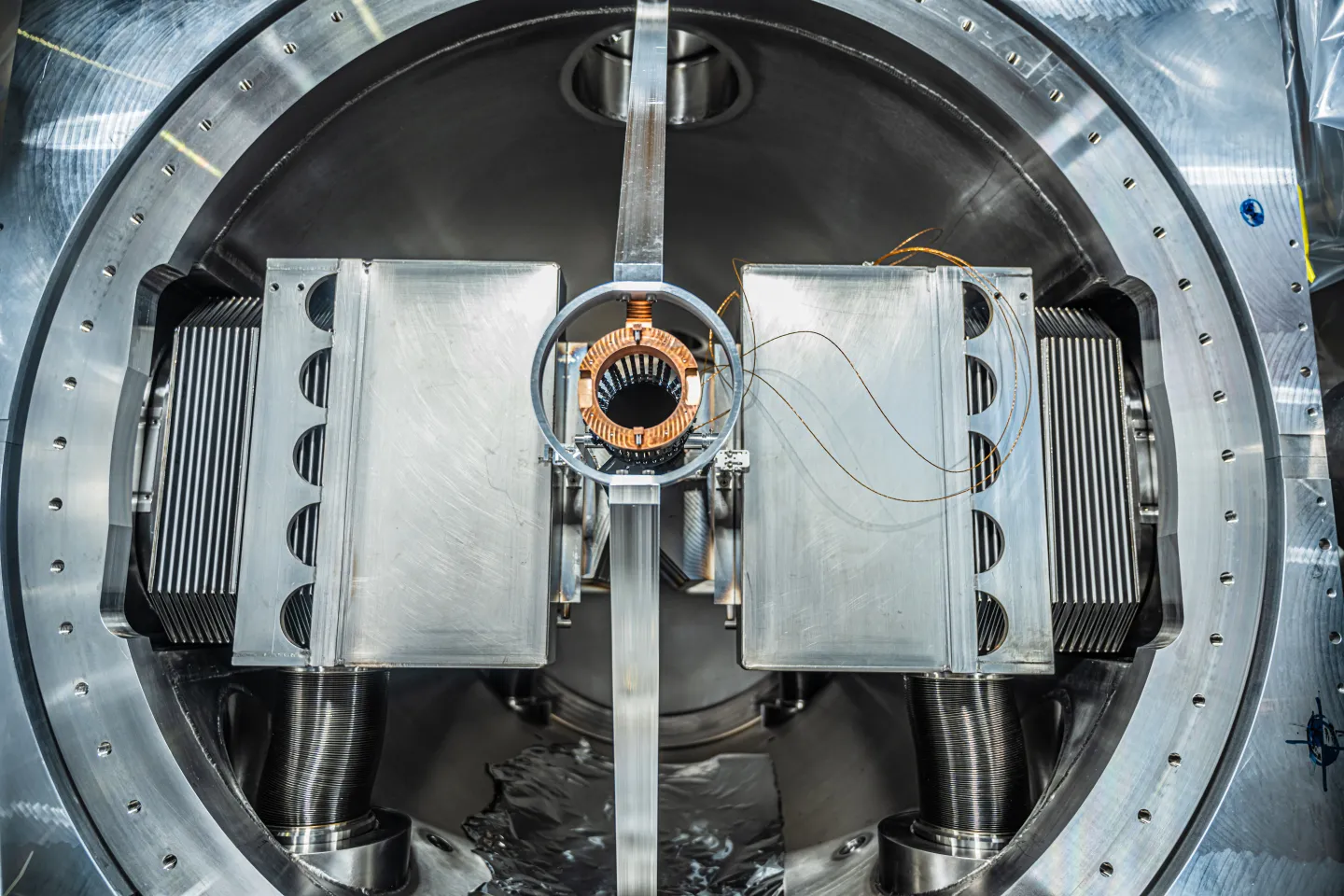
SMOG(2) at LHCb: a space experiment and a bowling alley
SMOG(2) at LHCb: a space experiment and a bowling alley A famous aphorism, sometimes attributed to Max Planck, goes “When you change the way you look at things, the things you look at change”. Since 2011, the LHCb experiment at the LHC has employed a System for Measuring Overlap with Gas (SMOG) to inject gas
-
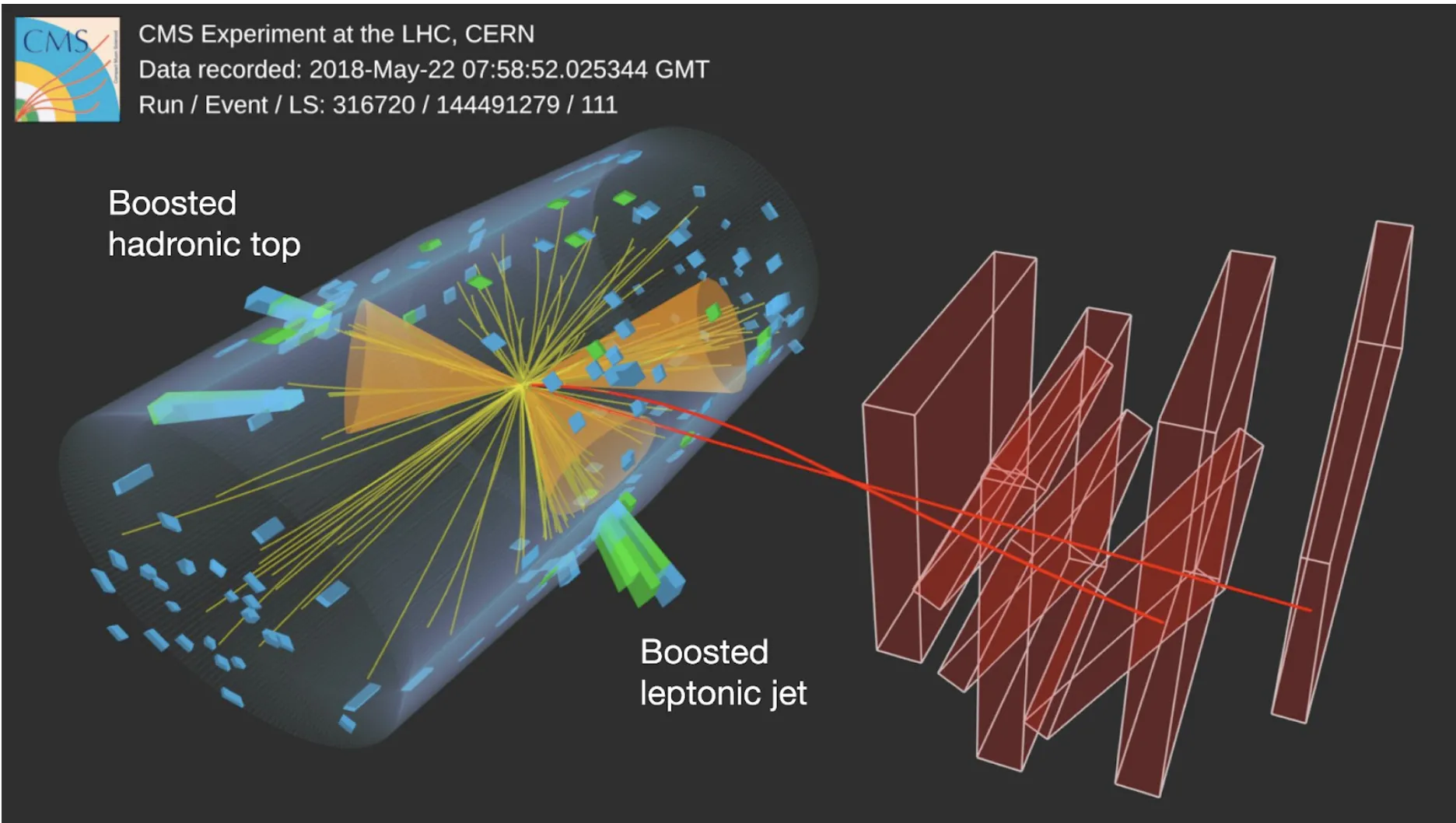
An all-round boosted chase for supersymmetry
An all-round boosted chase for supersymmetry It is rare for a theory to inspire as much experimental attention as supersymmetry has. CMS completed more than 40 SUSY searches in Run 2 alone, reflecting how compelling this framework remains in the quest for new physics. SUSY proposes that every known particle has a heavier partner, a
-
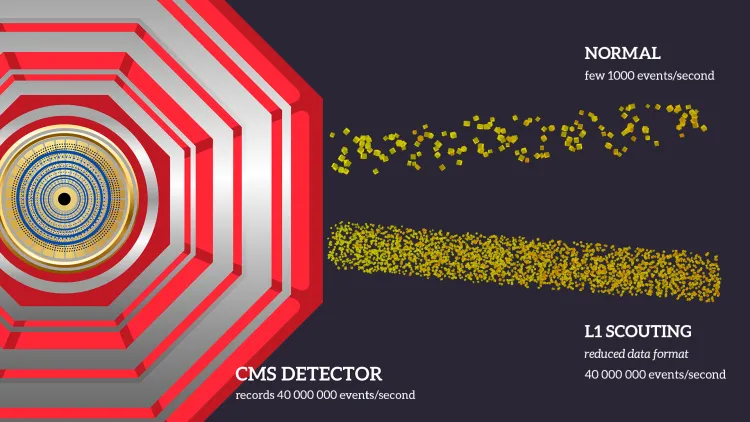
How CMS records all 40 million events per second
How CMS records all 40 million events per second Traditional data taking workflows at the LHC experiments rely on a filtering step – called Level-1 trigger – that reduces the amount of data to a manageable level. The Level-1 trigger is implemented in hardware, takes only a few microseconds, and gets rid of more than
-
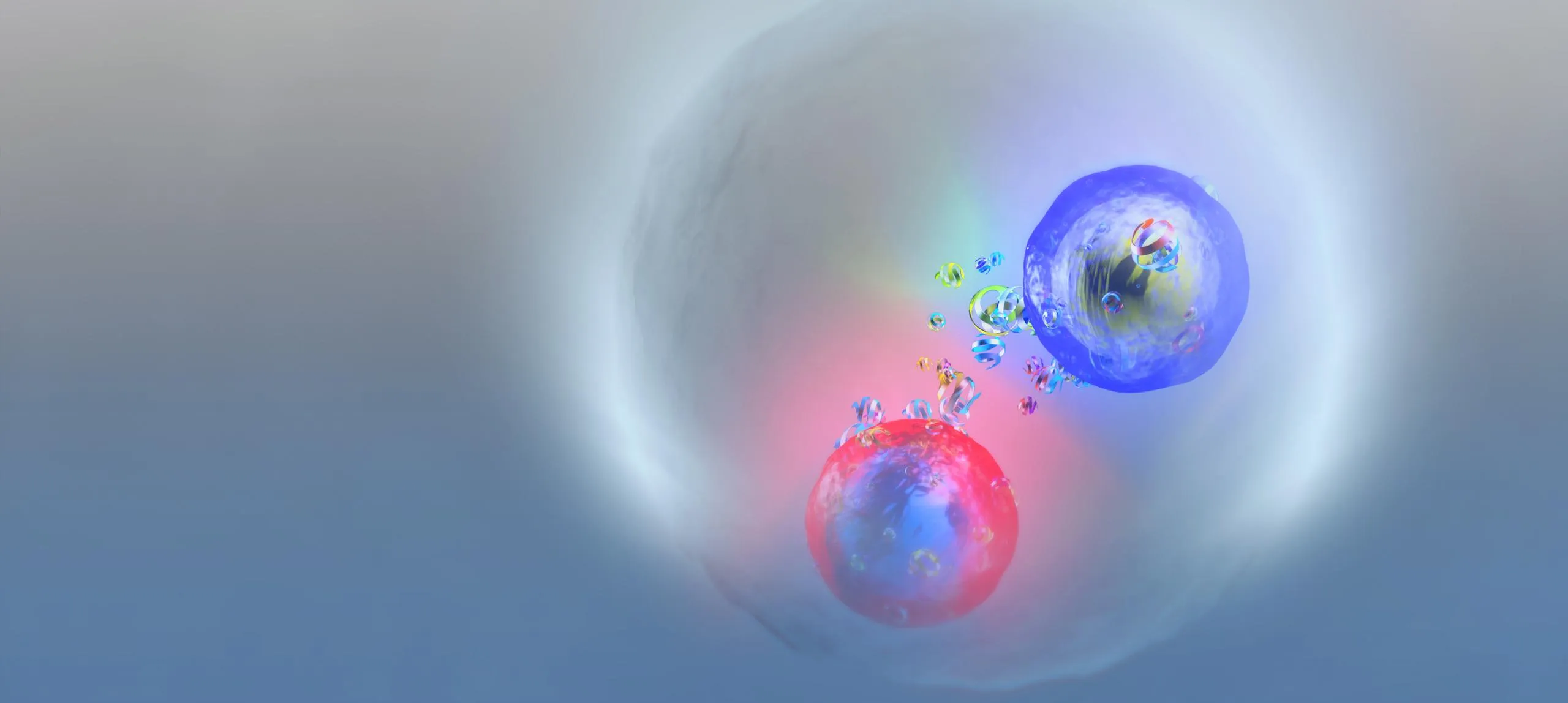
Bound state, found state – ATLAS ties the knot on top quark pair production at threshold
Bound state, found state – ATLAS ties the knot on top quark pair production at threshold Physics at the LHC often advances by pushing into regimes once thought unreachable. One such frontier is the precise study of top-anti-top quark pairs (tt̄) near the production threshold, where subtle quantum effects may leave their imprint. A few
-
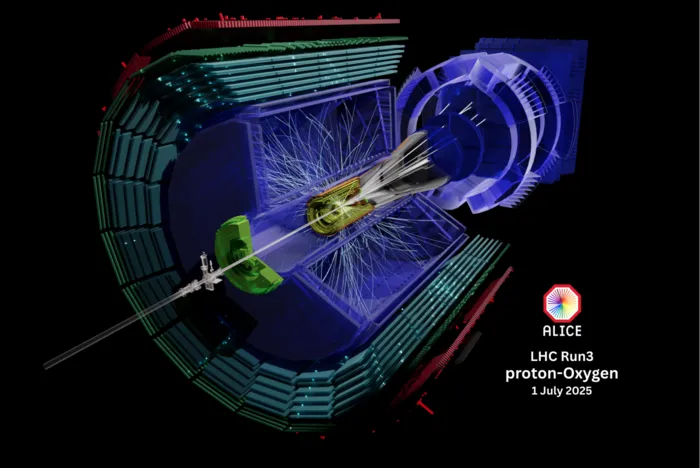
ALICE explores the quark–gluon plasma with light-ion collisions
ALICE explores the quark–gluon plasma with light-ion collisions In July 2025, the ALICE experiment took part in the LHC’s first-ever light-ion campaign, colliding oxygen–oxygen (O–O) and neon–neon (Ne–Ne) nuclei at a centre-of-mass energy of 5.36 TeV per nucleon pair. The short but intense runs offered a rare opportunity to explore the transition between ordinary hadronic
-
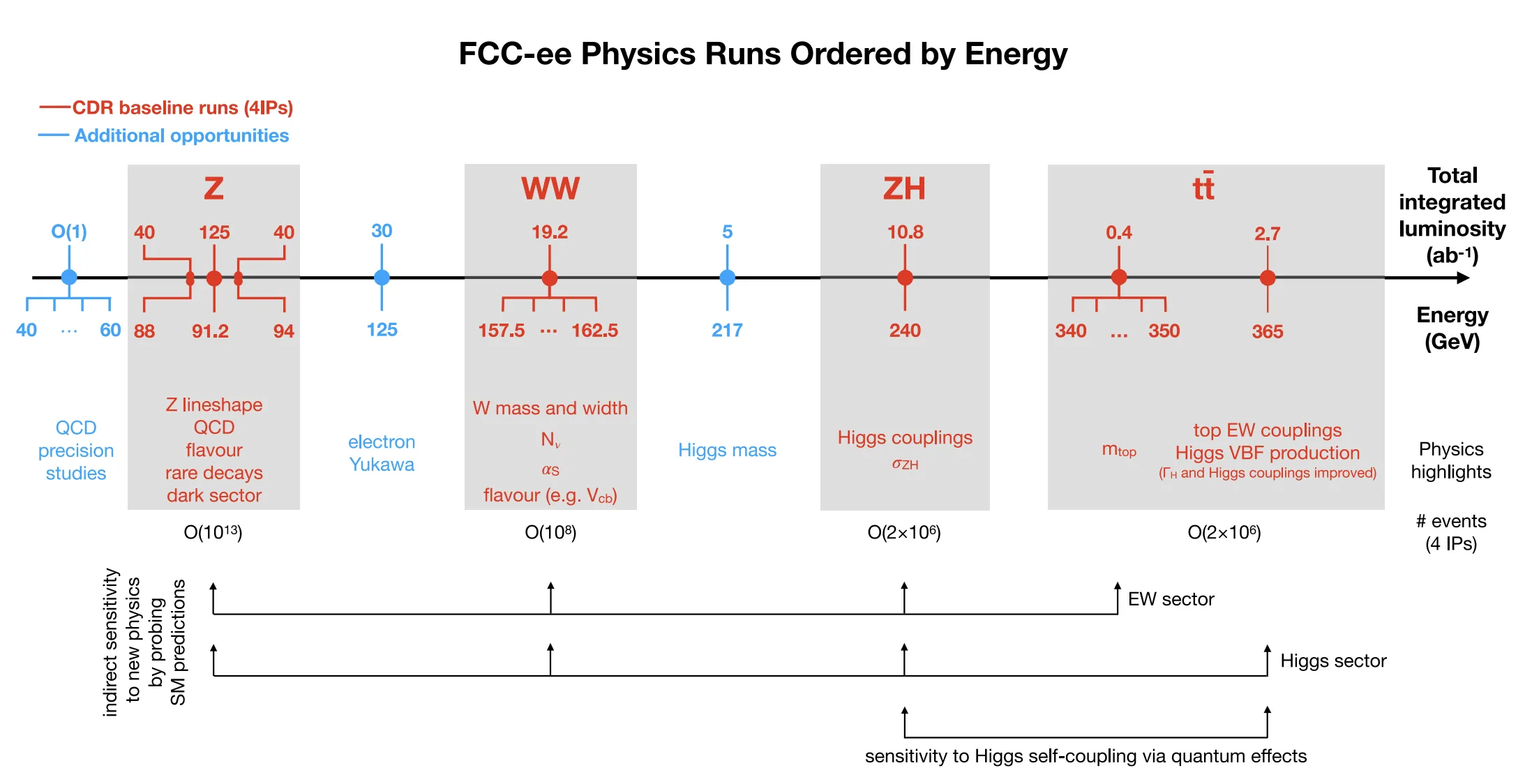
TEST-FCCPH-29062025
TEST-FCCPH-29062025 FCC Week 2025: Advancing the Frontier of Particle Physics As the FCC Week 2025 concluded in Vienna, Jan Eysermans delivered a summary of the physics prospects of the Future Circular Collider (FCC) integrated programme. The closing physics summary showcased the powerful case for the FCC-ee and FCC-hh as a unified strategy to deepen our
-
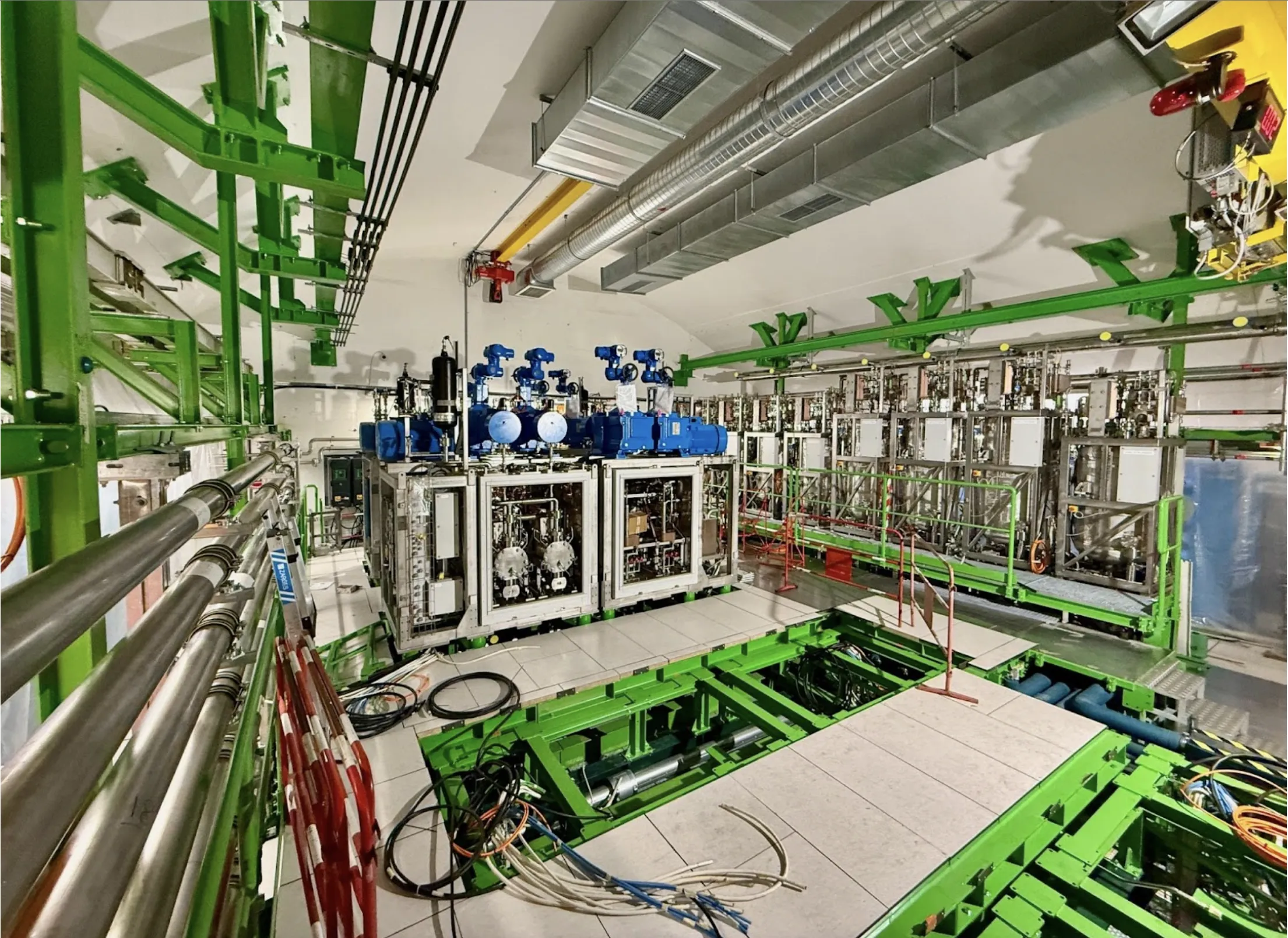
Next-Generation CO₂ Cooling Systems Powering the Future of ATLAS and CMS
Next-Generation CO₂ Cooling Systems Powering the Future of ATLAS and CMS Four CO2 cooling plants and accumulators in the service cavern of CMS in May 2025. (Photo by Jérôme Daguin) During recent shutdown periods, CERN engineers and technicians — in collaboration with the ATLAS and CMS teams — began installing the first units of next-generation
-
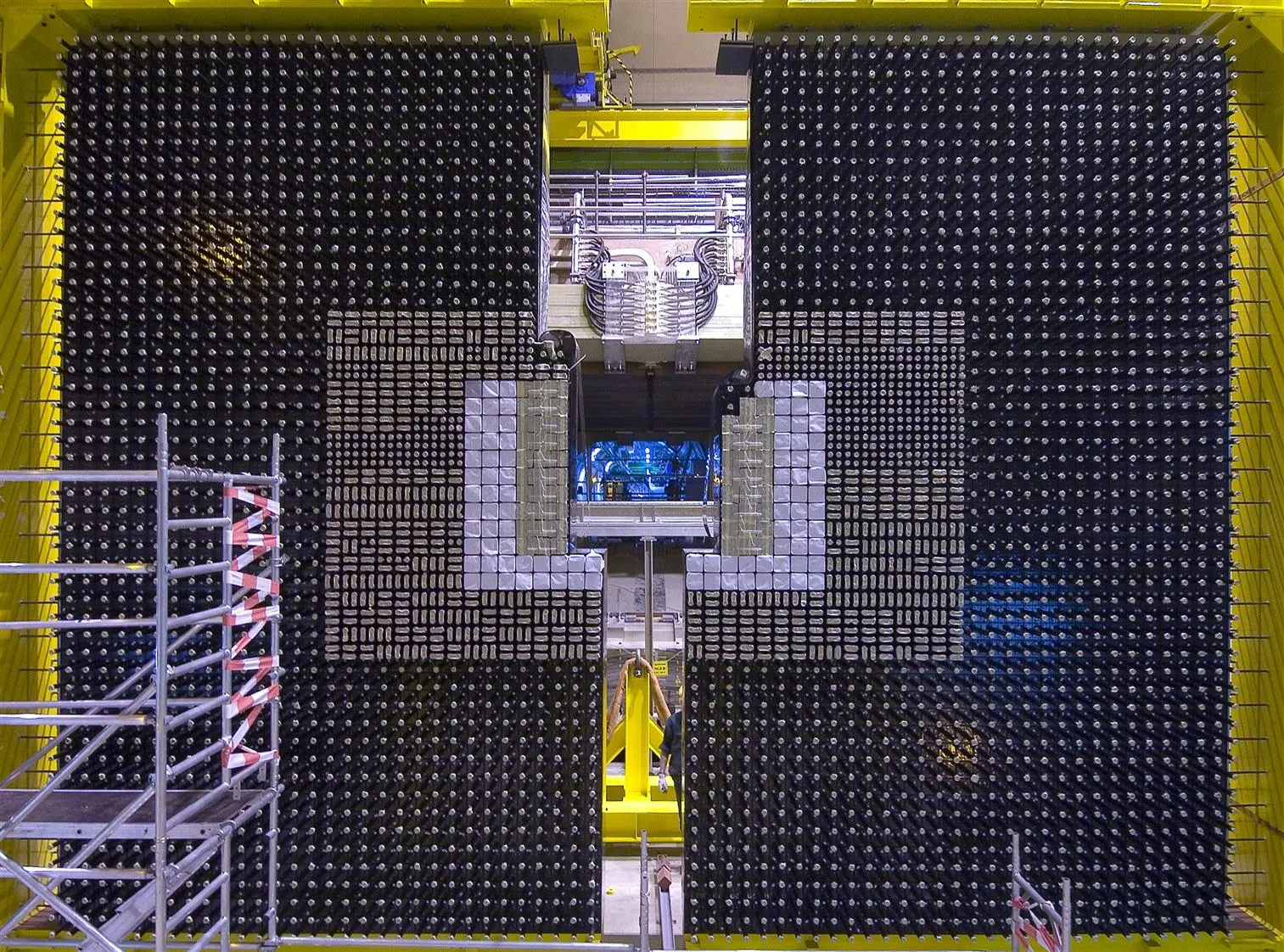
Calorimetry and light-based detectors for future experiments
Calorimetry and light-based detectors for future experiments The strategic R&D programme on technologies for future experiments by the CERN EP department is currently in its second phase from 2024 until 2028. Within this effort, Work Package (WP) 3 focusses on the development of calorimetry and light-based detectors. Particle identification Several detectors use light to detect
-
A Day of Innovation: EP R&D 2025 in Focus
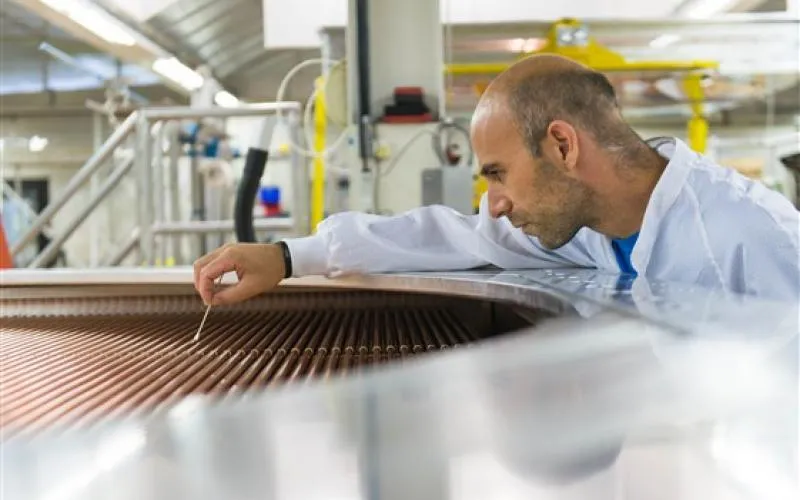
A Day of Innovation: EP R&D 2025 in Focus May 7th 2025, 8:15 AM. Many colleagues from all EP groups are gathering in front of the main auditorium. Colourful posters are being exhibited in the lobby. People who don’t see each other often profit from the occasion to chat a bit. It is the 2025
-
LHCb Upgrade II Scoping Document
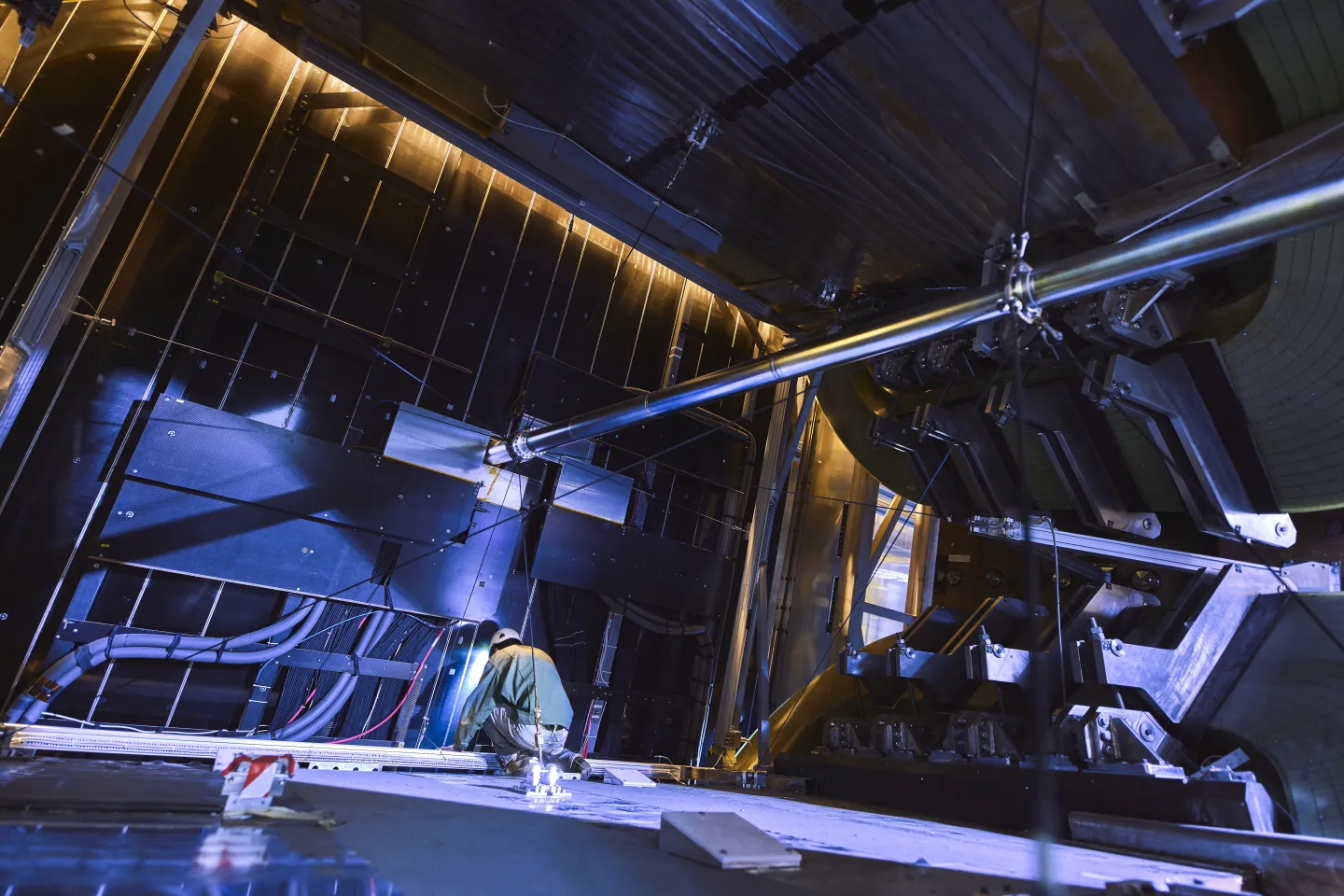
LHCb Upgrade II Scoping Document CERN Research Board backs “Middle” scope for LHCb Upgrade II With the CERN Research Board’s endorsement on 14 April 2025, the LHCb Upgrade II Scoping Document has cleared its critical design-scope review, moving the project from proposal to implementation. The Board’s recommendation that the collaboration pursue the Middle configuration—one of