
Tag: CMS
-
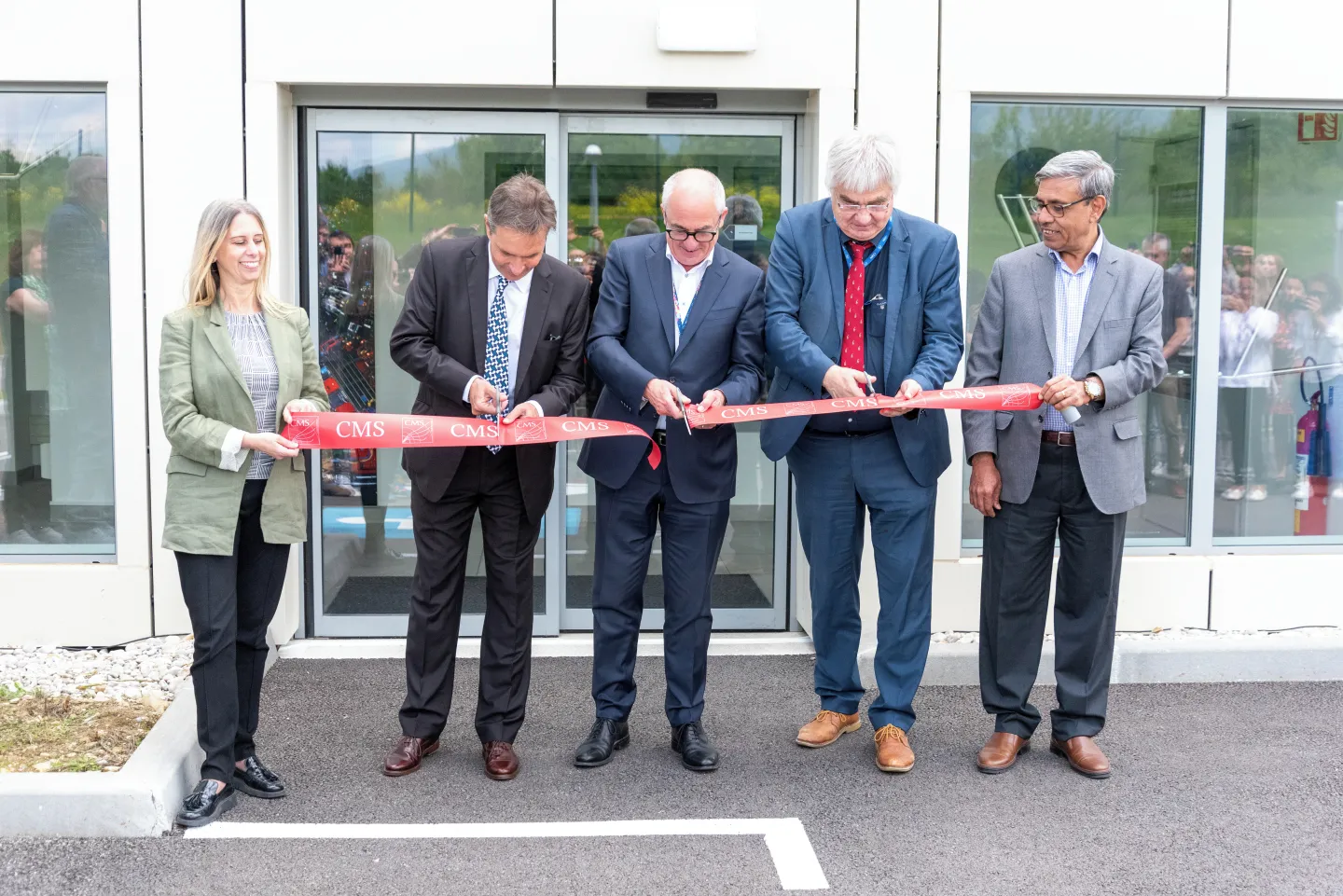
CMS Inaugurates Its New Control Room
CMS Inaugurates Its New Control Room On 15 May 2025, CMS officially inaugurated its new control room at Point 5 in Cessy, France. The celebration brought together guests from CERN management and representatives of all LHC experiments to mark this significant upgrade to CMS’s operational infrastructure. If CMS were a human body, the control room
-
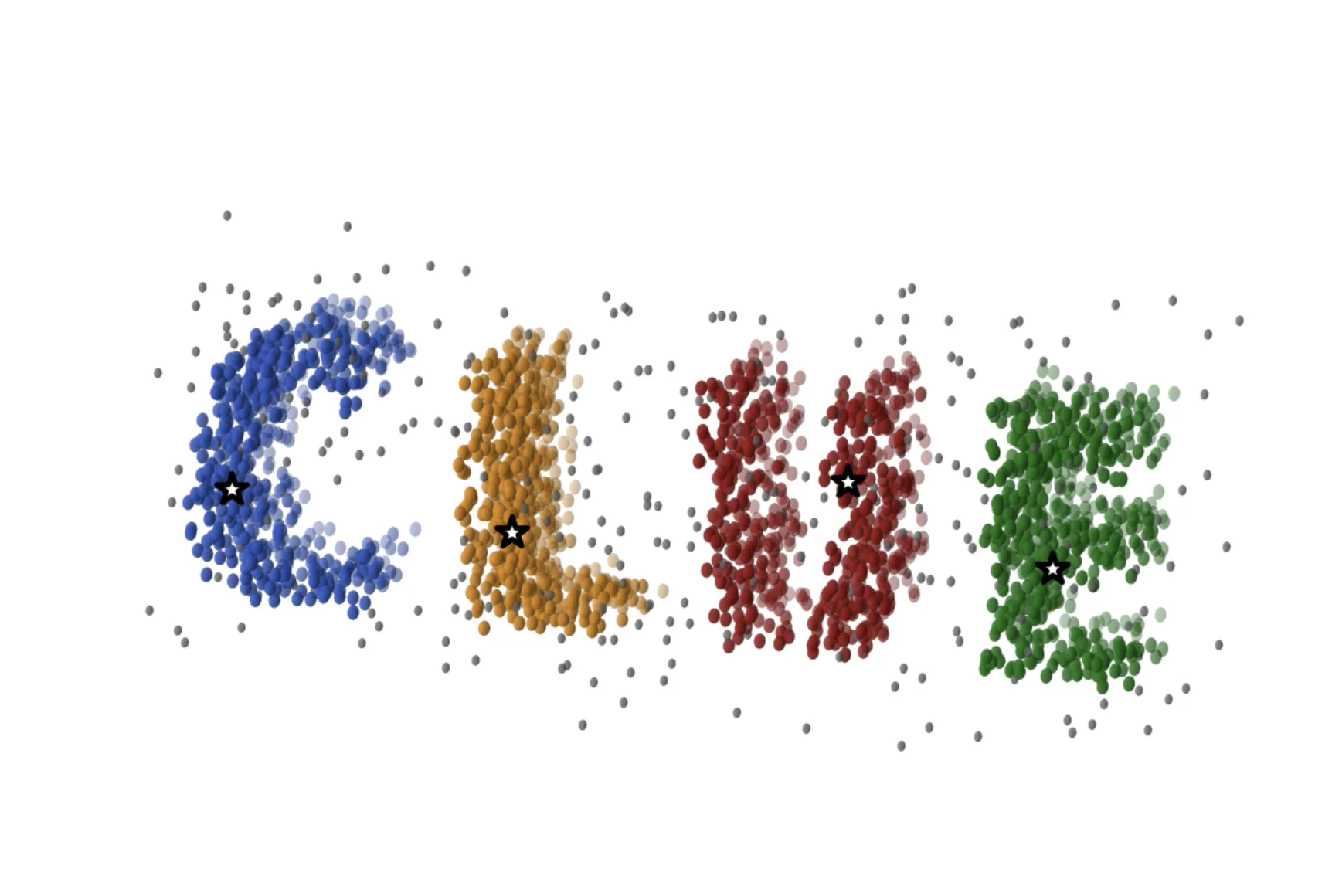
CLUE: A Scalable Clustering Algorithm for the Data Challenges of Tomorrow
CLUE: A Scalable Clustering Algorithm for the Data Challenges of Tomorrow The foreseen increase in luminosity and pileup at the High-Luminosity Large Hadron Collider (HL-LHC) [1] will challenge both the detector hardware and the reconstruction software. With higher pile-up, calorimeter energy reconstruction depends even more on pattern-recognition algorithms. These algorithms have to cluster together deposits
-
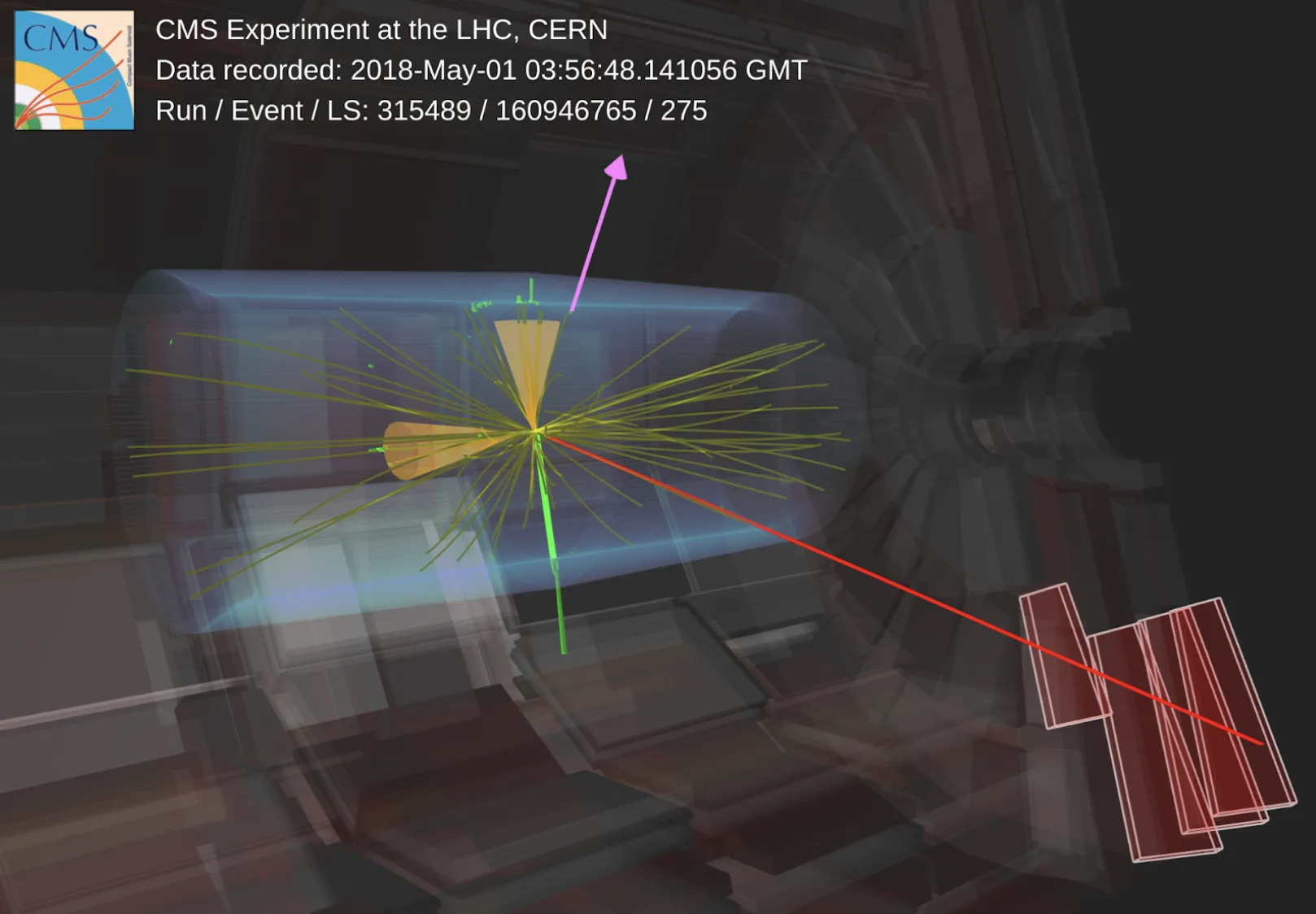
Anomaly at the Threshold: A Closer Look at tt̄ Events in CMS
Anomaly at the Threshold: A Closer Look at tt̄ Events in CMS Some of the most intriguing developments in physics begin not with a discovery, but with an anomaly, subtle, persistent, and difficult to ignore. In 2019, CMS reported a mild excess of around three standard deviations in a search for heavy pseudoscalar (A) or
-

CMS Launches New Monthly Newsletter: Le Point Cinq
CMS Launches New Monthly Newsletter: Le Point Cinq The CMS collaboration is excited to announce the launch of its new monthly newsletter, "Le Point Cinq." This fresh communication channel will provide regular updates on CMS physics highlights, the progress of upgrade projects, and essential collaboration news. Following a successful internal trial over the past couple
-
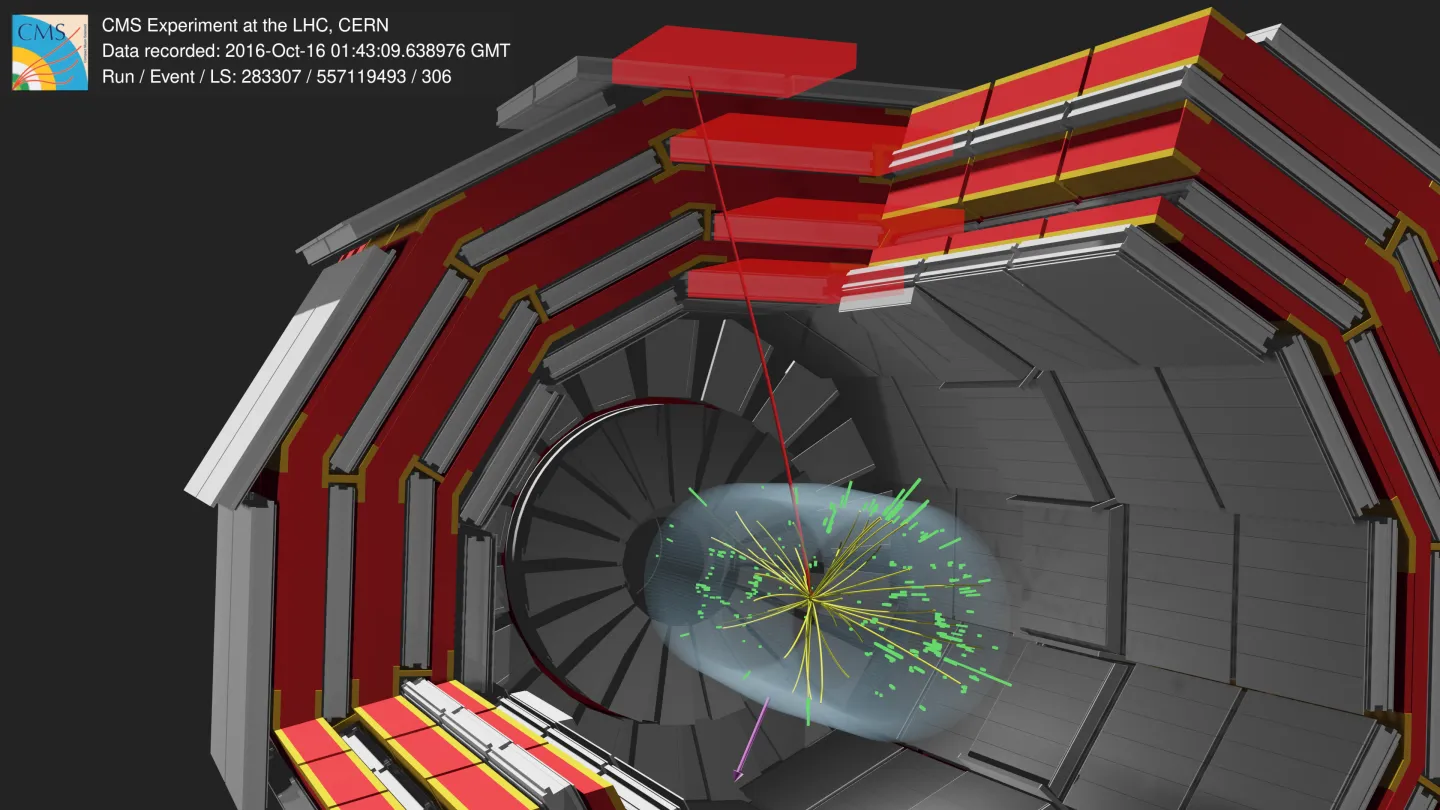
CMS Achieves LHC’s Most Precise W boson Mass Measurement Yet
CMS Achieves LHC's Most Precise W boson Mass Measurement Yet The first measurement of the W boson mass (mw) performed by the CMS Collaboration was announced in September 2024. This result has been long-awaited—the first LHC measurement of mW, by the ATLAS Collaboration, was shown nearly 7 years ago. In the meantime, the CDF Collaboration
-

Tracing the Path to Precision: The Historical Evolution of Electroweak Physics at the LHC
Tracing the Path to Precision: The Historical Evolution of Electroweak Physics at the LHC The unification of the electromagnetic and weak-nuclear forces into an electroweak theory was one of the major breakthroughs of 20th century particle physics. In the 1960s, Steven Weinberg, Sheldon Glashow, and Abdus Salam proposed that these two forces, which appear at
-

Extended Scalar Sectors are considered from all angles at CERN
Extended Scalar Sectors are considered from all angles at CERN It has been more than ten years since the discovery of the first scalar particle at the electroweak scale. This particle was discovered at the LHC in 2012, and it was quickly found to be a scalar that is compatible with the Higgs boson predicted
-
LHC Run 3: A Marathon of Progress and Perseverance
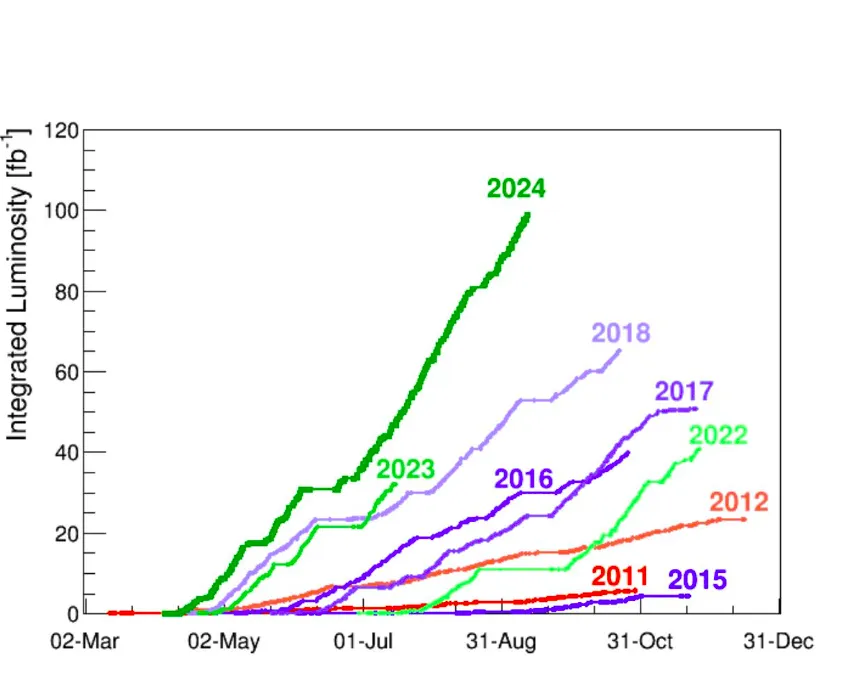
LHC Run 3: A Marathon of Progress and Perseverance Earlier this month, the Large Hadron Collider reached an unprecedented milestone of 100 inverse femtobarns – equivalent to 10 million billion collisions – delivered to the ATLAS and CMS experiments in 2024, with 28 days of proton-proton collisions remaining. This marks a historic first in a
-
CMS Detector in 2024: Advancements in Data Collection and Detector Performance
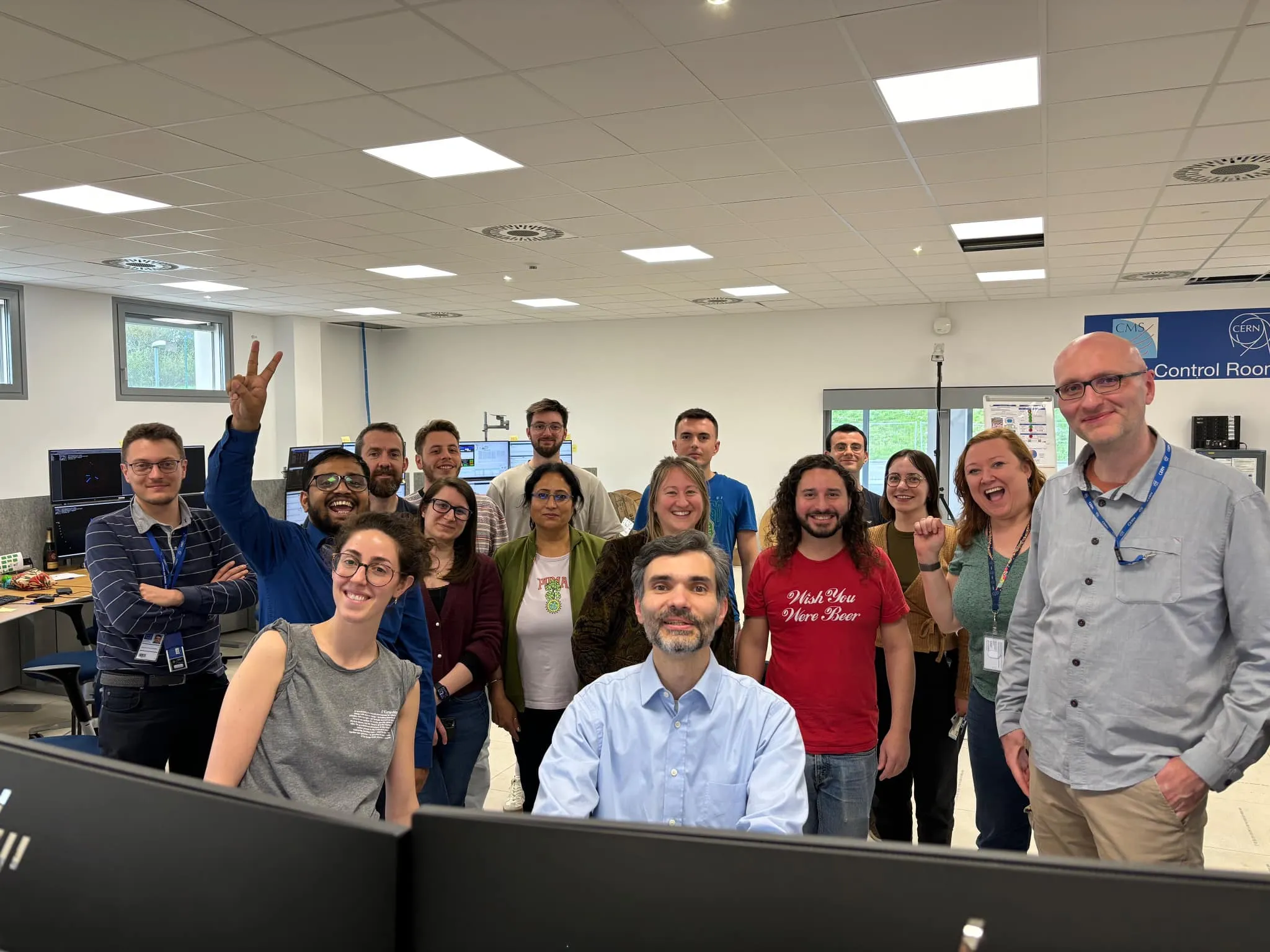
CMS Detector in 2024: Advancements in Data Collection and Detector Performance On April 5th, 2024, stable beams returned to the LHC, marking the official start of the 2024 physics data-taking season. The photo captures CMS’ Run Coordination team in the newly upgraded CMS control center, ready to oversee the exciting season ahead. The CMS detector
-
CMS Releases Extensive 13 TeV Collision Data for Open Science
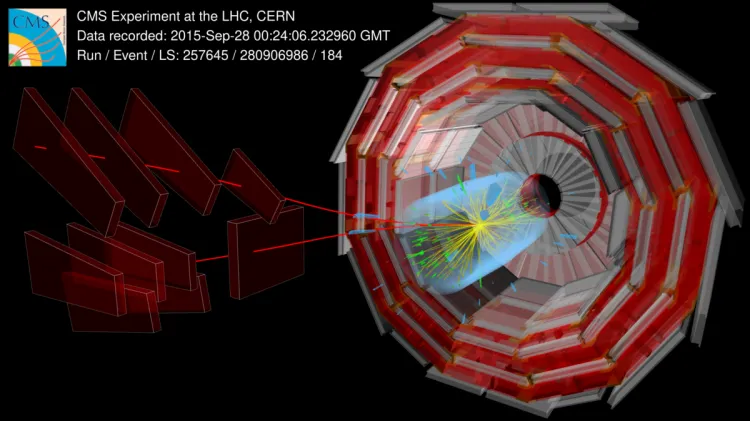
CMS Releases Extensive 13 TeV Collision Data for Open Science The CMS experiment at CERN recently announced the release of 13 TeV proton-proton collision data from 2016. Over 70 TB of collision data and 830 TB of corresponding simulations are now available through the CERN Open Data Portal, marking a significant milestone in open science.