
Tag: SME
-
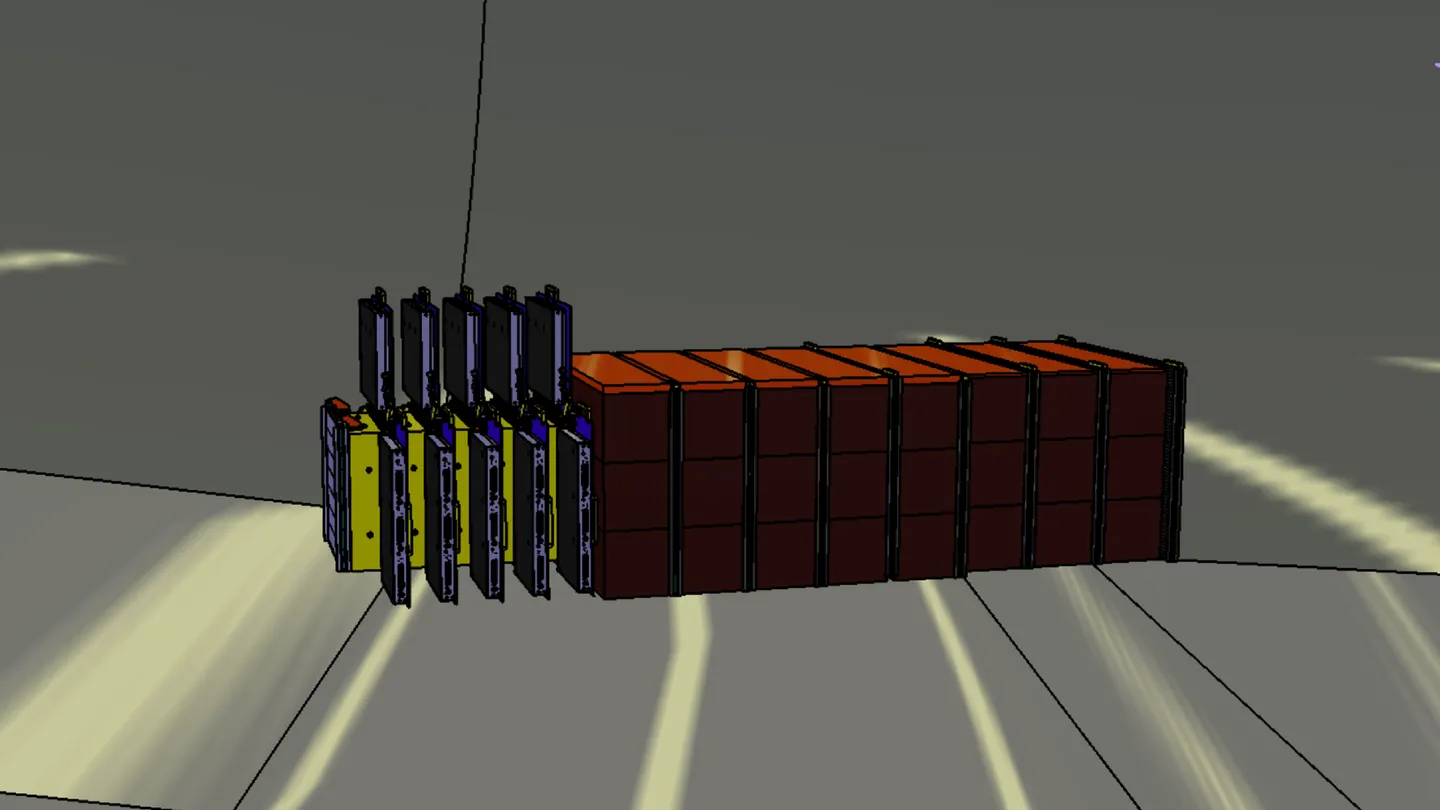
Designing the SND@LHC experiment
Designing the SND@LHC experiment SND@LHC is a newly proposed, compact and stand-alone experiment to perform measurements with neutrinos produced at the LHC in a hitherto unexplored pseudo-rapidity range of 7.2 < 𝜂 < 8.6, complementary to all the other experiments at the LHC, including FASER. Today, two effects make it possible and particularly interesting to
-
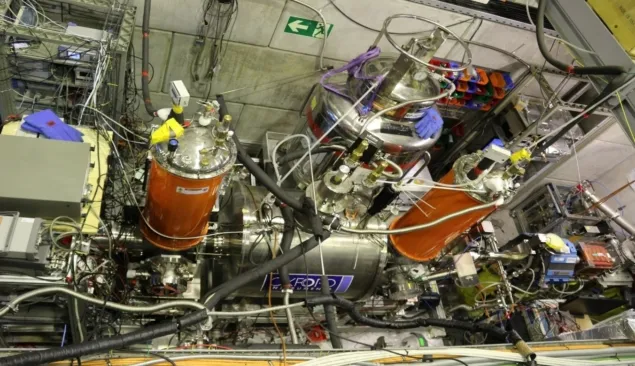
BASE develops a new technique to detect ultralight dark matter.
BASE develops a new technique to detect ultralight dark matter. In a recent work published in Physical Review Letters [1], the Baryon Antibaryon Symmetry Experiment (BASE) at CERN has placed new limits on a possible coupling between photons and hypothetical axionlike dark matter particles with masses between 2.7906-2.7914 neV. We evaluated the signals from our
-

Latest Results from the AMS on the International Space Station
Latest Results from the AMS on the International Space Station The Alpha Magnetic Spectrometer, AMS, is a particle physics detector operating on the International Space Station (Figure 1) since May 2011 with the aim to address long-standing open questions in fundamental physics, such as the matter-antimatter asymmetry, the nature of dark matter, the existence of
-
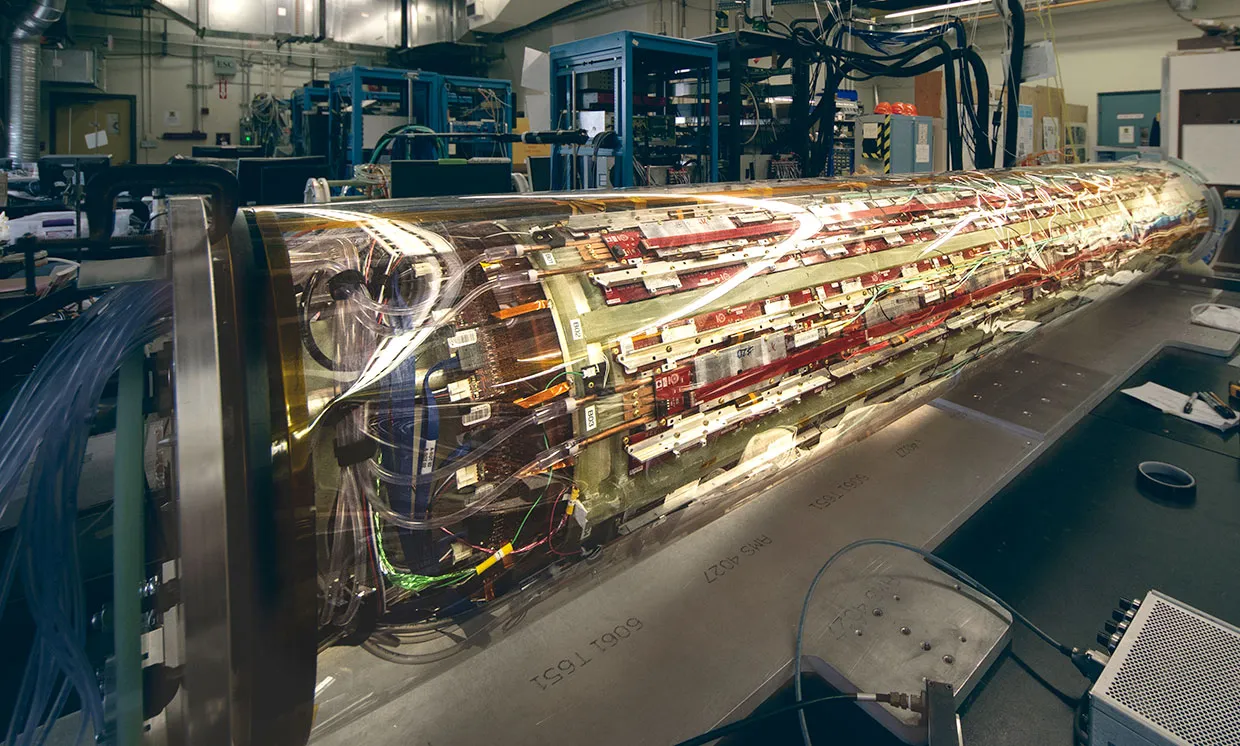
Do opposites attract? ALPHA-g prepares to explore antimatter gravity
Do opposites attract? ALPHA-g prepares to explore antimatter gravity Stuff falls down. This is the universal experience we all have with the gravitational interaction of matter on Earth. Yet one may still wonder if this holds true in the case of the most elusive stuff you can imagine dropping: antimatter. Might it be the case
-
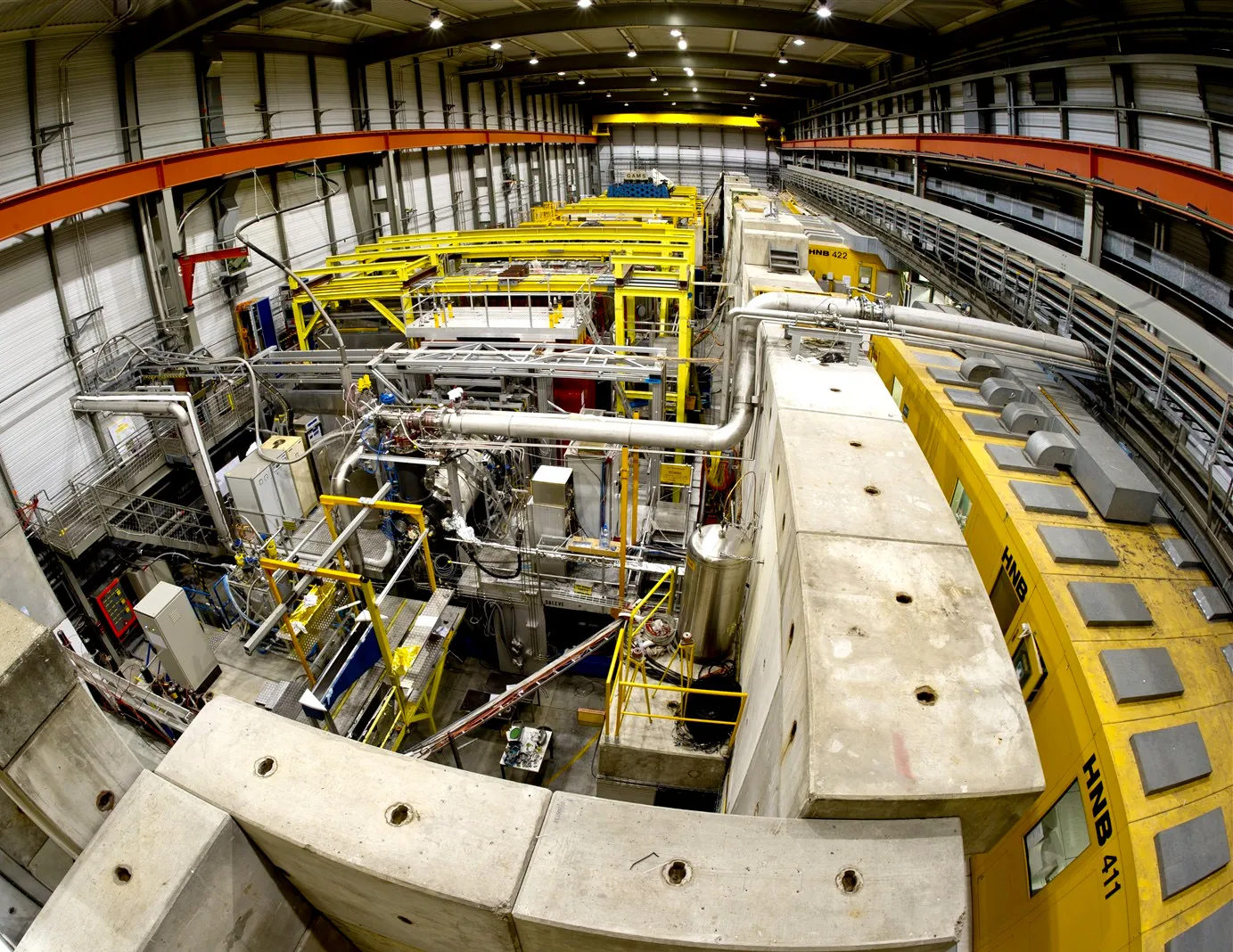
From COMPASS to AMBER: exploring fundamental properties of hadrons
From COMPASS to AMBER: exploring fundamental properties of hadrons The quest to fully understand the internal structure of hadrons, in particular the dynamics as well as the spatial and momentum distributions of their constituents – the partons -, inspired a large community of theoreticians and experimentalists to commit to the continuous development of the underlying
-
PUMA: antiprotons to probe the surface of radioactive nuclei
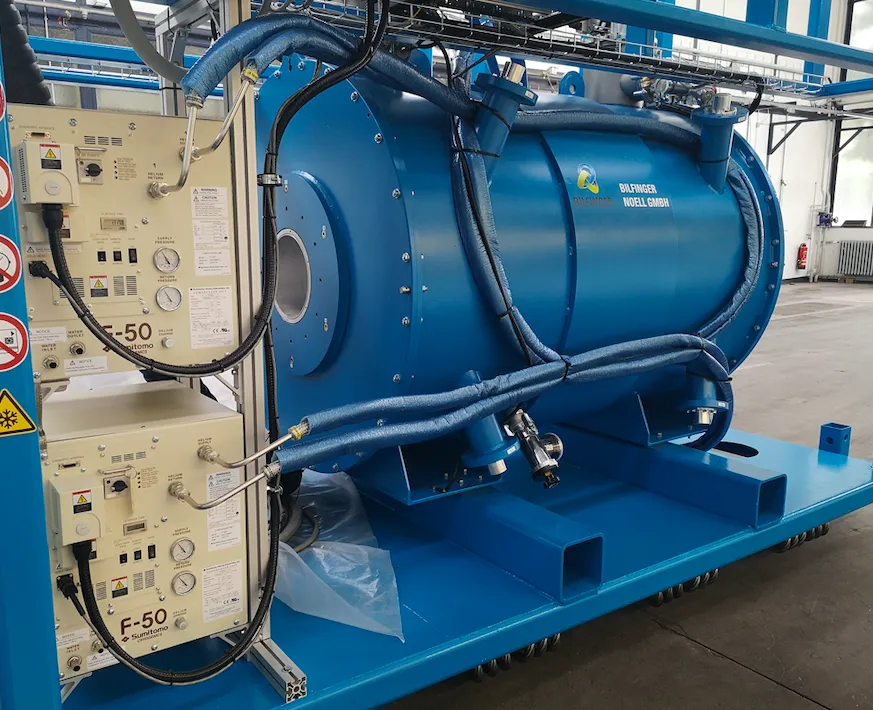
PUMA: antiprotons to probe the surface of radioactive nuclei Antiprotons as a probe to study short-lived isotopes remain unexploited despite past pioneering works with stable nuclei. In particular, low-energy antiprotons offer a unique prospect in terms of sensitivity to the neutron and proton densities at the annihilation site, i.e. in the tail of the nuclear
-
Secrets of beta decay unraveled at ISOLDE
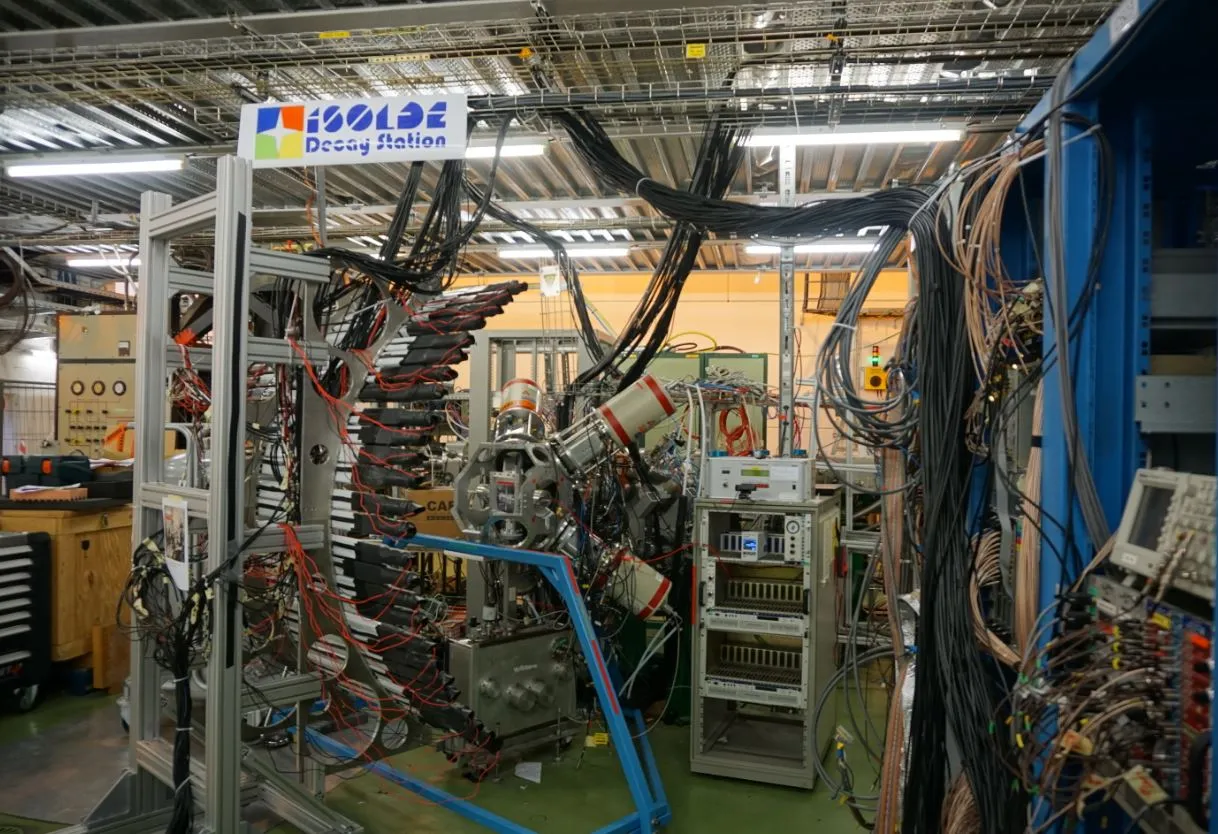
Secrets of beta decay unraveled at ISOLDE Ernest Rutherford, in 1899, separated radioactive emissions into two types: alpha and beta. Becquerel, in 1900, measured the mass-to-charge ratio of beta particles and identified them as electrons. The theory of β decay was developed by Fermi in 1934. However, even now predicting the half-life of beta decaying
-
MADMAX prototype test at CERN
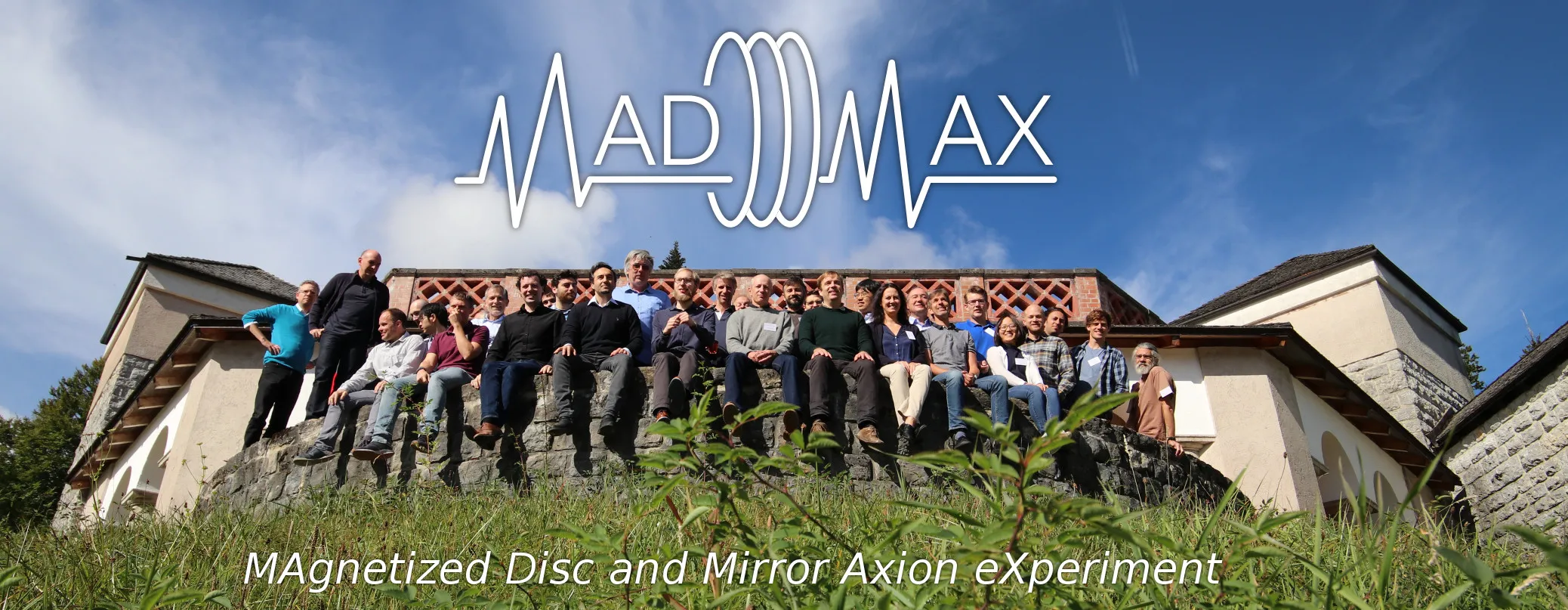
MADMAX prototype test at CERN Axion : A promising Dark Matter candidate For decades astronomical observations have indicated the existence of large quantities of dark matter in the universe. Until today, the nature of dark matter has not been understood and is therefore a central question in fundamental physics. The axion is among to the
-
Closing the gap between beam dump and colliders ALPs searches with NA64
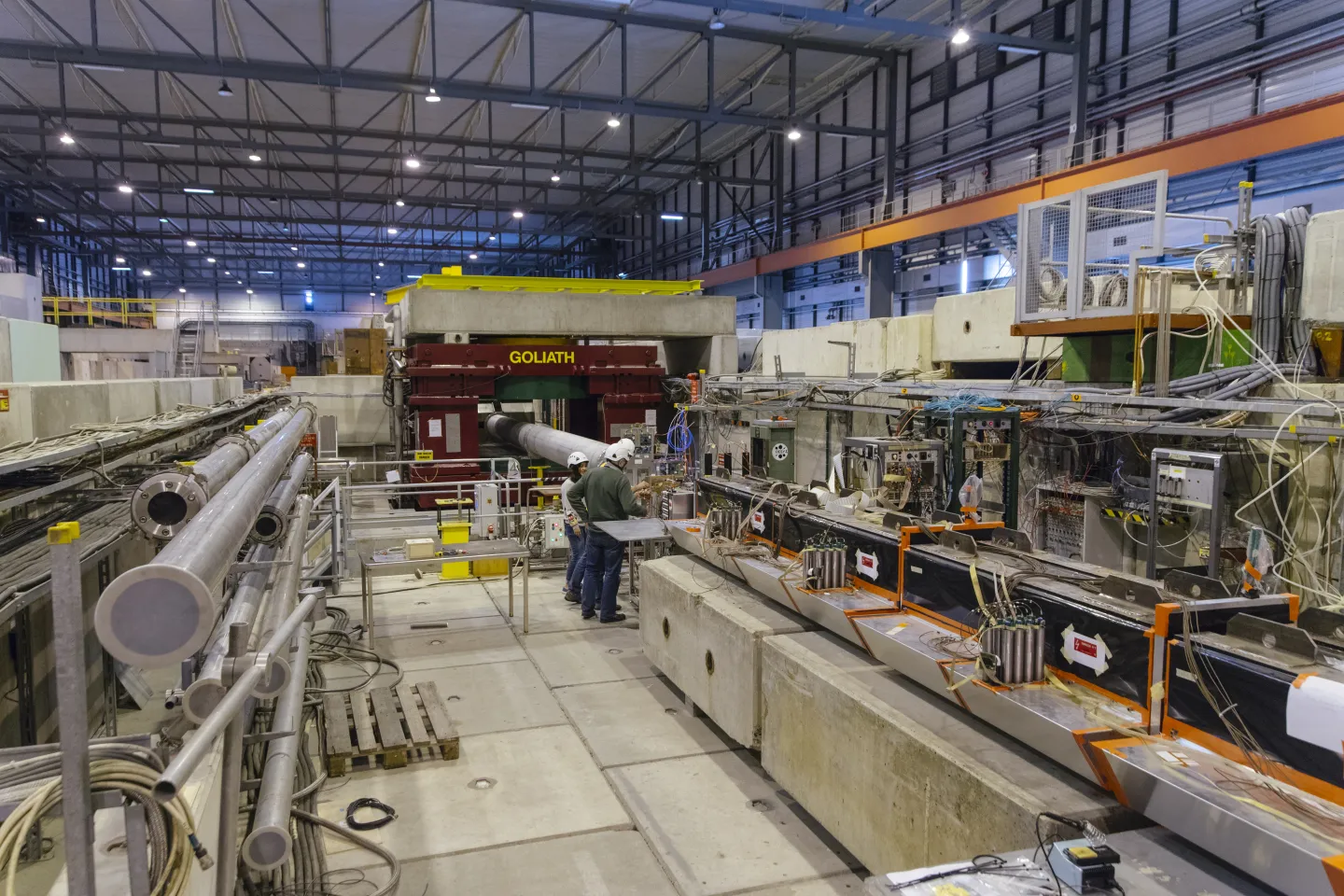
Closing the gap between beam dump and colliders ALPs searches with NA64 The axion was postulated to provide a solution to the “strong CP” problem. This pseudo-scalar particle emerges as a consequence of the breaking of the Peccei-Quinn (PQ) symmetry [1,2,3] (link to EP article on Axions). Typically, models of QCD axions predict a specific
-
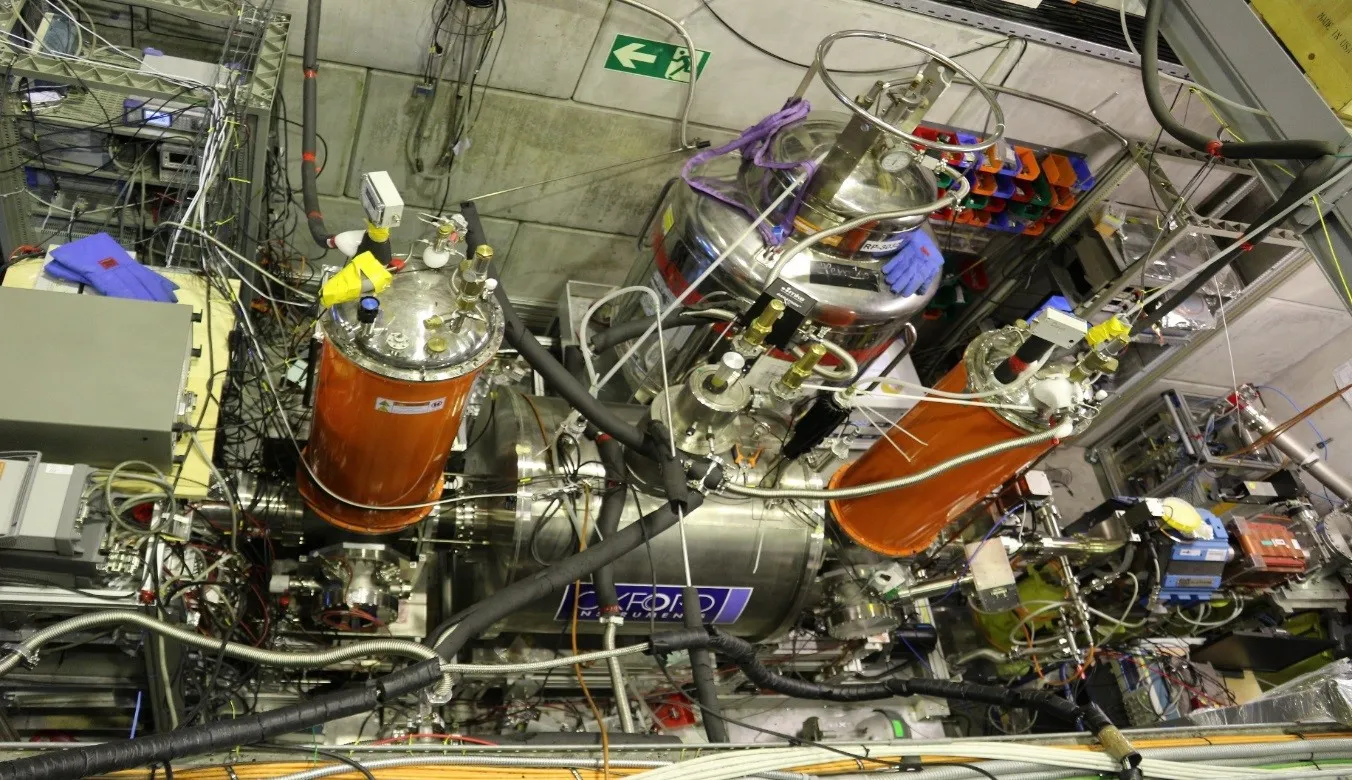
A mobile antiproton reservoir for precision measurements
A mobile antiproton reservoir for precision measurements The BASE collaboration has performed the most precise measurements of the fundamental properties of the antiproton in order to test CPT invariance as fundamental symmetry of the Standard Model [1, 2] and to search for dark matter-antimatter couplings [3]. The course of continuing this journey is set towards