
Tag: April 2025 – June 2025
-
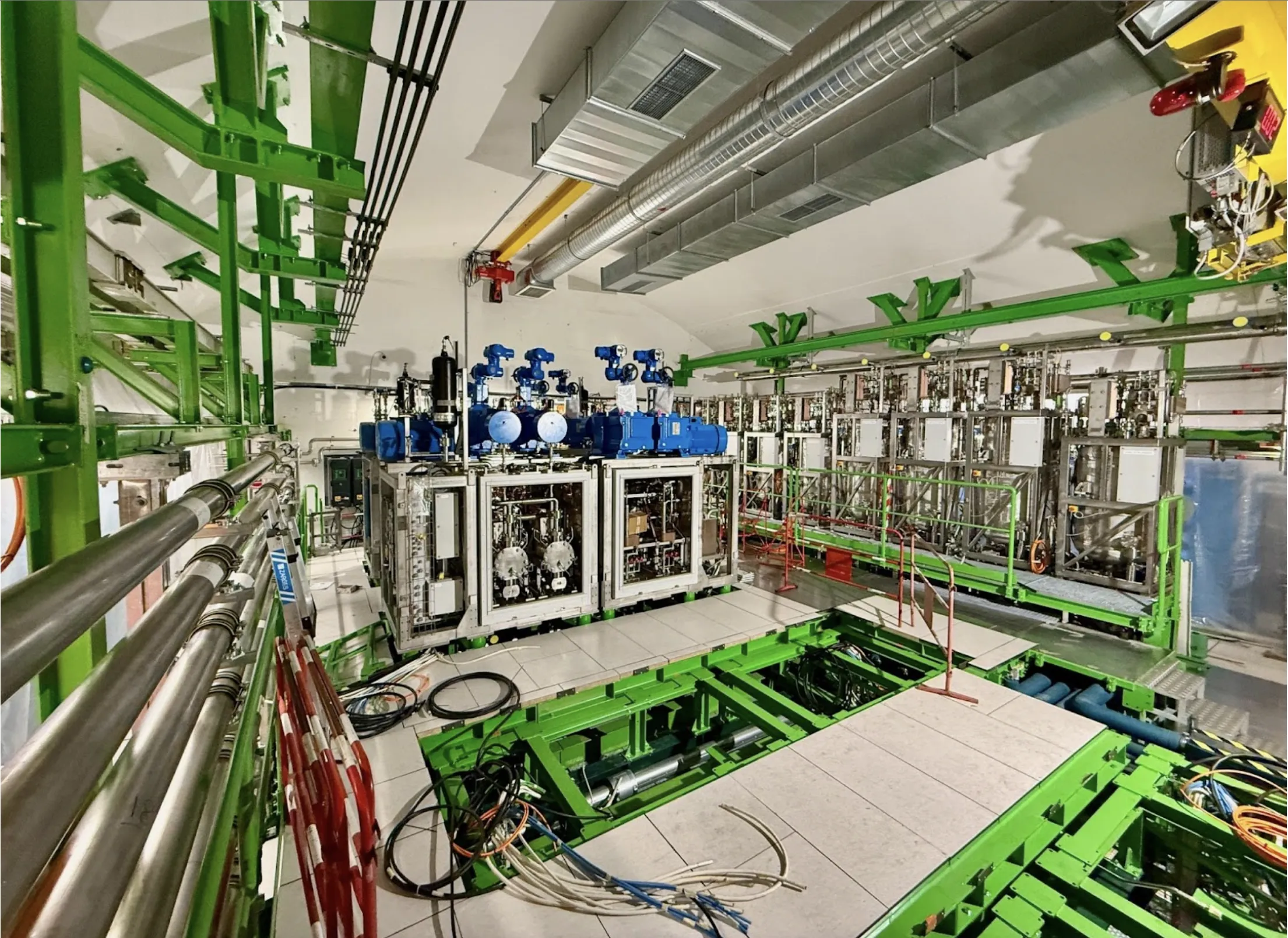
Next-Generation CO₂ Cooling Systems Powering the Future of ATLAS and CMS
Next-Generation CO₂ Cooling Systems Powering the Future of ATLAS and CMS Four CO2 cooling plants and accumulators in the service cavern of CMS in May 2025. (Photo by Jérôme Daguin) During recent shutdown periods, CERN engineers and technicians — in collaboration with the ATLAS and CMS teams — began installing the first units of next-generation
-
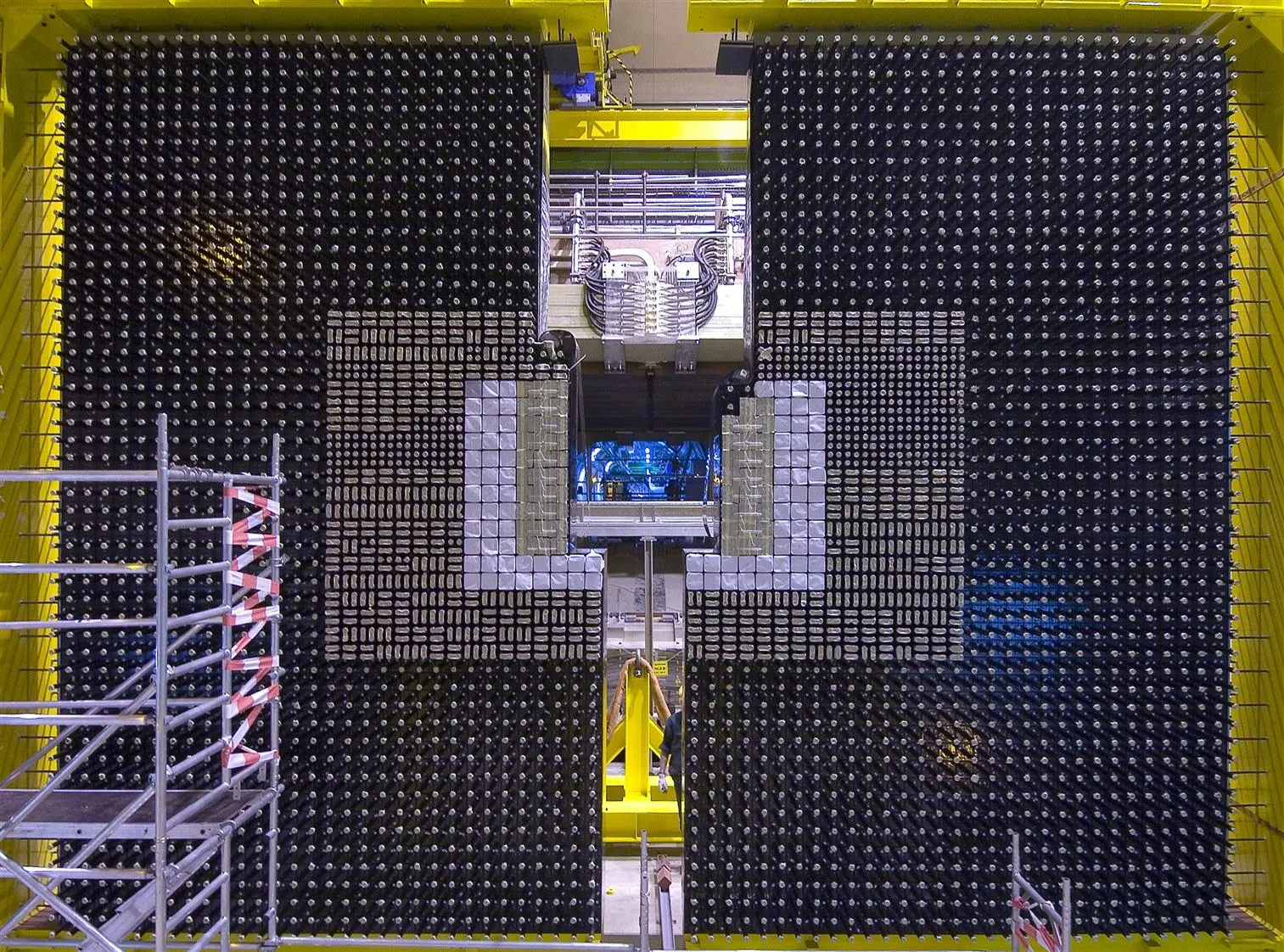
Calorimetry and light-based detectors for future experiments
Calorimetry and light-based detectors for future experiments The strategic R&D programme on technologies for future experiments by the CERN EP department is currently in its second phase from 2024 until 2028. Within this effort, Work Package (WP) 3 focusses on the development of calorimetry and light-based detectors. Particle identification Several detectors use light to detect
-
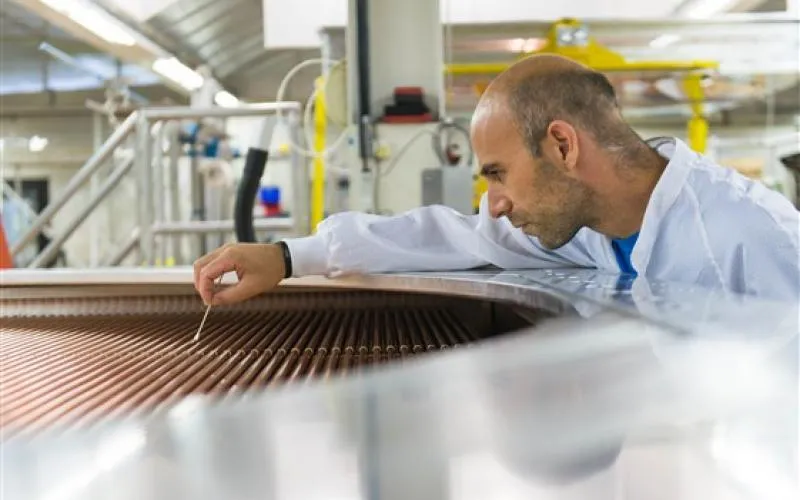
A Day of Innovation: EP R&D 2025 in Focus
A Day of Innovation: EP R&D 2025 in Focus May 7th 2025, 8:15 AM. Many colleagues from all EP groups are gathering in front of the main auditorium. Colourful posters are being exhibited in the lobby. People who don’t see each other often profit from the occasion to chat a bit. It is the 2025
-
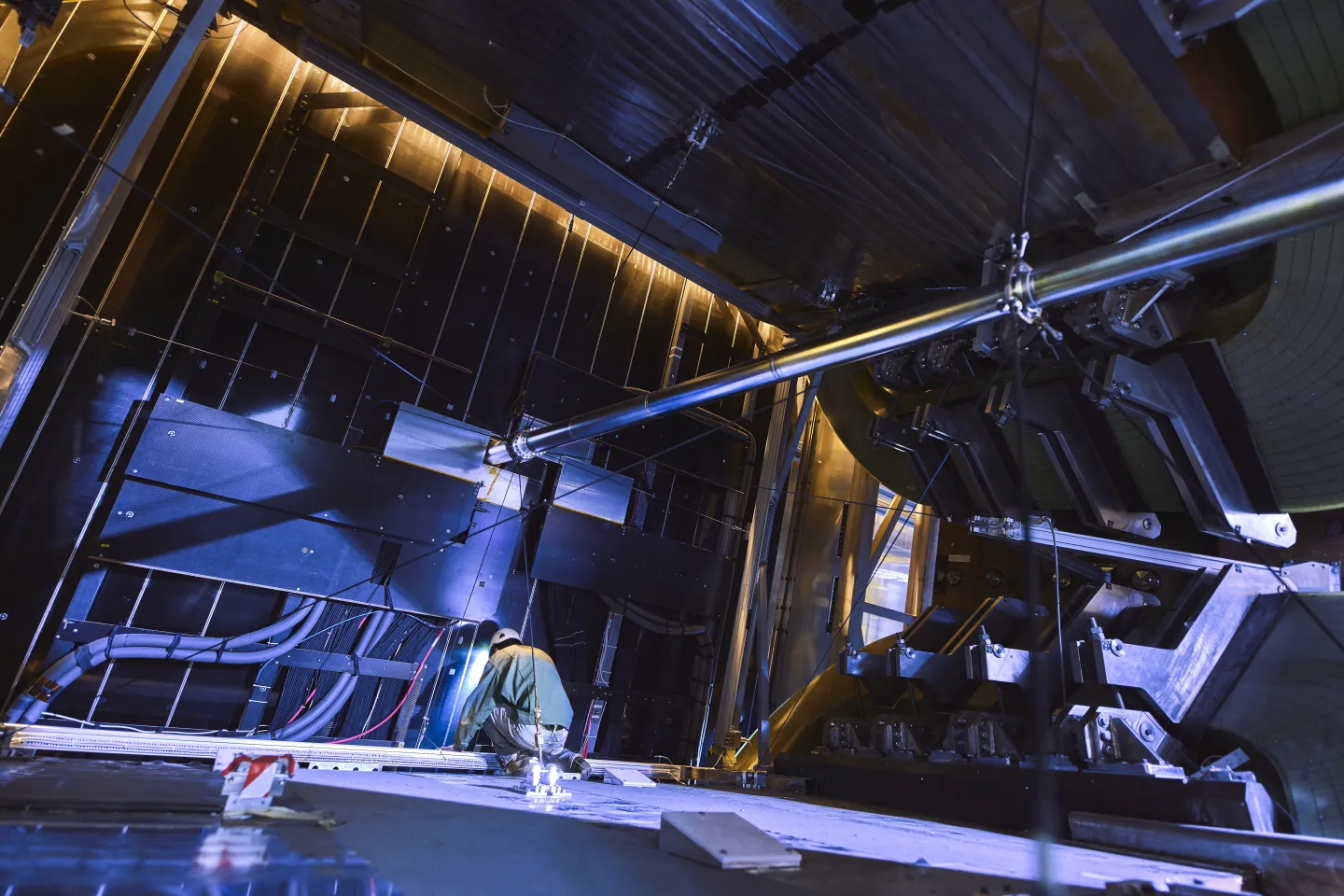
LHCb Upgrade II Scoping Document
LHCb Upgrade II Scoping Document CERN Research Board backs “Middle” scope for LHCb Upgrade II With the CERN Research Board’s endorsement on 14 April 2025, the LHCb Upgrade II Scoping Document has cleared its critical design-scope review, moving the project from proposal to implementation. The Board’s recommendation that the collaboration pursue the Middle configuration—one of
-

New Staff Members and Fellows
New Staff Members and Fellows Emma Kate Anderson Hello! I’m an Australian physicist, I recently joined CERN as a research fellow. My background includes postdoctoral work with the ALPHA experiment, focusing on antihydrogen studies, and a PhD from Stockholm University, where I conducted experiments with the double storage ring DESIREE. I’m now excited to be
-
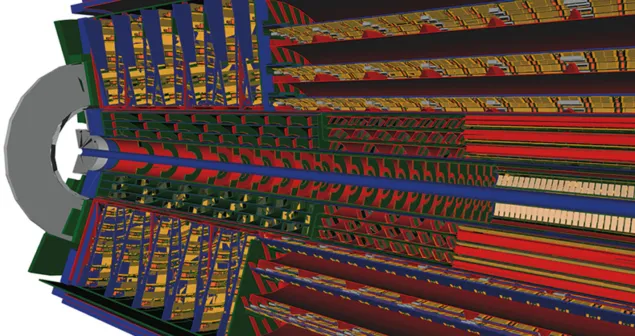
The ATLAS Inner Tracker Integration at CERN
The ATLAS Inner Tracker Integration at CERN Introduction The ATLAS ITk (Inner TracKer) is a new all-silicon tracker that will replace the existing ATLAS Inner Detector (ID) to meet the requirements imposed by the high-radiation and high-hit occupancy environments of the HL-LHC (High-Luminosity LHC). The ITk consists of multiple layers of silicon detectors arranged into
-

A word from the EP Deputy Department Head – June 2025
A word from the EP Deputy Department Head – June 2025 As I write this editorial, the 2025 experimental programme is in full swing, and the high temperatures are a reminder that summer is here. Many of you will be extremely busy with the ongoing data-taking, producing new results for the summer physics conferences, or
-
Shaping Detector Innovation: Highlights from CERN’s EP-DT Group Annual Report
Shaping Detector Innovation: Highlights from CERN’s EP-DT Group Annual Report The Detector Technologies (EP-DT) group has played a vital role in 2024 in advancing experimental capabilities across CERN’s LHC and non-LHC programmes. As outlined in the group’s recently published annual report, their contributions span from detector construction and integration to critical R&D on enabling technologies,
-

FCC Week 2025: First Gathering After Feasibility Study to Discuss the Way Forward
FCC Week 2025: First Gathering After Feasibility Study to Discuss the Way Forward FCC Week 2025, held in Vienna, provided a timely opportunity to review the project’s scientific and technical progress, ushering in the next phase of design and development. The results of the Feasibility Study will serve as a key input to the next
-

CWDM Link: A High-Bandwidth Optical Upgrade for LHC Beam Instrumentation
CWDM Link: A High-Bandwidth Optical Upgrade for LHC Beam Instrumentation The Versatile Link project[1] was initially developed to provide a point-to-point radiation-hardened optical link common to most CERN experiments which upgraded during Long Shutdown 2 (LS2). The Beam Instrumentation group (SY-BI) also adopted it as backbone of the SPS beam instrumentation (BI) front-end electronics upgrade[2],