
Tag: CMS
-
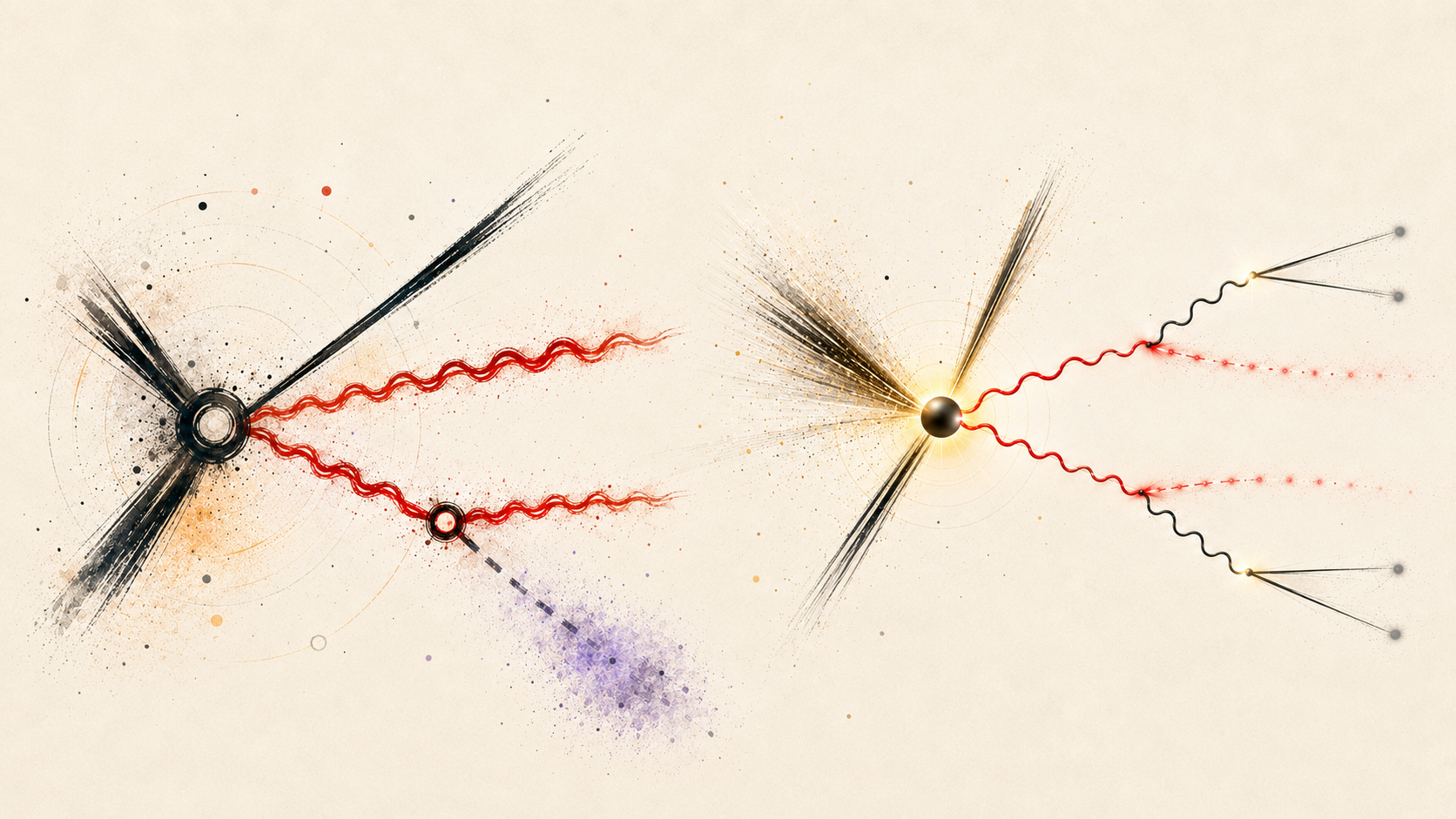
New ATLAS and CMS searches narrow the gap for compressed higgsinos
New ATLAS and CMS searches narrow the gap for compressed higgsinos Supersymmetry plays a prominent role in the landscape of models that push beyond the Standard Model. Higgsinos, the supersymmetric partners of the Higgs boson, may help in addressing a number of unsolved puzzles, particularly if their masses are near the electroweak scale. Not only
-
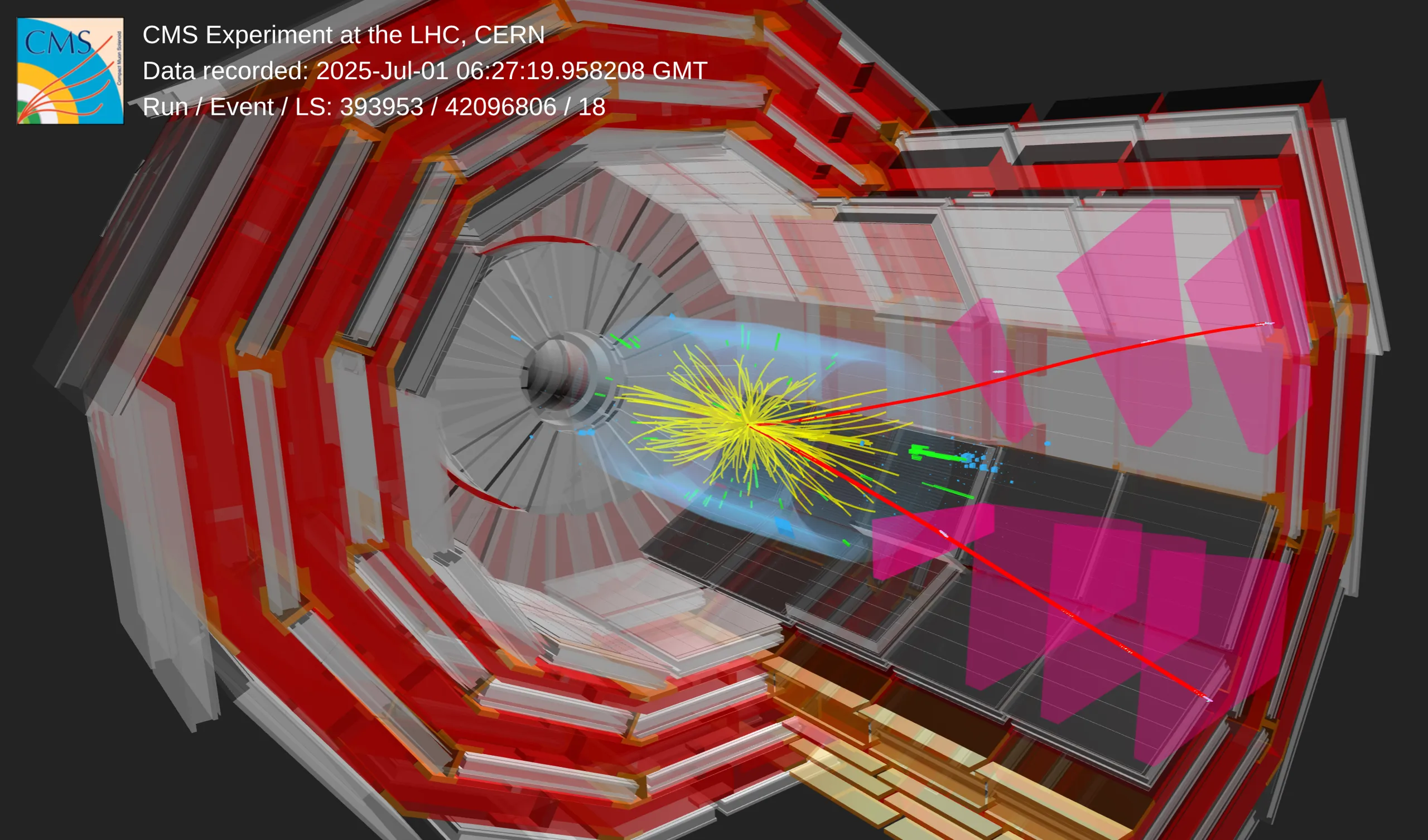
Light ions bring CMS closer to the onset of QGP-like behaviour
Light ions bring CMS closer to the onset of QGP-like behaviour What are the smallest droplets of strongly interacting matter that exhibit colour deconfinement? This question has become one of the most intriguing frontiers in heavy-ion physics. At very high temperatures and densities, quantum chromodynamics predicts that quarks and gluons are no longer confined inside
-
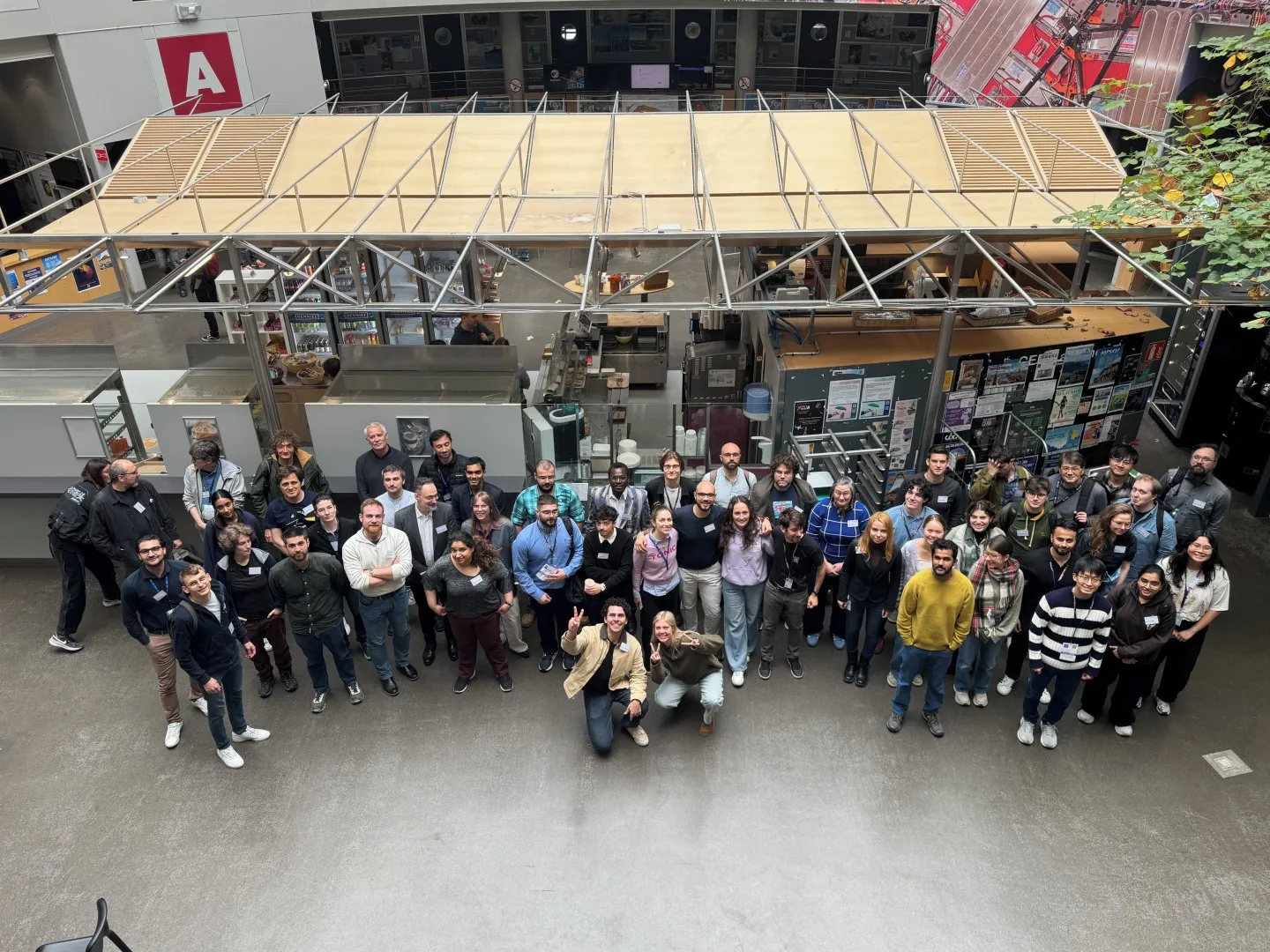
AI for Gravitational Waves: Building Bridges Between Scientific Communities
AI for Gravitational Waves: Building Bridges Between Scientific Communities As gravitational-wave observatories enter a new phase of sensitivity, scale and scientific ambition, the challenge is no longer only to detect faint ripples in spacetime. It is also to analyse, interpret and respond to them fast enough to open new windows on the Universe. This was
-
Rucio crosses the exabyte horizon
Rucio crosses the exabyte horizon When we last wrote in these pages about Rucio, ATLAS had just passed the half-exabyte mark and the community counted around thirty organisations. Six years on, a threshold that was then a distant projection has been crossed: both ATLAS and CMS, the two largest LHC experiments, now each manage more
-

Towards monitoring in Run 4 and beyond: LHC experiments exchange perspectives on data quality at the HL-LHC
Towards monitoring in Run 4 and beyond: LHC experiments exchange perspectives on data quality at the HL-LHC In March of 2026, experts from ALICE, ATLAS, CMS and LHCb gathered at CERN for a dedicated workshop on Data Quality Monitoring (DQM), bringing together developers, coordinators and detector specialists to discuss how the LHC experiments monitor the
-
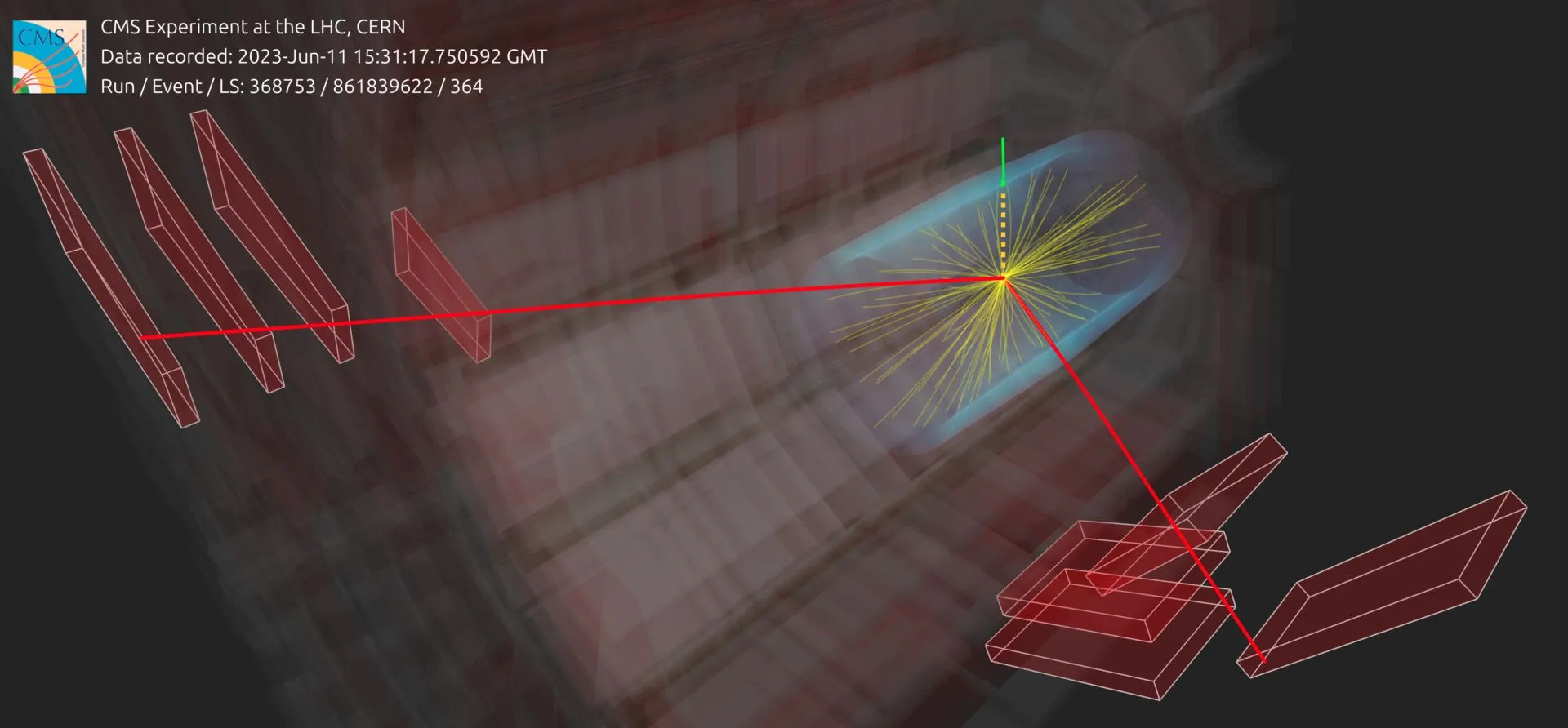
Out of the loop: CMS advances in the search for a rare Higgs boson decay
Out of the loop: CMS advances in the search for a rare Higgs boson decay Completing the Higgs boson’s profile requires probing some of its rarest decay modes. Among the few still awaiting observation is the decay into a Z boson and a photon (H → Zγ), which occurs in only about one out of
-

A word from the EP Department Head – Spring 2026
A word from the EP Department Head – Spring 2026 Dear Colleagues, It is my pleasure to share the first 2026 edition of the EP newsletter with you, in my new role as EP Department Head. CERN’s new management took office in January, with a revised structure of Sectors and Departments. In EP, we reorganised
-

A word from the EP Department Head – Spring 2026
A word from the EP Department Head – Spring 2026 Dear Colleagues, It is my pleasure to share the first 2026 edition of the EP newsletter with you, in my new role as EP Department Head. CERN’s new management took office in January, with a revised structure of Sectors and Departments. In EP, we reorganised
-
New Staff Members and Fellows
New Staff Members and Fellows Maximilian Babeluk Hi, I’m Max. I recently joined the ALICE ITS3 team, where I work on sensor testing, functional verification, and in the future also chip design – particularly on MOSAIX. My main activities include testing and yield assessment across multiple integration levels (wafer probing to system tests), including data
-
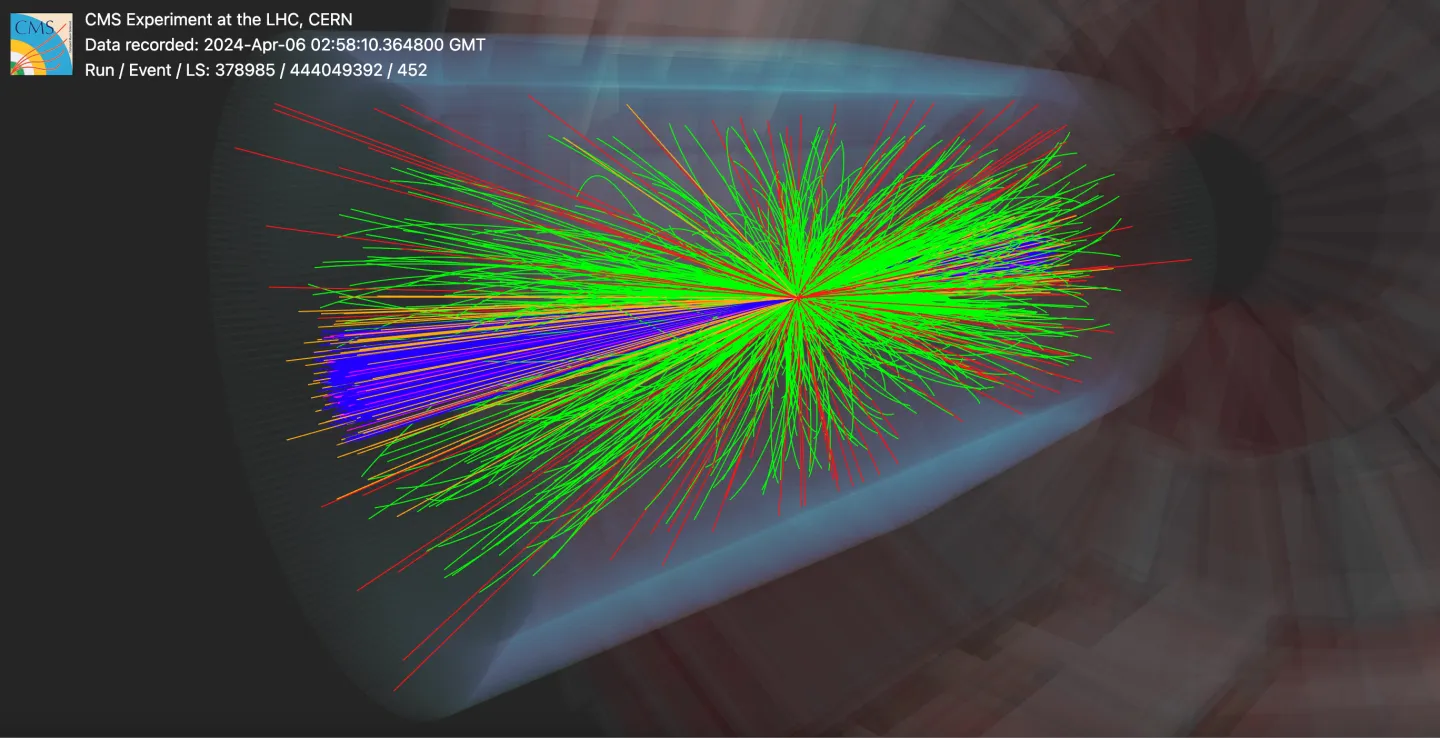
From particle flow to learned reconstruction at CMS
From particle flow to learned reconstruction at CMS An interactive version of the above event display can be found on this page. For more than a decade, particle-flow reconstruction has been at the core of CMS event interpretation. It was instrumental in the discovery of the Higgs boson and remains foundational for virtually every analysis