
Tag: INTERVIEWS
-
What is the W boson mass trying to tell us?
What is the W boson mass trying to tell us? Introduction In April this year the CDF collaboration shocked the particle physics world with a new measurement of the mass of the W boson particle [1], with a precision better than all previous results combined, and a value of the W mass higher than the
-
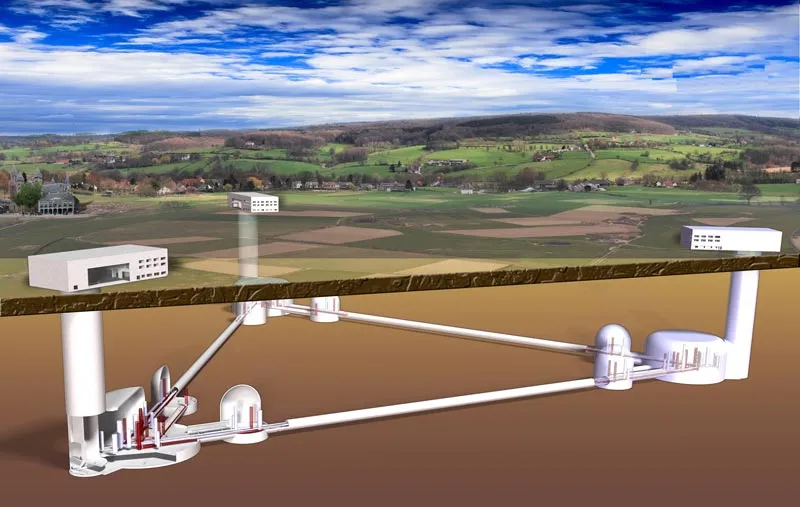
The proposed Einstein Telescope gravitational wave observatory gains ground
The proposed Einstein Telescope gravitational wave observatory gains ground With the first direct detection of a gravitational wave event in 2015, we are at the beginning of a rapidly growing field of science that offers us a whole new way to study the Universe. Gravitational waves allow us to measure the vibrations in space and
-
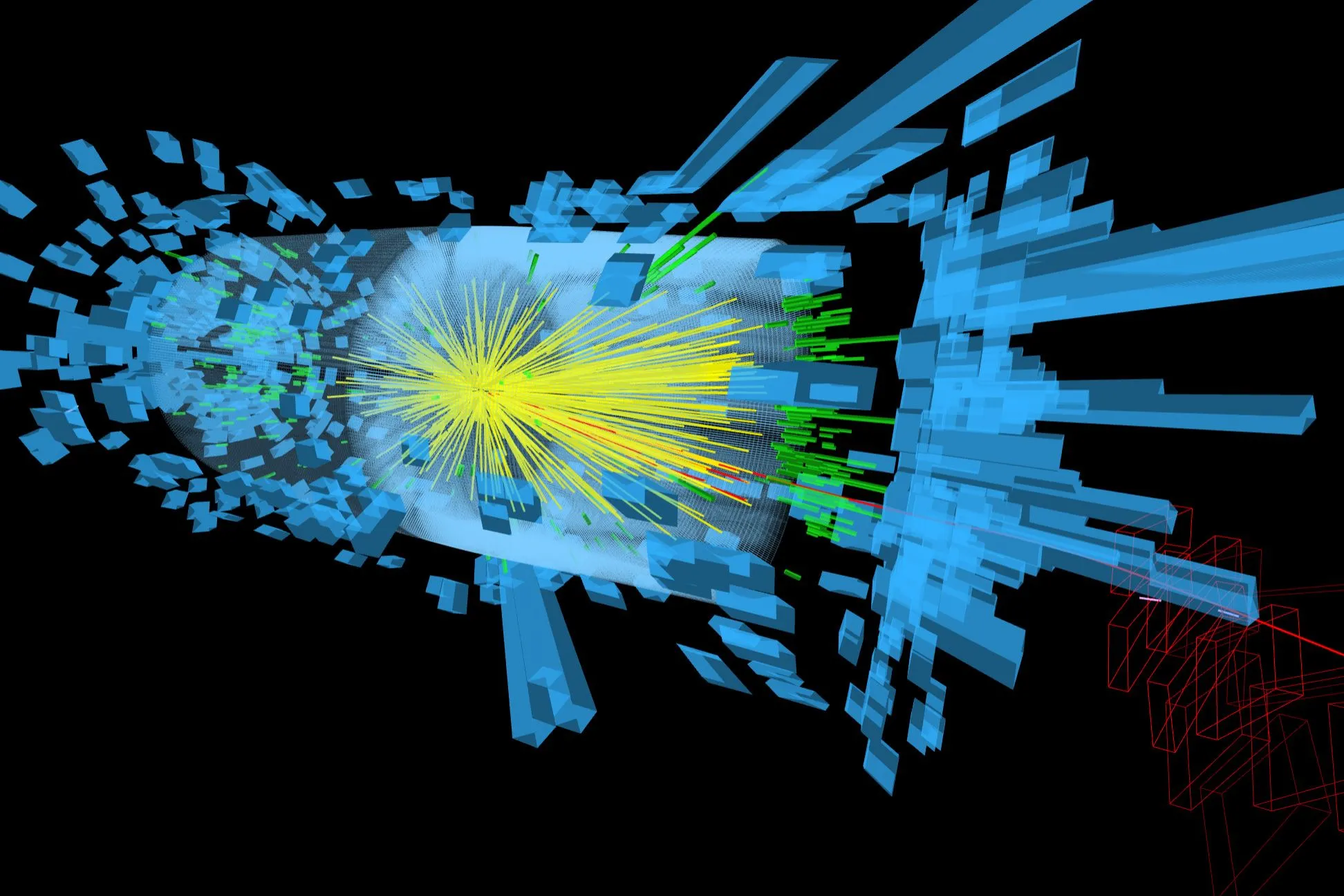
Non-resonant searches open new avenues in the hunt for axion-like particles
Non-resonant searches open new avenues in the hunt for axion-like particles Axion-like-particles (ALPs) are a vast family of hypothetical particles. They are among the most compelling candidates for physics beyond the Standard Model (SM), because their existence is associated to broken symmetries, which are ubiquitous in theories addressing any of the big open questions, from
-
New prospects for the Physics Beyond Colliders programme
New prospects for the Physics Beyond Colliders programme Particle physics is often equated with high energy collider experiments. However, over recent years it has become increasingly clear that high intensity and high precision experiments offer significant, complementary opportunities to explore physics beyond the Standard Model. CERN’s accelerator complex offers an unprecedented variety of beams and
-

PHYSTAT – Systematics Workshop
PHYSTAT – Systematics Workshop The PHYSTAT-Systematics meeting, held remotely in early November, was the latest in a series of PHYSTAT events. Begun in 2000, these were the first Workshops focused on statistical issues in particle physics. They started at CERN, which has hosted 3 further meetings. An important feature of PHYSTAT events is the participation
-
Introducing the “25 by 25” initiative
Introducing the "25 by 25" initiative The principles of diversity and inclusiveness are enshrined in CERN’s Code of Conduct. They have been strategic for CERN as they lie at the heart of excellence while also reflecting the diversity of its Member States. Furthermore, the need to intensify the efforts to meet these principles is reflected
-
Findings of the ECFA Roadmap for R&D on Detector Technologies
Findings of the ECFA Roadmap for R&D on Detector Technologies In two previous newsletter editions (1, 2) the process to develop a Roadmap for R&D on Detector Technologies was reported. As recommended in the European Strategy for Particle Physics Update (EPPSU) (3), ECFA has set up the Detector R&D Panel which has led this process.
-
AWAKE gears up for its Second Run
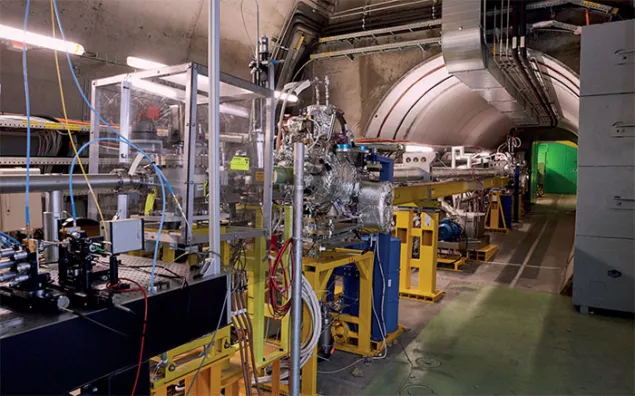
AWAKE gears up for its Second Run CERN’s Long Shutdown 2 (LS2) proved an excellent opportunity for the Advanced Wakefield (AWAKE) experiment to consolidate its plans and prepare for its second run following the successful results from Run 1. We met with Giovanni Zevi Della Porta, the run coordinator, to discuss the lessons carried forward
-

How different are electrons and muons after all? Discovering lepton flavour universality violating new physics
How different are electrons and muons after all? Discovering lepton flavour universality violating new physics Introduction The discovery of the electron in 1897 by Thomson, Wiechert and Kaufmann might be considered the starting date of elementary particle physics, as still today the electron is considered to be a fundamental particle. From there on it took
-

New pathways in axion searches
New pathways in axion searches Peering through telescopes we have found a deluge of evidence for dark matter. Given the speed that galaxies rotate, as well as theoretical calculations about the evolution of large-scale structure in the Universe, dark matter should make up 85% of the matter in the Universe. Despite considerable evidence in support