
Tag: Special Feature
-
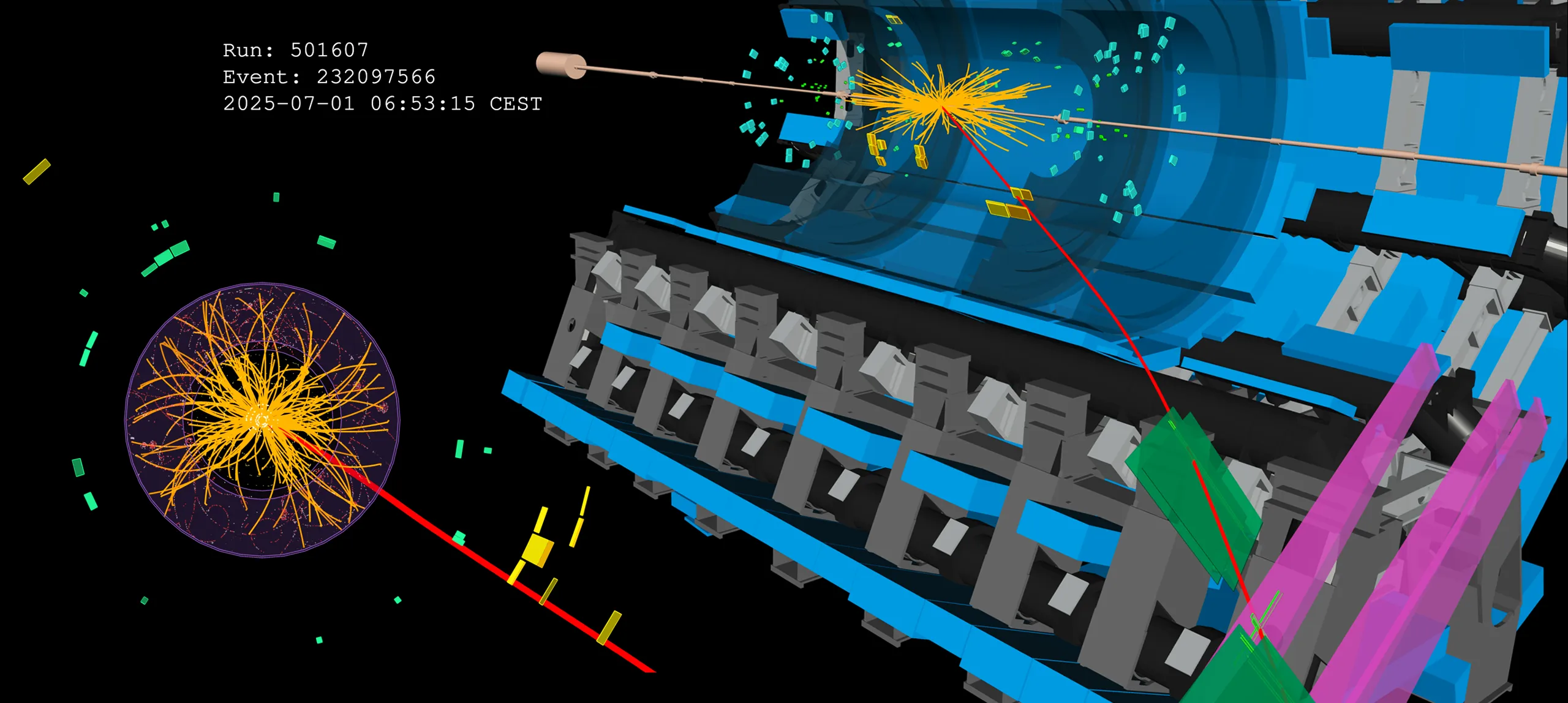
ATLAS explores the quark–gluon plasma with light-ion collisions
ATLAS explores the quark–gluon plasma with light-ion collisions In July 2025, ATLAS recorded the first-ever collisions of light ions at the LHC — oxygen–oxygen (O–O) and neon–neon (Ne–Ne) — marking a new phase in the study of strongly interacting matter. These short, intense runs provided a unique opportunity to explore the transition between conventional hadronic
-
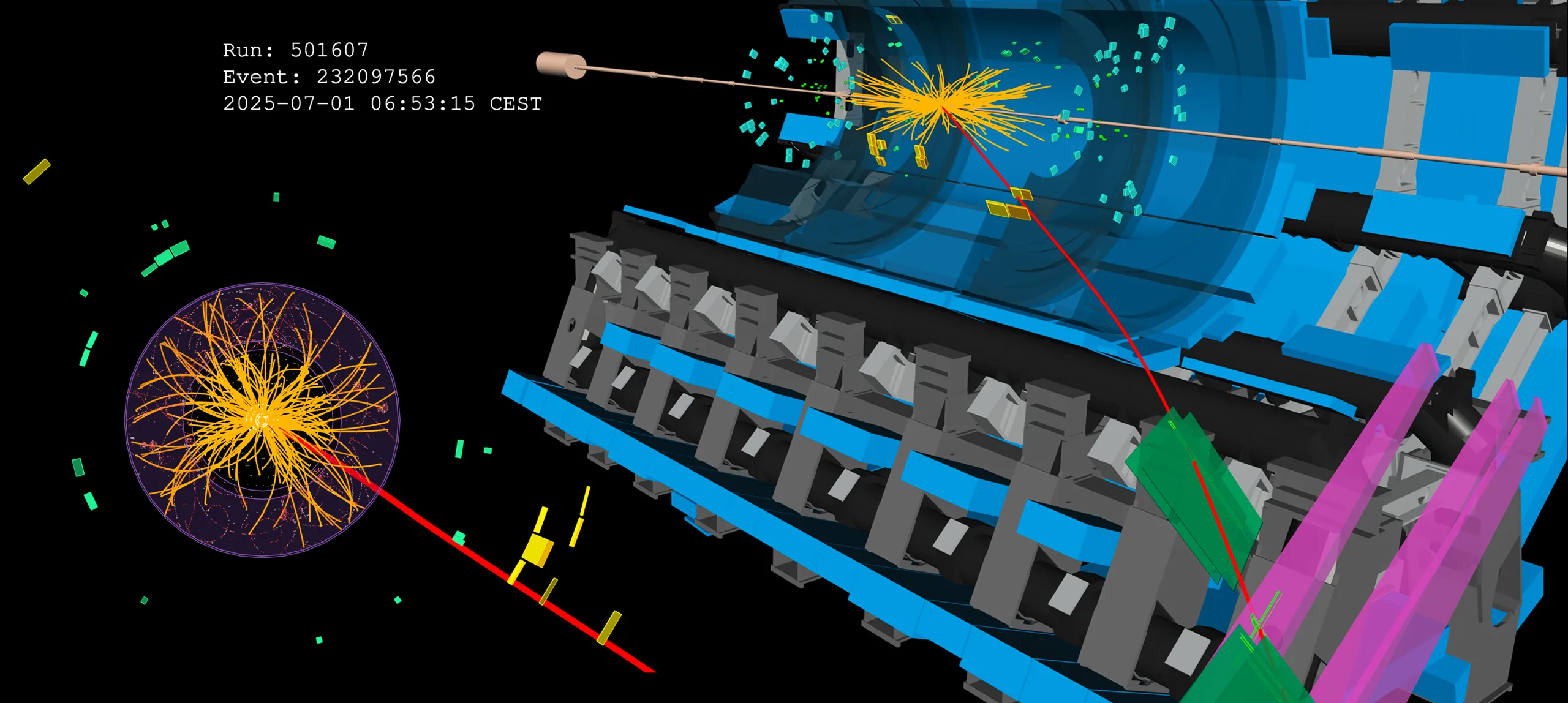
ATLAS explores the quark–gluon plasma with light-ion collisions
ATLAS explores the quark–gluon plasma with light-ion collisions In July 2025, ATLAS recorded the first-ever collisions of light ions at the LHC — oxygen–oxygen (O–O) and neon–neon (Ne–Ne) — marking a new phase in the study of strongly interacting matter. These short, intense runs provided a unique opportunity to explore the transition between conventional hadronic
-
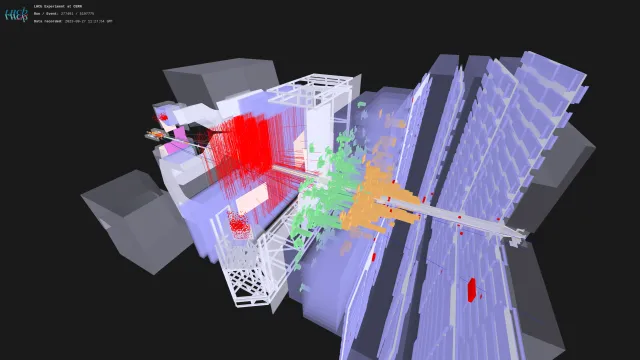
LHCb explores new physics in special light-ion LHC runs
LHCb explores new physics in special light-ion LHC runs The LHC carried out a special run programme early summer. First results were reported by the ALICE, ATLAS, CMS and LHCb experiments at the Initial Stages of High-Energy Nuclear Collisions conference. These results were also presented at a CERN seminar and reported in a CERN news.
-
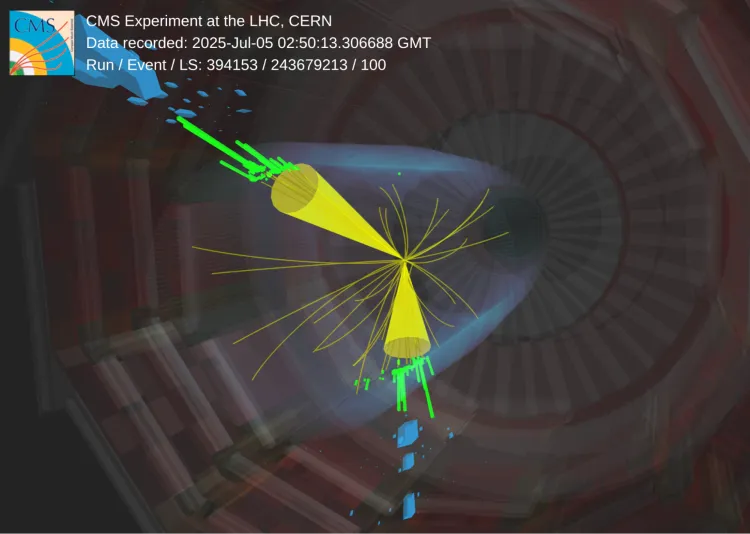
CMS explores light-ion collisions: suppression, scaling, and collectivity
CMS explores light-ion collisions: suppression, scaling, and collectivity The CMS experiment has reported first results from the LHC’s dedicated oxygen–oxygen (O–O) and neon–neon (Ne–Ne) collision run, offering an unprecedented look at quark–gluon plasma (QGP) formation in light-ion systems. These studies address long-standing questions about the minimal conditions required for QGP droplets to form and how
-
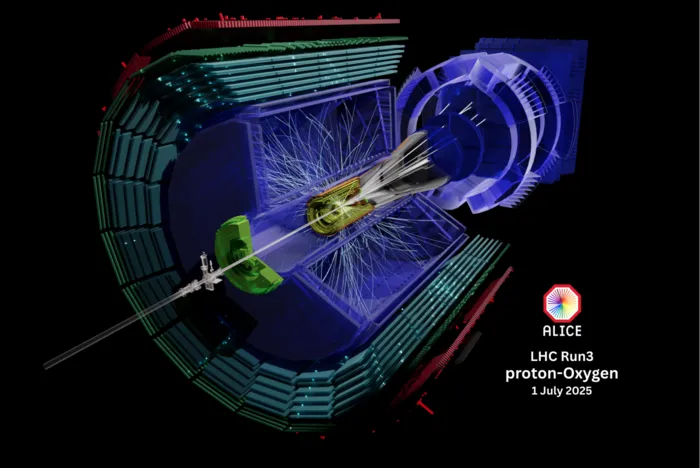
ALICE explores the quark–gluon plasma with light-ion collisions
ALICE explores the quark–gluon plasma with light-ion collisions In July 2025, the ALICE experiment took part in the LHC’s first-ever light-ion campaign, colliding oxygen–oxygen (O–O) and neon–neon (Ne–Ne) nuclei at a centre-of-mass energy of 5.36 TeV per nucleon pair. The short but intense runs offered a rare opportunity to explore the transition between ordinary hadronic
-
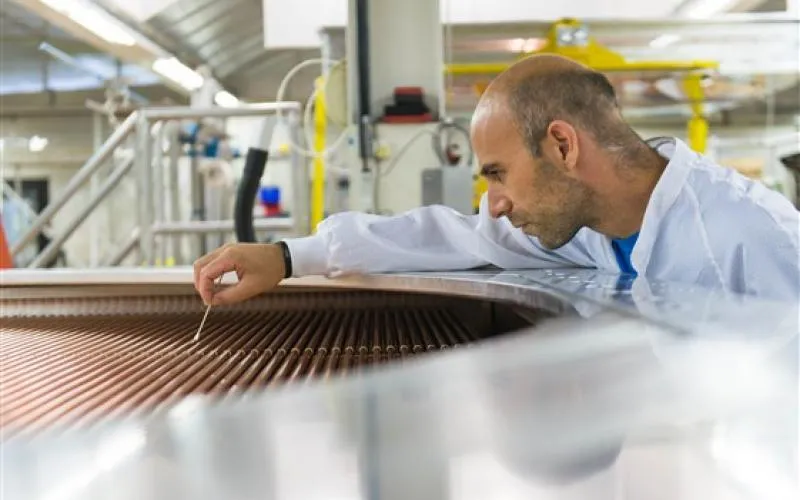
A Day of Innovation: EP R&D 2025 in Focus
A Day of Innovation: EP R&D 2025 in Focus May 7th 2025, 8:15 AM. Many colleagues from all EP groups are gathering in front of the main auditorium. Colourful posters are being exhibited in the lobby. People who don’t see each other often profit from the occasion to chat a bit. It is the 2025
-
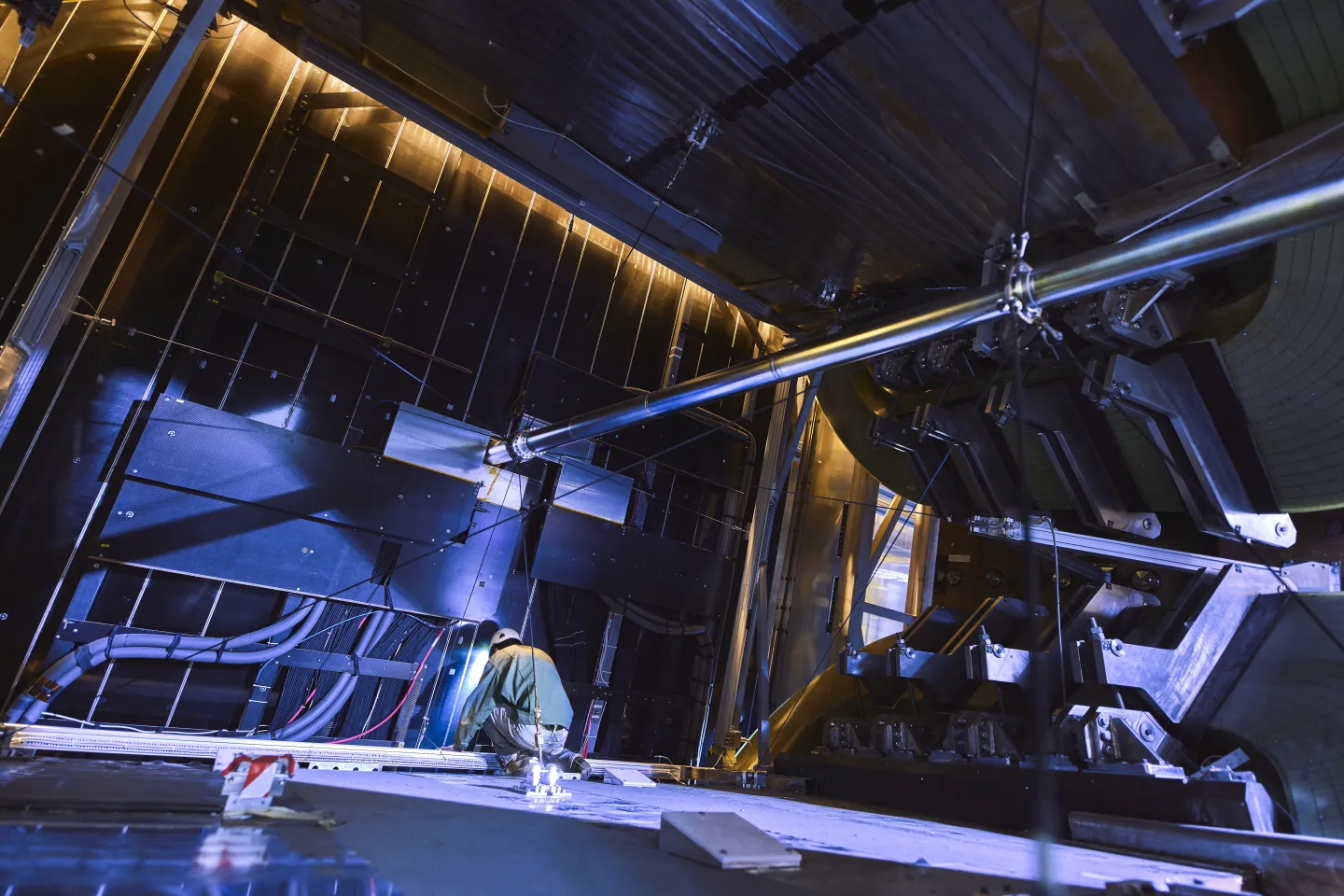
LHCb Upgrade II Scoping Document
LHCb Upgrade II Scoping Document CERN Research Board backs “Middle” scope for LHCb Upgrade II With the CERN Research Board’s endorsement on 14 April 2025, the LHCb Upgrade II Scoping Document has cleared its critical design-scope review, moving the project from proposal to implementation. The Board’s recommendation that the collaboration pursue the Middle configuration—one of
-
Shaping Detector Innovation: Highlights from CERN’s EP-DT Group Annual Report
Shaping Detector Innovation: Highlights from CERN’s EP-DT Group Annual Report The Detector Technologies (EP-DT) group has played a vital role in 2024 in advancing experimental capabilities across CERN’s LHC and non-LHC programmes. As outlined in the group’s recently published annual report, their contributions span from detector construction and integration to critical R&D on enabling technologies,
-
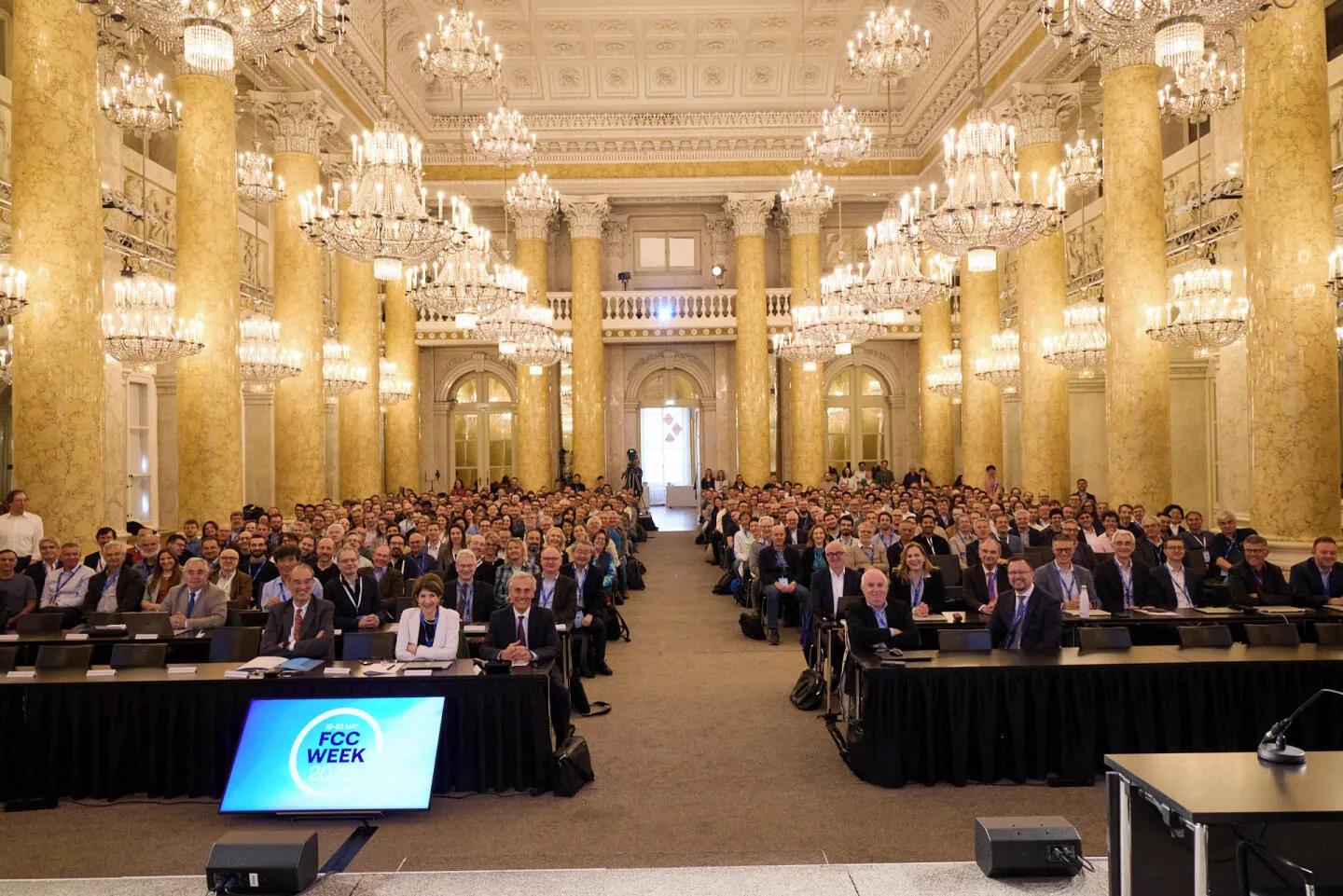
FCC Week 2025: First Gathering After Feasibility Study to Discuss the Way Forward
FCC Week 2025: First Gathering After Feasibility Study to Discuss the Way Forward FCC Week 2025, held in Vienna, provided a timely opportunity to review the project’s scientific and technical progress, ushering in the next phase of design and development. The results of the Feasibility Study will serve as a key input to the next
-
Pushing the Frontiers of Detector Innovation: EP R&D Programme
Pushing the Frontiers of Detector Innovation: EP R&D Programme The Experimental Physics (EP) R&D programme at CERN continues to serve as a cornerstone for technological innovation in particle physics, developing the next generation of detector systems that will empower future discoveries. Launched in 2020, the programme supports the long-term vision of high-energy physics, contributing to