
Category: Newsletter
-
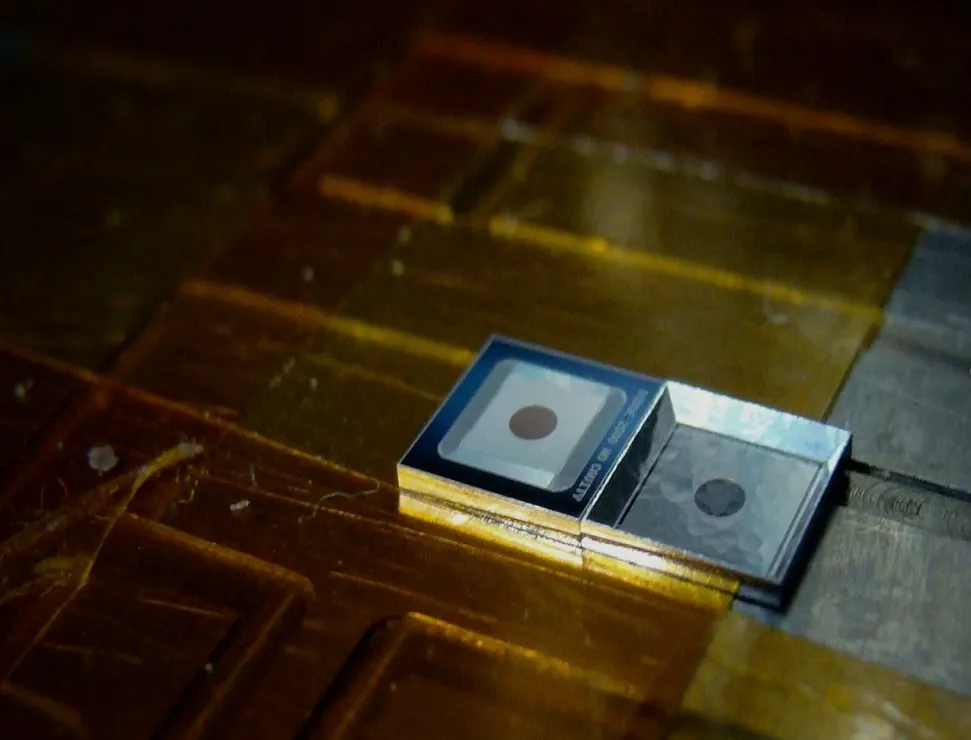
Characterization, modelling and radiation hardening of silicon-detectors for future experiments.
Characterization, modelling and radiation hardening of silicon-detectors for future experiments. The Strategic R&D Programme on Technologies for Future Experiments of the EP Department (EP R&D) develops the detector technologies needed for the next generation of High Energy Physics experiments and recently concluded phase I (2020-2023) of its ambitious work plan with a close-out report [1].
-

A word from the EP Deputy Department Head – September 2024
A word from the EP Deputy Department Head – September 2024 Dear colleagues, As I write in mid-September, the days are getting shorter and colder, and we are in the midst of marking the 70th birthday of CERN, with the community party on 17th September, and the official celebrations on 1st October. It is an
-
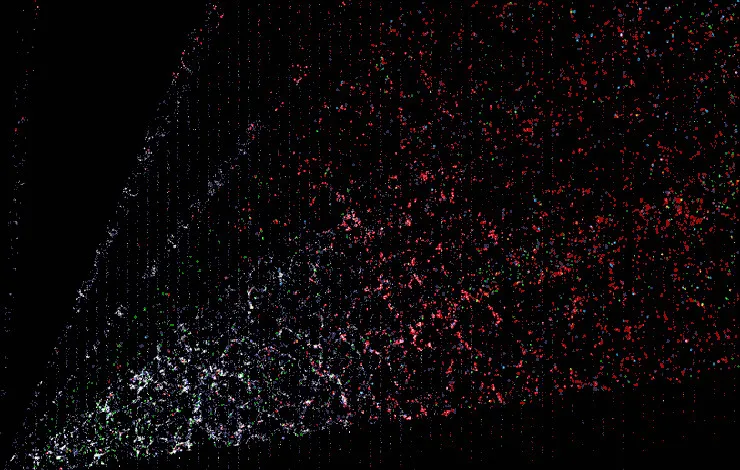
DESI-Y1 and the Mystery of the Neutrino Mass
DESI-Y1 and the Mystery of the Neutrino Mass In April 2024, the Dark Energy Spectroscopic Instrument (DESI) collaboration released their first cosmological results [1]. These results made the news primarily because they showed some hints of dynamical dark energy (see the article in the same issue of the EP newsletter). However, they also had key
-
DESI may have initiated a paradigm shift in cosmology
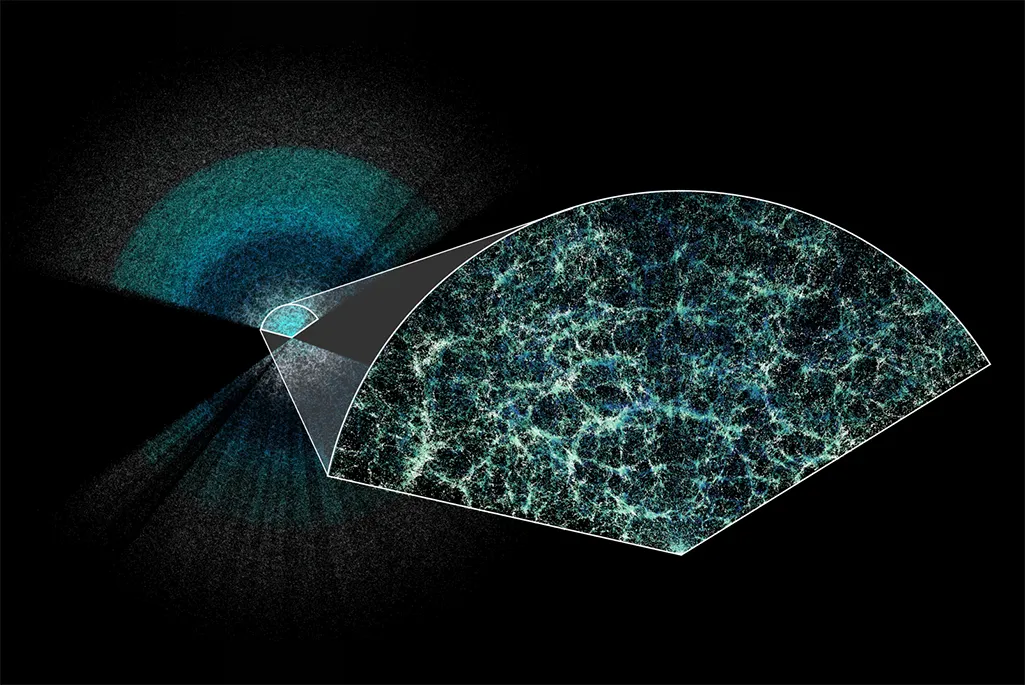
DESI may have initiated a paradigm shift in cosmology DESI has made the largest 3D map of our universe to date. Earth is at the center of this thin slice of the full map. In the magnified section, it is easy to see the underlying structure of matter in our universe. Claire Lamman/DESI collaboration. The
-
From Upgrade to Upsurge: ALICE Experiment Achieves Milestone Luminosity in Run 3
From Upgrade to Upsurge: ALICE Experiment Achieves Milestone Luminosity in Run 3 The ALICE experiment has successfully resumed physics data-taking in RUN 3 following a major upgrade of its detectors and data acquisition system during the LHC Long Shutdown 2 (LS2). While a portion of the delivered luminosity in 2022 was allocated to commissioning the
-
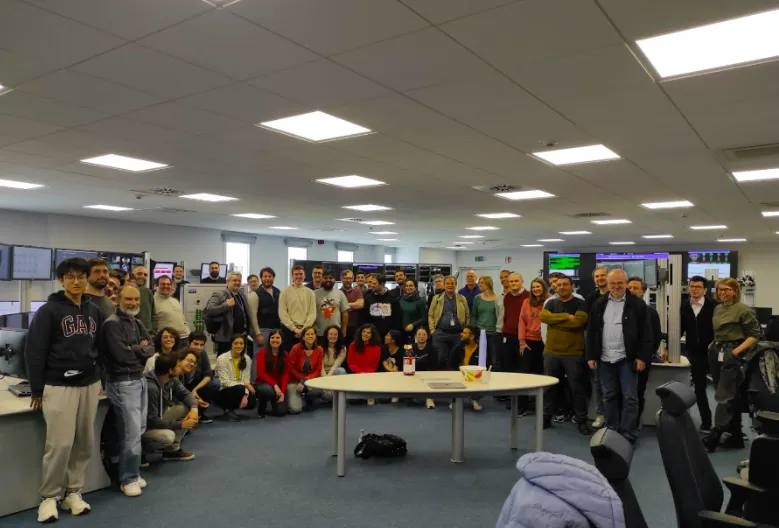
Navigating Challenges: LHCb’s Milestone Achievements and Intensive Data Collection in 2024
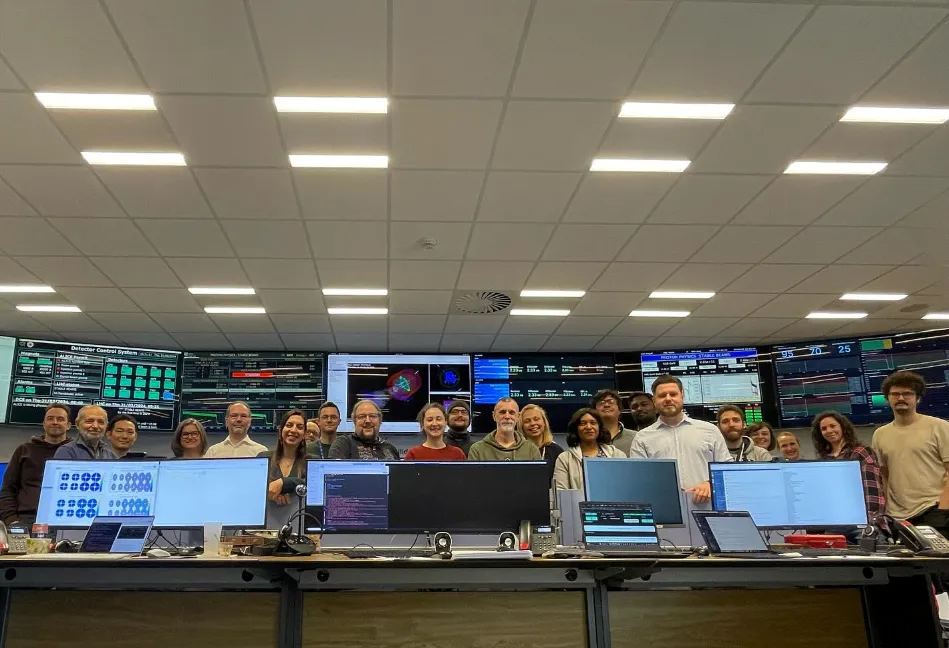
Navigating Challenges: LHCb's Milestone Achievements and Intensive Data Collection in 2024 Photo of LHCb collaboration members gathered in the control room in April 2024. The LHCb experiment achieved significant milestones by the end of 2023, despite the challenges related to the LHC vacuum incident in the Vertex Locator (VELO) volume and the premature stop of
-
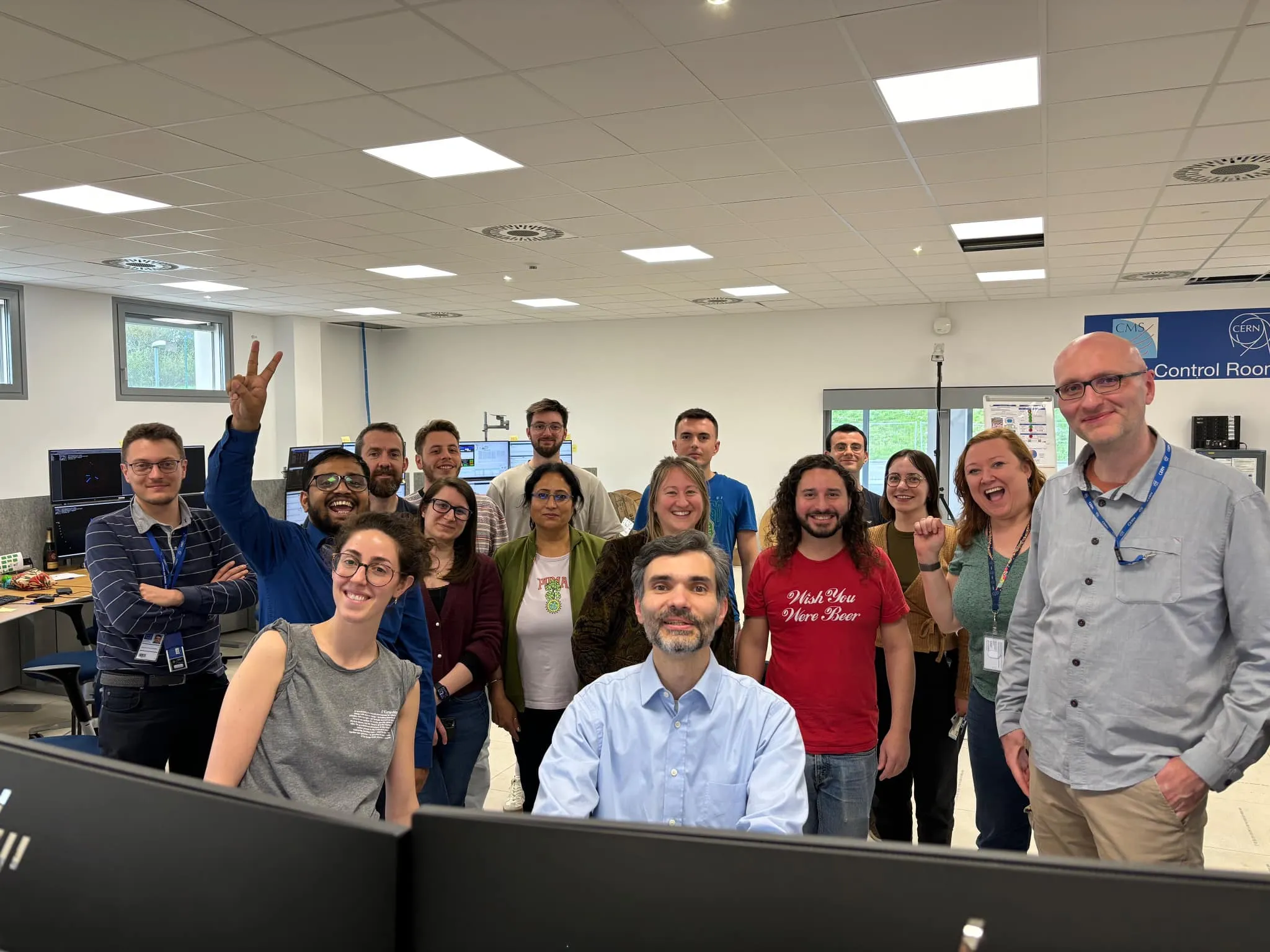
CMS Detector in 2024: Advancements in Data Collection and Detector Performance
CMS Detector in 2024: Advancements in Data Collection and Detector Performance On April 5th, 2024, stable beams returned to the LHC, marking the official start of the 2024 physics data-taking season. The photo captures CMS’ Run Coordination team in the newly upgraded CMS control center, ready to oversee the exciting season ahead. The CMS detector
-
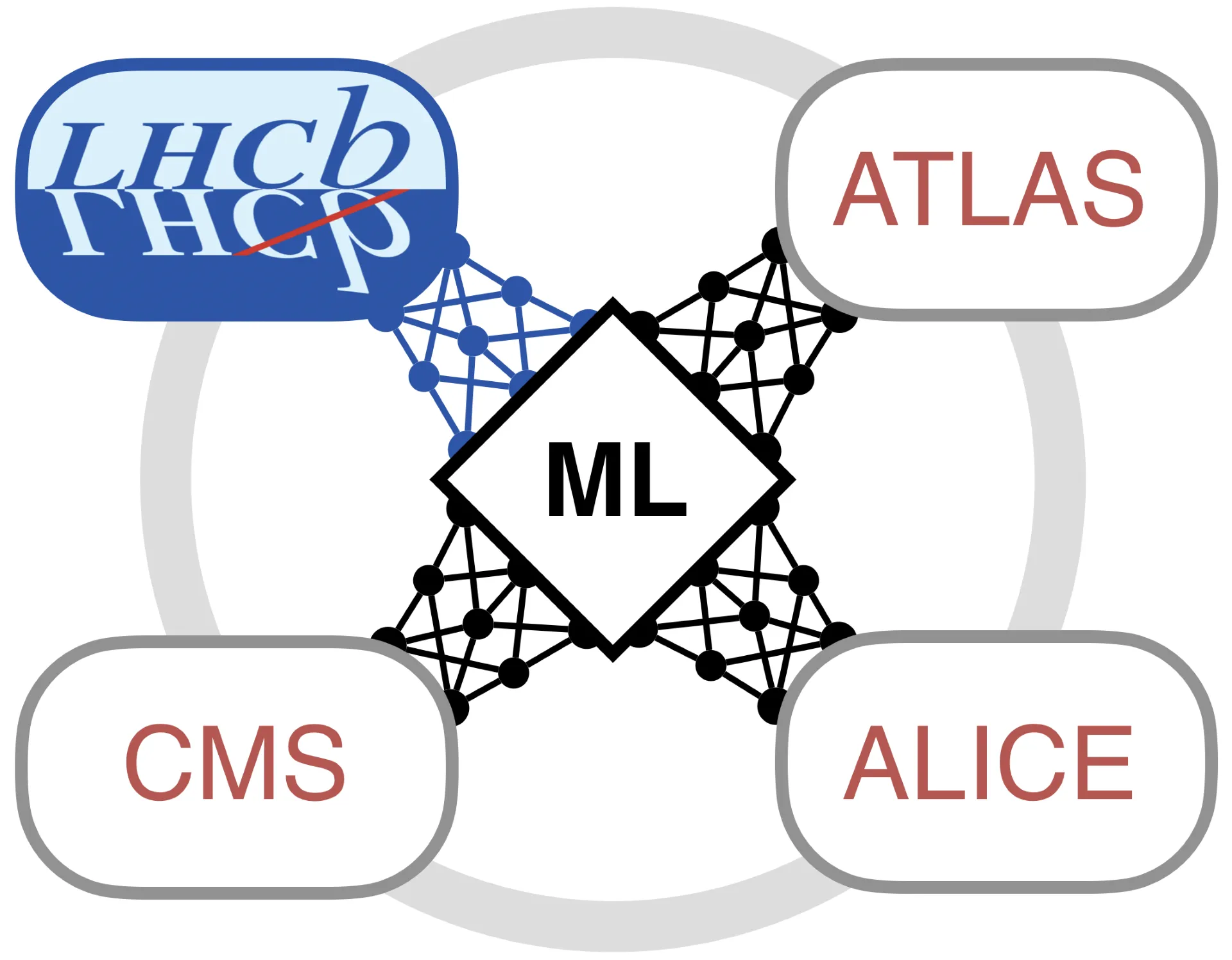
Machine Learning in action: shaping the future of LHCb and fostering cross-experiment collaboration
Machine Learning in action: shaping the future of LHCb and fostering cross-experiment collaboration Common challenges and the democratic nature of ML are building new bridges across experiments. The LHCb experiment is ramping up its R&D efforts in Machine Learning (ML), while also addressing the challenges of deploying ML in production and fostering multi-experiment collaborations. Why?
-
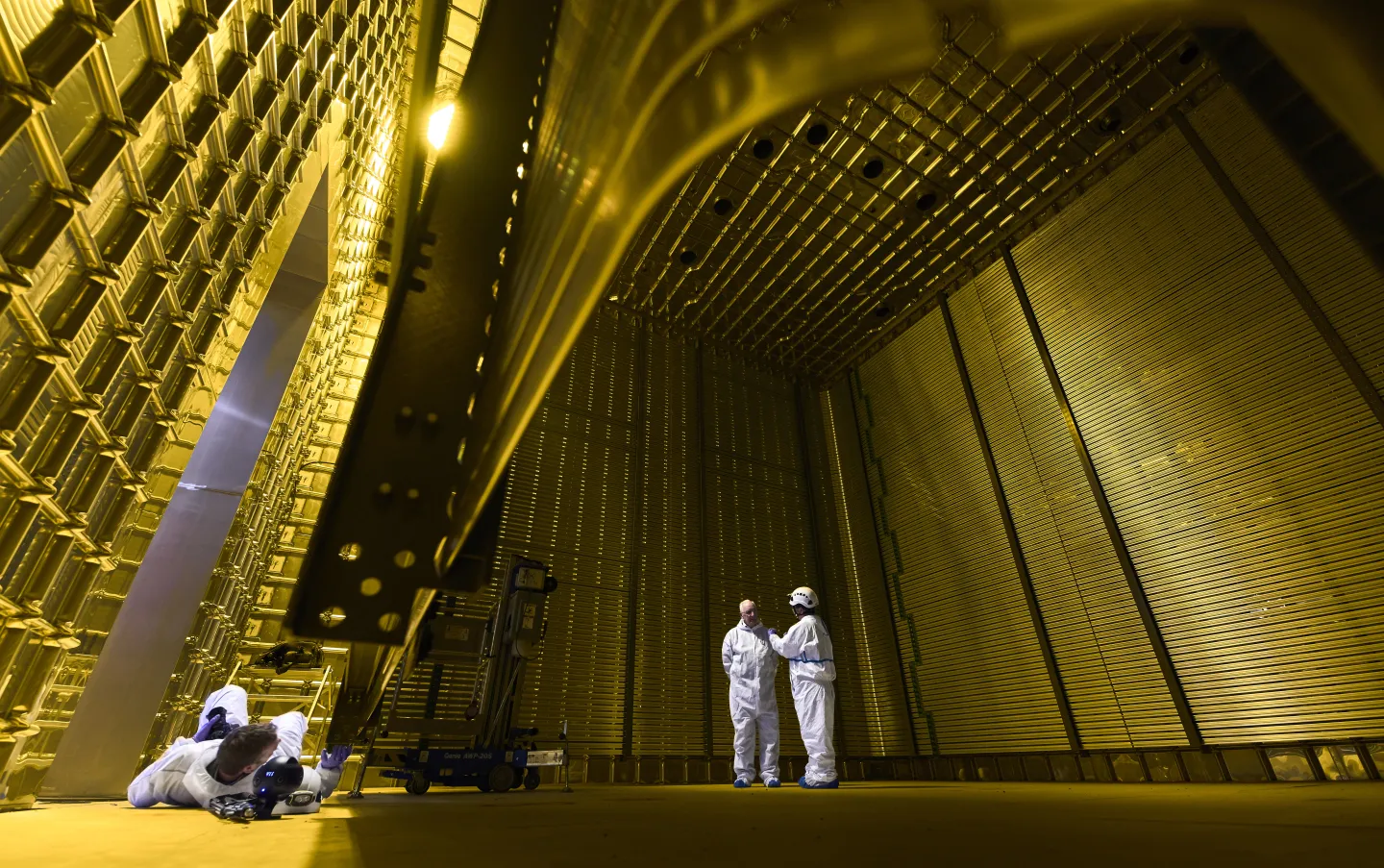
ProtoDUNE: Paving the Way for the Deep Underground Neutrino Experiment
ProtoDUNE: Paving the Way for the Deep Underground Neutrino Experiment The Deep Underground Neutrino Experiment (DUNE) at the Long-Baseline Neutrino Facility (LBNF) is a groundbreaking scientific initiative poised to elucidate the mysteries of neutrinos. Its progress has been marked by remarkable feats of engineering and scientific innovation. In February 2024 LBNF reached a critical milestone
-
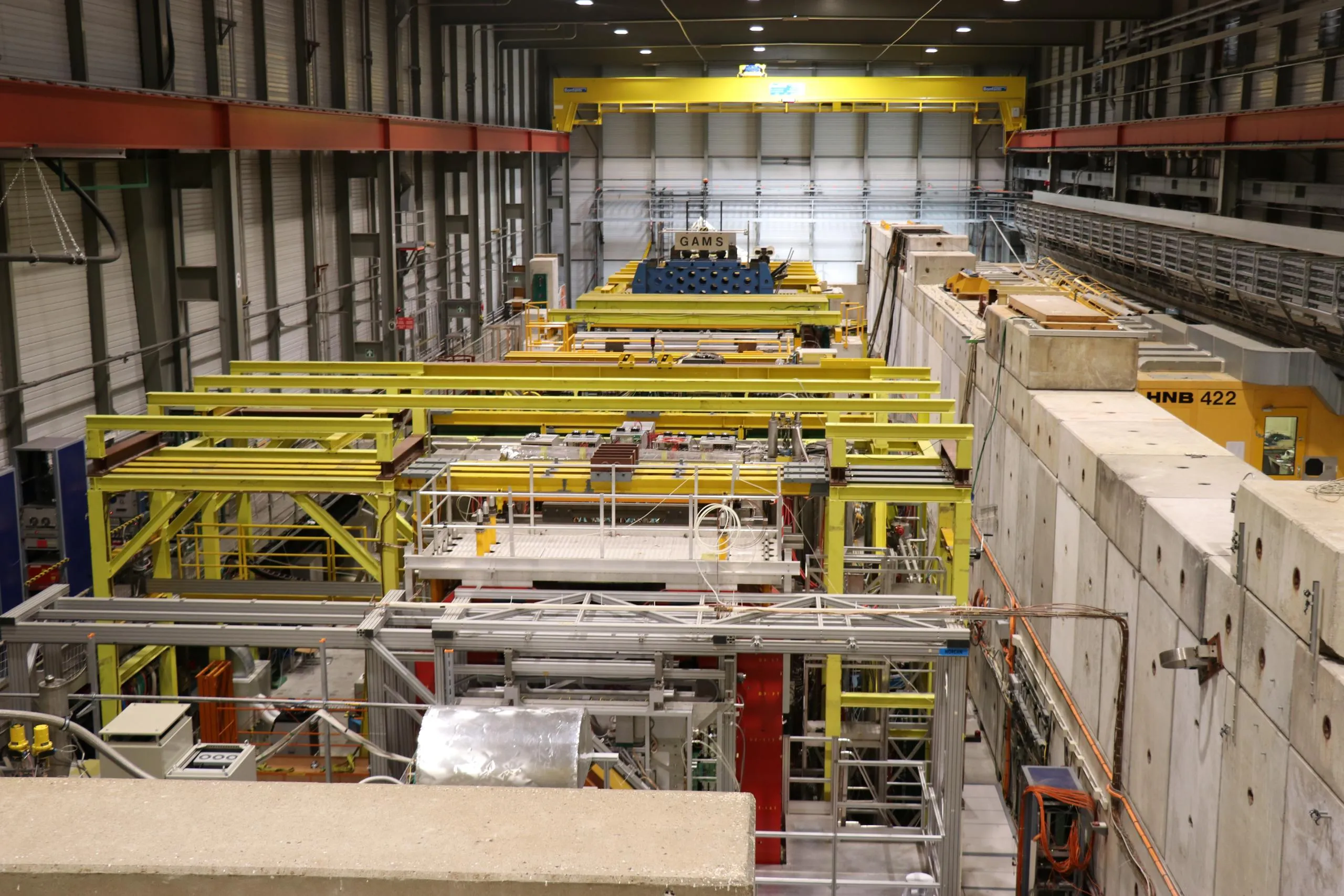
AMBER uncovers the universe’s mysteries
AMBER uncovers the universe’s mysteries The AMBER spectrometer. Credit: K Bernhard-Novotny/A Sargsyan Despite our extensive knowledge, the universe remains mysterious in many ways. To this day, questions prevail about the origin of the matter-antimatter asymmetry. The exact sources of antiprotons in our galaxy are largely unknown. Do they originate from cosmic ray collisions with the