
Tag: Interviews and Features
-

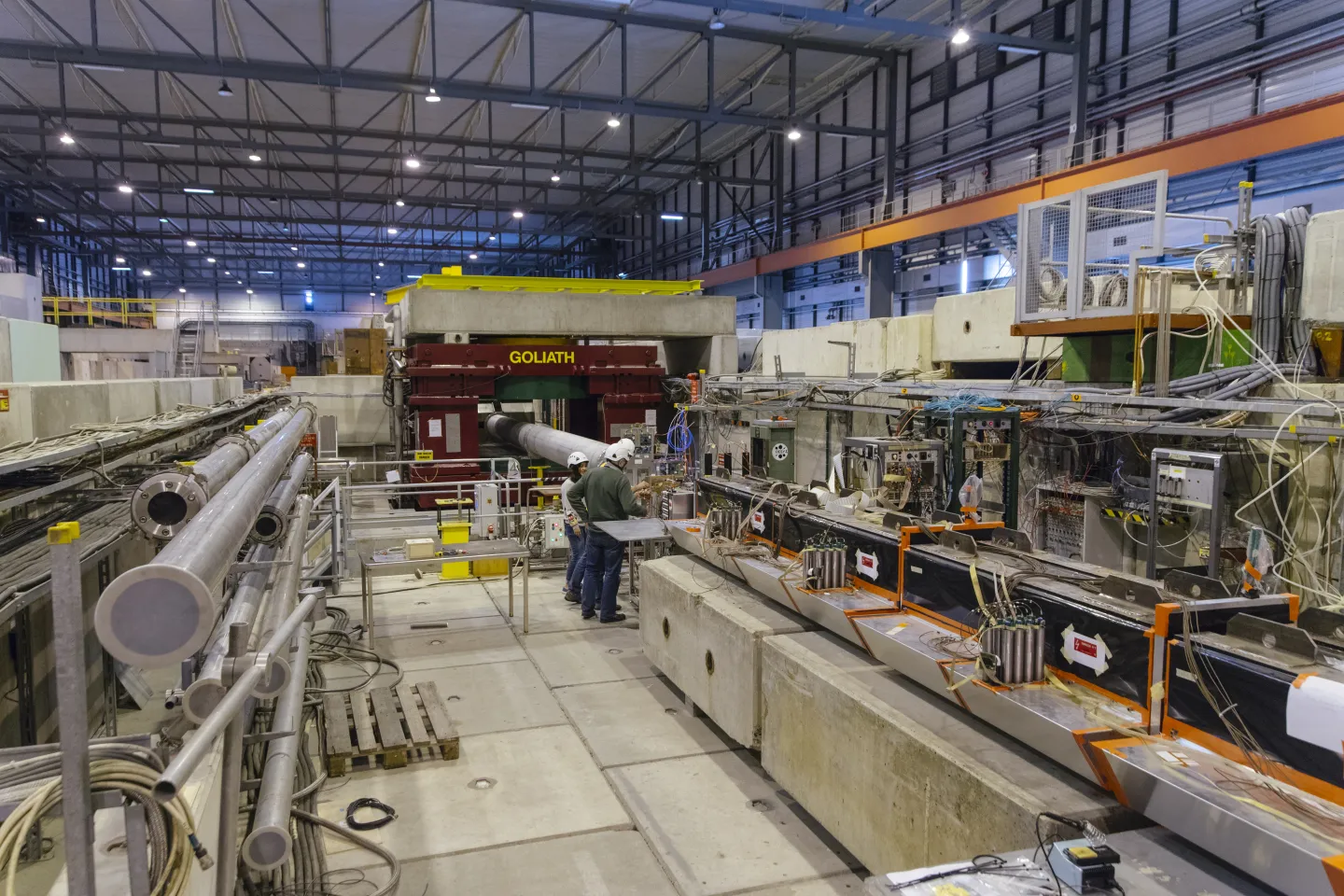
MADMAX prototype test at CERN
MADMAX prototype test at CERN Axion : A promising Dark Matter candidate For decades astronomical observations have indicated the existence of large quantities of dark matter in the universe. Until today, the nature of dark matter has not been understood and is therefore a central question in fundamental physics. The axion is among to the
-
Closing the gap between beam dump and colliders ALPs searches with NA64
Closing the gap between beam dump and colliders ALPs searches with NA64 The axion was postulated to provide a solution to the “strong CP” problem. This pseudo-scalar particle emerges as a consequence of the breaking of the Peccei-Quinn (PQ) symmetry [1,2,3] (link to EP article on Axions). Typically, models of QCD axions predict a specific
-

A timeline of the EP newsletter
A timeline of the EP newsletter Since its establishment, CERN's Experimental Physics department (EP) produces cutting-edge research supporting the activities of the laboratory and serving the international particle physics community. Since its establishment, EP continuously provides resources and expertise in devising, designing and building new tools that will enable the particle physics community to further
-
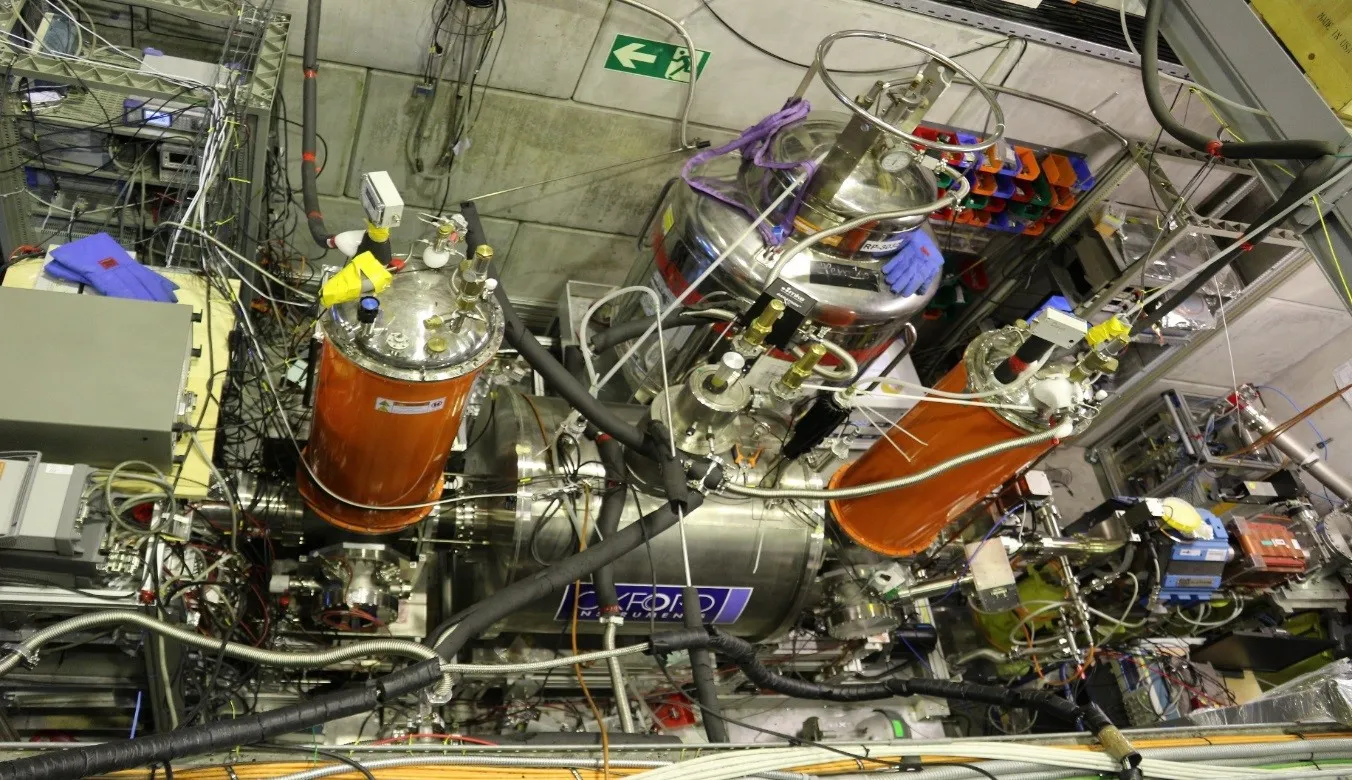
A mobile antiproton reservoir for precision measurements
A mobile antiproton reservoir for precision measurements The BASE collaboration has performed the most precise measurements of the fundamental properties of the antiproton in order to test CPT invariance as fundamental symmetry of the Standard Model [1, 2] and to search for dark matter-antimatter couplings [3]. The course of continuing this journey is set towards
-
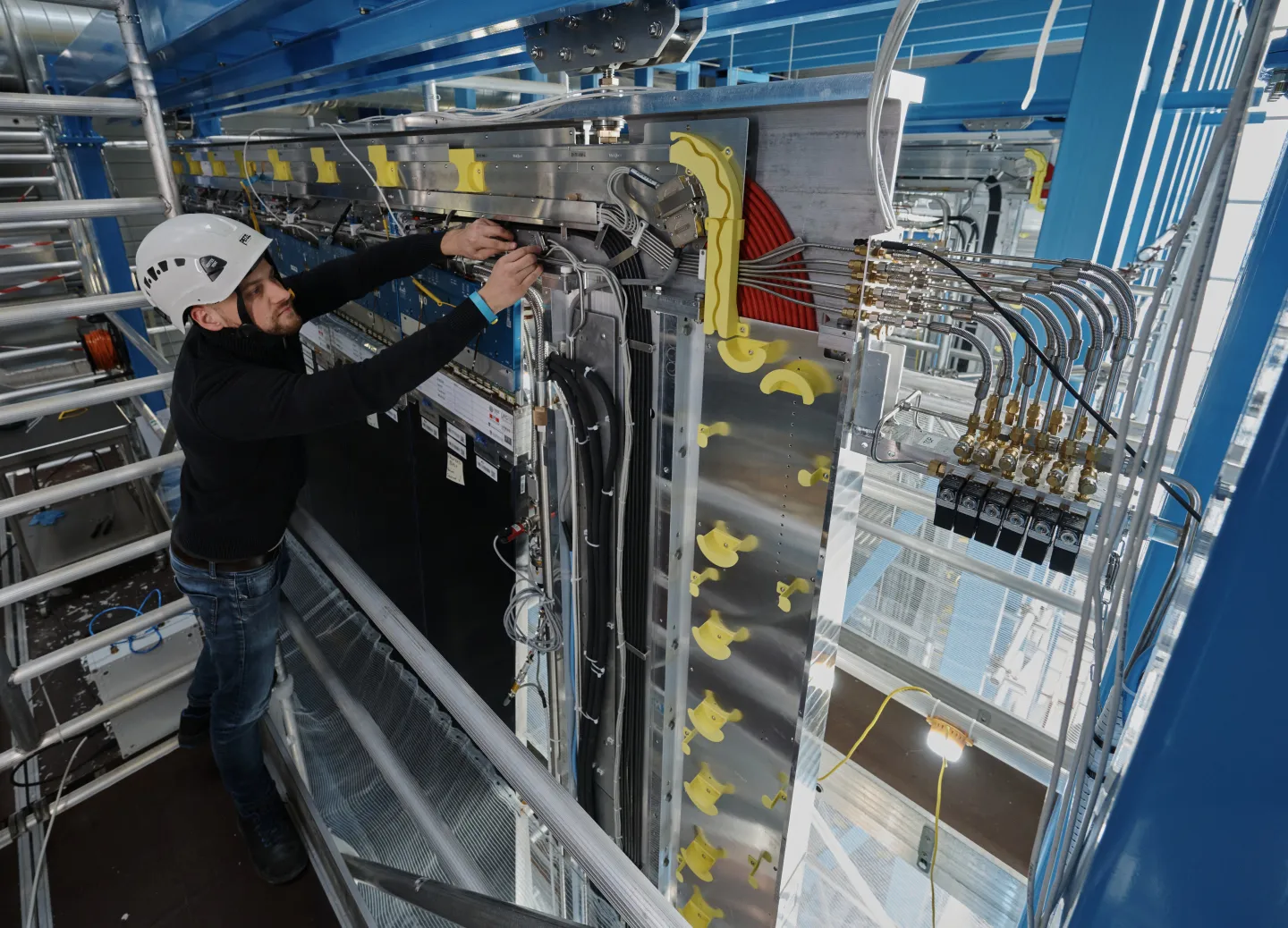
DT group publishes annual report
DT group publishes annual report The mandate of the Detector Technologies (DT) group in the Experimental Physics department covers development, construction, operation and maintenance of particle detectors for the experiments at CERN. Recently, the group published its 2019 annual report reporting the progress on several detector projects for LHC and non-LHC experiments, the operating services
-
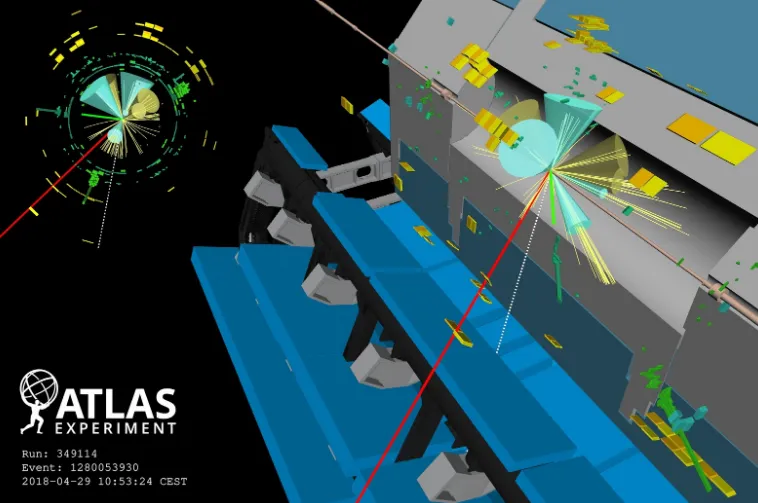
ATLAS results: from precision to rarity
ATLAS results: from precision to rarity Two recent ATLAS results that showcase the full range of the ATLAS physics potential, from precision to rarity, were shown at LHCP and presented at a recent CERN LHC seminar. A test of the universality of τ and μ lepton couplings in W boson decays from tt̅ events [1]
-

CMS weighs in for the top quark
CMS weighs in for the top quark The top quark has a special position in the zoo of elementary particles, being the heaviest as well as one of the rarest fundamental particles ever sighted. With a mass of about 173 GeV, it has 40 times the mass of its partner, the bottom quark and is
-
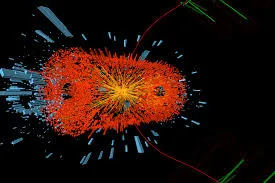
New physics opportunities with heavy-ion collisions at the LHC
New physics opportunities with heavy-ion collisions at the LHC The LHC is the latest scientific tool in a long line of increasingly sophisticated machines built over the last 70 years to study the inner workings of our Universe and the laws governing its microscopic structure and evolution. Decades-long experimental and theoretical efforts have given rise
-

T2K Neutrino Oscillation Results
T2K Neutrino Oscillation Results The T2K collaboration studies neutrino oscillations. These oscillations arise from quantum mechanical interference caused by the fact that every neutrino of the type electron, muon, or tau is a combination of three neutrino mass states. The neutrino type is determined by the associated heavy lepton (electron, muon, or tau) in the
-

FastIC and FastICpix developments
FastIC and FastICpix developments Precise time tagging is a hot topic in High Energy Physics and in other fields. A number of detector technologies are available but there are few multi-channel front-end ASICs capable of providing time tagging in the region of 10ps. This article describes two developments that are going on within the microelectronics