
Tag: News from the experiments
-
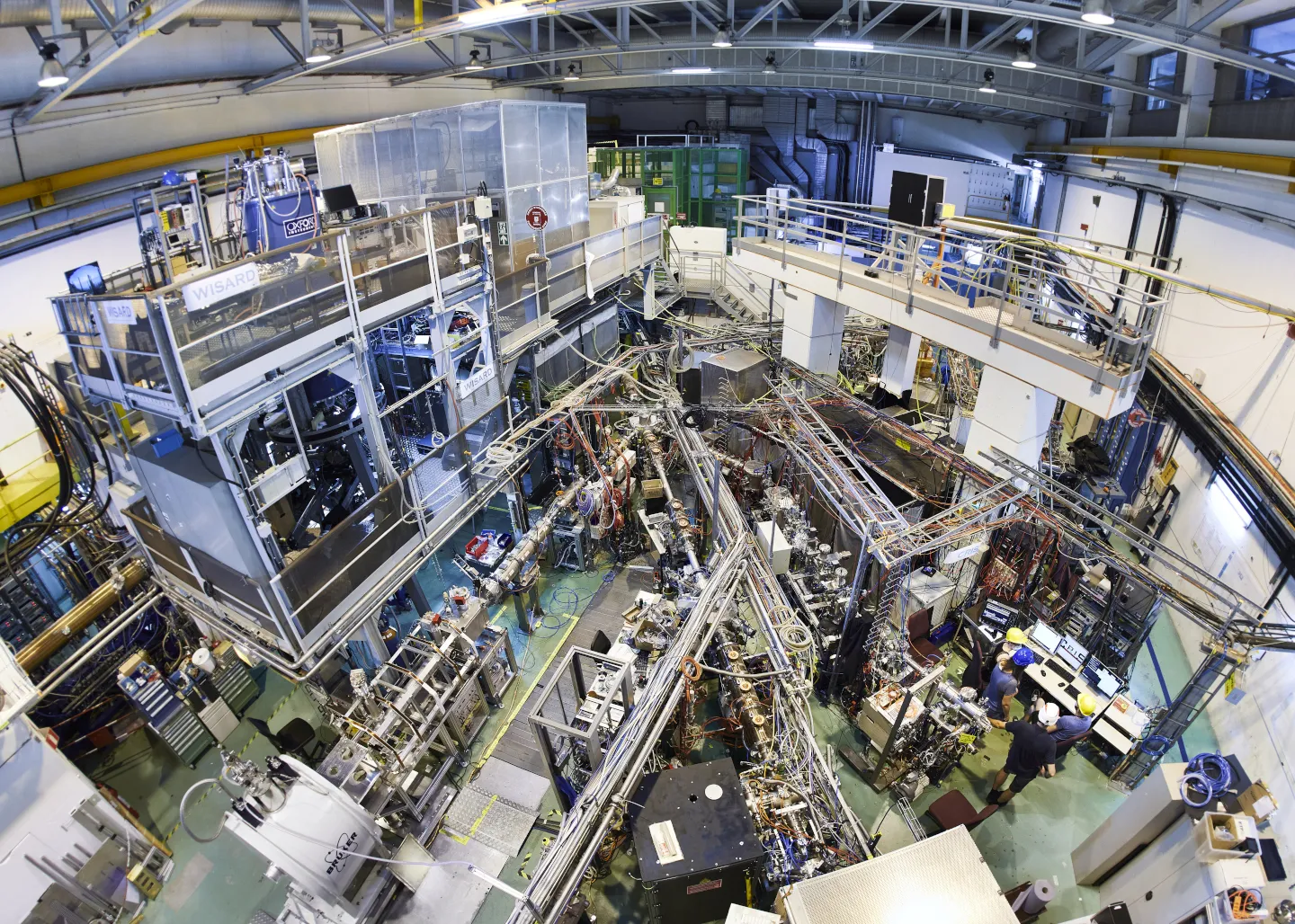
ISOLDE charts the shores of the islands of inversion
ISOLDE charts the shores of the islands of inversion For decades, CERN’s ISOLDE (Isotope Separator On-Line Device) facility has been a global leader in exploring the behaviour of exotic nuclei far from stability. By delivering beams of short-lived isotopes and enabling their study with advanced spectroscopic techniques, ISOLDE has expanded our view on nuclear structure
-
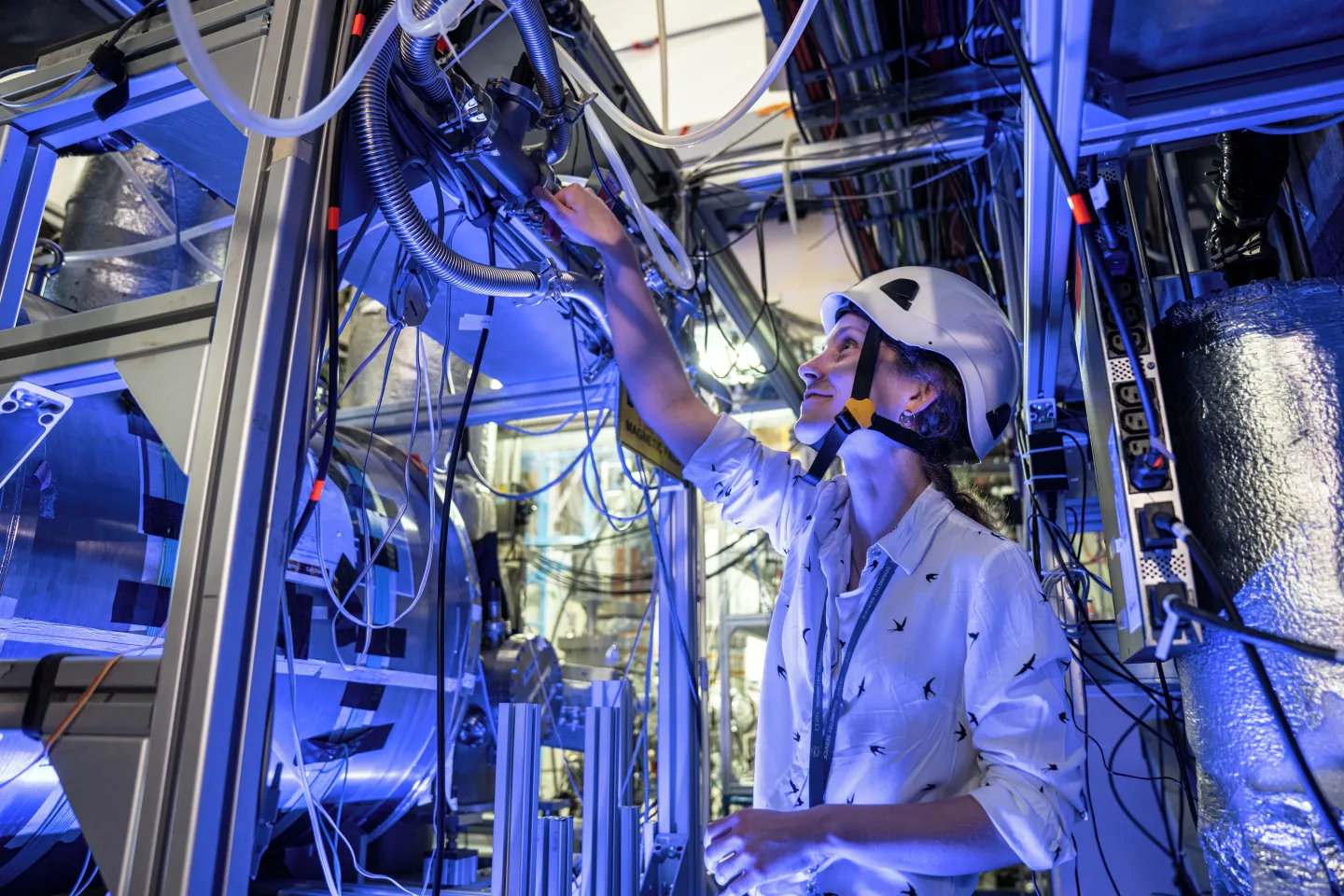
Breakthrough: Coherent Spectroscopy with a Single Antiproton Spin
Breakthrough: Coherent Spectroscopy with a Single Antiproton Spin BASE physicist Barbara Latacz in front of the experiment’s cryostat. This cylinder, which is kept at 4 kelvins (-269°C), houses the system of traps that cool and measure the antiprotons and a very strong magnet. (Image: CERN) In a significant breakthrough for precision physics and antimatter research,
-
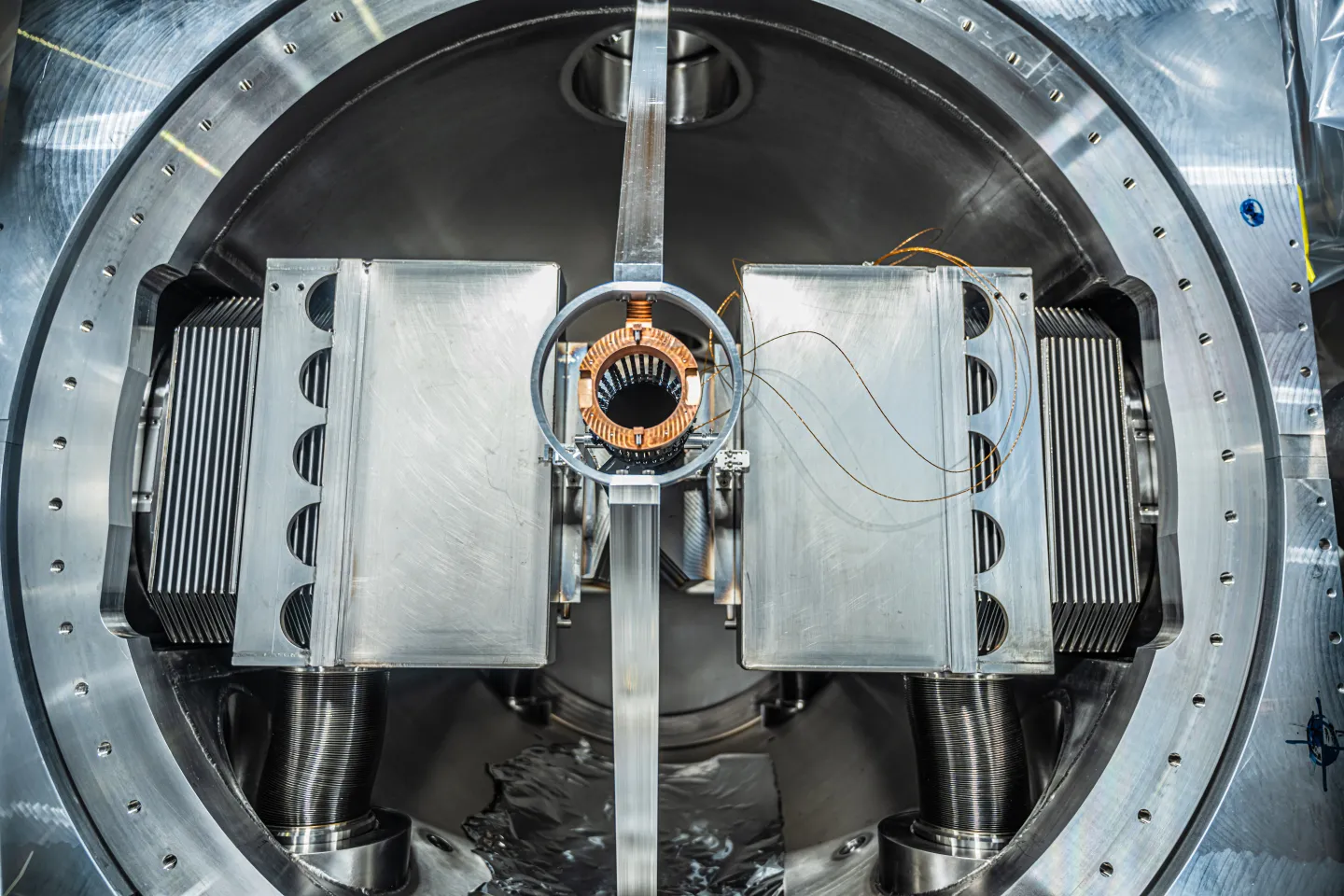
SMOG(2) at LHCb: a space experiment and a bowling alley
SMOG(2) at LHCb: a space experiment and a bowling alley A famous aphorism, sometimes attributed to Max Planck, goes “When you change the way you look at things, the things you look at change”. Since 2011, the LHCb experiment at the LHC has employed a System for Measuring Overlap with Gas (SMOG) to inject gas
-
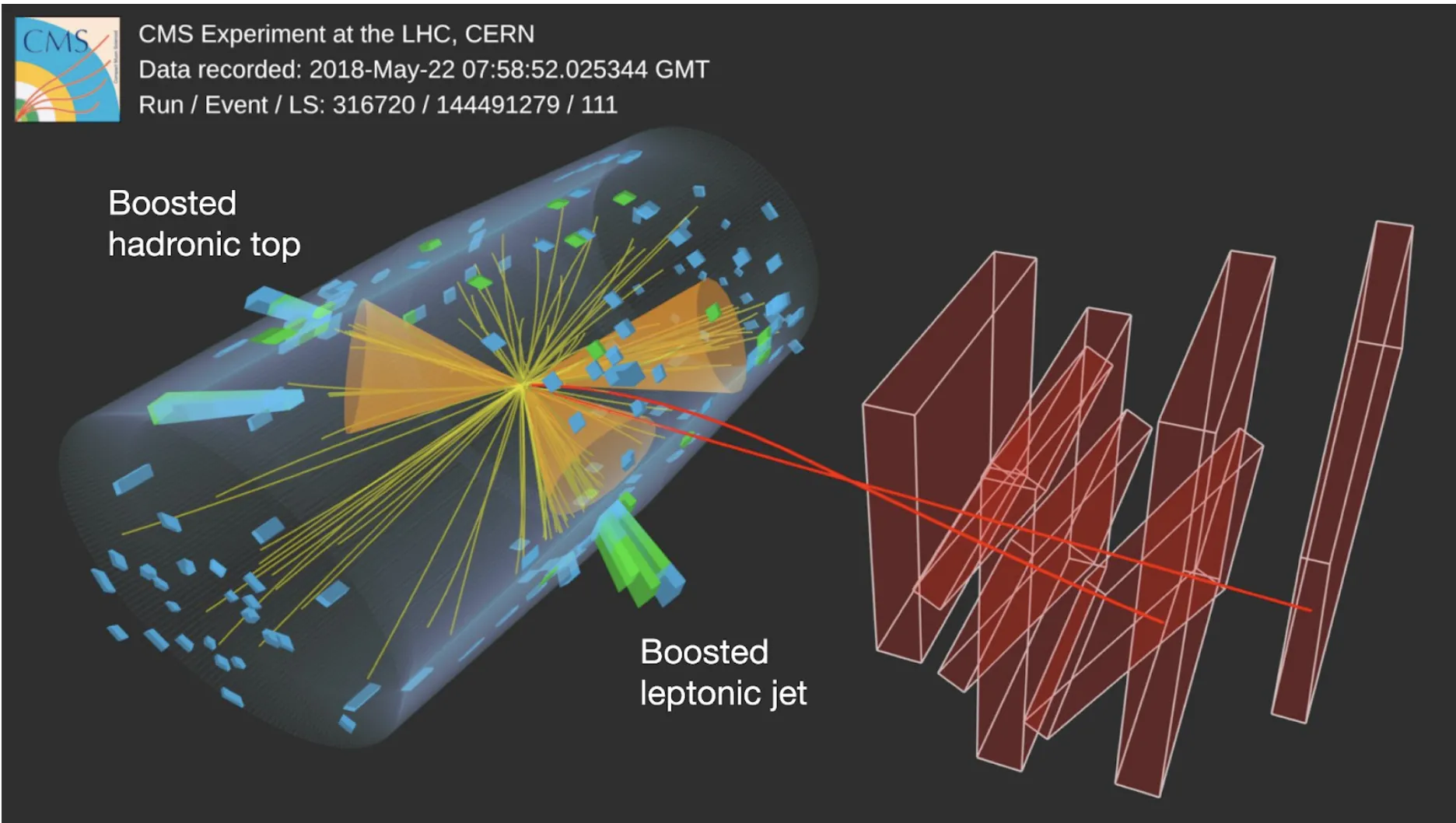
An all-round boosted chase for supersymmetry
An all-round boosted chase for supersymmetry It is rare for a theory to inspire as much experimental attention as supersymmetry has. CMS completed more than 40 SUSY searches in Run 2 alone, reflecting how compelling this framework remains in the quest for new physics. SUSY proposes that every known particle has a heavier partner, a
-

Bound state, found state – ATLAS ties the knot on top quark pair production at threshold
Bound state, found state – ATLAS ties the knot on top quark pair production at threshold Physics at the LHC often advances by pushing into regimes once thought unreachable. One such frontier is the precise study of top-anti-top quark pairs (tt̄) near the production threshold, where subtle quantum effects may leave their imprint. A few
-
AMS-02: A New Chapter in Orbit to Probe the Nature of Cosmic Rays
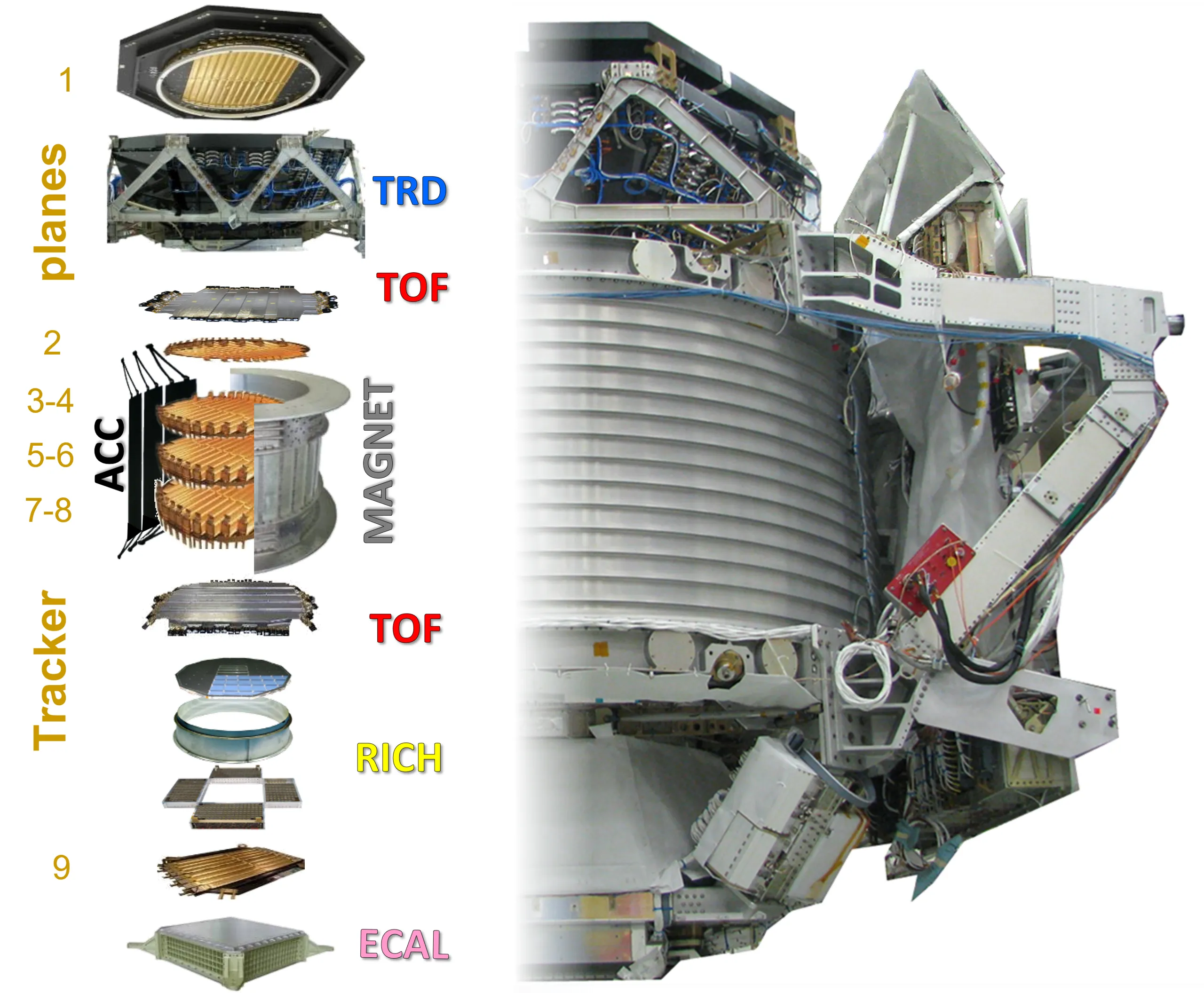
AMS-02: A New Chapter in Orbit to Probe the Nature of Cosmic Rays Since its launch aboard the International Space Station (ISS) in May 2011, the Alpha Magnetic Spectrometer (AMS-02) has recorded more than 250 billion cosmic-ray events, offering precision measurements of the composition and energy spectra of protons, nuclei, electrons, and positrons across an
-
Decoding r-Process Nucleosynthesis: Precision Studies of Exotic Indium Isotopes at ISOLDE
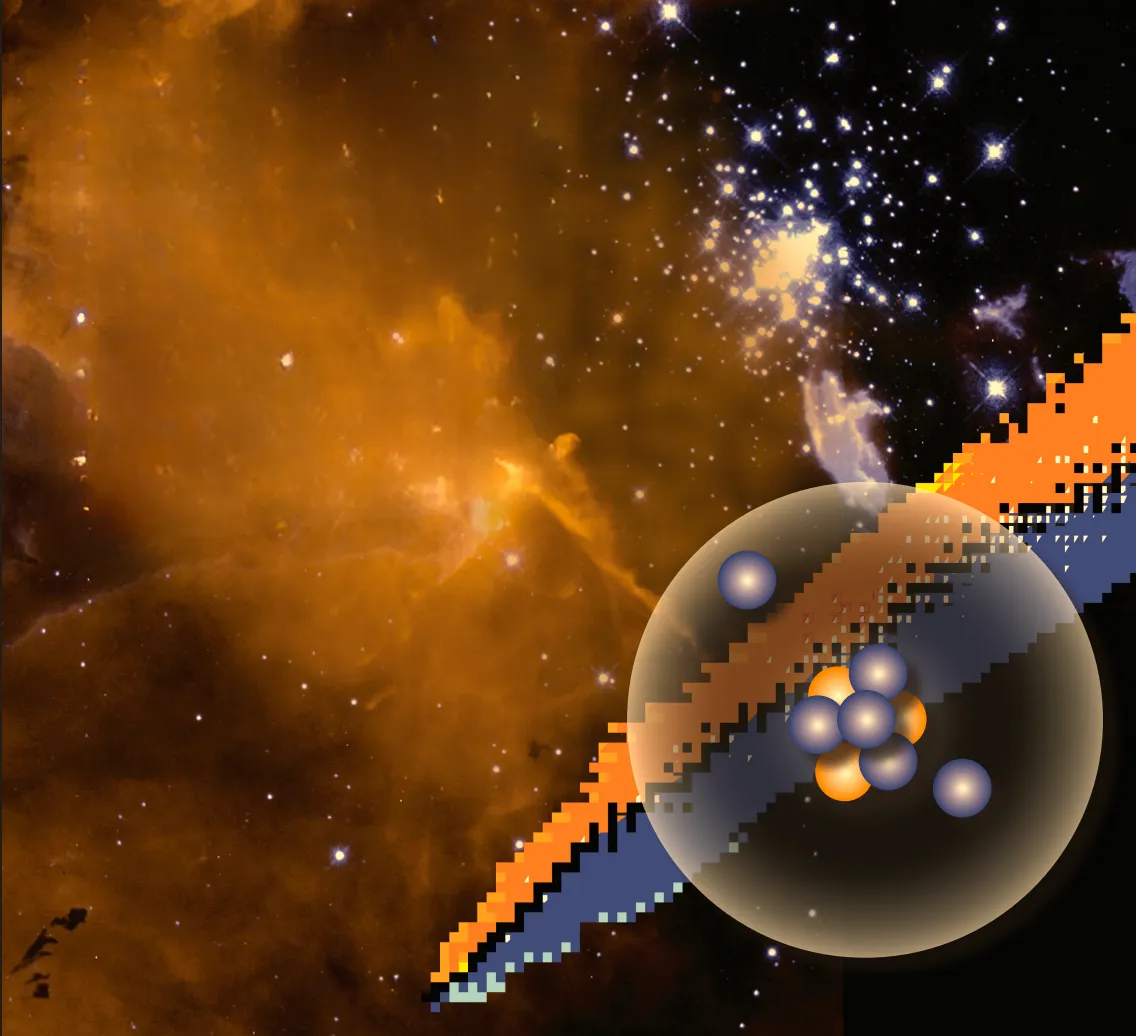
Decoding r-Process Nucleosynthesis: Precision Studies of Exotic Indium Isotopes at ISOLDE How are the chemical elements synthesised in stellar environments? Which processes lead to their creation? What impact does nuclear physics have on their production? Describing the origins of the chemical elements and their observed abundances remains one of the most significant challenges in modern
-
Heavy isotopes production via electromagnetic interactions at the LHC
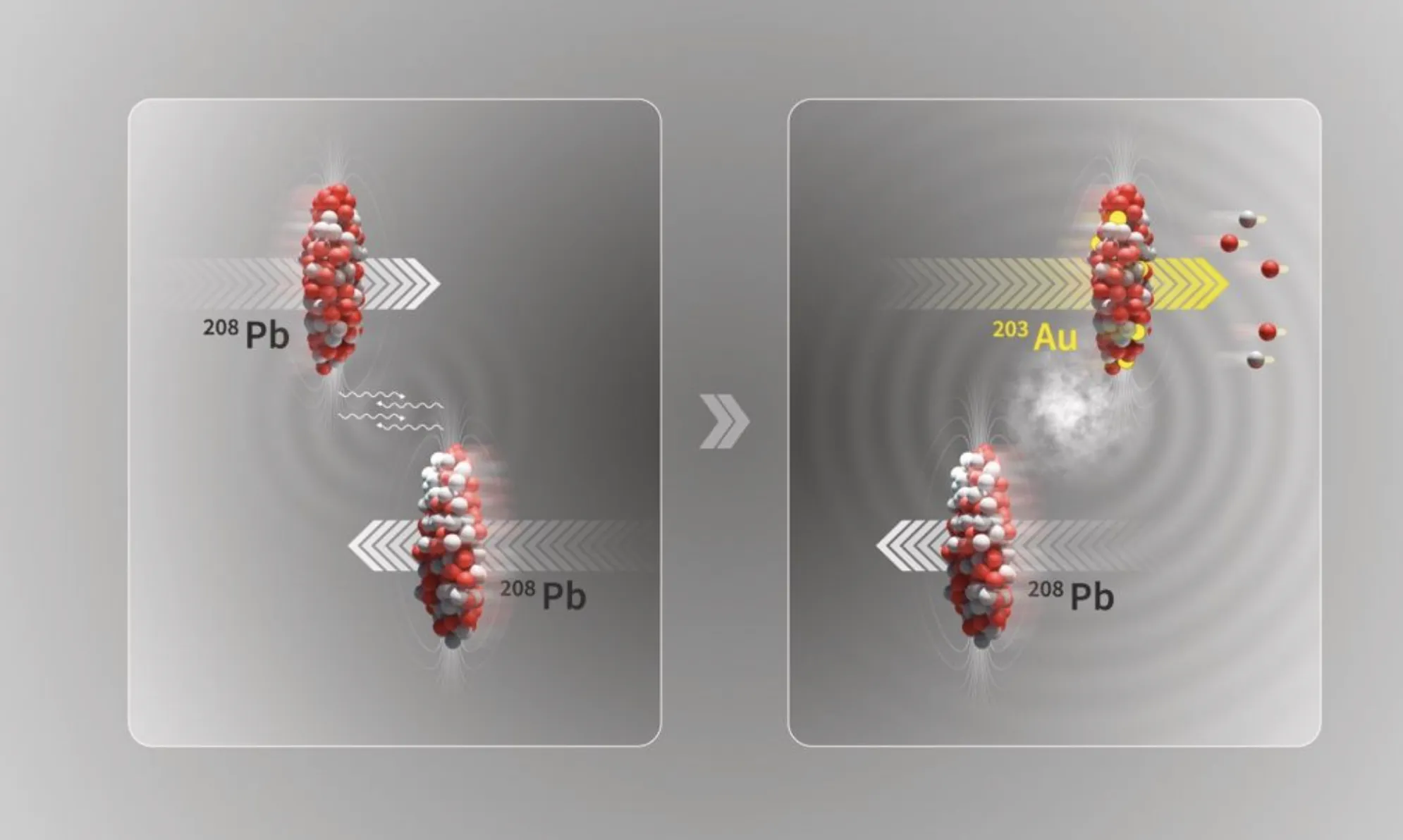
Heavy isotopes production via electromagnetic interactions at the LHC The ALICE experiment at LHC studies ultra-relativistic heavy-ion collisions to characterize the Quark-Gluon Plasma (QGP) — a state of matter where quarks and gluons are deconfined. This state existed briefly in the early Universe, just a few millionths of a microsecond after the Big Bang. However,
-
Anomaly at the Threshold: A Closer Look at tt̄ Events in CMS
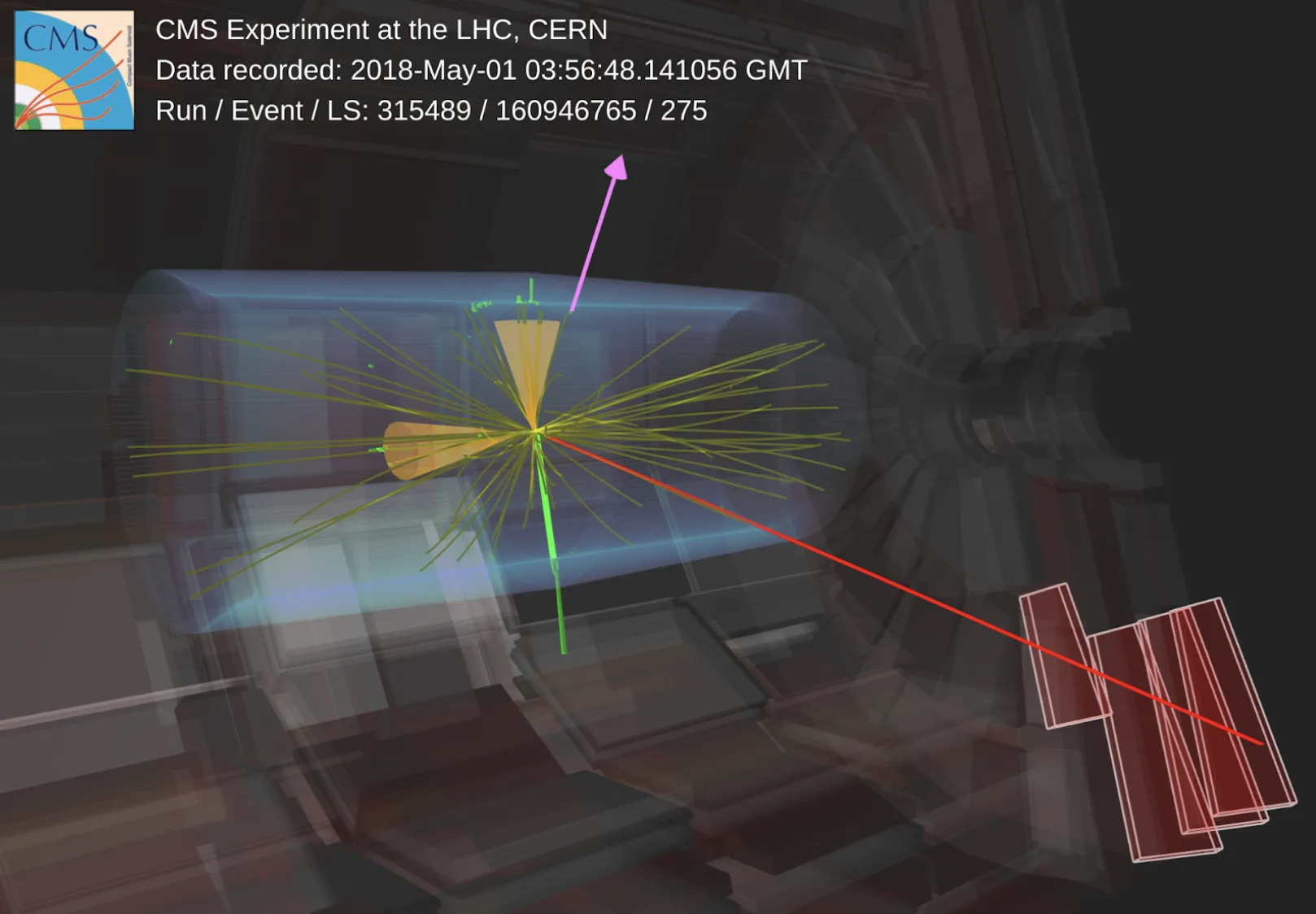
Anomaly at the Threshold: A Closer Look at tt̄ Events in CMS Some of the most intriguing developments in physics begin not with a discovery, but with an anomaly, subtle, persistent, and difficult to ignore. In 2019, CMS reported a mild excess of around three standard deviations in a search for heavy pseudoscalar (A) or
-
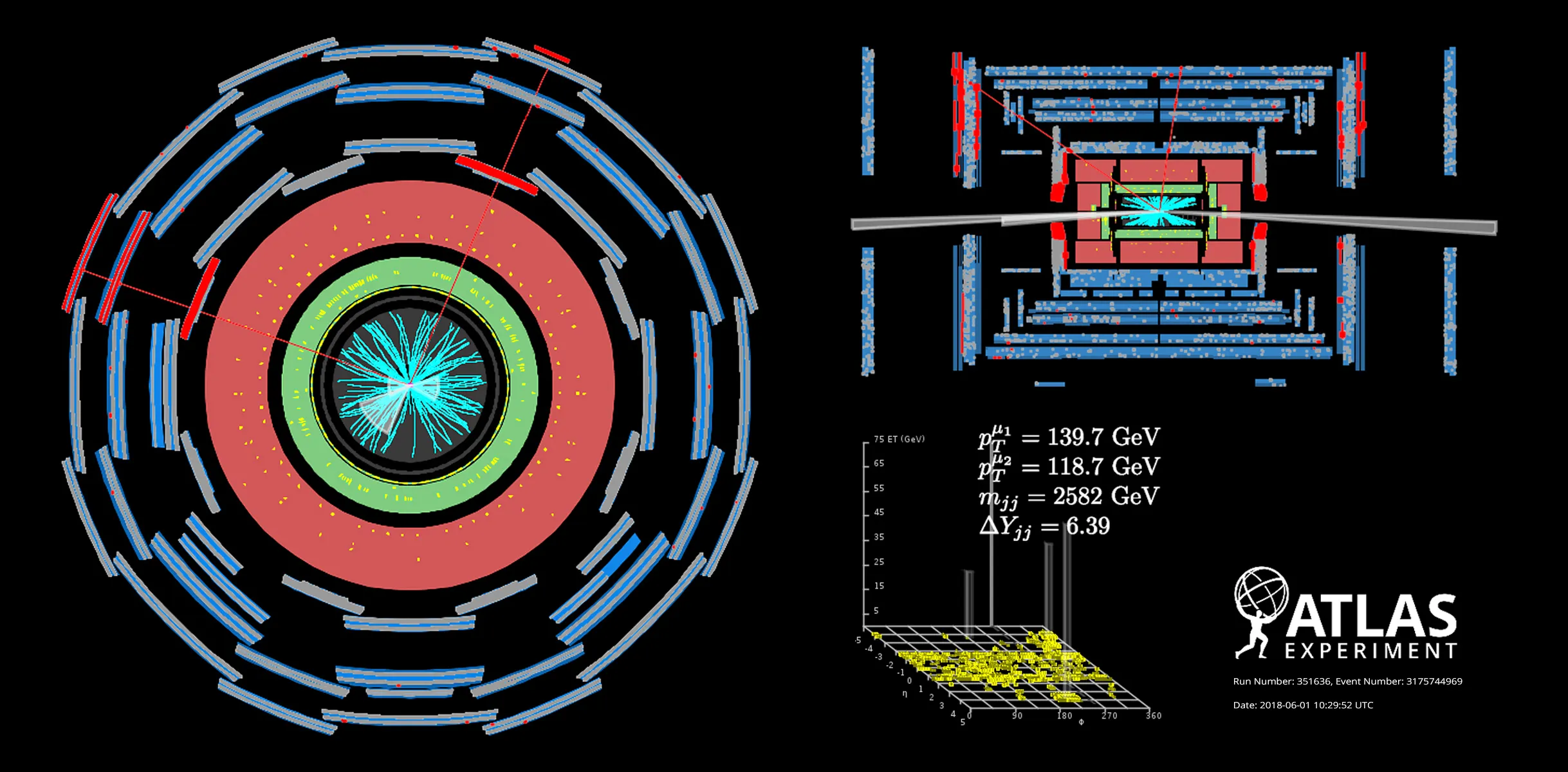
ATLAS Approaching a Breakthrough in Diboson Polarization with Run-3 Data
ATLAS Approaching a Breakthrough in Diboson Polarization with Run-3 Data The study of the polarisation of vector boson scattering (VBS) processes provides a unique test of the Higgs mechanism’s role in taming high-energy electroweak interactions, making it indispensable for fundamental physics for the last decades. As the LHC enters its Run-3 phase, this study is