
Tag: News from the experiments
-
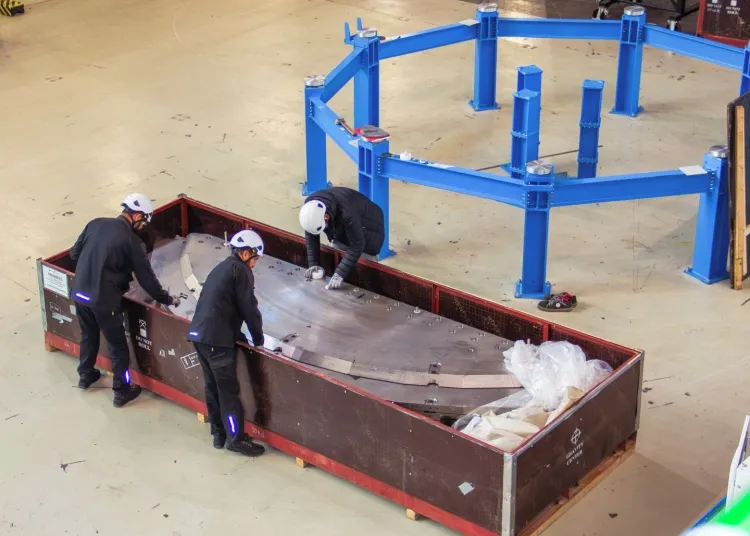
First HGCAL absorber structure delivered to CERN for assembly
First HGCAL absorber structure delivered to CERN for assembly After an eight-week journey, the first HGCAL absorber structure (CE-H1) was delivered to CERN and is ready to be assembled, just 100 metres above the location where the detector will eventually be installed. Seventeen enormous boxes were delivered at the CMS experimental site at the beginning
-
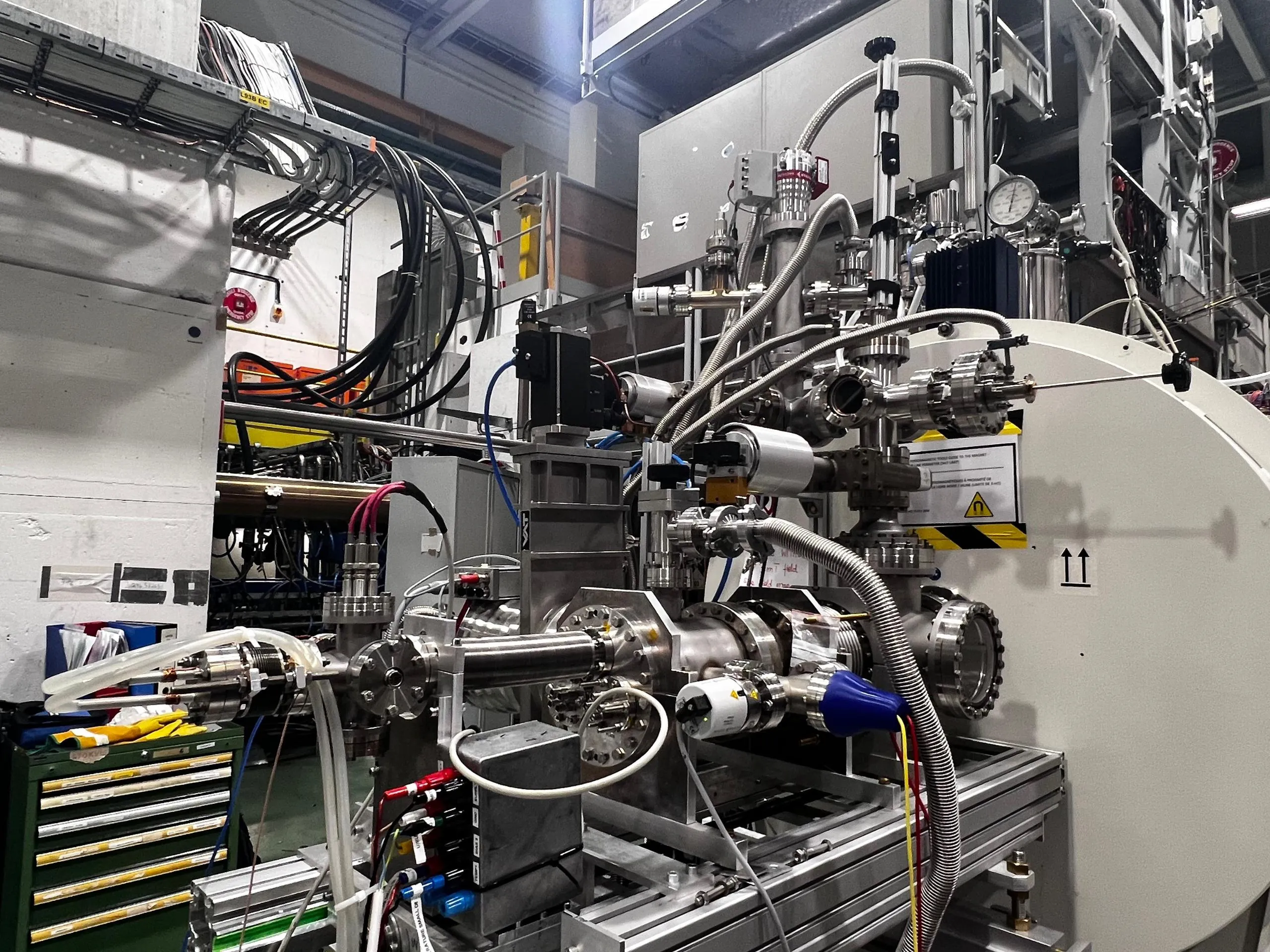
Probing lithium dynamics at buried interfaces with β-detected NMR at ISOLDE
Probing lithium dynamics at buried interfaces with β-detected NMR at ISOLDE Spin-polarised probes have been central to nuclear and particle physics since the discovery of parity violation by Chien-Shiung Wu in 1956, who detected asymmetric emission of β-radiation from low-temperature 60Co in a magnetic field. The directional distribution of radiation from aligned spins provides access
-
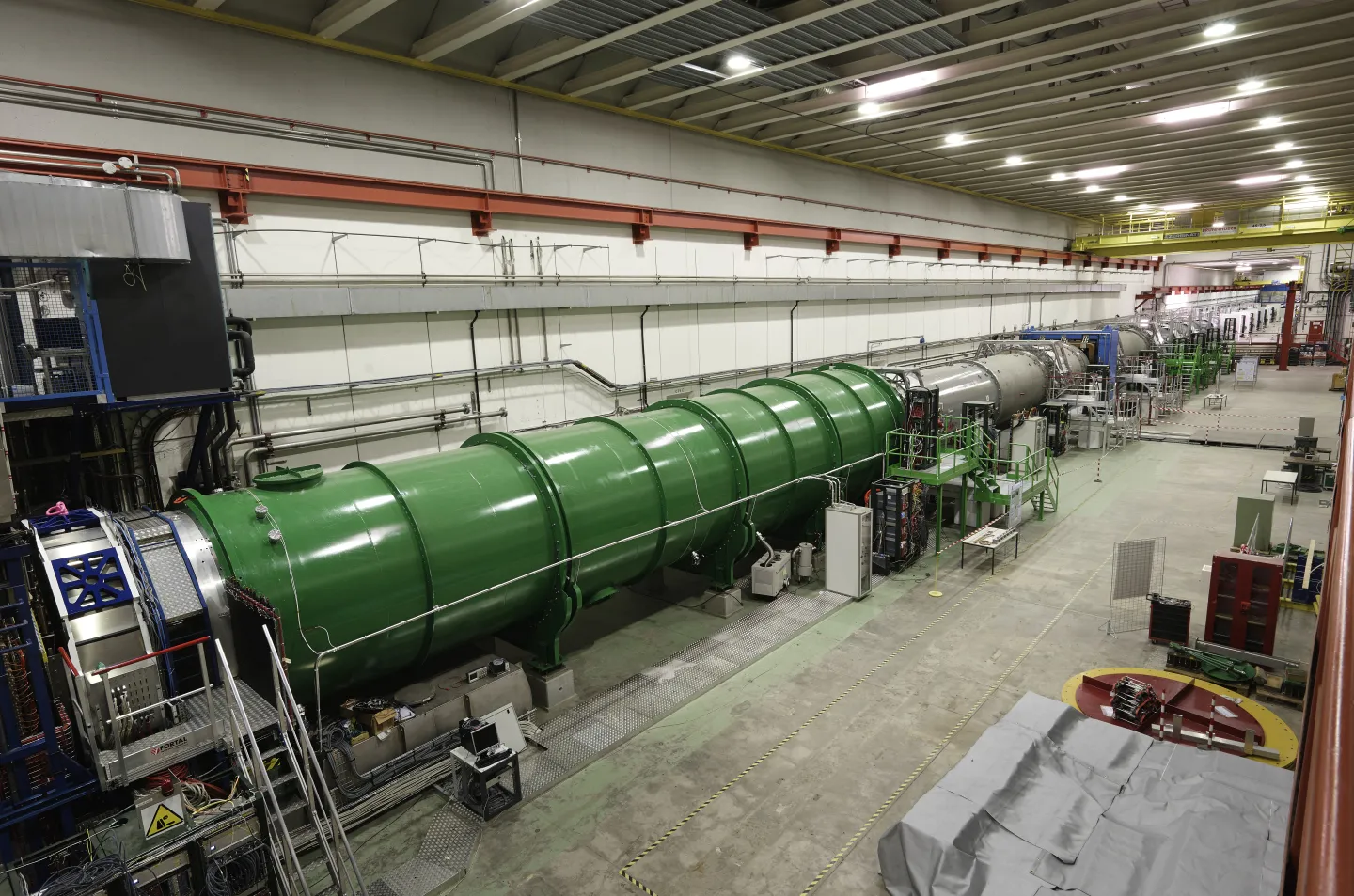
NA62 sharpens the picture of one of nature’s rarest particle decays
NA62 sharpens the picture of one of nature’s rarest particle decays The NA62 experiment at CERN has achieved a major milestone in flavour physics with the first observation of one of the rarest particle decays ever measured. The process — the decay of a positively charged kaon into a pion and a neutrino–antineutrino pair —
-

Understanding the formation of fragile light nuclei with ALICE
Understanding the formation of fragile light nuclei with ALICE Light nuclei such as the deuteron are surprisingly fragile. A deuteron is bound by only a few mega-electronvolts, yet at the Large Hadron Collider it is produced in environments that are tens of trillions of degrees – about 100,000 times hotter than the centre of the
-
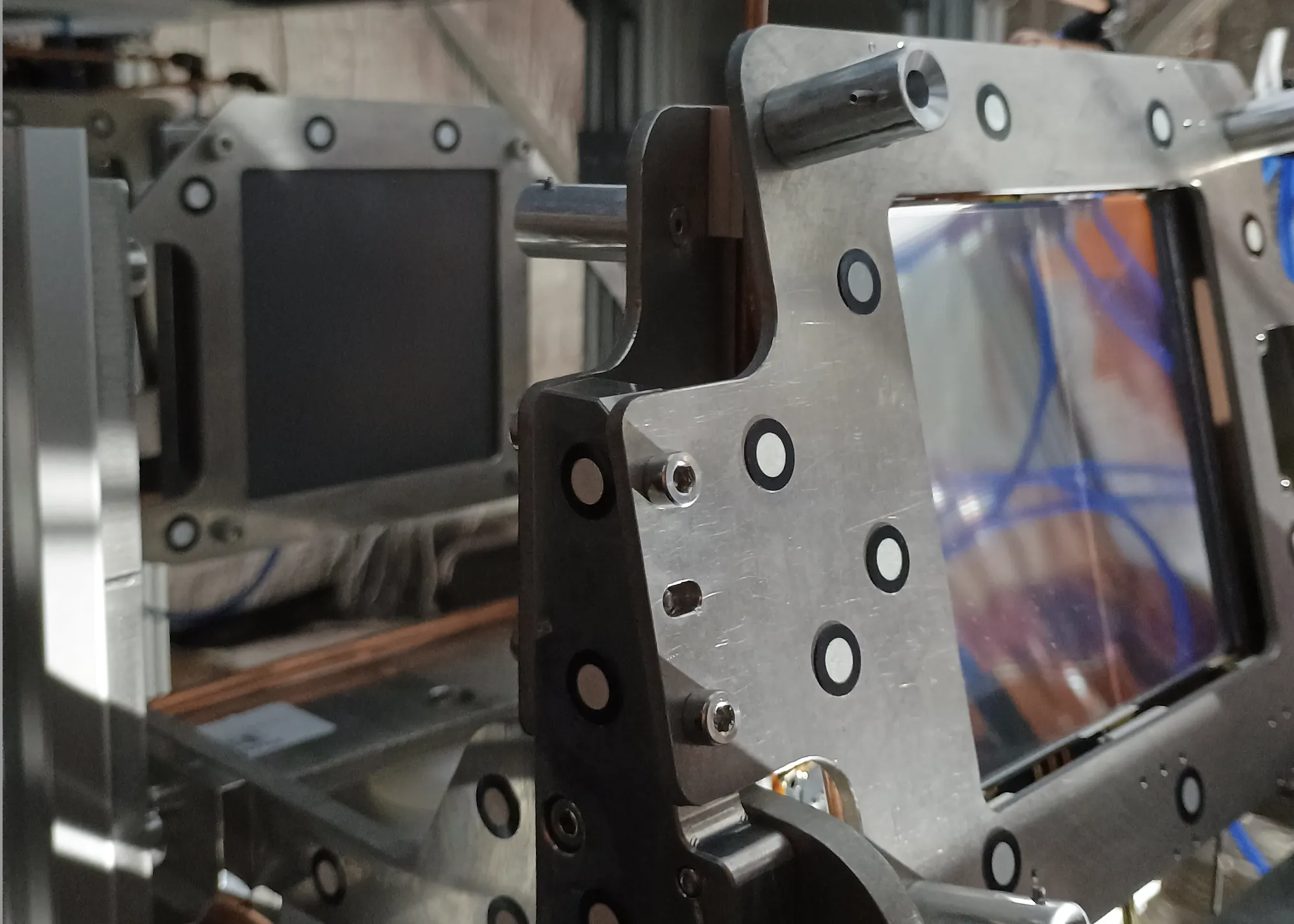
MUonE: A new path to hadronic vacuum polarization and the running of α
MUonE: A new path to hadronic vacuum polarization and the running of α The MUonE Collaboration [1] is making excellent progress towards developing a final proposal for an experiment that will measure the running of the electromagnetic coupling (alpha) by mapping out the differential cross section for muon–electron elastic scattering. The effective coupling strength increases
-
FoCal Moves Toward Construction After a Successful Beam Test
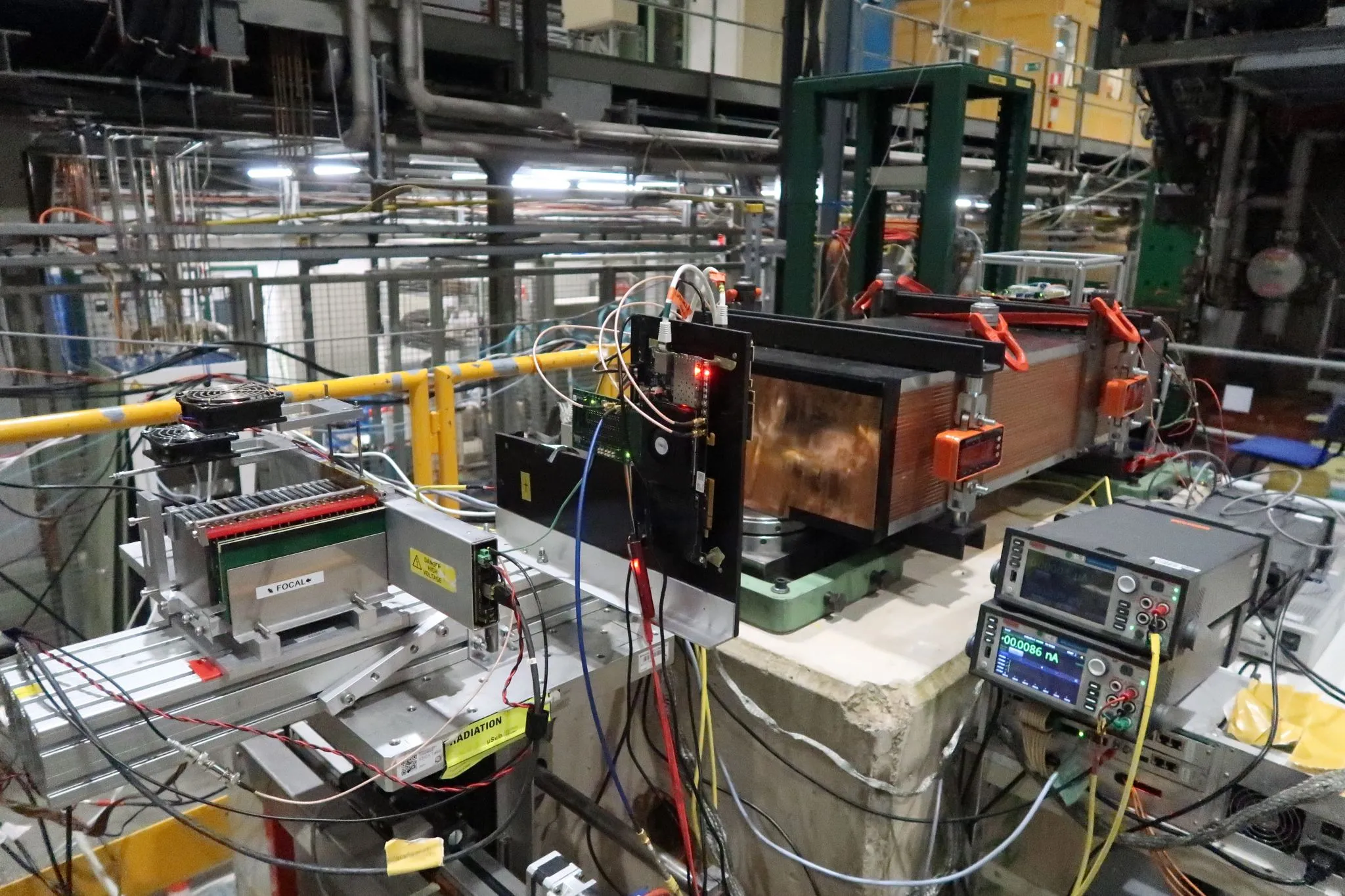
FoCal Moves Toward Construction After a Successful Beam Test Introduction Our recent beam test campaign for the ALICE Forward Calorimeter (FoCal) marked an important turning point for the project. After years of development toward a highly granular forward calorimeter, FoCal has now demonstrated the performance and maturity required to move confidently into construction. The tests
-
Sympathetic Cooling Opens a New Era for Antihydrogen at CERN
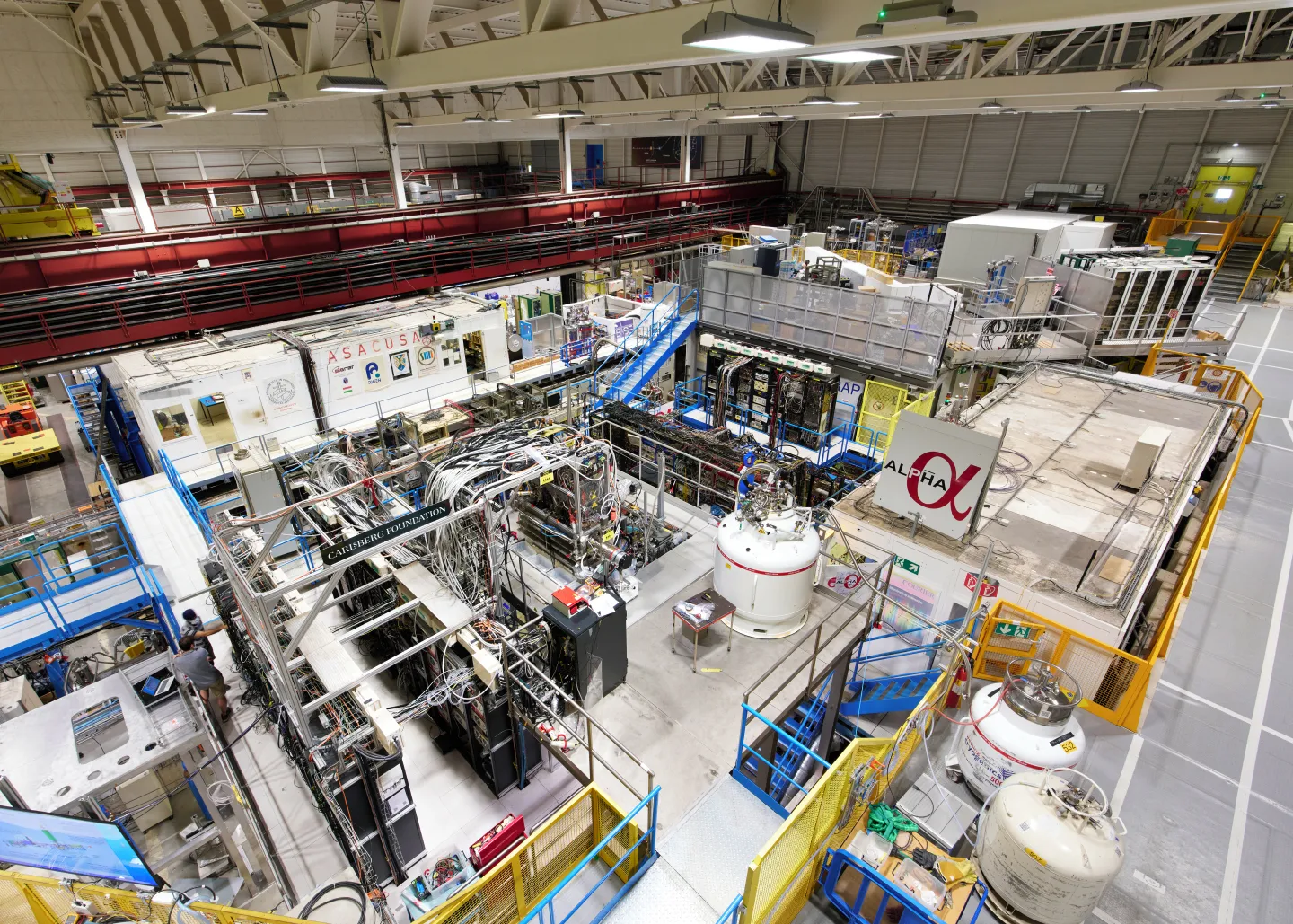
Sympathetic Cooling Opens a New Era for Antihydrogen at CERN A major milestone has been reached at CERN’s Antimatter Factory. Using an innovative technique to cool positrons with laser-cooled beryllium ions, the ALPHA collaboration has increased the rate of antihydrogen production by a factor of eight. The advance, reported in Nature Communications, has transformed the
-

White Rabbit: Revolution of Timing Distribution for HL-LHC experiments
White Rabbit: Revolution of Timing Distribution for HL-LHC experiments As CERN prepares for HL-LHC, fine timing is becoming a critical factor for success, especially for detectors aiming to time-tag hits to a precision of tens of picoseconds. For decades, the good old Timing, Trigger, and Control (TTC) backbone has fulfilled the role of distributing timing
-
Transfer-induced fission at the ISOLDE Solenoidal Spectrometer
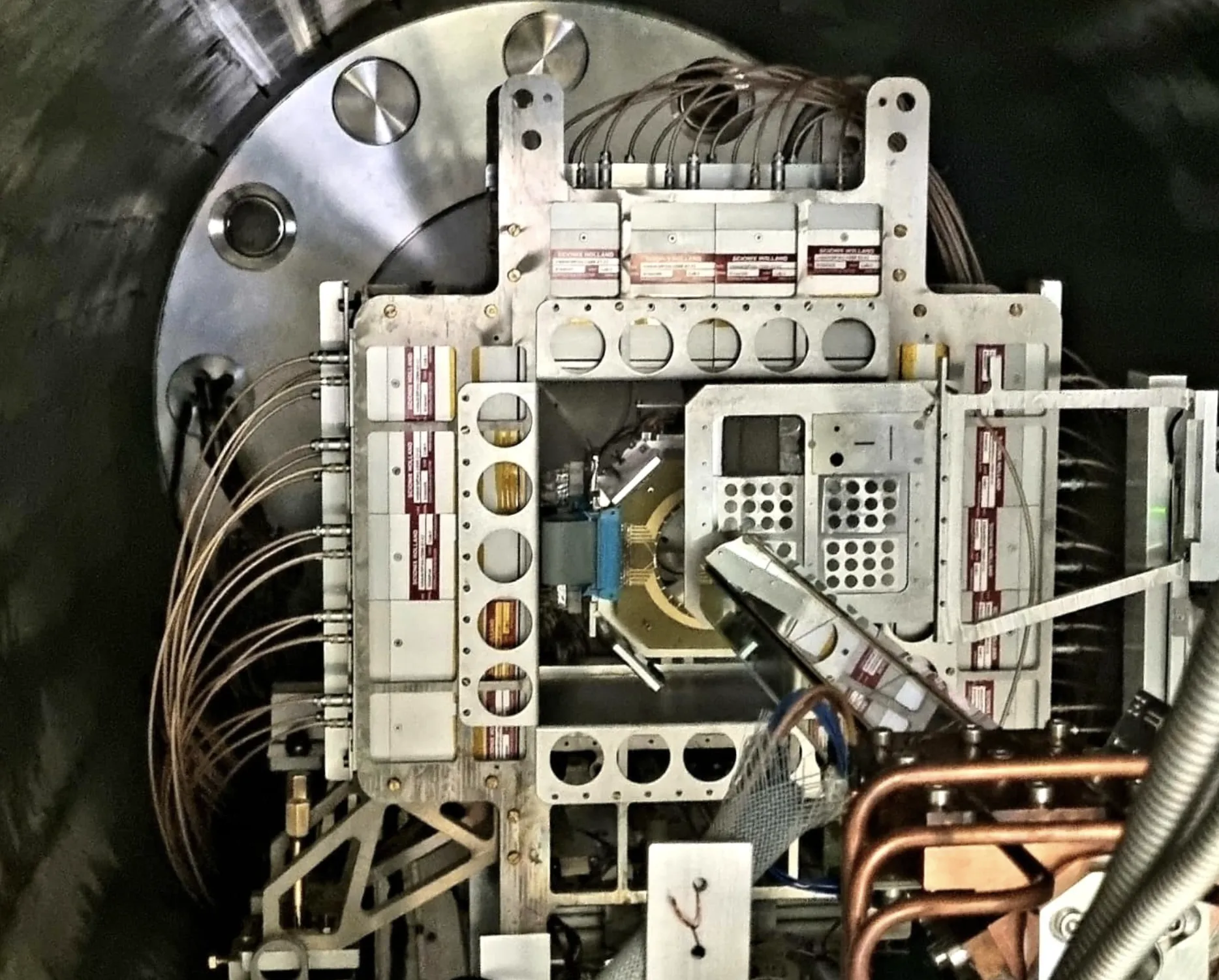
Transfer-induced fission at the ISOLDE Solenoidal Spectrometer How are the heaviest elements in the Universe formed? Looking at the periodic table, we know where the lightest elements come from. Hydrogen and helium were forged in the primordial nucleosynthesis that took place just moments after the Big Bang. Elements such as lithium, beryllium, and boron are
-
The Asymmetry of the Universe: First Observation of CP Violation in Baryons
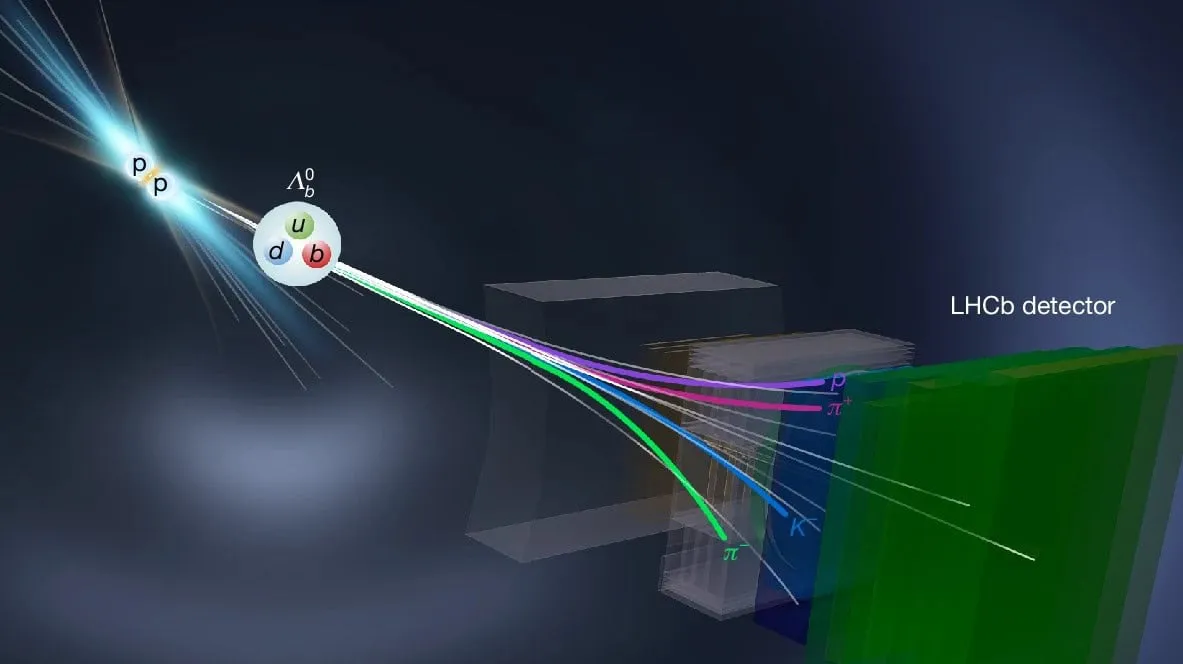
The Asymmetry of the Universe: First Observation of CP Violation in Baryons “What is that which always is and has no becoming, and what is that which becomes and never is?” — Plato, Timaeus 27d–28a It may sound like pure philosophy, yet for physicists it speaks to one of the most profound mysteries in physics: