
Tag: SME
-

First positrons for GBAR
First positrons for GBAR BROKEN IMAGE NOT MOVED (drupal url : https://ep-news.web.cern.ch//content/first-positrons-gbar) At the CERN Antimatter Factory, antihydrogen atoms are produced routinely by merging antiprotons and positrons. In order to control this process, it is necessary to reduce the energy of those particles, i.e. decelerate them to the lowest possible energies. The antiprotons are generated
-

MEDICIS: a new CERN facility can help medical research into cancer
MEDICIS: a new CERN facility can help medical research into cancer BROKEN IMAGE NOT MOVED (drupal url : https://ep-news.web.cern.ch//content/medicis-new-cern-facility-can-help-medical-research-cancer) Last week, the new CERN-MEDICIS facility has produced radioisotopes for medical research for the first time. MEDICIS (Medical Isotopes Collected from ISOLDE) aims to provide a wide range of radioisotopes, some of which can be produced
-

A special Xenon run for NA61/SHINE
A special Xenon run for NA61/SHINE Earlier in October, the Large Hadron Collider had a special test run of colliding xenon nuclei; a new flavour compared to the standard proton and lead collisions foreseen in the LHC experimental programme. Xenon collisions were requested by NA61, a fixed target experiment at the SPS and Xenon ions
-
Another milestone for the BASE collaboration
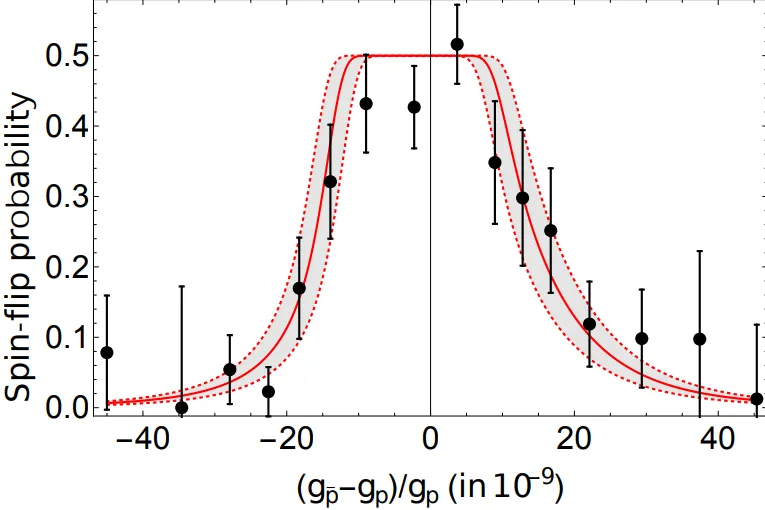
Another milestone for the BASE collaboration In a recent publication in the Nature magazine, the BASE collaboration reports on the first high-precision measurement of the antiproton magnetic moment with parts per billion uncertainty (see https://www.nature.com/articles/nature24048). The antiproton magnetic moment is now determined with 350-fold improved precision to be -2.792 847 344 1(42) times the nuclear
-
ALPHA experiment takes a closer look at antimatter
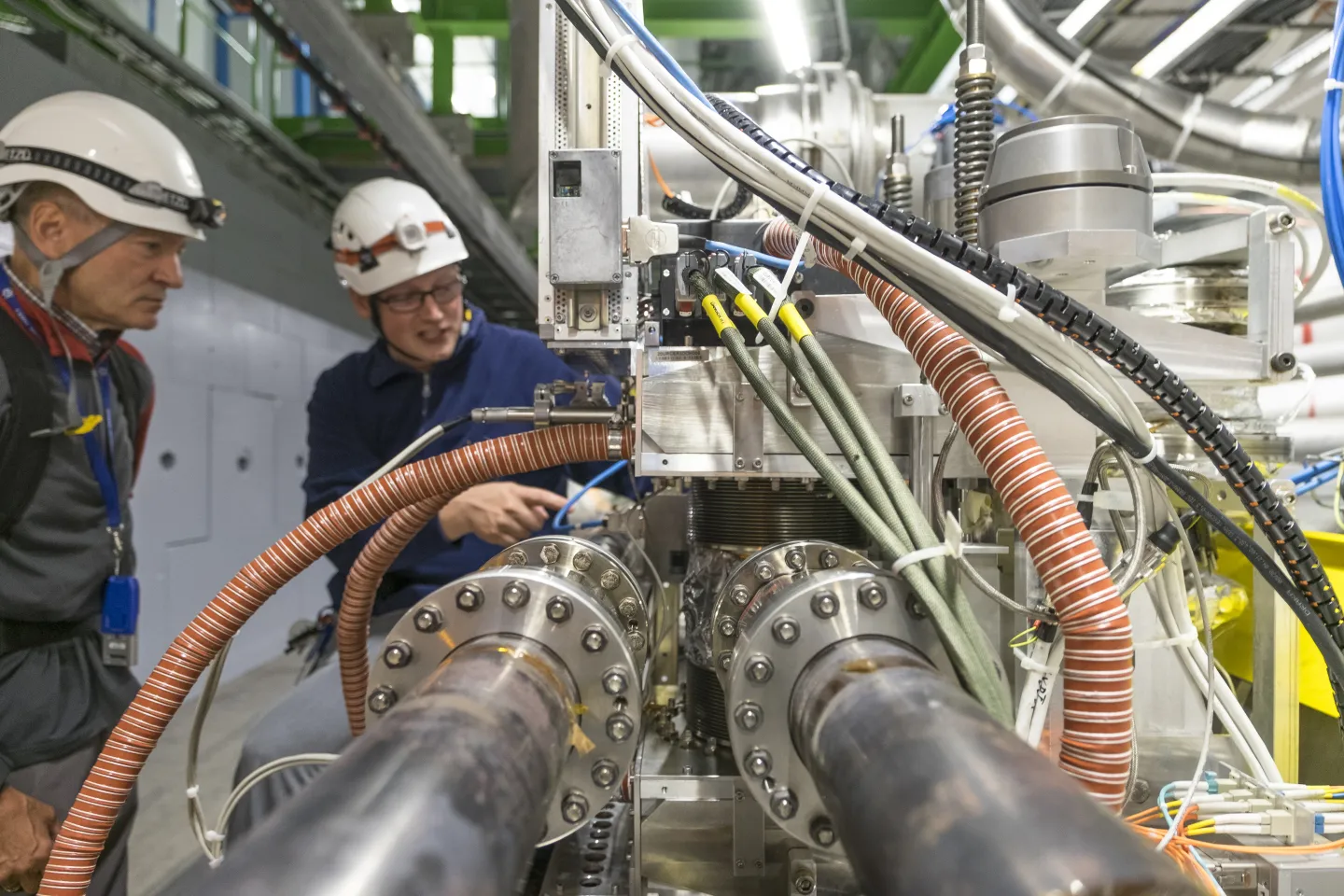
ALPHA experiment takes a closer look at antimatter The ALPHA collaboration at CERN in Geneva has scored another coup on the antimatter front by performing the first-ever spectroscopic measurements of the internal state of the antihydrogen atom. The results were published in www.nature.com/nature/journal/v548/n7665/pdf/nature23446.pdf“>https://www.nature.com/nature/journal/v548/n7665/pdf/nature23446.pdf“>Nature earlier this year in August. Their measurement showed the hyperfine splitting of
-
How heavy is the proton?
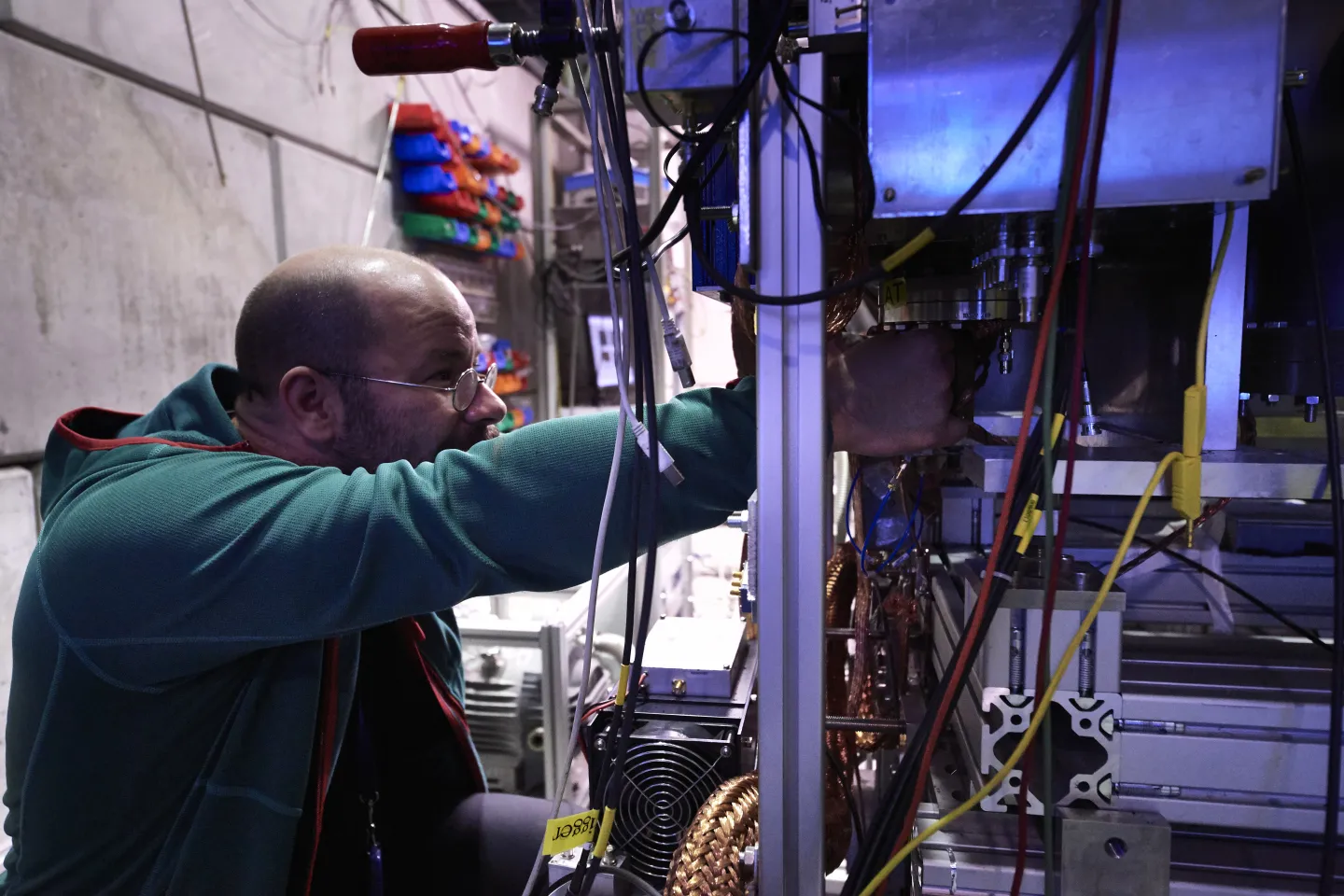
How heavy is the proton? To determine the mass of a single proton more accurately, the group of physicists from the Max Planck Institute for Nuclear Physics in Heidelberg and RIKEN in Japan performed an important high-precision measurement in a greatly advanced Penning trap system. The sensitive single-particle detectors were partly developed by the RIKEN
-
Exploring the dark sector with NA64
Exploring the dark sector with NA64 The field of dark matter (DM) particle physics is at an interesting stage, as key discoveries are anticipated. However, despite the intensive direct, indirect and LHC searches, the experiments have not yet yielded unambiguous Dark Matter (DM) signals. Though stringent constraints obtained on DM coupling to Standard Model (SM)
-
HIE-ISOLDE is tuning up for the new physics season
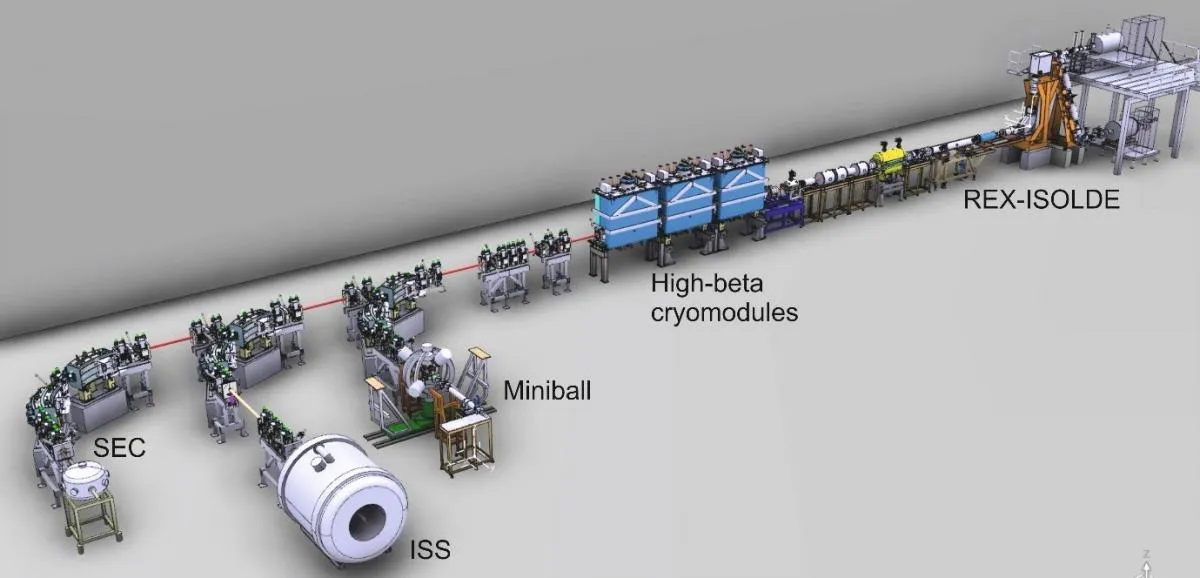
HIE-ISOLDE is tuning up for the new physics season This year has been a busy one for HIE-ISOLDE, the high energy and intensity upgrade project at ISOLDE. In January 2017, another milestone was reached with the addition of the third cryomodule to the HIE-ISOLDE linear post-accelerator, increasing the energy of radioactive ion beams from 5.5
-

Search for axions in streaming dark matter
Search for axions in streaming dark matter Streaming dark matter (DM) axions may be the better source for their discovery than the widely assumed isotropic DM. Because, a large axion flux enhancement can take place, temporally, due to gravitational lensing when the Sun and/or a planet are aligned with the stream or an axion caustic
-

Exotic searches with NA62 experiment
Exotic searches with NA62 experiment The NA62 experiment at CERN focuses in the study of kaon physics; a branch of physics that has been one of the major protagonists of the field in the second half of the twentieth century, as it played a key role in the development of the Standard Model and in