
Tag: SME
-
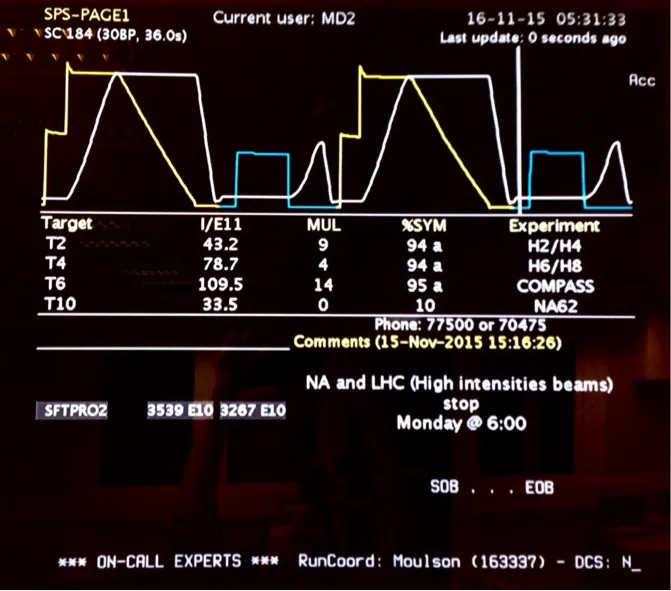
NA62 exploits the first high intensity kaon beam of 2015
NA62 exploits the first high intensity kaon beam of 2015 Last May, the newsletter reported about the two-month pilot run of 2014 and how NA62 was preparing for the 2015 data taking: this became reality for five months between mid-June and mid-November, an exciting but exhausting period for our operation team! As you may remember,
-
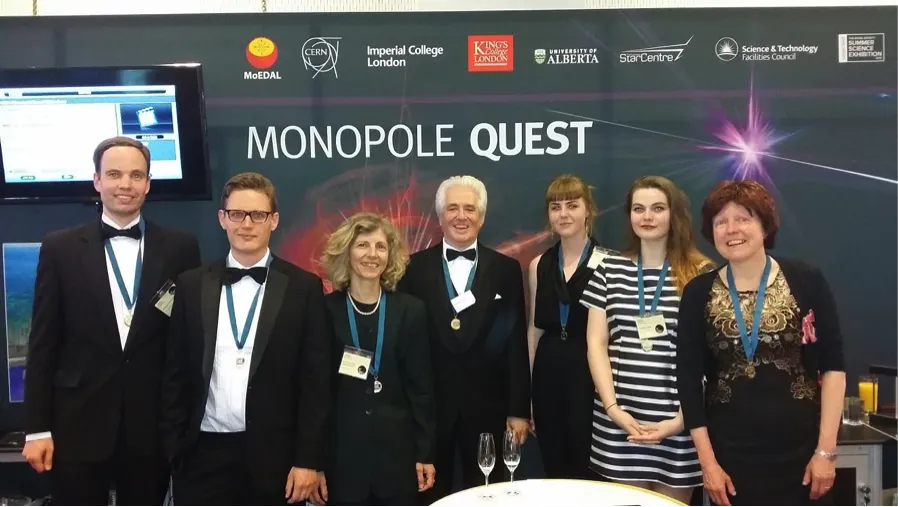
MOEDAL – A New Light on LHC Physics
MOEDAL – A New Light on LHC Physics MoEDAL is a pioneering experiment designed to search for highly ionizing avatars of new physics such as magnetic monopoles or massive (pseudo-)stable charged particles. Its physics program defines over 34 scenarios that yield potentially revolutionary insights into such foundational questions as: are there extra dimensions or new
-
First Pb beam in NA61/SHINE
First Pb beam in NA61/SHINE December 1st ended a two-week test period with Pb beam in the NA61/SHINE fixed-target experiment [1]. Pb ions at momentum of 30A GeV/c were delivered from the CERN SPS to the experiment for the first time. The beam time was used to perform numerous test and calibration measurements. They are
-

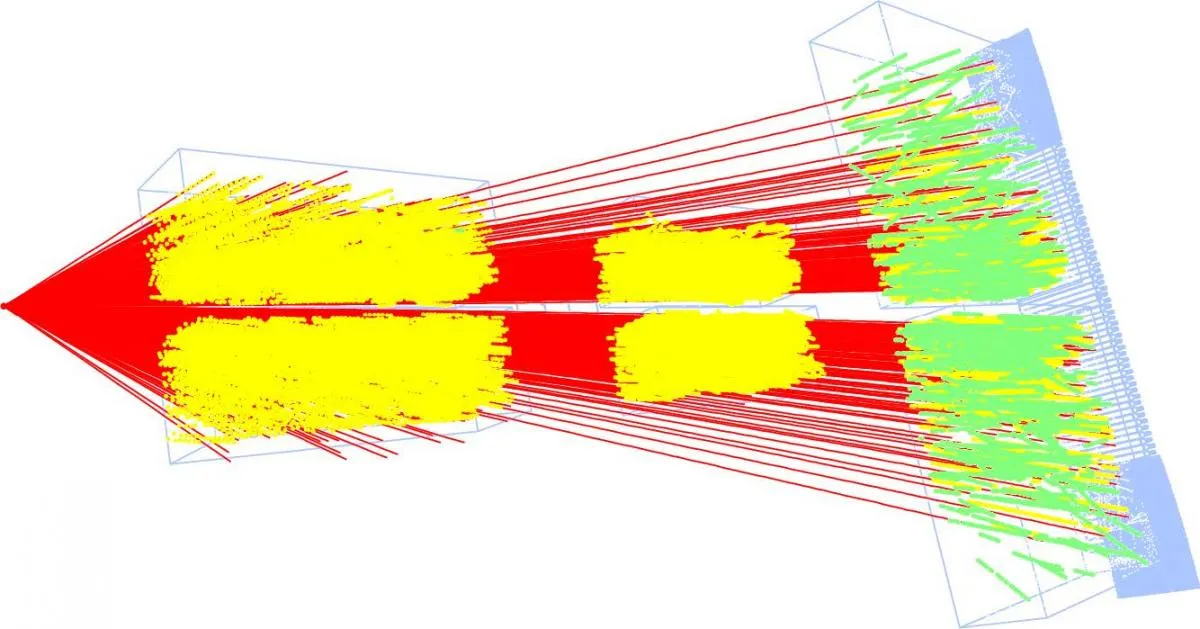
The Straw Detector in the NA62 Experiment
The Straw Detector in the NA62 Experiment The NA62 experiment is the successor of a previous kaon decay experiment (NA48) operated in the same experimental area at the CERN SPS (see Fig.1). In December 2008, the CERN Research Board has authorized the collaboration to build new detectors, which are tailored to measure the very rare
-
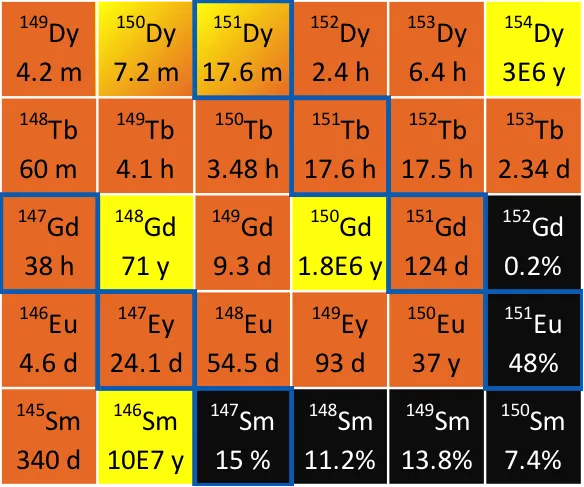
A boost for ISOLDE’s beams
A boost for ISOLDE's beams The new HIE-ISOLDE accelerator is up and running, increasing the beam energy of ISOLDE, CERN’s nuclear physics facility. Over the last few weeks, CERN’s nuclear physics facility, ISOLDE (http://home.web.cern.ch/about/experiments/isolde), has been producing ion beams at higher energies. The first cryomodule of the new HIE-ISOLDE (High-Intensity and Energy ISOLDE) accelerator is
-
AWAKE starts installation
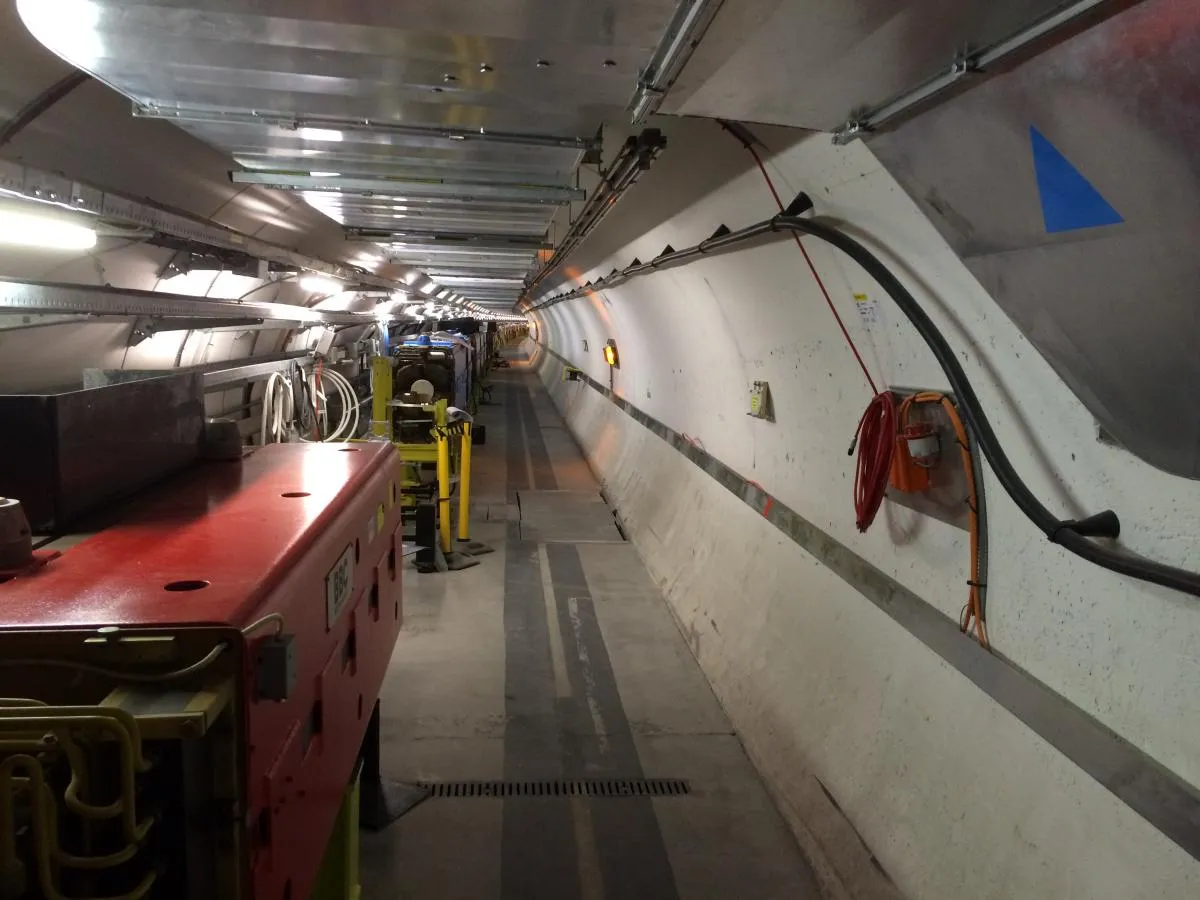
AWAKE starts installation On 18 September, the CERN council approved a boost in funding for a planned experiment called the Advanced Wakefield Experiment, or AWAKE. AWAKE is a proof-of-principle experiment, whose aim is to use protons to generate powerful wakefields, accelerating an electron beam. With accelerator gradients hundreds of times higher than those used in
-
A Timelapse video of CAST
A Timelapse video of CAST The CERN Axion Solar Telescope (CAST) is an experiment to search for hypothetical particles called axions. These have been proposed by some theoretical physicists to explain why there is a subtle difference between matter and antimatter in processes involving the weak force, but not the strong force. If axions exist,
-
n_TOF one year after – First results
n_TOF one year after – First results Since the termination of the construction of the new second experimental area EAR2 [1,2] of n_TOF in July 2014 [3], the facility has been successfully taking data both in the existing experimental area EAR1 and in the new EAR2. The neutron beams in both areas are produced simultaneously
-
COMPASS-II: A QCD Laboratory at CERN
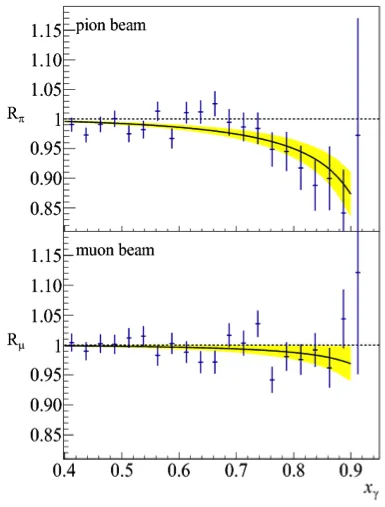
COMPASS-II: A QCD Laboratory at CERN With COMPASS-II CERN enters in the exploration of a new territory: the structure of the proton in multiple dimensions. While COMPASS-I primarily studied the distribution and polarisation of quarks and gluons in the nucleon as a function of the longitudinal momentum carried by the struck quark or gluon, now
-
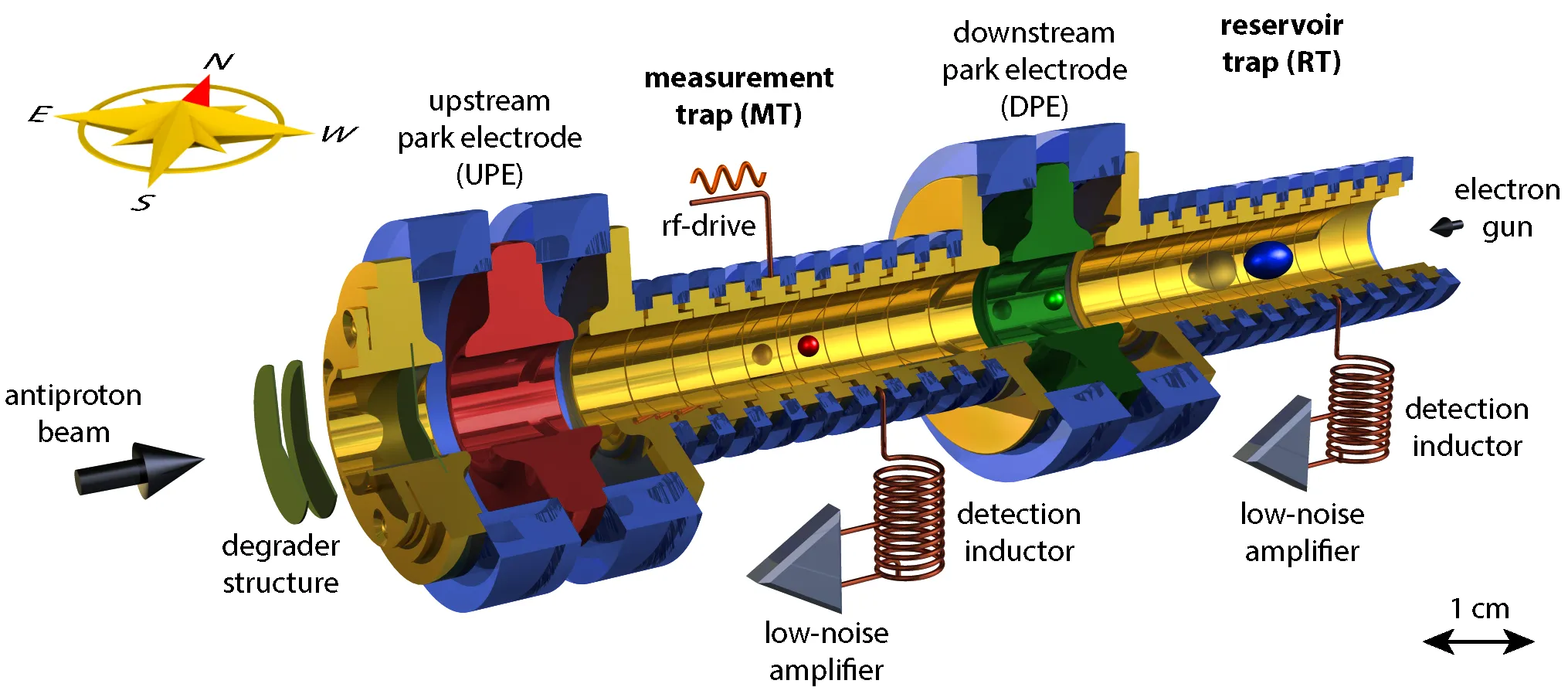
ALICE and BASE experiments present new results related to CPT symmetry
ALICE and BASE experiments present new results related to CPT symmetry In August the ALICE experiment published a precise measurement of the difference between ratios of the mass and electric charge of light nuclei and antinuclei produced during heavy-ion collisions at the LHC. The article published in the journal Nature Physics confirms one of the