
Tag: FUTURE COLLIDERS
-
A voice from Early-Career Researchers
A voice from Early-Career Researchers Any post-LHC collider, starting operations around late 2030s, would be an inter-generational project and thus it is vital to include the voices of young researchers in the decision making process. Studies planning for a next-generation collider strive to create a global vision for a "sustainable, innovative and diverse" research infrastructure,
-
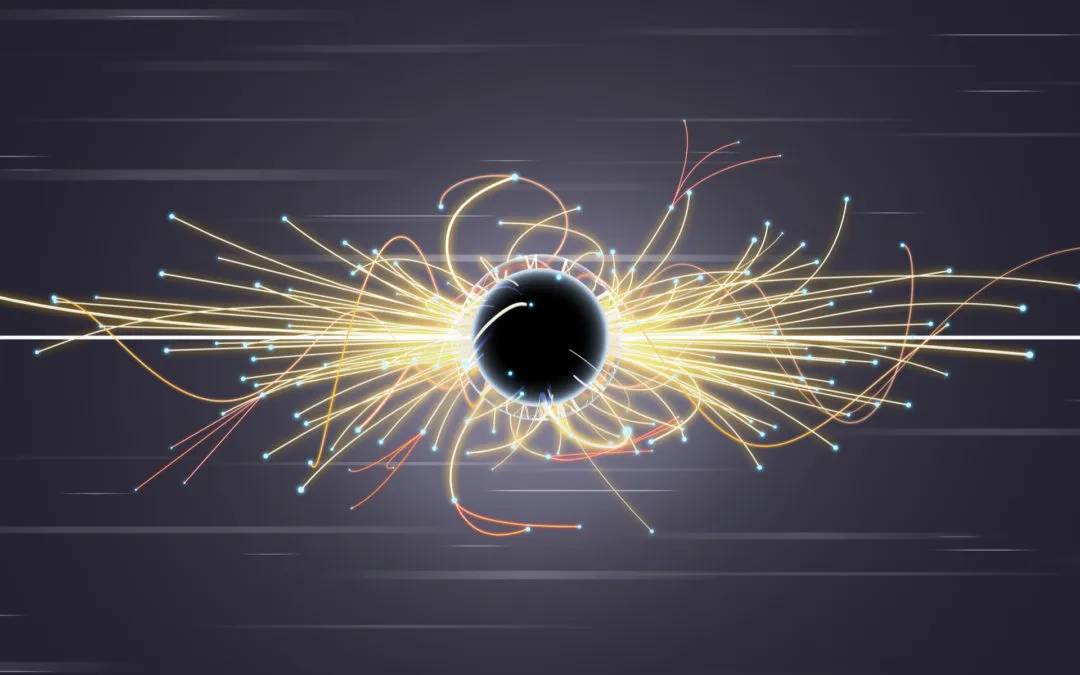
Shaping the future of particle physics
Shaping the future of particle physics Τhe ongoing update of the European Strategy for Particle Physics aims to identify the potential opportunities and challenges of the proposed research programme through an inclusive and evidence-driven process. Discussions focus on the parameter space that can be explored and how future searches could guide theoretical developments along with
-
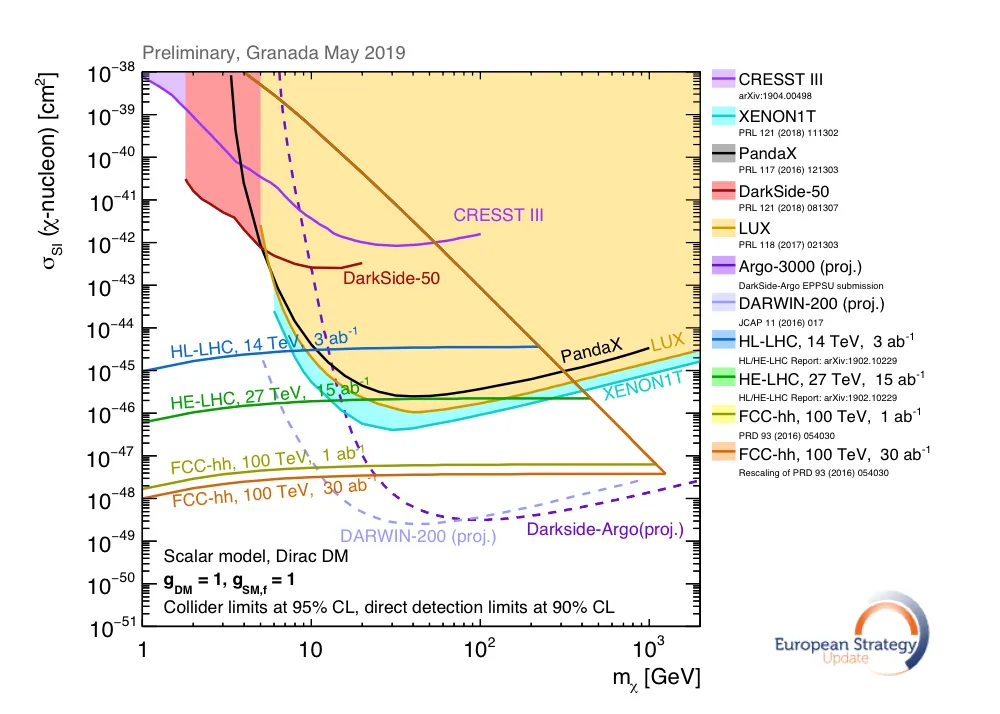
Discussing synergies between particle physics, astrophysics and nuclear physics
Discussing synergies between particle physics, astrophysics and nuclear physics One overarching objective of science is to further our understanding of the universe, from its early stages to its current state and future evolution. This depends on gaining insight on the universe’s most macroscopic components, for example galaxies and stars, as well as describing its smallest
-
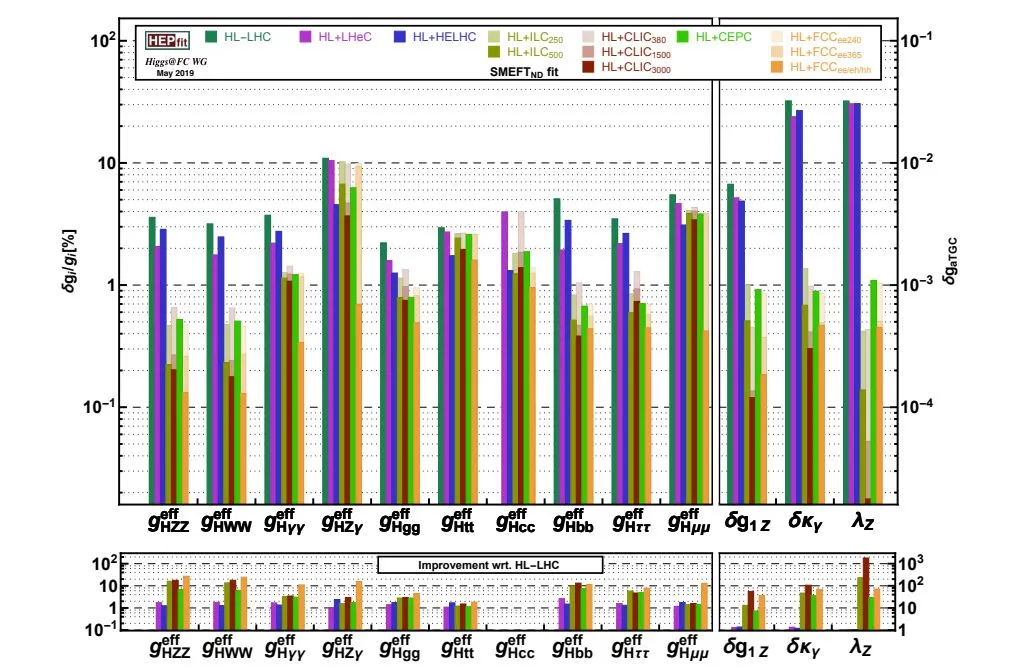
Studying the Higgs at future colliders
Studying the Higgs at future colliders The LHC offers a very detailed knowledge of how the Standard Model particles interact, but we know that this knowledge is incomplete. A number of experimental data and theoretical motivations point to the existence of new physics beyond the description of the Standard Model. The recently discovered Higgs boson
-
Physics at the Future Circular Collider
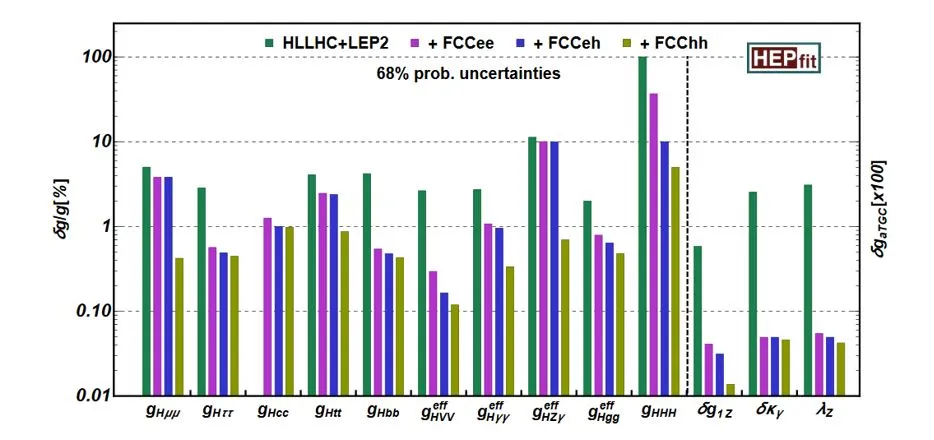
Physics at the Future Circular Collider “Progress in knowledge has no price” with these words, Alain Blondel concluded the FCC Physics workshop at CERN. Over two days, the meeting reviewed the results of the FCC Conceptual Design Report and discussed a reliable implementation plan to meet the ambitious physics targets of this project. BROKEN IMAGE
-
A report from the CLIC week
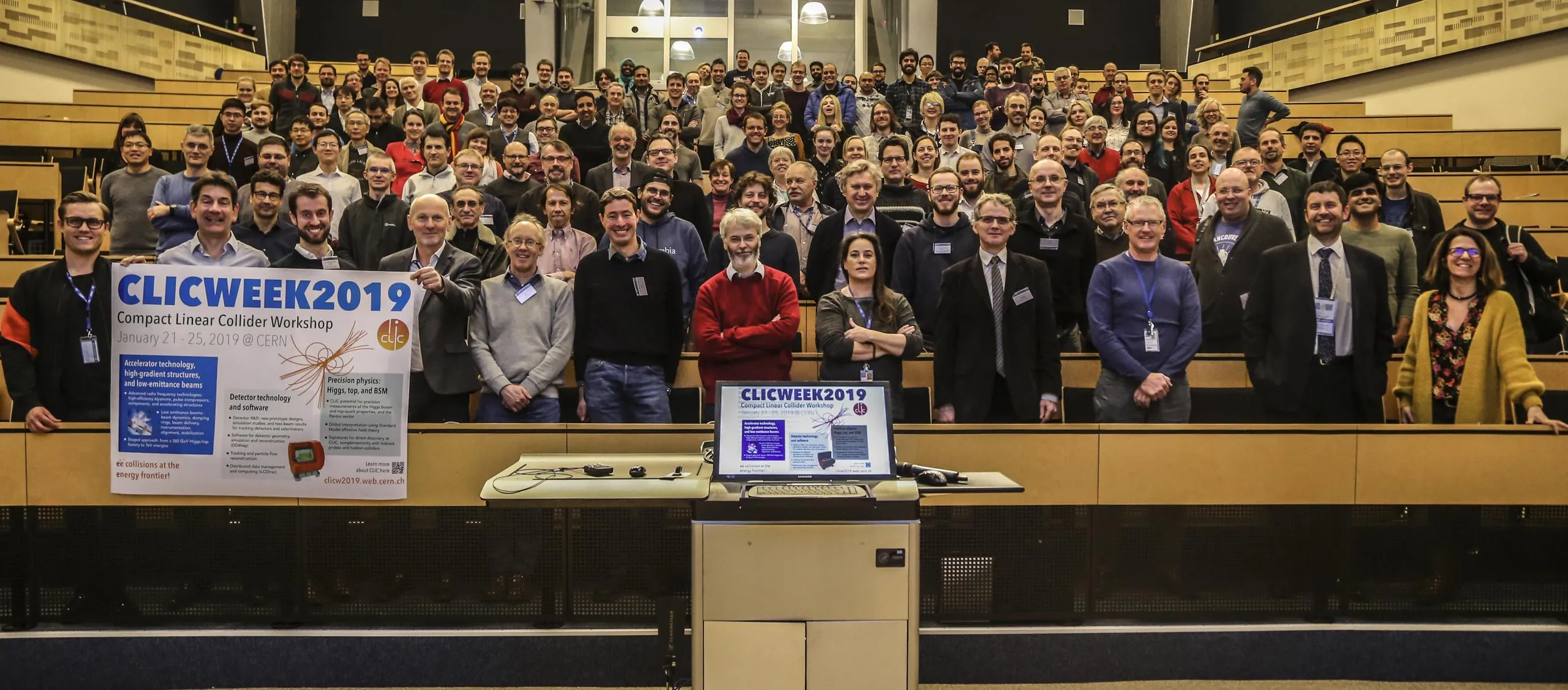
A report from the CLIC week The annual Compact Linear Collider (CLIC) workshop brings together the full CLIC community, this year attracting more than 200 participants to CERN, 21-25 January. CLIC occupies a unique position in both the precision and energy frontiers, combining the benefits of electron-positron collisions with the possibility of multi-TeV collision energies.
-
AWAKE achieves first ever acceleration of electrons in a proton-driven plasma wave
AWAKE achieves first ever acceleration of electrons in a proton-driven plasma wave BROKEN IMAGE NOT MOVED (drupal url : https://ep-news.web.cern.ch//content/awake-achieves-first-ever-acceleration-electrons-proton-driven-plasma-wave) In a paper published in Nature, the AWAKE collaboration at CERN reports the first ever successful acceleration of electrons using a wave generated by protons zipping through a plasma. The acceleration obtained over a given
-
Towards an FCC-hh Detector Magnet System
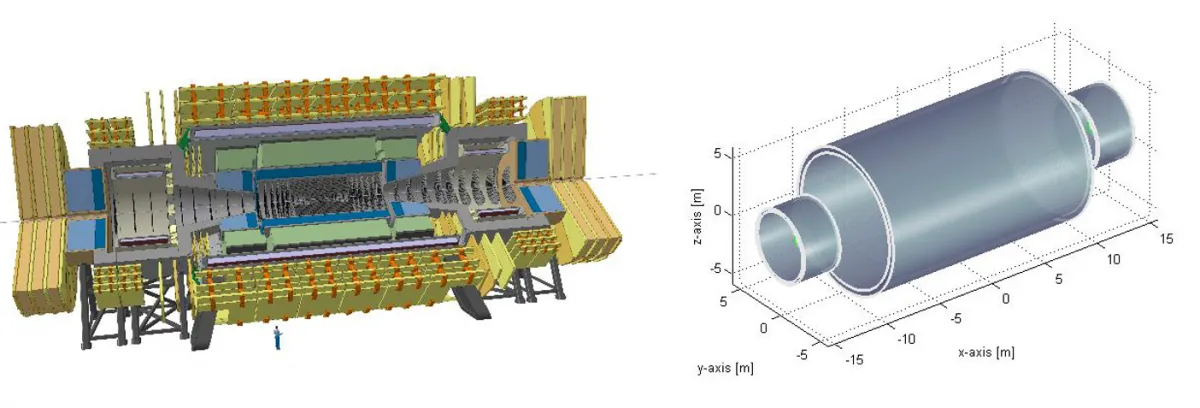
Towards an FCC-hh Detector Magnet System The Future Circular Collider (FCC) study is well on its way, and will culminate in the publication of the Conceptual Design Report (CDR) early 2019. The most ambitious proposed future machine is a hadron-hadron accelerator (FCC-hh) of 100 km in circumference foreseeing proton-proton collisions at a center of mass
-
Setting a roadmap for future experimental technologies
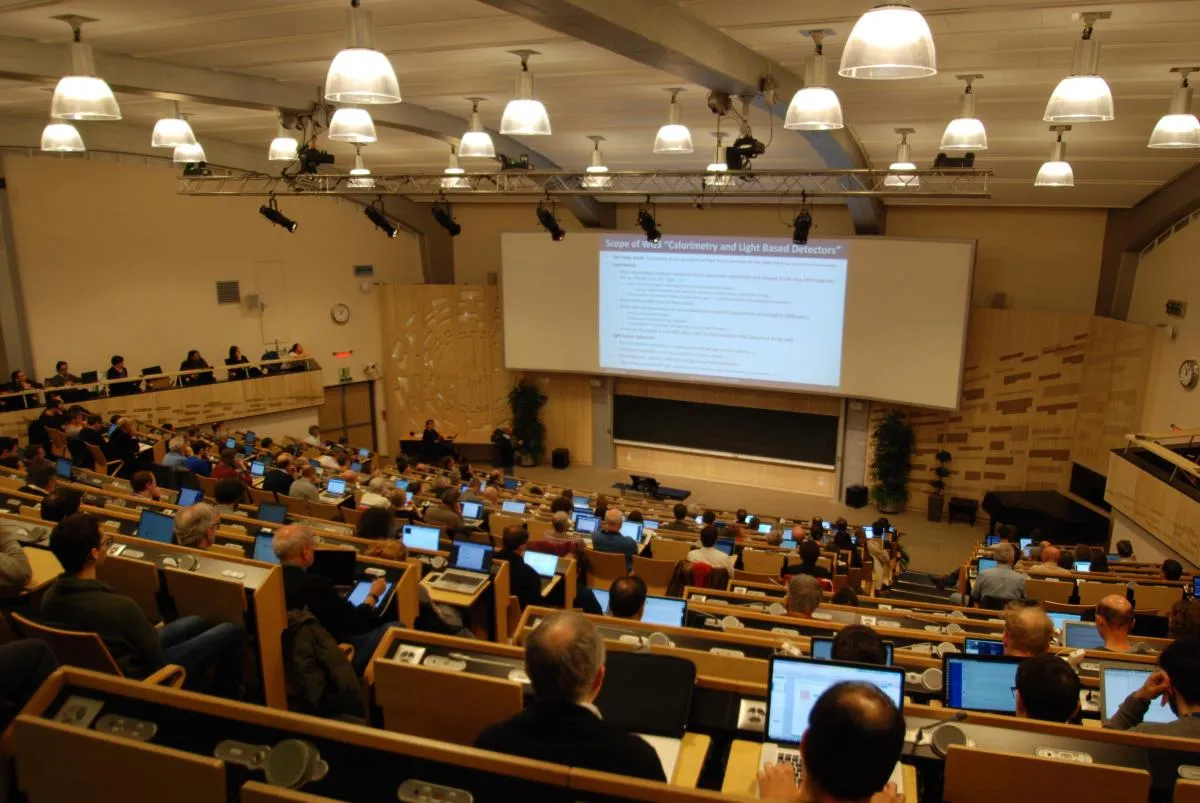
Setting a roadmap for future experimental technologies In elementary-particle physics as in most fields of science, advances in understanding are closely coupled to advances in technology. Machines of higher luminosity open opportunities for the observation of rare and unexpected processes while higher-energy accelerators are needed to cross thresholds for suspected new phenomena. Advances in accelerator
-
Report from CLIC Week 2018
Report from CLIC Week 2018 The Compact Linear Collider (CLIC) workshop is the main annual gathering of the CLIC accelerator and detector communities. This year it attracted more than 220 participants to CERN, 22-26 January. CLIC is a proposed electron-positron linear collider, envisaged for the era beyond the High-Luminosity LHC (HL-LHC), that would operate a