
Tag: Interviews and Features
-
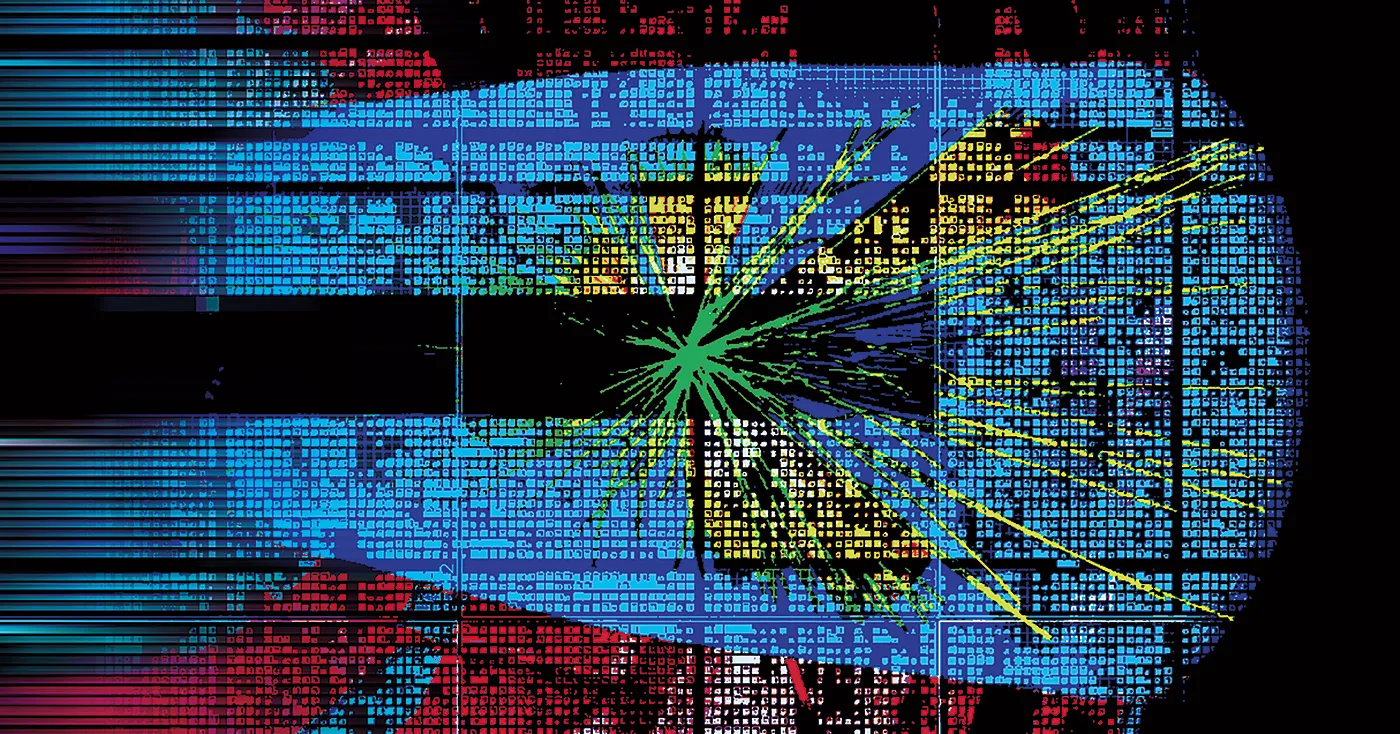
G4HepEm: accelerated electromagnetic shower simulation for the HL–LHC
G4HepEm: accelerated electromagnetic shower simulation for the HL–LHC When the High–Luminosity LHC (HL–LHC) starts delivering data, the volume of simulated events required to control systematic uncertainties will rise sharply. In ATLAS, detailed detector simulation already consumes a large fraction of the computing budget; in CMS, it is expected to grow substantially with the Phase-2 upgrade,
-
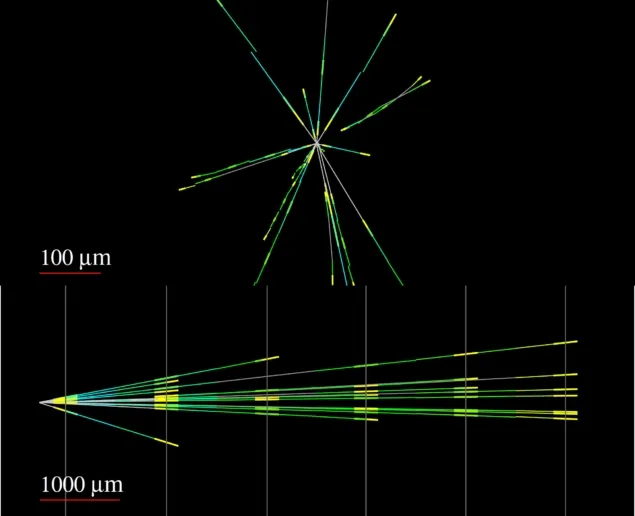
Welcome to the Collider Neutrino Era!
Welcome to the Collider Neutrino Era! Searches for new fundamental particles and interactions at hadron collider experiments such as the SPS, the TeVatron, and the LHC have traditionally focused on heavy and relatively strongly interacting states. The two general-purpose experiments of the LHC, ATLAS and CMS, were for this reason designed to cover the central
-
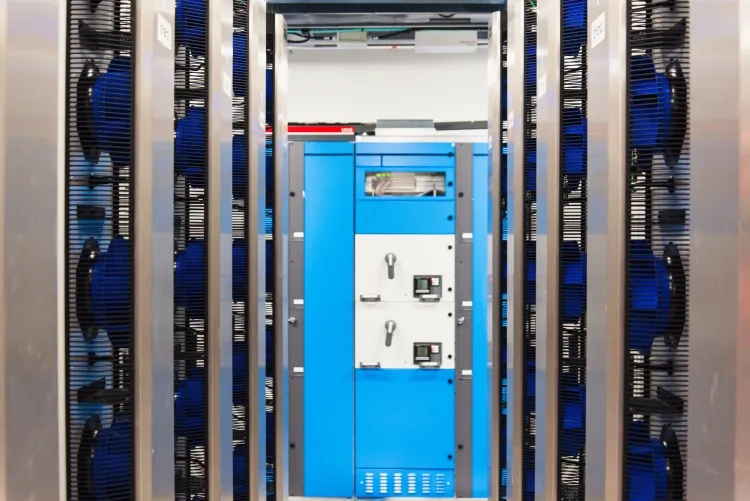
OLC-R / OLC-1 refurbishment in a Nutshell
OLC-R / OLC-1 refurbishment in a Nutshell For Phase-2, CMS DAQ will undergo a major increase of its capacities to match HL-LHC performance and the related CMS physics program. Compared to the present situation (Run3), the post-trigger data throughput will increase from 2 Tb/s today to 50 Tb/s for Run4 and the processing power needed
-
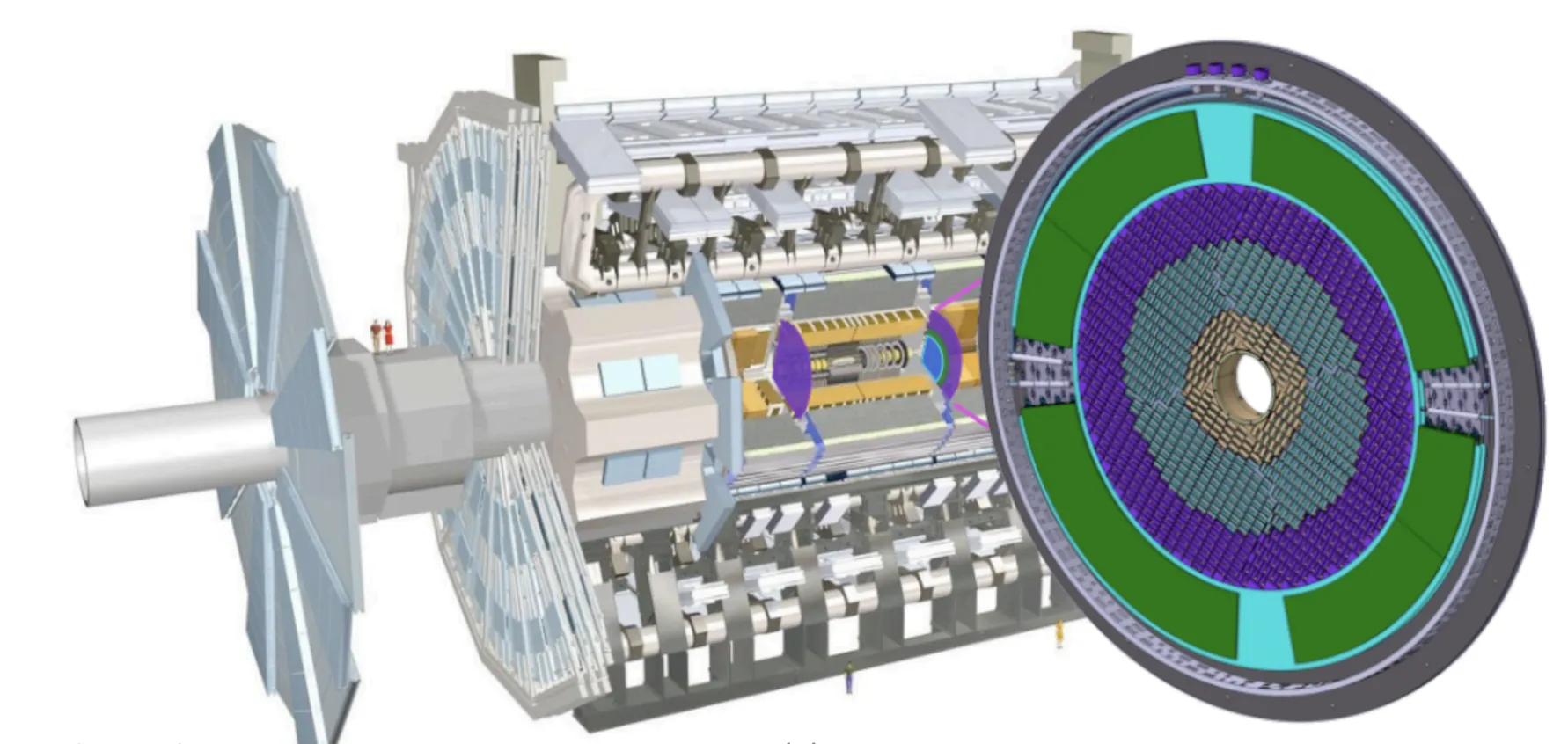
The ATLAS High Granularity Timing Detector
The ATLAS High Granularity Timing Detector Introduction Given the challenging conditions posed by the HL-LHC, ATLAS is currently in the process of constructing a novel precision-timing silicon detector, the High-Granularity Timing Detector (HGTD), which provides a time resolution of 30 to 50 ps for charged particles [ATLAS-TDR-31]. The detector covers a pseudorapidity range of 2.4
-
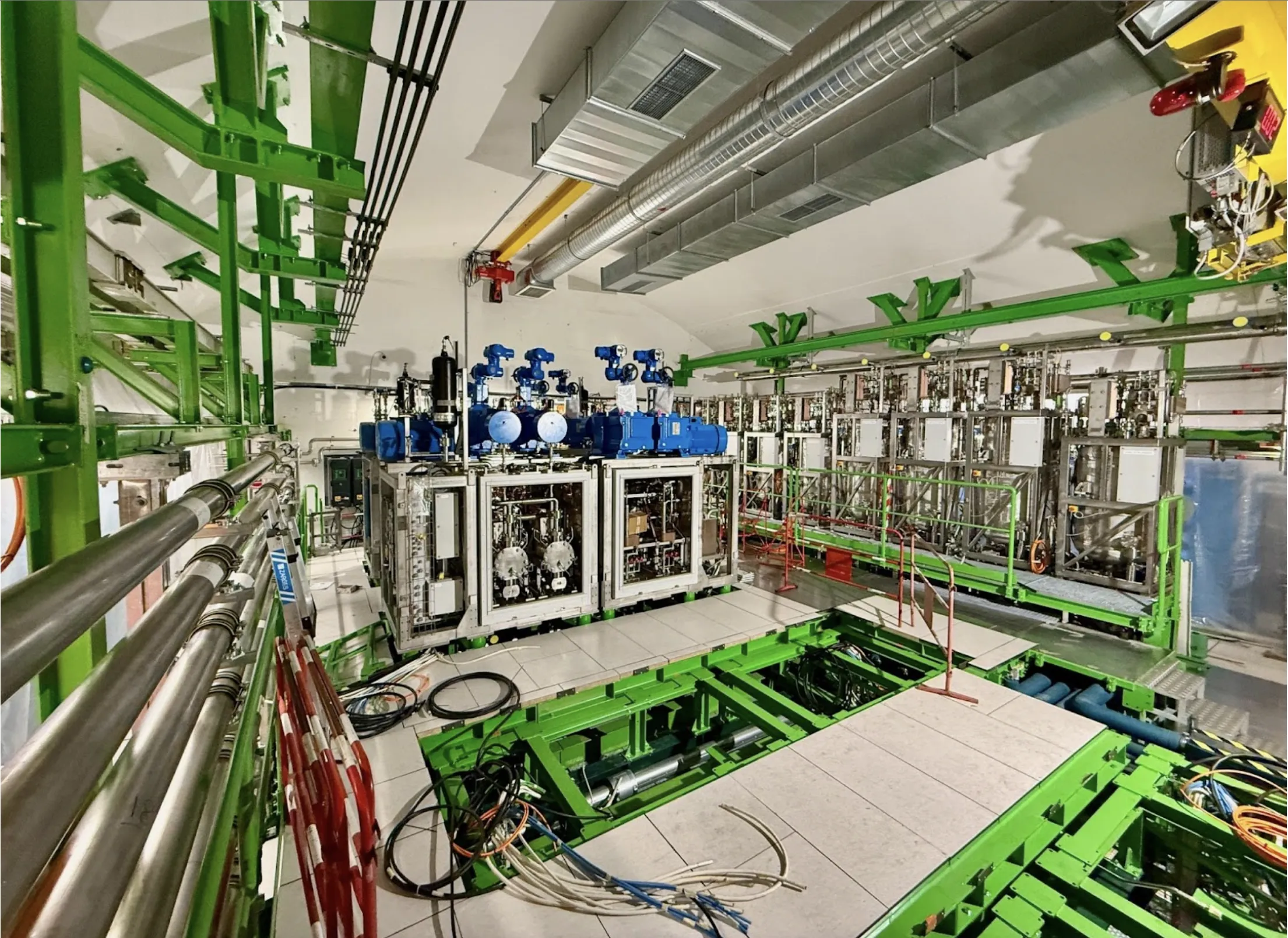
Next-Generation CO₂ Cooling Systems Powering the Future of ATLAS and CMS
Next-Generation CO₂ Cooling Systems Powering the Future of ATLAS and CMS Four CO2 cooling plants and accumulators in the service cavern of CMS in May 2025. (Photo by Jérôme Daguin) During recent shutdown periods, CERN engineers and technicians — in collaboration with the ATLAS and CMS teams — began installing the first units of next-generation
-
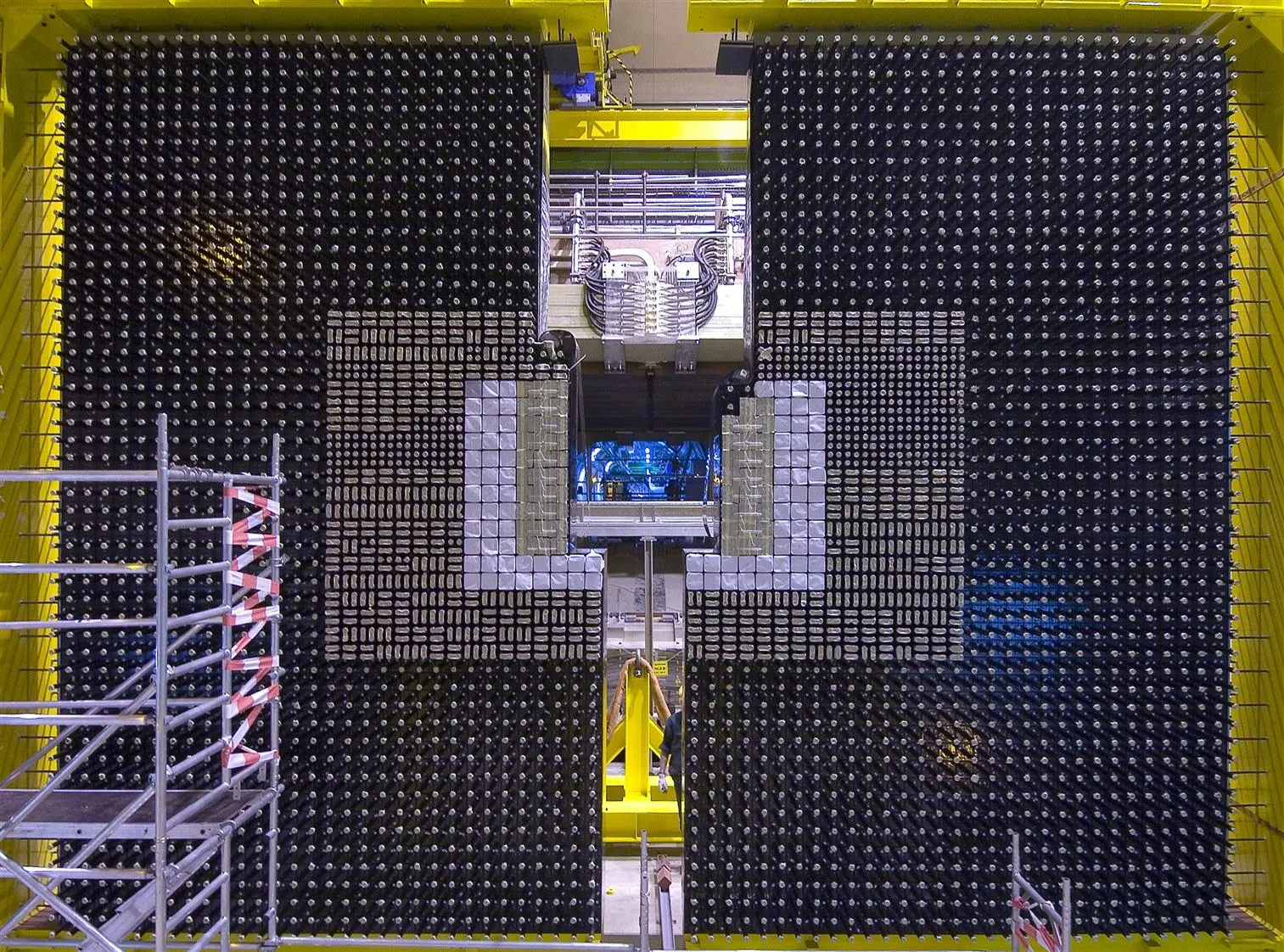
Calorimetry and light-based detectors for future experiments
Calorimetry and light-based detectors for future experiments The strategic R&D programme on technologies for future experiments by the CERN EP department is currently in its second phase from 2024 until 2028. Within this effort, Work Package (WP) 3 focusses on the development of calorimetry and light-based detectors. Particle identification Several detectors use light to detect
-
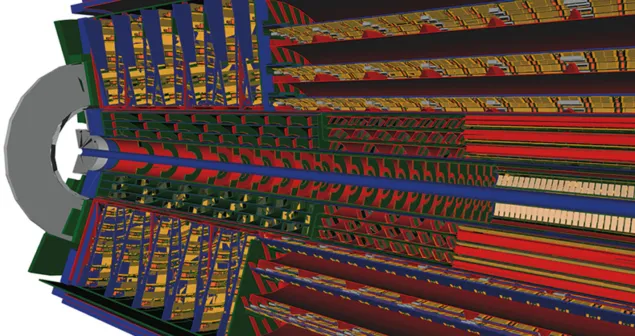
The ATLAS Inner Tracker Integration at CERN
The ATLAS Inner Tracker Integration at CERN Introduction The ATLAS ITk (Inner TracKer) is a new all-silicon tracker that will replace the existing ATLAS Inner Detector (ID) to meet the requirements imposed by the high-radiation and high-hit occupancy environments of the HL-LHC (High-Luminosity LHC). The ITk consists of multiple layers of silicon detectors arranged into
-

CWDM Link: A High-Bandwidth Optical Upgrade for LHC Beam Instrumentation
CWDM Link: A High-Bandwidth Optical Upgrade for LHC Beam Instrumentation The Versatile Link project[1] was initially developed to provide a point-to-point radiation-hardened optical link common to most CERN experiments which upgraded during Long Shutdown 2 (LS2). The Beam Instrumentation group (SY-BI) also adopted it as backbone of the SPS beam instrumentation (BI) front-end electronics upgrade[2],
-
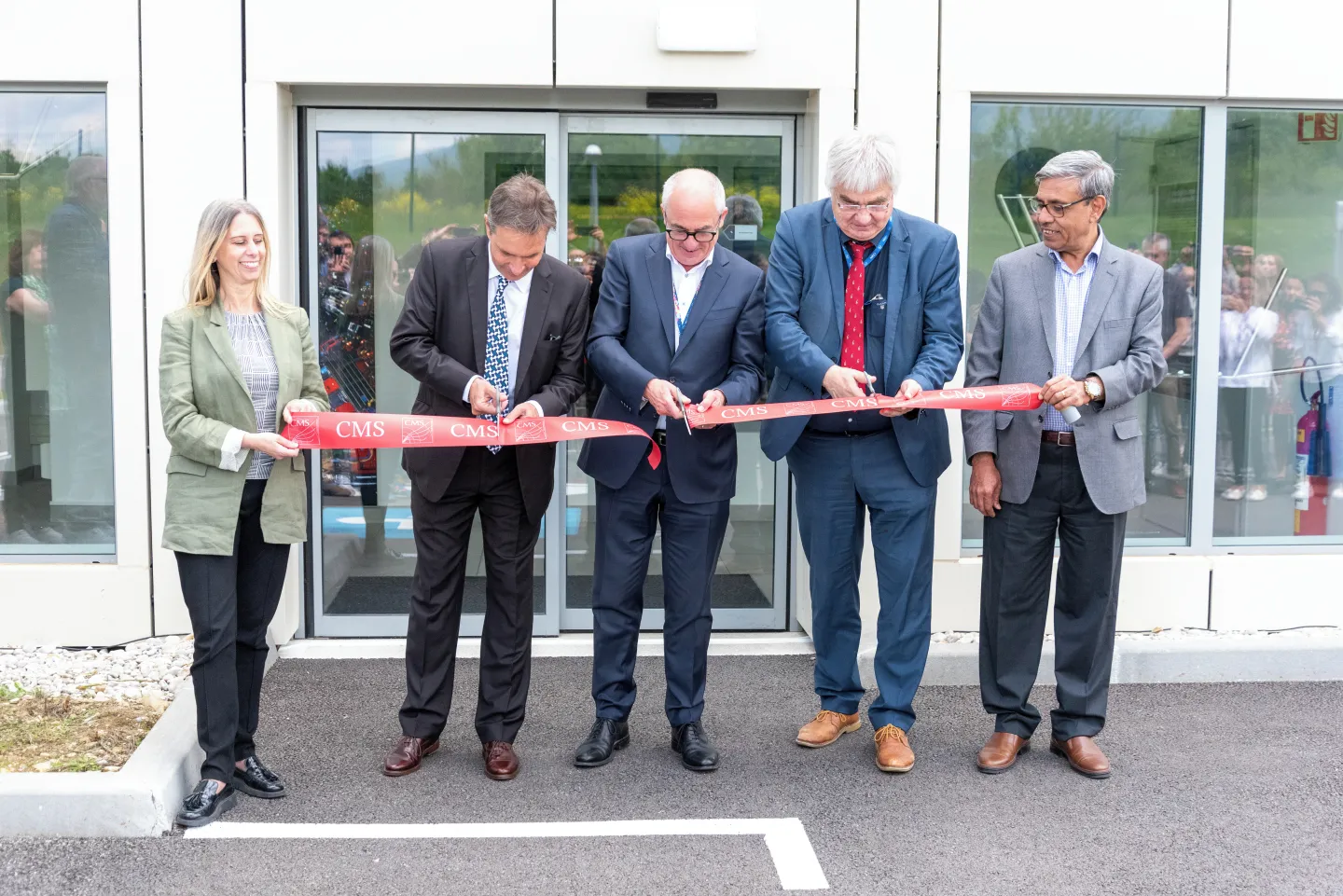
CMS Inaugurates Its New Control Room
CMS Inaugurates Its New Control Room On 15 May 2025, CMS officially inaugurated its new control room at Point 5 in Cessy, France. The celebration brought together guests from CERN management and representatives of all LHC experiments to mark this significant upgrade to CMS’s operational infrastructure. If CMS were a human body, the control room
-
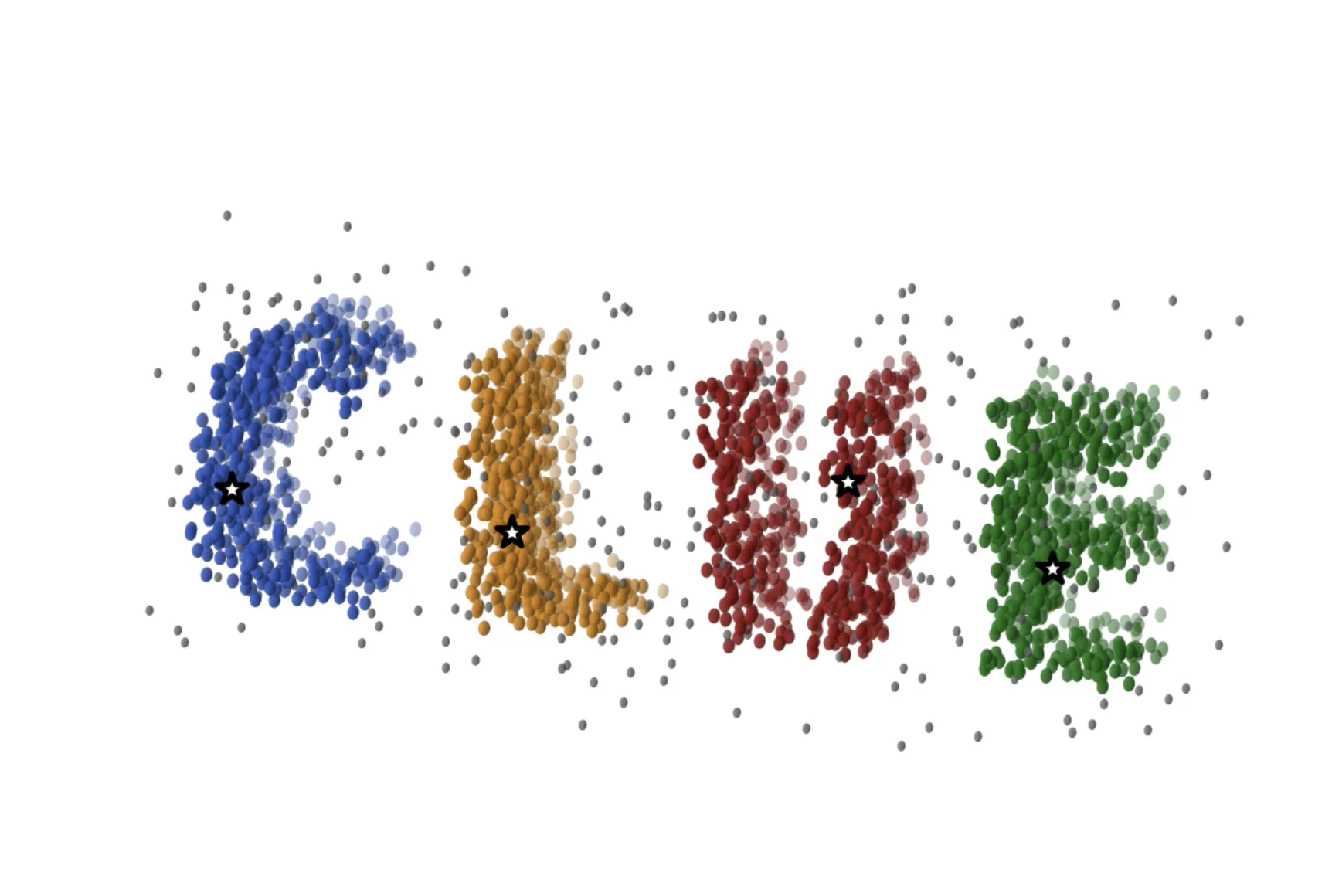
CLUE: A Scalable Clustering Algorithm for the Data Challenges of Tomorrow
CLUE: A Scalable Clustering Algorithm for the Data Challenges of Tomorrow The foreseen increase in luminosity and pileup at the High-Luminosity Large Hadron Collider (HL-LHC) [1] will challenge both the detector hardware and the reconstruction software. With higher pile-up, calorimeter energy reconstruction depends even more on pattern-recognition algorithms. These algorithms have to cluster together deposits