
Tag: Interviews and Features
-

Extended Scalar Sectors are considered from all angles at CERN
Extended Scalar Sectors are considered from all angles at CERN It has been more than ten years since the discovery of the first scalar particle at the electroweak scale. This particle was discovered at the LHC in 2012, and it was quickly found to be a scalar that is compatible with the Higgs boson predicted
-
Development of Radiation Tolerant Silicon Detectors for the LHC and HL-LHC
Development of Radiation Tolerant Silicon Detectors for the LHC and HL-LHC Introduction The potential of semiconductor-based detectors for particle detection in nuclear and high-energy physics (HEP) has been identified as early as 1960. However, it took two more decades of development to transform these detectors into reliable, fully operational systems. Silicon-based tracking detectors made their
-
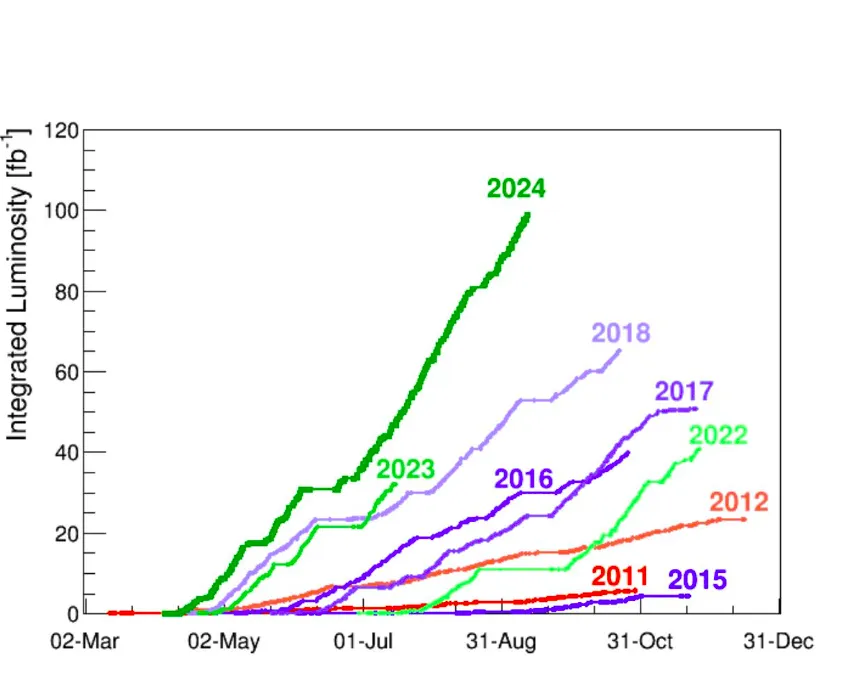
LHC Run 3: A Marathon of Progress and Perseverance
LHC Run 3: A Marathon of Progress and Perseverance Earlier this month, the Large Hadron Collider reached an unprecedented milestone of 100 inverse femtobarns – equivalent to 10 million billion collisions – delivered to the ATLAS and CMS experiments in 2024, with 28 days of proton-proton collisions remaining. This marks a historic first in a
-
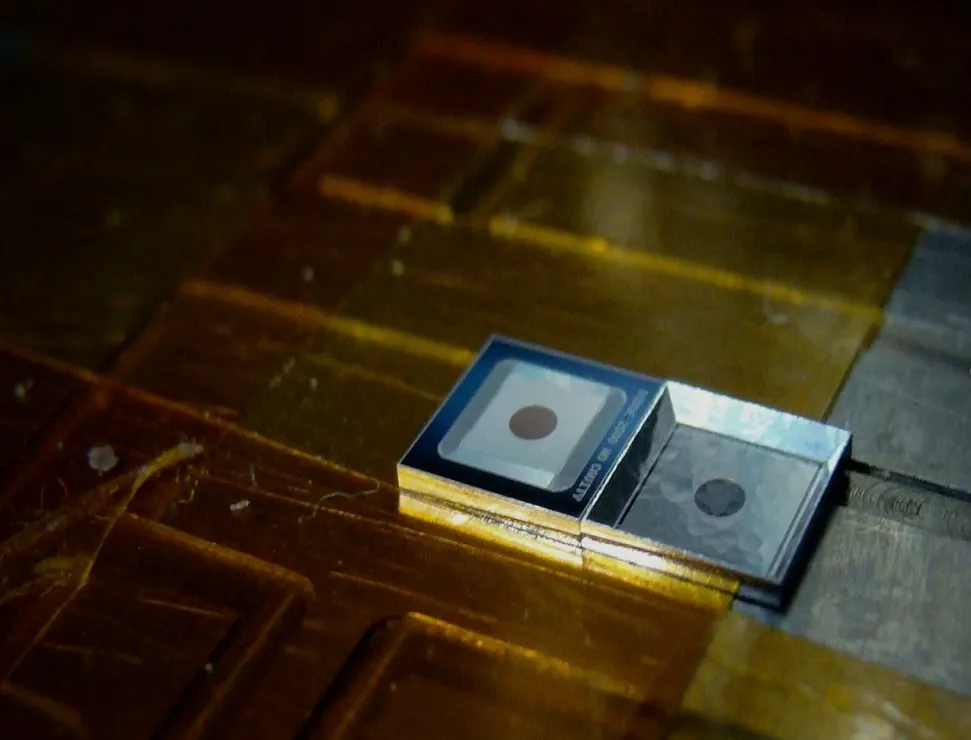
Characterization, modelling and radiation hardening of silicon-detectors for future experiments.
Characterization, modelling and radiation hardening of silicon-detectors for future experiments. The Strategic R&D Programme on Technologies for Future Experiments of the EP Department (EP R&D) develops the detector technologies needed for the next generation of High Energy Physics experiments and recently concluded phase I (2020-2023) of its ambitious work plan with a close-out report [1].
-
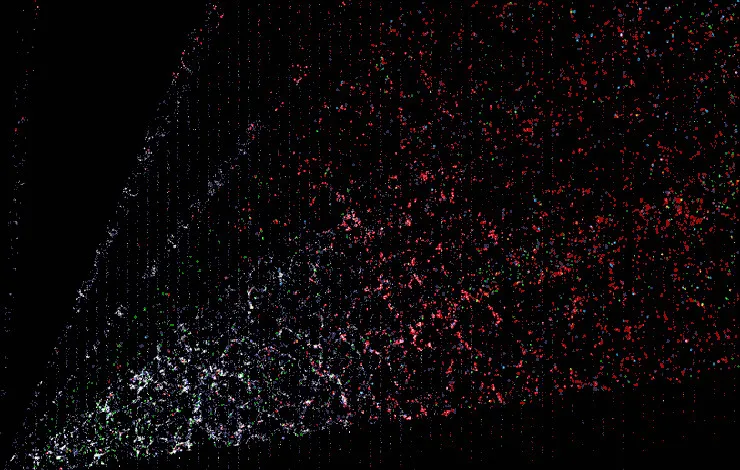
DESI-Y1 and the Mystery of the Neutrino Mass
DESI-Y1 and the Mystery of the Neutrino Mass In April 2024, the Dark Energy Spectroscopic Instrument (DESI) collaboration released their first cosmological results [1]. These results made the news primarily because they showed some hints of dynamical dark energy (see the article in the same issue of the EP newsletter). However, they also had key
-
ATLAS releases 2015 and 2016 proton–proton datasets for public research use
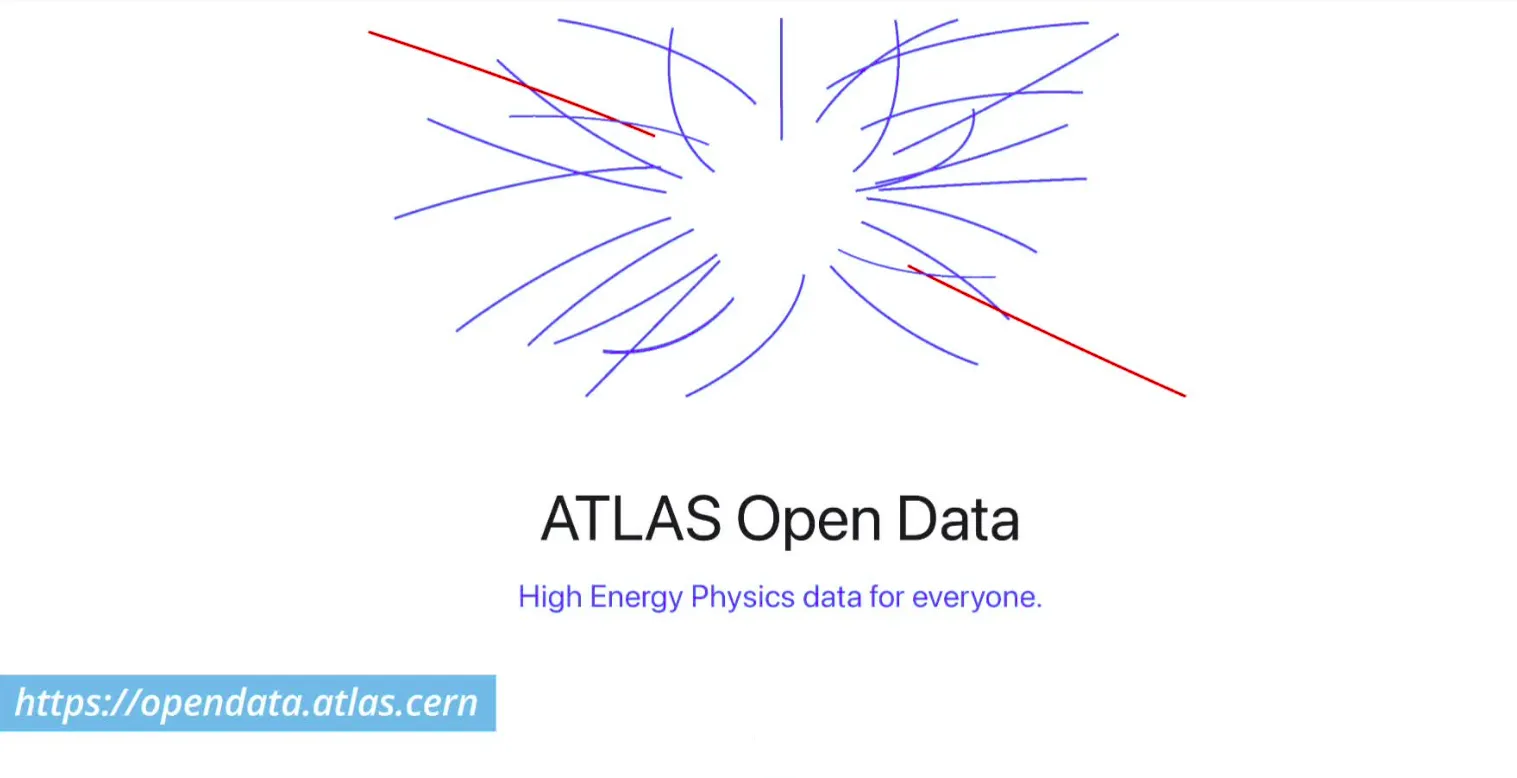
ATLAS releases 2015 and 2016 proton–proton datasets for public research use The ATLAS Collaboration has announced the release of 7 billion proton–proton collision events, alongside 2 billion simulated events, in the collaboration’s first release of open data for scientific research. The open data, available through CERN’s Open Data portal, comprise the entire 2015 and 2016
-
Charting the Future of Neutrino Experiments
Charting the Future of Neutrino Experiments The development of next-generation neutrino experiments is underway at CERN, which will shed light on the nature of these elusive particles. While the development of far and near detectors is advancing well, novel identification techniques for neutrino beams are vital to strongly reduce systematic uncertainties on key observables –
-
DRD7: An R&D Collaboration Pioneering Electronics for Future Particle Detectors
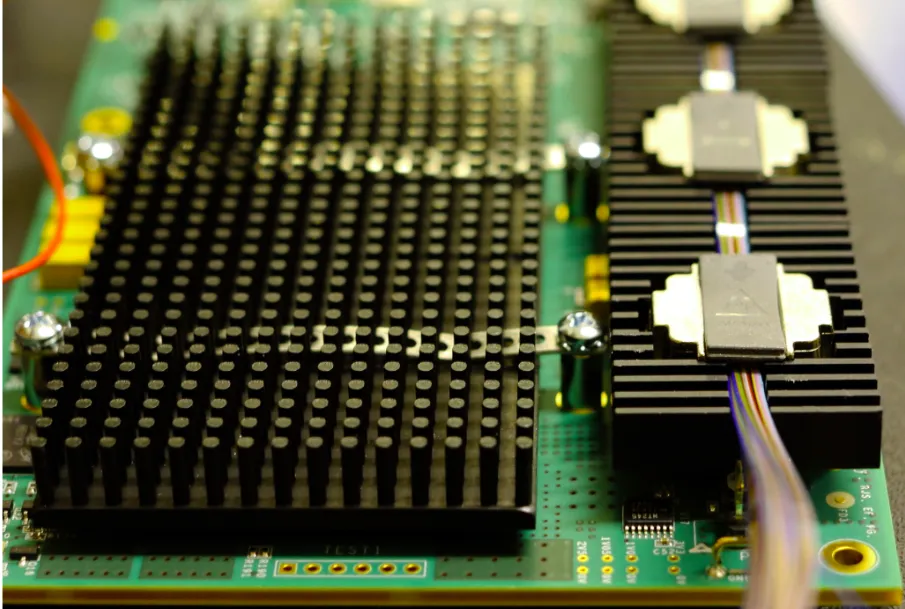
DRD7: An R&D Collaboration Pioneering Electronics for Future Particle Detectors On June 5, 2024, the CERN Research Board approved the DRD7 Collaboration for an initial three-year period. The collaboration will focus on developing and demonstrating new electronic hardware, firmware, and software concepts. Its main goal is to pursue disruptive and transformative innovations, but it will
-
In-Depth Conversation with John Preskill
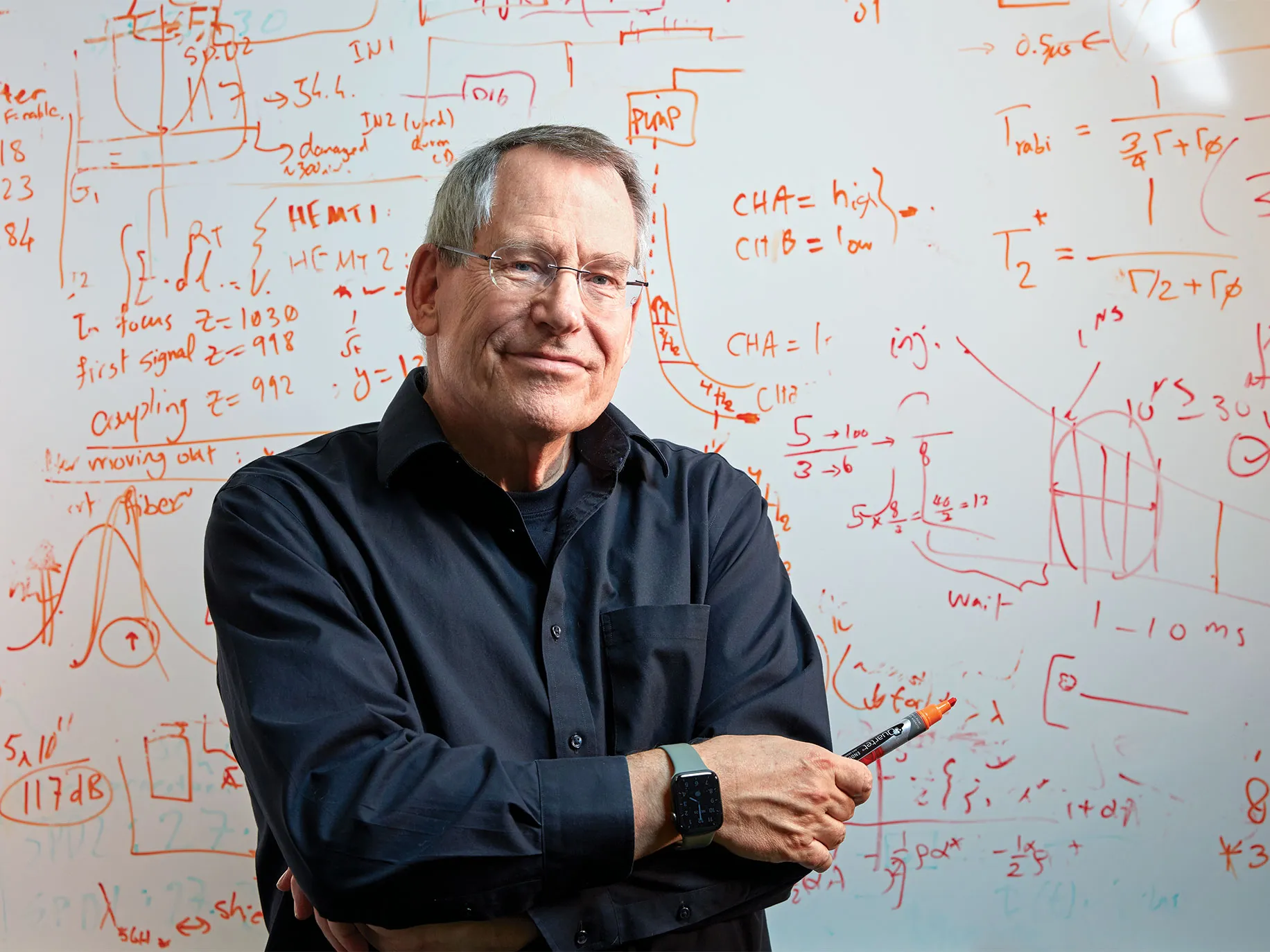
In-Depth Conversation with John Preskill In this exclusive interview, we sit down with John Preskill, a pioneering physicist and leading expert in quantum computing. As a professor at Caltech and the director of the Institute for Quantum Information and Matter, Preskill has been at the forefront of groundbreaking research that promises to revolutionize technology as
-

Exploration with LHCb: from unseen to rare
Exploration with LHCb: from unseen to rare Flavour physics, even at low-energy scales, offers a glimpse at energy scales far higher than those reachable directly thanks to the quantum loop effects, which are present in the quark transitions. The rarer or more suppressed a given transition is within the standard model (SM) of particle physics,